Opole Village Museum in Winter: PLN 5 Walks and Weekend Tickets
The essentials: From 26 October to 31 December 2026, Opole Village Museum lists grounds-only visits, 10:00-15:00, except statutory holidays. Walking tickets cost PLN 5 and Mondays are free. Buy online at weekends, when the ticket desk and shop are closed. Interiors and temporary exhibitions are not included.
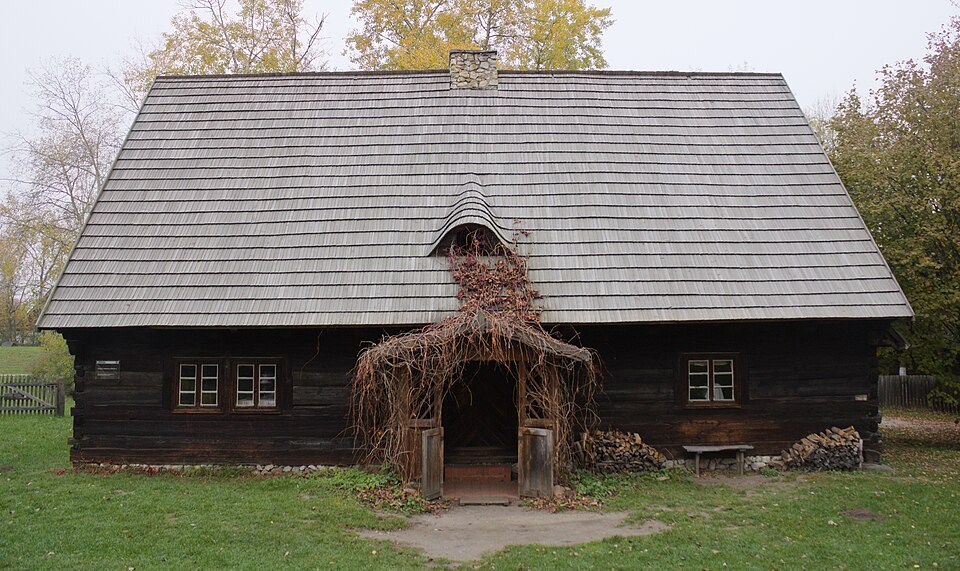
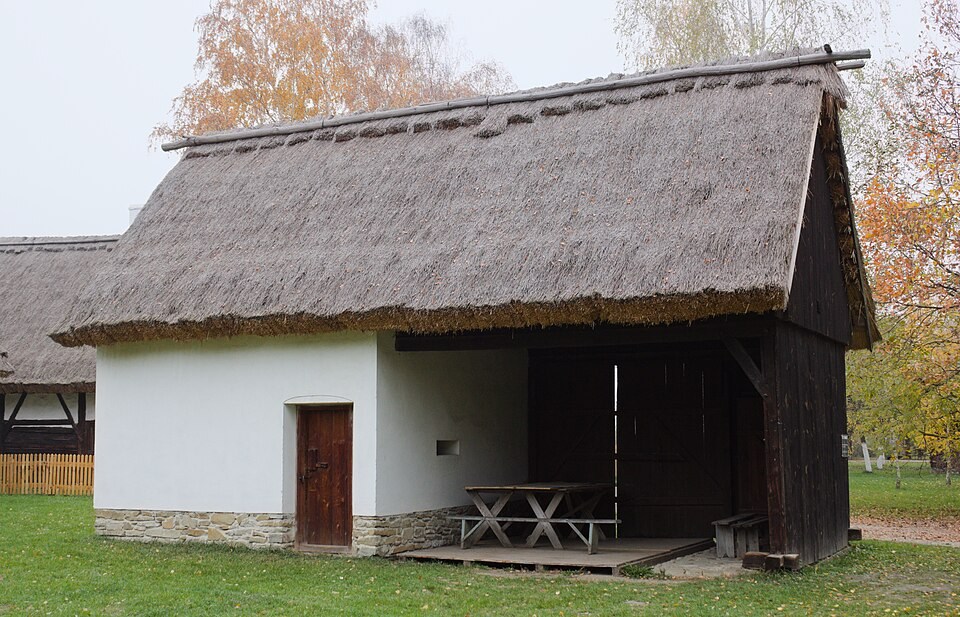
Cover: the cottage from Antoniow at Opole Village Museum, photographed on 10 November 2024. This archival image does not show current conditions or prove that the interior is open. Photo: Przykuta / Wikimedia Commons, CC BY-SA 3.0. Resized and recompressed under the same licence.
Winter means a park walk, not an indoor museum day
Muzeum Wsi Opolskiej in Bierkowice is a useful change of pace from central Opole, but its winter offer needs reading literally. This is an open-air collection of regional wooden architecture. Outside the full exhibition season, the published offer is access to the park grounds only. Historic interiors and temporary exhibitions are not included. A cheap ticket does not buy a smaller version of the summer interior tour.
The museum's dated 2026 timetable puts the current off-season period at 26 October to 31 December. Opening hours are 10:00-15:00, Monday to Sunday, excluding statutory public holidays. These dates describe the remaining 2026 season, not a confirmed timetable for 2027. For a holiday visit or a trip after New Year, check the museum's latest notice rather than extending this schedule yourself.
That makes Bierkowice a better choice for someone who wants daylight, buildings and a self-directed walk than for someone seeking several hours of heated galleries. Decide which experience you want before travelling. The museum's own opening-hours page gives exact seasonal boundaries and should take priority over a general description of an April-to-October season.
The PLN 5 ticket and the weekend purchase trap
The off-season walking ticket is PLN 5. Mondays are free throughout the year, subject to the museum actually being open. Free admission does not cancel a public-holiday closure, and it does not restore winter access to the interiors. The tariff separately lists exemptions, including children below compulsory school age and specified professional or accompanying-person categories. Bring the relevant documents if claiming an exemption.
Do not use the summer reduced-ticket categories to invent a cheaper winter rate. The museum describes the walking ticket as applying to all visitors except its listed exempt groups. For comparison, the full-exhibition-season tariff for 11 April to 25 October 2026 was PLN 30 standard and PLN 15 reduced. Those are not the ordinary winter walk prices. A separate PLN 20 occasional-event ticket is tied to selected events, not an automatic charge for every visit.
The practical catch is ticket buying. According to the official FAQ, off-season weekday tickets can be bought at the desk or online. On weekends, the ticket desk and souvenir shop are closed, and visitors are told to buy online. Arrange that before reaching the entrance. Do not assume a member of staff will open a cash till for you because the grounds are open.
The museum does not reserve ordinary visiting dates or time slots for either individual visitors or organised groups. That is different from its education programme, where lessons need a separate booking. Read the current tariff and any event announcement together before buying an unusual ticket.
What the buildings can tell you from outside
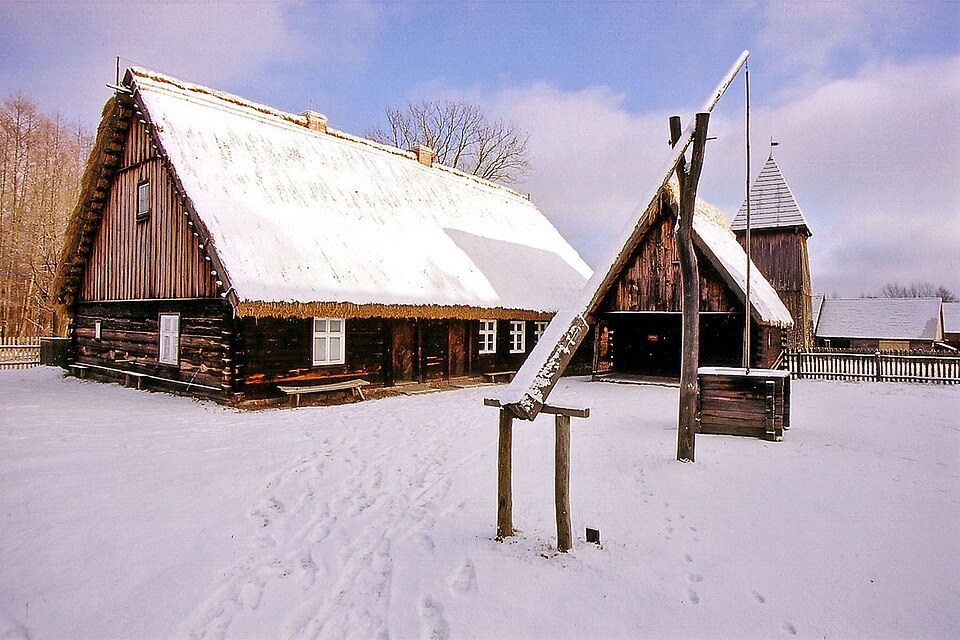
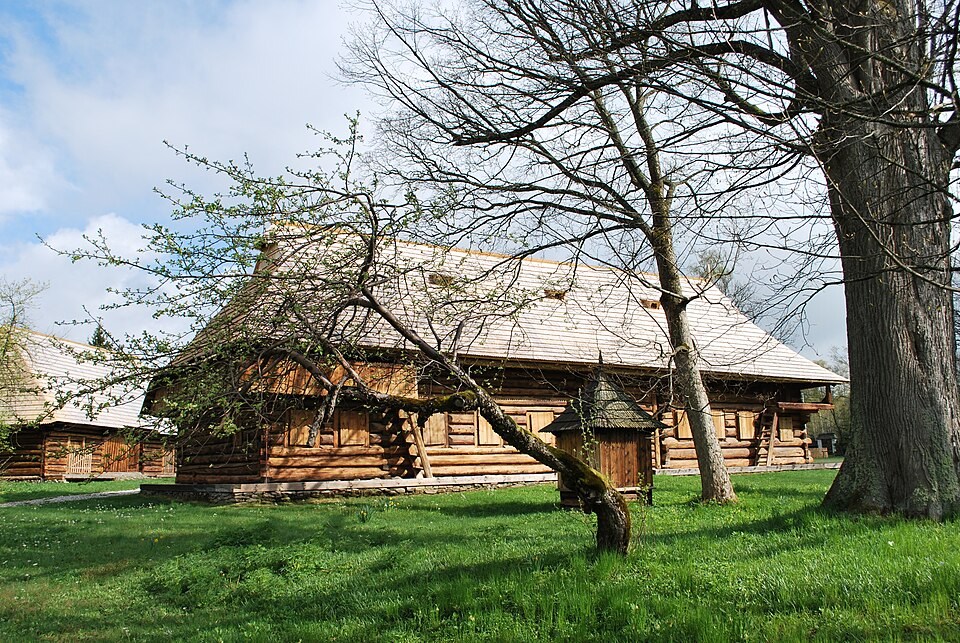
The museum says it has reconstructed 49 wooden buildings and also looks after a separate cottage in Kielcza. Do not treat that off-site cottage as another stop inside the Bierkowice grounds. The main park covers a little over ten hectares and sets houses, farm buildings, workshops and public buildings in a reconstructed village landscape. A winter visit removes the interior displays from the itinerary, but leaves the building forms available to compare.
Look at roof coverings first. The museum's exhibition description distinguishes shingled roofs from roofs covered with rye straw. It also describes different thatching methods associated with the occupants' means and status. Instead of trying to identify every building immediately, compare the roof line, the wall structure and the position of an entrance. This gives an outdoor walk a clear purpose without pretending closed rooms are accessible.
The Antoniow cottage has an especially useful exterior detail: its porch, described by the museum as a lauba. Its precise construction date is unknown. An inscription records a fire in 1840, so that year should not simply be repeated as its building date. Before the Second World War, the cottage was moved to avoid the rising waters associated with the Turawa reservoir. Those distinctions make the structure more interesting than an unsupported claim that every timber is exactly the same age.
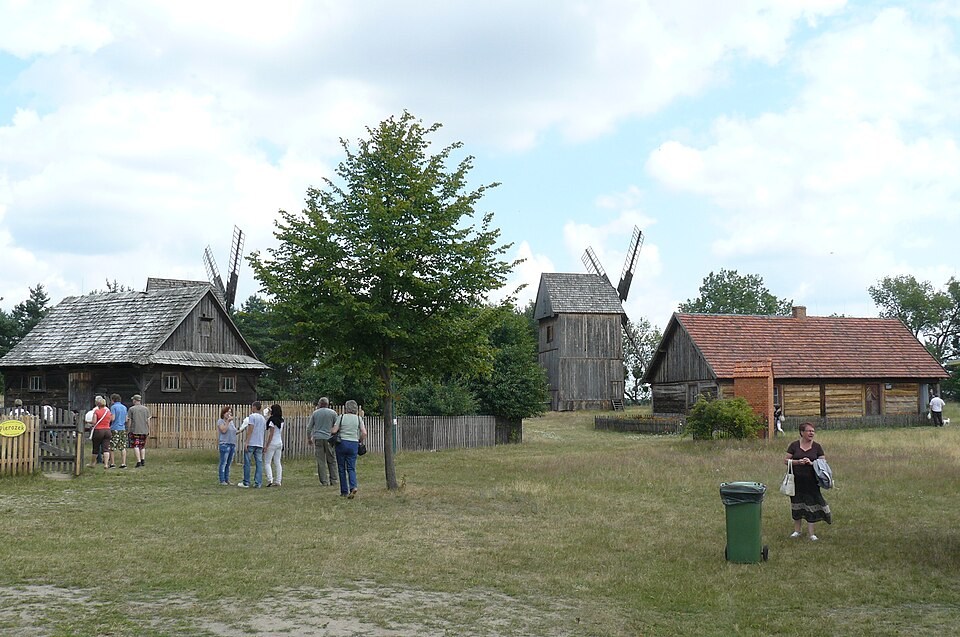
Two post mills are another reason to look beyond the cottages. The collection also includes buildings connected with milling, smithing, education and village commerce. Their presence does not promise a winter demonstration, working machinery or open interiors. Treat any activity as something to confirm in a dated event notice, rather than something included in a normal grounds ticket.
The church is a lesson in changing ownership
The church from Greboszow is worth reading about before the visit. The museum dates its foundation to 1613 and explains that it began as a Protestant church before being taken over by Catholics in 1653. Its single-nave arrangement has no architecturally separate chancel. The later tower and the log-built body are features to compare from outside, within whatever visitor route is open.
The museum's detailed church page also prevents a common misunderstanding about reconstructed museums. The original pulpit travelled with the church, while other furnishings came from elsewhere. The altar, for example, came from Groszowice. This is an interpreted collection, not a claim that every object stood together in the original village.
Read that history online if it interests you, but do not plan to inspect the altar or pulpit during an ordinary winter walk. The off-season rule still excludes interiors. If those objects are the main reason for your trip, wait for a published full-exhibition timetable or a specific event that explicitly includes them.
English information without assuming an English guide
For newcomers who do not read Polish comfortably, the QR information is useful. The FAQ says each wooden architecture object has a QR plaque linking to descriptions in English and German. Bring a charged phone and open a description before depending on it for the rest of the visit. This is written interpretation, not evidence that a live English-speaking guide is waiting.
The usual guide arrangement is also seasonal. During the full exhibition season, keepers in selected buildings and farmsteads explain the collections as part of admission. The museum describes visitors moving independently around the grounds. Do not turn that into a promised guided winter circuit. Likewise, the 14:00-14:30 break in visiting exhibition buildings belongs to the full-season interior arrangements, not an extra winter opening period.
The FAQ offers a shorter route of about 1.5 hours and a longer one of about 2.5 hours, and says many visitors spend around three hours. These are general visit descriptions, not a requirement to remain outdoors for three winter hours. Choose a smaller route if conditions or your group make that sensible, and leave enough time to be out by the published closing time.
Getting there and checking access needs
The address is ul. Wroclawska 174 in Bierkowice, around five kilometres from central Opole. The museum's visitor-access page lists buses 5 and 9 to Wroclawska-skansen, with the stop around 200 metres from the entrance. Check the current transport timetable for your travel date; this is not a promised frequency or journey time. Free visitor parking is around 100 metres from the entrance and includes marked disabled spaces.
The architectural-access description says the outdoor routes require no steps, but have gravel-and-sand surfaces. Split granite paving outside reception may also be difficult. Step-free does not mean smooth, firm or easy in wet weather. The museum recommends enclosed footwear when it rains because of the ground surfaces. Ask about current conditions if those surfaces could determine whether the visit works for you.
Reception has a ground-level main entrance and an adapted toilet. The FAQ also lists toilets on the grounds and a changing table in the reception toilet. However, the winter weekend closure of the ticket desk does not explain exactly which reception facilities remain accessible. Confirm toilet access before a weekend trip if it is essential. The education contact is available Monday-Friday, 08:00-14:00, on +48 77 474 30 21, extensions 214 or 215.
Families, dogs and a sensible stopping point
The museum says a handcart with two safety belts and a maximum load of 70 kg can be borrowed from security. Ask about availability rather than building the entire visit around getting one. Pets are allowed on leads in the park, with owners responsible for cleaning up; ordinary pets are not allowed inside historic buildings. The access page separately welcomes guide dogs.
Private amateur photography has no extra charge, while professional photo sessions and filming follow a paid commercial offer. Smoking is prohibited. Thursday quiet hours, 13:00-17:00, are described in the FAQ as a full-exhibition-season arrangement. They should not be advertised as a winter afternoon session when the normal closing time is 15:00.
For a first winter visit, keep the plan simple: buy the right ticket online if coming at a weekend, read the English building descriptions, compare a few roofs and farmstead layouts, and leave the indoor collection for a season when it is explicitly open. That delivers the actual Bierkowice offer without arriving with summer expectations.
Frequently asked questions
Can I buy a winter weekend ticket at the desk?
The museum says its ticket desk and souvenir shop are closed on off-season weekends, and tells visitors to buy online.
Does the PLN 5 winter ticket include the church interior?
No. The off-season offer is for park grounds only, without historic interiors or temporary exhibitions.
Are Thursday quiet hours a winter offer?
The FAQ places Thursday 13:00-17:00 quiet hours in the full exhibition season. Normal winter hours end at 15:00.