Poland Plans EV Charging at 22 More Roadside Service Areas
The essentials: GDDKiA is tendering charging infrastructure at 22 motorway and expressway service areas. Bids close on 18 January 2027, not an opening date. For a trip now, check EIPA and the operator for a working connector, current availability and payment details.
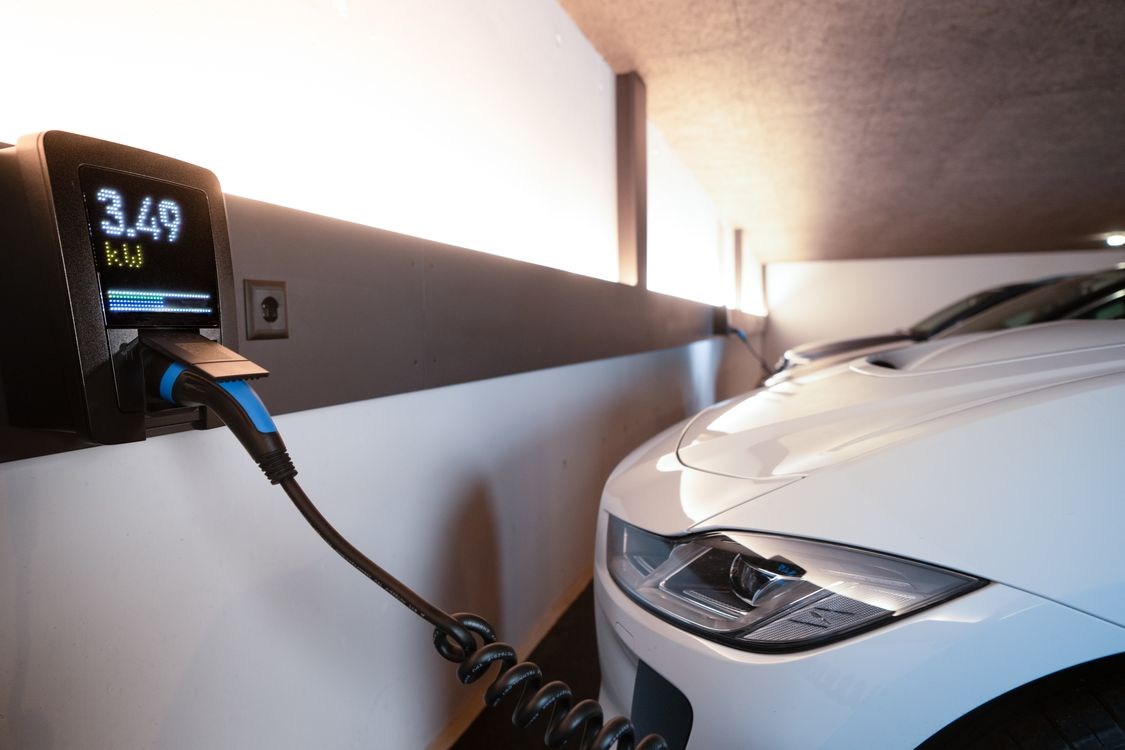
Cover: an indoor charging station, illustrative rather than one of the planned Polish MOP sites. Photo: smart-me AG / Pexels.
More charging sites are planned, not open yet
Poland's road authority has launched a tender for electric-vehicle charging infrastructure at 22 more motorway and expressway service areas. The 25 November 2026 announcement covers the A4 and the S3, S5, S7, S8, S19 and S61. For drivers, this is useful news about the future network, not a list of new chargers to rely on for a journey this weekend.
GDDKiA says bids are due by 18 January 2027. The tender concerns leasing land, building fast-charging stations and operating the charging service. It does not announce that the sites are commissioned, set a retail charging price or give a single opening date for all 22 locations. Until an operator confirms a particular station is available, plan around the existing network and keep an alternative stop.
Which roads and service areas are included?
The A4 locations are Chotyniec and Hruszowice in Podkarpackie. On the S3, the tender covers Niegosławice Wschód and Niegosławice Zachód in Lubuskie. The S5 has six locations in Wielkopolskie: Łabiszynek, Modliszewko, Sanniki, Wagowo, Trzebosz and Dębno. These are named service areas, not a promise of a charger at every junction along those routes.
On the S7, the locations are Ćwiklinek and Dłużniewo in Mazowieckie, Smyków in Świętokrzyskie and Liksajny in Warmińsko-Mazurskie. The S8 sites are Syców Północ and Syców Południe in Dolnośląskie. The S19 locations are Radawiec, Zemborzyce, Rudnik Wschód and Rudnik Zachód in Lubelskie. On the S61, Budzisko Wschód and Budzisko Zachód are in Podlaskie.
MOP means Miejsce Obsługi Podróżnych, a service or rest area. Names ending in Wschód, Zachód, Północ or Południe distinguish east, west, north or south sites. Do not assume a location with a similar name on the opposite carriageway is accessible without a detour. Check the exact map pin and direction before making it your next charging stop.
What the planned power figures mean
For passenger vehicles, GDDKiA specifies at least four charging points at each service area, with a target combined power of at least 600 kW. At least two points must have power of no less than 150 kW. The total is an infrastructure requirement for the site, not a claim that every car can draw 600 kW from one connector.
The tender also plans infrastructure for heavy vehicles. Its target combined power for those points is at least 3,600 kW, with at least two points rated at no less than 350 kW. Passenger-car and heavy-vehicle requirements should not be mixed when judging the experience a family car will have at the location.
The European Commission's alternative-fuels-infrastructure questions and answers make a related distinction: a station can have several charging points whose individual maximum ratings are not all available simultaneously. A station's total output can limit what its points deliver together. A headline power rating is therefore not a guaranteed charging speed throughout your session. Check your vehicle's compatible connector and charging capability as well as the site's advertised power.
What happens after the January deadline?
The authority plans 20-year leases with the option of a further five years. If not every location attracts a tenant, it says it will run an additional bidding round. That makes the timetable dependent on the procurement and subsequent delivery, rather than a fixed nationwide switch-on date.
For an EV owner deciding whether a regular route is becoming easier, the announcement is evidence of planned expansion. For a driver choosing where to stop today, it is not evidence of a functioning connector. Keep the distinction between a tender, a signed delivery contract and a station shown as operational in an operator's system.
GDDKiA also reports contracts for charging stations at another 54 MOPs. Those contracted projects are separate from the 22 locations in this tender. Neither category should be added to today's available stops without checking whether the individual station has actually opened.
Use the current network for an actual journey
In its announcement, GDDKiA reports charging at 147 MOPs and a headline total of 505 charging points on Poland's high-speed-road network. It says 248 points have power of at least 150 kW. These are the authority's dated network figures, not a live availability count and not the total number of chargers throughout Poland.
For a specific trip, use the public EIPA register run by the Office of Technical Inspection, UDT. It provides location information, alternative-fuel prices and availability information for points at publicly accessible charging stations. The register offers a station list and search as alternatives to the map, which is useful when you know a place name but cannot easily work with a map interface.
GDDKiA also directs drivers to its driver-information service for charging locations drawn from EIPA. Whichever discovery tool you use, open the operator's details for the exact station before departure. A national network statistic cannot tell you whether the connector you need is occupied, temporarily unavailable or accessible from your side of the road at arrival.
Prepare the payment route before leaving
The operator you use to find a charger and the service you use to pay are not always the same company. The Commission's guidance distinguishes the charging-point operator from the mobility service provider. Roaming lets a customer use another network through a provider, but it does not make every tariff or activation method identical.
GreenWay's own roaming guidance says prices at partners can differ and recommends checking the specific station and connector in its app before starting. It also warns that some partner stations may not communicate with the app, in which case the charging card is needed. Do not assume that an app which worked at one GreenWay location will start every partner charger in the same way.
If you already have a roaming service from another country, check that the particular Polish station appears as usable under your account and read the displayed terms. A familiar brand logo on a map is not proof of your tariff. Compare the payment option you will actually use, including any displayed time or other session charges, before authorising charging.
ORLEN users should check the current app route
ORLEN's current Polish charging page directs users to ORLEN VITAY for the ORLEN Charge service. It describes checking station availability, starting a session and monitoring progress there, using ORLEN ID for access to group services. That is worth checking before departure if you last charged using an older app setup.
The operator's English information page describes selecting a suitable station using vehicle and connector filters, checking pricing information before starting, monitoring the energy delivered and viewing previous sessions and invoices. Its heading refers to the service in VITAY, while parts of the explanatory text still use the older ORLEN Charge app wording. Follow the current download and account instructions on the operator's own app page rather than relying on an old screenshot or an unofficial download link.
This article does not quote a national flat charging price. The tender has not chosen a retail tariff for the planned locations, and existing prices depend on the operator, connector and payment arrangement. Check the displayed price for the actual session, not an old article or another driver's subscription bill.
A workable stop plan for a new EV driver
Start by identifying a currently operating station on your route, then choose a second currently operating alternative that your vehicle can reach. Check the connector, the precise site entrance and carriageway, the payment method and the latest status. Keep the alternative far enough before your last possible stop that a problem does not leave you without a practical choice.
For a rental car, ask the rental company which charging accounts or cards are included and which charges remain yours. Confirm that the supplied card is active and usable on the intended network. This is a check to make with the rental company, not a claim that every Polish rental includes charging access or free electricity.
Before connecting, identify the operator and connector number and read the session terms. After starting, confirm the car is actually receiving energy rather than assuming that plugging in completed the process. Before leaving, check that the session has ended in the interface you used and retain the receipt or session record. If activation fails, use the support contact shown for that operator and location.
The useful takeaway from this expansion
The 22-site tender matters because it includes several long-distance corridors and specifies both passenger-car and heavy-vehicle infrastructure. It is a meaningful addition to the pipeline. It is not a reason to treat every MOP on the A4 or an expressway as a guaranteed fast-charging stop.
For now, the practical order is simple: discover operating locations through EIPA or an operator map, verify the exact connector and payment arrangement, and keep an alternative. Revisit the named tender locations once operators announce commissioning. The bid deadline of 18 January 2027 is a procurement milestone, not the date on which drivers can assume all 22 sites are ready.
Frequently asked questions
Are all 22 locations open for charging?
No. The announcement concerns a tender for leasing land, building stations and operating charging services. It does not confirm that these stations are open.
Does 600 kW mean my car will charge at that speed?
No. It is the target combined power for passenger-car points at a site. The tender requires at least four points, including at least two rated at 150 kW or more.
Where can I check operating charging locations?
Use the EIPA public register and the operator's own station information. Check the exact connector, status, price and payment method before relying on a stop.