Poland's Sugar Levy: Proposed Rate Hikes From 2027
Short answer: As of 17 Oct 2026 the sugar levy increase is only a bill. The fixed fee would rise from PLN 0.50 to 0.70 per litre, with a PLN 1.80 cap, and start 1 Jan 2027.
Poland's sugar levy, officially the fee on sweetened drinks in the Public Health Act, could get noticeably higher from 1 January 2027. This is not law yet. The Council of Ministers adopted a bill on 29 September 2026, and the Sejm has started work on it. This guide explains what the government proposes, where the bills stand as of 17 October 2026, and what it could mean for the price of drinks on the shelf.
What the levy is
The fee applies to sweetened beverages, drinks with sweeteners, and drinks with caffeine or taurine. It is paid by businesses in the supply chain, not by the shopper at the till. Shops may still pass the cost on, so it can show up in shelf prices. According to the Ministry of Finance, 96.5% of the revenue currently goes to the National Health Fund (NFZ) and is spent on prevention, health education and funding of medical services.
Two bills, not one
According to the report by Rynek Zdrowia of 8 October 2026, two separate bills amending the Public Health Act are in the Sejm.
The first is described as a tidying-up bill. It would move the duty to pay the fee onto producers, importers and businesses that acquire drinks from other EU countries. The government says this should simplify the system and remove problems with finding who owes the fee. It would also cover online sales, drinks given away for advertising and representation purposes, and drinks used for a company's own business needs. It plans exemptions for drinks made only of water and juice and for selected fruit nectars, and a refund of the fee for drinks exported from Poland.
The second bill raises the rates and widens the list of products covered. This is the one described on the government's own pages.
The proposed new rates
The Ministry of Finance and the Chancellery of the Prime Minister published the same list of changes on 29 September 2026 (project number UD417):
- The fixed fee, for drinks with up to 5 g of sugar per 100 ml or any amount of a sweetener, would rise from PLN 0.50 to PLN 0.70 per litre.
- The variable fee for each gram of sugar above 5 g per 100 ml would double, from PLN 0.05 to PLN 0.10.
- The fee for caffeine or taurine would rise from PLN 0.10 to PLN 1.00 per litre.
- The maximum fee per litre of drink would rise from PLN 1.20 to PLN 1.80.
Who and what would be newly covered
The bill would also bring in products that are now outside the fee or exempt:
- Drinks with at least 20% juice and up to 5 g of sugar per 100 ml would lose their exemption if they contain sweeteners, caffeine or taurine. The exemption would stay only for drinks without those additions.
- Highly sweetened fruit syrups with only trace amounts of juice, sold as food supplements, would be covered. Packages up to 200 ml, for example syrups sold to support immunity or against cough, would stay out.
- All concentrates for preparing drinks would be covered, whether liquid, semi-liquid or solid. They would get a single rate of PLN 3.00 per litre or kilogram.
A calculated example
The figures below are our own arithmetic based on the rates above. They assume the fee is counted per litre and that the variable part applies per gram of sugar above 5 g in each 100 ml. They are not an official price forecast.
A soft drink with 10 g of sugar per 100 ml and no caffeine would pay 0.50 + 5 x 0.05 = PLN 0.75 per litre today. Under the proposal it would be 0.70 + 5 x 0.10 = PLN 1.20 per litre.
An energy drink with 11 g of sugar per 100 ml and caffeine would be 0.50 + 6 x 0.05 + 0.10 = PLN 0.90 per litre today. Under the proposal the sum would be 0.70 + 6 x 0.10 + 1.00 = PLN 2.30, but the cap of PLN 1.80 per litre would apply.
How much of this reaches the shelf price depends on producers and retailers.
Where the bills stand
On 8 October 2026 the Sejm voted on motions to reject both bills at the first reading. Motions came from the Konfederacja club, Rozwój Plus and the Demokracja Bezpośrednia group, who argued the changes would plug a budget gap rather than improve public health. They failed. For the first bill, 198 deputies voted to reject and 239 were against. For the second, 200 voted to reject and 240 were against. Both bills went to the Health and Public Finance committees.
The proposed start date is 1 January 2027, but the text can still change in committees, in the Sejm, in the Senate and with the President's signature. Check the Sejm website for the current stage before relying on any figure.
Expected revenue
The Ministry of Finance estimates that the changes would add about PLN 1.3 billion a year to NFZ revenue. Rynek Zdrowia, reporting the ministers' presentation in the Sejm, gives about PLN 1.5 billion a year for the proposed solutions from the finance and health ministries. The two numbers come from different sources and are not reconciled here. The government also says nearly two thirds of Poles are overweight or obese, citing NFZ data, and that one in three children is overweight, citing the WHO.
What it means if you live in Poland
The law does not tax residents directly and does not depend on nationality or residence status. For most people the visible effect would be higher prices on soft drinks, energy drinks, syrups and concentrates, if businesses pass the fee on. Drinks that are plain water, or juice without added sweeteners, caffeine or taurine, are not the target of the new rules. Businesses that import or buy drinks from other EU countries should watch the first bill, because it changes who pays.
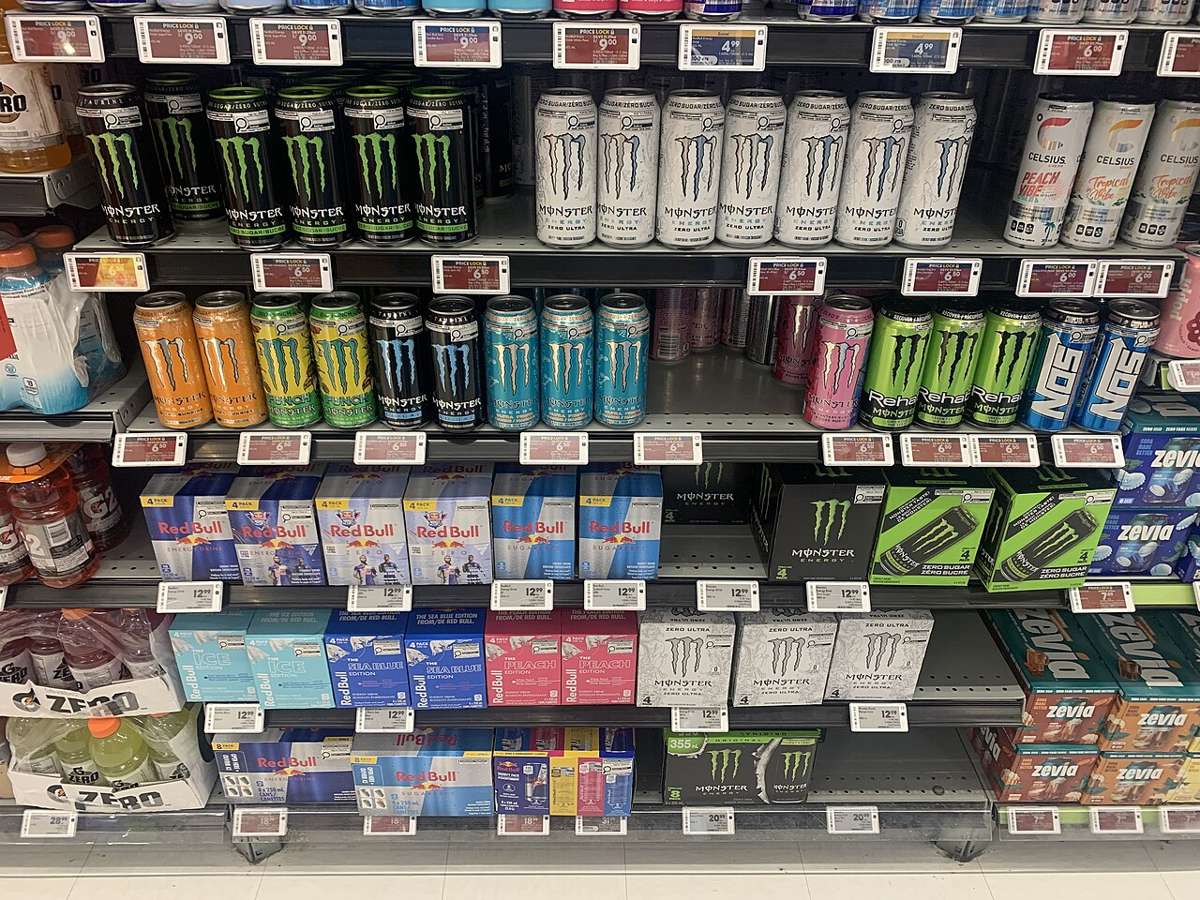
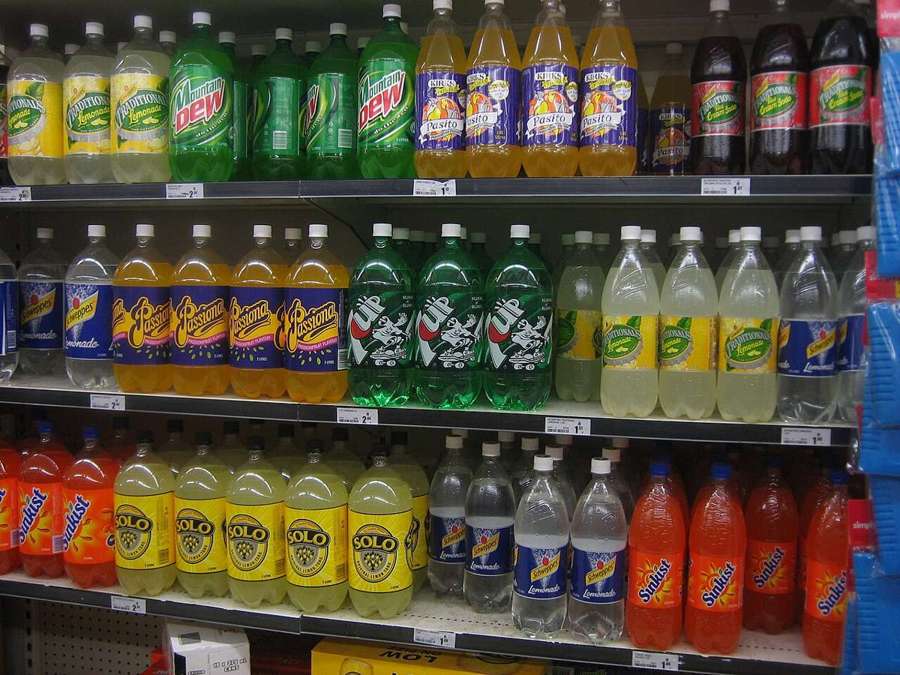
* Photos: Soft drink shelf (public domain) and Energy Drink Display (CC0), both Wikimedia Commons, illustrative.
Frequently asked questions
Is the higher sugar levy already in force?
No. As of 17 October 2026 it is a bill. The government adopted it on 29 September 2026, the Sejm refused to reject it at the first reading on 8 October, and committees are working on it. The proposed start is 1 January 2027.
Will I pay the levy at the shop?
The fee is owed by businesses, not by consumers. Retailers and producers may raise shelf prices to cover it, so you may see it indirectly.
Which drinks would be hit hardest?
Energy drinks. The fee for caffeine or taurine would rise from PLN 0.10 to PLN 1.00 per litre, and the total fee per litre would be capped at PLN 1.80.