Poland-Switzerland Tax Protocol: Signed, Not Yet in Force
The essentials: Poland and Switzerland signed on 25 November 2026, but approval in both countries is still required. Poland announces a future switch to proportional credit for Polish residents. No first application year is confirmed in the announcements.
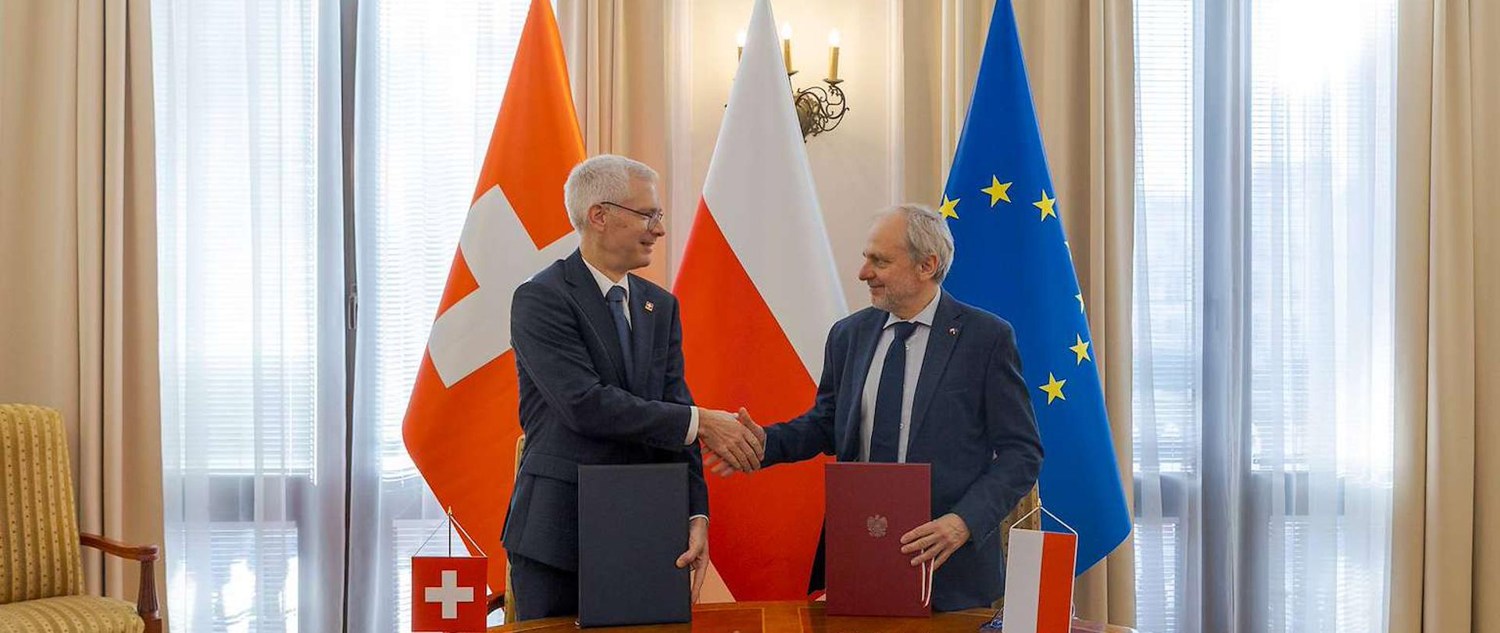
Poland and Switzerland signed a protocol changing their double-taxation agreement in Warsaw on 25 November 2026. For people living in Poland with Swiss earnings or investments, the important distinction is between a document being signed and its rules becoming applicable. This agreement has reached the first stage, not the last. Both governments say further approval is needed before it can enter into force.
The Polish Ministry of Finance identifies a future change from exemption with progression to the proportional tax-credit method for Polish residents. It also describes a stronger property-rich-company clause and a principal-purpose test against treaty abuse. Switzerland's State Secretariat for International Finance independently confirms the signing, the anti-abuse provision and an update to the mutual agreement procedure. None of that is a reason to rewrite a tax return today using a guessed starting year.
What was signed, and by whom?
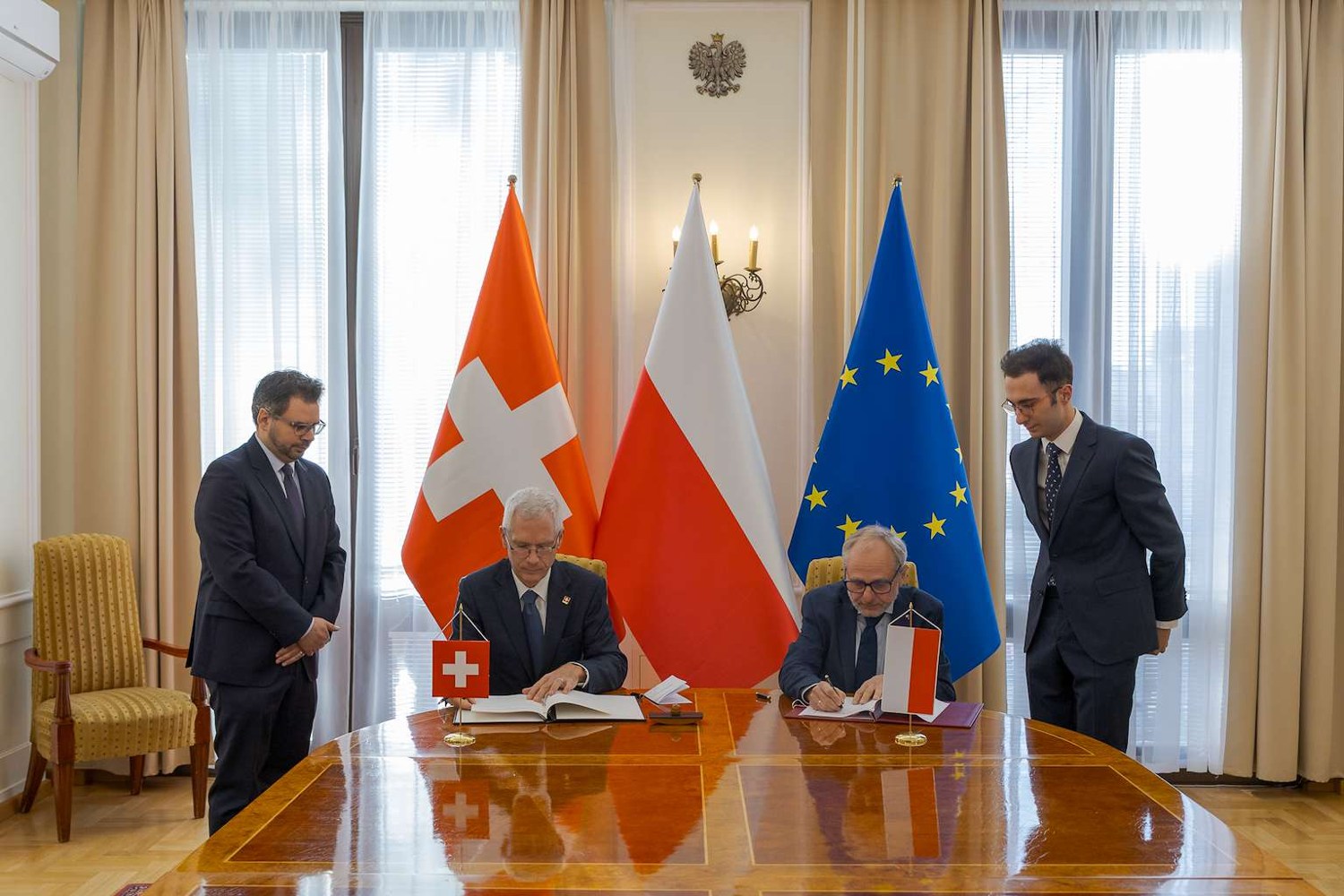
Poland's Deputy Finance Minister Jarosław Neneman and Switzerland's ambassador to Poland, Olaf Kjelsen, signed the protocol on 25 November. It amends the bilateral convention signed in 1991, rather than replacing every part of the existing treaty with a completely separate system. The Finance Ministry links the changes to international work against base erosion and profit shifting.
For a reader moving between the two countries, this means the treaty remains something to read as a set of provisions, amendments and effective dates. A headline about a new protocol is not a full explanation of the treatment of salary, a pension, dividends or a property sale. Those are different categories of income. Start by identifying your actual income category, then ask which provision applies to it for the tax year concerned.
Signed does not mean already applicable
The Polish announcement says the protocol will take effect after ratification procedures are completed in both countries. Its provisions will apply from the beginning of the calendar year following the year in which it enters into force. The Swiss announcement likewise says legislative approval is still required in both countries.
That sequence has practical consequences. There is a signing date, a later entry-into-force date, and then the date from which provisions are applied. Do not collapse those into 25 November 2026. The announcements do not establish that the new method applies to income earned in 2026, nor do they give readers a confirmed first application year. Keep that year open until the necessary official steps and dates are published.
If you are planning a move, keep separate folders for the year of departure, the year of arrival and any later year affected by the protocol. It is easier to update a plan when its assumptions are written down. An accountant should be able to see which rule you used and why, rather than having to infer it from an online headline saved without a date.
Why the double-taxation method matters
Poland's official tax guidance explains two different mechanisms. Under exemption with progression, qualifying foreign income is excluded from the Polish tax base, but it can affect the rate applied to other income taxable in Poland under the scale. Under the proportional credit method, the foreign income is also brought into the Polish calculation, with a deduction for foreign tax subject to a proportional limit.
These are methods for relieving double taxation, not promises that the final tax is always zero or always the same in both countries. A credit has a ceiling. The Polish guidance says foreign tax can be deducted only up to the share of Polish tax attributable proportionally to the foreign income. Paying a large amount abroad does not automatically make the whole payment deductible against every Polish tax liability.
The Ministry's new announcement says the protocol changes the method used by Polish residents from exemption with progression to proportional credit. Read that as a reason to review future cash flow and filing arrangements once the application date is known. It is not a reliable shortcut to a personal tax bill. Your residence position, income type, allowable costs and other income still matter.
Residence is not the same thing as citizenship
The announcement specifically refers to Polish residents. That wording matters for a Swiss citizen living in Poland, a Polish citizen living in Switzerland, or a family splitting time between the two. Do not decide that a treaty change affects you only from the passport you hold. First establish the residence analysis relevant to your circumstances and the period in question.
The Polish tax authority's guidance says a Polish tax resident accounts for income regardless of the country in which it arose, taking the treaty into account. Its guidance on foreign employment also explains that where work is actually performed and the employer's circumstances can affect taxing rights. A foreign employer, a Swiss bank account and a place of work are not interchangeable facts. Give an adviser the real arrangement rather than simply calling it Swiss income.
What the property clause announcement covers
The Polish Ministry describes a tighter clause for gains involving interests whose value comes mainly from immovable property. Its summary includes gains from selling certain participation rights, fund units or investment certificates where more than 50% of their value comes directly or indirectly from immovable property. The country where that property is located is relevant under the announced rule.
This is not the same as saying every person selling an ordinary flat has acquired a new tax bill on the signing date. The announcement concerns specified rights and interests with underlying property value. If you own shares or units linked to property, make a list of the holding, where the underlying property is located and the planned transaction date. Ask for a review of the actual provision and its application date before treating the summary as transaction advice.
The principal-purpose test is about treaty benefits
The principal-purpose test, often shortened to PPT, is the anti-abuse change highlighted by both governments. Poland says it allows tax authorities to deny treaty relief or preferences where obtaining them was one of the main purposes of an arrangement or transaction. Switzerland describes the same provision as a safeguard against abuse of the agreement.
For a household reader, the useful takeaway is not that ordinary cross-border life is prohibited. It is that a structure designed around a treaty advantage needs proper advice and a defensible explanation. Do not assume that putting a transaction through a particular country guarantees the advertised treaty result. Keep the commercial and personal facts distinct from a promoter's description of the tax outcome.
Switzerland also flags the mutual agreement procedure
The Swiss statement says the protocol supplements the mutual agreement procedure in line with the minimum standard. That procedure is part of the treaty framework for addressing problems between the two tax systems. The short announcement does not itself provide a new personal application checklist or promise that a disputed assessment will be cancelled.
If you already have a cross-border dispute, save the assessments, correspondence and relevant dates and obtain advice on the procedure available now. Do not wait for this protocol merely because it mentions dispute resolution. Equally, do not interpret its signature as reopening every completed case. The correct route depends on the current treaty provisions and the facts of the dispute.
What to prepare now, without guessing the new start year
Begin with a one-page timeline of where you lived and worked, together with the periods covered by each payment. Gather employment statements, tax assessments and proof of tax actually paid. If you hold investments, separate dividends, interest, sales and any property-linked holdings. This is preparation for classification, not a claim that all those payments receive identical treatment.
Ask an adviser to separate two questions in writing: what applies to your existing filing, and what would change in a future year once the protocol applies. Request the official basis for the first application year when it becomes available. A budget prepared on the assumption that a treaty change starts immediately can be wrong even when the headline describing the change is accurate.
For employment income, the Polish authority's general guidance describes circumstances in which PIT-36 and a separate PIT/ZG attachment for each relevant country are used. It also explains exceptions and different treatment where work is taxable only in Poland through a Polish employer. Do not select a form from this news article alone. Use the authority's current instructions for your income category and year.
The useful conclusion for expats
This is a real signed treaty development, confirmed independently by the Polish and Swiss administrations. The future method change deserves attention from Polish residents with relevant Swiss income, and investors should notice the property and anti-abuse provisions. But signing is not implementation. The practical next step is to preserve records, identify your income correctly and watch for the official entry-into-force and application dates.
For background, see our guide to Polish tax residence before discussing your position with an adviser. This article explains the announced protocol and the tax authority's general method descriptions. It does not calculate an individual's liability or replace advice on a specific return, investment or move.
Frequently asked questions
Does the protocol already apply?
No. Both governments say further approval is required before entry into force.
Is a first application year confirmed?
No. Poland says provisions apply from the calendar year after the year of entry into force, which is not yet established in the announcements.