Museum of Opole Silesia: Tickets, Thursday Terms, Buildings and Access
The essentials: Main exhibitions: Mały Rynek 7. Admission 15/10 zł; Thursday free rule covers permanent exhibitions, not guiding or temporary shows. Closed 11 and 29 November 2026. Tenement house has a separate ticket and hourly visits. Main accessible entrance is on Muzealna; confirm staff access.
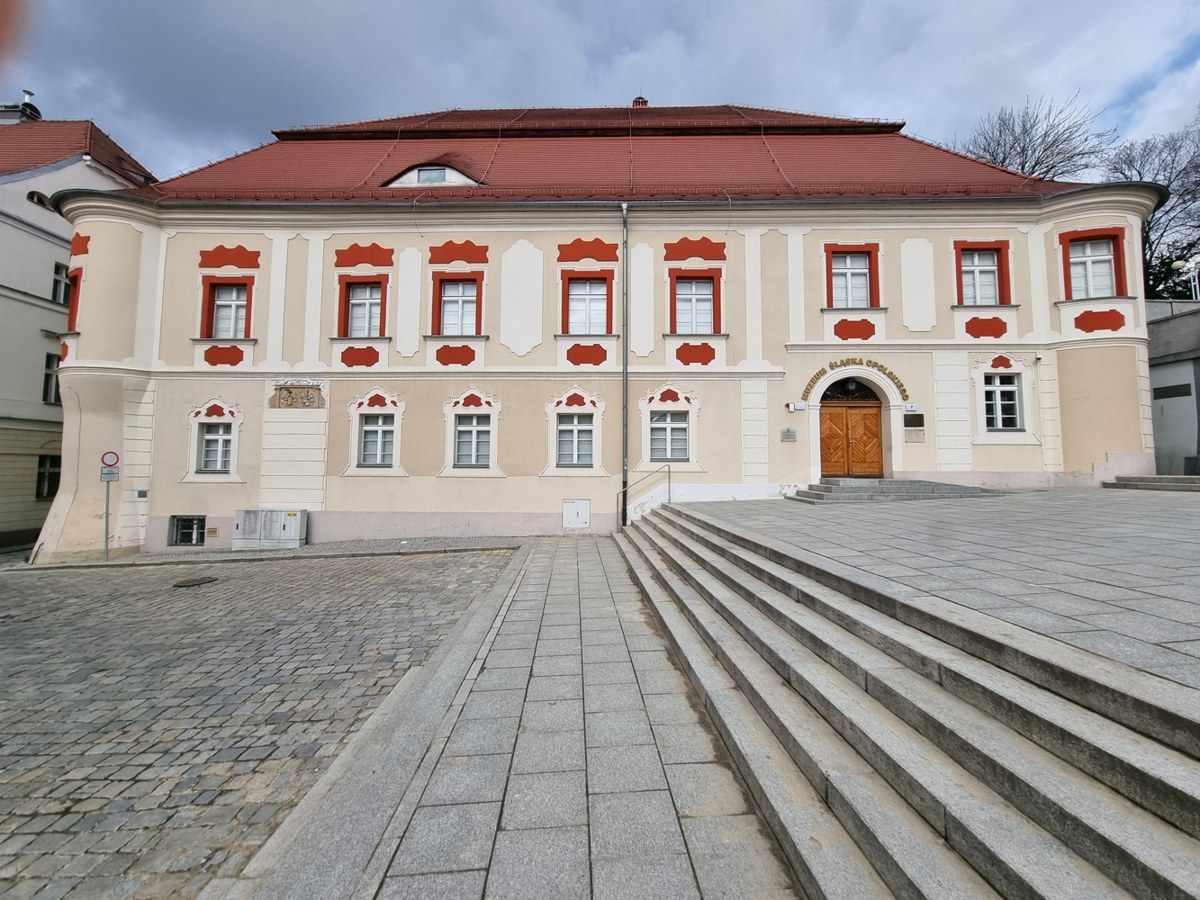
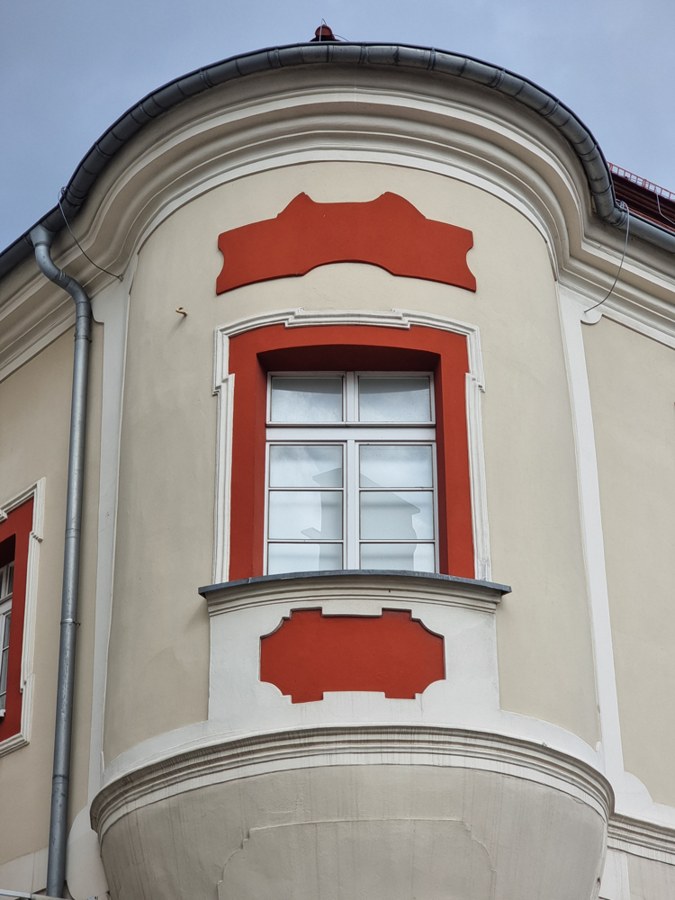
The Museum of Opole Silesia main building, photographed in March 2024. Photo: Zala. Wikimedia Commons source. CC BY-SA 4.0. Oriented, resized and re-encoded; photo derivative under the same license.
Pick the building before picking the ticket
The Museum of Opole Silesia, or Muzeum Śląska Opolskiego, is not the Museum of Polish Song. It is a regional museum with archaeology, town history, ceramics, painting and ethnography, spread across several buildings. Start with the main exhibition building at Mały Rynek 7. The nearby tenement-house museum at Świętego Wojciecha 9 and the gallery at Ozimska 10 have their own visiting arrangements. The administrative address at Świętego Wojciecha 13 is not a substitute for the main exhibition entrance.
For a first visit, the main building gives the broadest introduction to the region. Choose the tenement house if domestic interiors are your priority, but do not assume it is included in the main admission price. Choose the Ozimska gallery for its separate exhibition programme, checking its timetable rather than copying the main building's Sunday hours. These distinctions are particularly useful when different people in the group are looking at different versions of the museum website.
November closures override the weekly timetable
The current Polish visitor page gives the main building's hours as Tuesday, Wednesday and Friday from 09:30 to 17:00, Thursday from 09:30 to 18:00, Saturday from 09:00 to 18:00 and Sunday from 12:00 to 17:00. It is closed on Mondays and the last Sunday of the month. The museum's November 2026 calendar explicitly says all museum buildings are closed on Wednesday 11 November and Sunday 29 November. Do not plan around the usual Wednesday timetable on the public holiday.
Two different deadlines matter at the end of a visiting day. The regulations say exhibition tickets can be purchased no later than half an hour before closing. They also require visitors to leave the museum fifteen minutes before closing, allowing time to collect things from the cloakroom. The visitor page accordingly describes visiting until 16:45 or 17:45. Those are not suggested arrival times. Give yourself enough time for the displays rather than trying to turn the last few minutes into a full visit.
Current prices and the Thursday limit
The Polish tariff lists a main-building ticket, covering its permanent and temporary exhibitions and the museum gallery, at 15 zł ordinary or 10 zł reduced. The listed group price is 5 zł per person for groups of at least ten. Bring the documents supporting reduced admission and ask which ticket fits your party. A group rate is not automatically the price for a small family, and a ticket naming the gallery does not include every other museum building or activity.
Thursday is advertised as a free museum day, but the visitor regulations define the weekly free admission as covering permanent exhibitions. Temporary exhibitions and guiding require separate tickets or payment under those rules. Keep that narrower wording when planning a visit based on a particular temporary show. A general free-day notice should not be expanded into a promise that a workshop, event, guide or every temporary exhibition is included at no charge.
The museum's English tariff is useful orientation, but it does not agree with every current Polish price. In particular, it lists the separate Ozimska gallery at 6 zł ordinary and 4 zł reduced, while the Polish visitor page lists 8 zł and 5 zł. This guide uses the Polish figure for that separate product rather than averaging the two. If the precise charge affects your plan, confirm with the museum before travelling. The main cashdesk telephone is 77 443 17 54.
Do not promise an included audioguide
The published information also conflicts on audioguide charging. The current hours and prices page lists rental of one device at 10 zł, while the audioguide section of the regulations says rental is included in the main-building admission price, apart from special services. Treat the charge as something to confirm at the cashdesk, not as a guaranteed free addition or a certain extra fee. The museum does not guarantee continuous device availability and says devices cannot be reserved.
The regulations restrict audioguide use to the main building. Do not carry a device to the tenement house or assume that it provides a route across every branch. Ask which languages and exhibitions the available device covers before relying on it as your English-language support. Having an English website is not proof that every device, label, film or guided visit is available in English. Return the device as instructed and report a fault when you receive it.
What the main exhibitions help you understand
The exhibition Opole: Stronghold, Town, Regional Capital follows the town from the early medieval settlement on Ostrówek through later urban life and post-war rebuilding. It is a useful starting point if you have been walking through the centre without much sense of the layers beneath it. Another permanent exhibition covers the region's prehistory and early Middle Ages. Together, they let you move between the town's story and the longer history of its surrounding area without treating them as the same subject.
The Upper Silesian ceramics exhibition offers a different route through regional history. The museum describes material ranging from the Neolithic period to painted Opole porcelain, alongside a Tułowice collection donated by Antoni Biloński and material about designers connected with Opole Silesia. Look at ceramics as evidence of changing production, design and everyday use, rather than expecting one uniform decorative style. If this is your main interest, ask about a focused exhibition visit instead of trying to cover every room equally.
The Polish painting gallery presents a selection of 130 works from the nineteenth and twentieth centuries in chronological order. The ethnography exhibition addresses the region before 1945, the culture of the eastern borderlands before 1945 and the meeting of different groups in Opole Silesia after the war. These are different perspectives on the area, not interchangeable versions of one simple identity story. A focused visit can be more useful than trying to read every object label in every collection.
A historic building with a modern extension
The main museum building has its own changing history. The museum traces it to two houses that the Jesuits combined and rebuilt as a college in the late seventeenth century. Its later uses included government administration and a hospital. In 1932, the building accommodated a library and the municipal museum. After the war, a Polish municipal museum began operating there, with public access restored in 1946. The institution's account records these changes rather than presenting the building as an untouched original interior.
A major project between 2005 and 2008 renovated and expanded the museum with a new exhibition pavilion. That helps explain why a visit combines a historic setting with more recent museum spaces. It also matters for access: a historic facade alone does not tell you which entrance or lift serves today's route. Use the building-specific access declaration and staff instructions, not a photograph or a general description of the old college, to plan a visit with mobility needs.
The tenement house is a separate, timed visit
The tenement house at Świętego Wojciecha 9 presents domestic interiors from approximately 1890 to 1960. It is a different experience from the main museum's regional collections. Its ordinary ticket is 10 zł, with reduced admission at 6 zł and a listed group rate of 5 zł from ten people. To buy a ticket or enter the house, go first to the main cashdesk at Mały Rynek 7. Turning up at the house's door alone is not the complete visiting procedure.
The operator lists fixed hourly visits from 10:00 through 16:00, with a 09:00 visit on Saturdays and a 17:00 visit on Thursdays and Saturdays. Monday and last-Sunday closures apply. Confirm the intended time and available places rather than assuming every hour has capacity for your group. The house's guiding charge is separately listed at 100 zł for groups of five to twenty, plus admission. Those group limits are not the same as the main museum's guiding limits.
Guiding and education are different products
The museum's dated June 2026 group offer lists guiding across the main permanent exhibitions at 100 zł per group, with a group admission ticket of 5 zł per person. Guiding around one permanent exhibition costs 50 zł per group plus admission. The published ordinary group size is ten to thirty people. Ask the education department about a larger group rather than interpreting another line about splitting groups above thirty-six as permission for any party in between. Language availability also needs confirmation.
A thematic educational meeting is a separate offer, not simply another name for a guided tour. The published programme describes meetings of approximately forty-five to sixty minutes at 10 zł per person including admission, with advance booking, and other workshop combinations at different prices. To arrange a visit, contact [email protected] or 77 44 31 761. Give your date, group size, age range, language needs and topic, and ask the staff to confirm the product, total and reservation conditions.
Use the access route for your actual building
The main exhibition building's access declaration describes stairs from Mały Rynek and an alternative entrance from Muzealna, reached along a cobbled surface. An intercom allows visitors to ask staff to open that entrance. The exhibition building has a lift and adapted toilets on the ground and second floors, with an induction loop in the lecture room. Confirm the route you need in advance; the presence of a lift does not remove the need to reach the right entrance.
The tenement house has a narrow stepped entrance without adaptation and no adapted toilet. The Ozimska gallery has stairs, a stairclimber that requires staff arrangements and no adapted toilet. Do not transfer the main museum's facilities to those buildings. The declaration also distinguishes sign-language help for official business from museum visiting, explicitly saying these are not the same. That service is not a promise of an interpreted exhibition tour. Choose your building and route first, then confirm any support needed for the visit.
Frequently asked questions
Is every exhibition free on Thursday?
The regulations limit free Thursday entry to permanent exhibitions; temporary shows and guiding are separate.
Is an audioguide definitely included?
The current tariff and regulations conflict. Confirm the charge and device availability at the cashdesk.
Sources
- Current Polish hours and ticket tariff (checked 8 November 2026)
- Visitor rules and Thursday scope (checked 8 November 2026)
- November 2026 calendar and explicit closures (checked 8 November 2026)
- Building-specific access declaration, February 2026 (checked 8 November 2026)
- Main building and permanent collections (checked 8 November 2026)
- Separate tenement-house interiors (checked 8 November 2026)
- Group guiding and educational products, June 2026 (checked 8 November 2026)
- English tariff, conflicting gallery figure (checked 8 November 2026)