Tarnowskie Góry Museum: Tickets, Free Friday, Guides and Access
The essentials: Rynek 1, upstairs. Tue-Fri 10-16, Sat 10-15, Sun 12-17; Monday closed. Cashdesk closes 30 minutes early. Admission 15/6 zł, family 20; Friday free. English guide 120 zł plus admission, request at least 3 days ahead and await acceptance. Stairs and no adapted WC. Closed 11 November 2026.
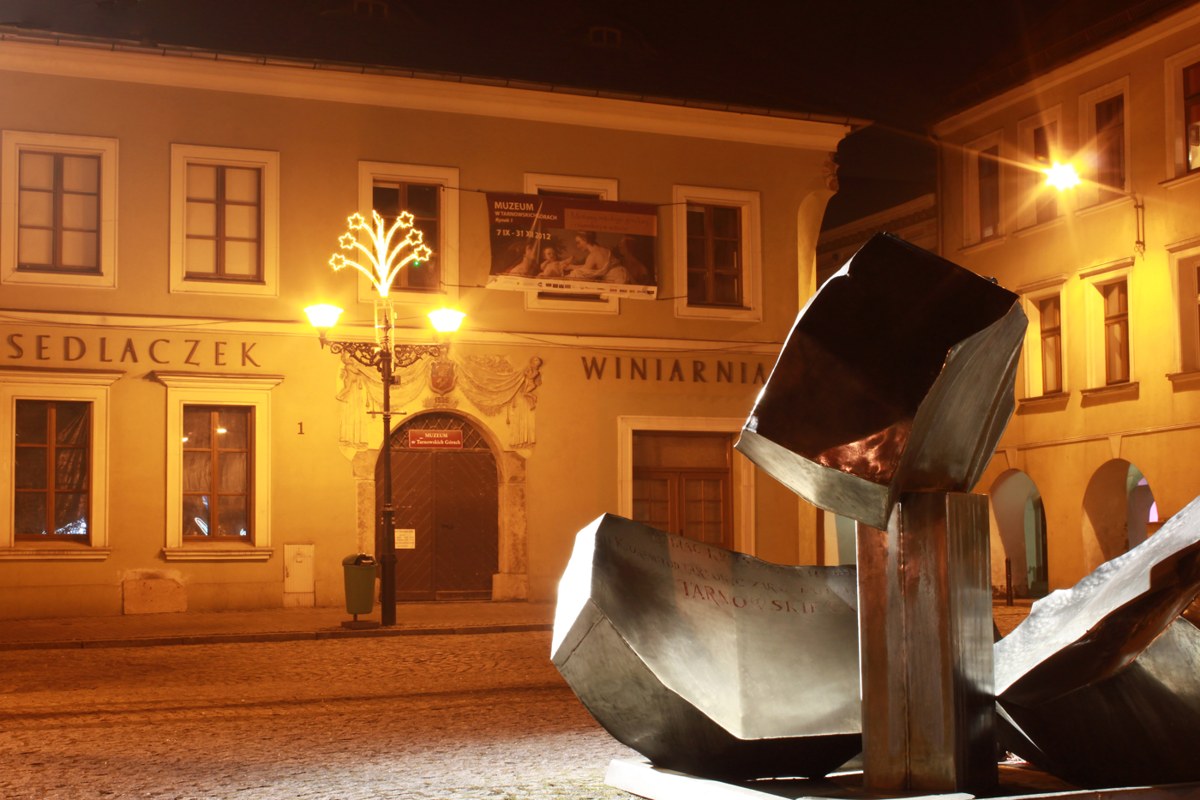
Sedlaczek townhouse, photographed in 2013. Photo: Anna Piernikarczyk. Photo: Anna Piernikarczyk. Wikimedia Commons source. CC BY-SA 3.0 pl. Resized and re-encoded; photo derivative under the same license.
Choose the museum on the square, not the silver mine
Tarnowskie Góry has several attractions whose names can make a first visit confusing. The town museum discussed here is Muzeum w Tarnowskich Górach, in the Sedlaczek townhouse at Rynek 1. Its exhibitions occupy the first floor above the street-level businesses. This is a museum about the town, its people, art and local history, rather than the underground route at the Historic Silver Mine. A museum ticket should not be treated as a mine reservation, and a mining excursion does not establish opening hours or access arrangements at the townhouse.
The location is useful if you want to understand the town before looking around its streets. The permanent exhibitions connect mining and industry with civic life, religious communities, railways and the people who shaped the area. They offer more than a collection of mining tools. You can give the museum your attention as a separate visit, or combine it with time around the market square without assuming that several different attractions share a ticket, an entrance or a timetable.
Weekly hours and the November closure
The current Polish visitor page lists Tuesday to Friday opening from 10:00 to 16:00, Saturday from 10:00 to 15:00, and Sunday from 12:00 to 17:00. Monday is closed. The cashdesk closes half an hour before the museum, so arriving at the published closing time will not work for buying admission. On Saturday, in particular, the shorter day makes a late-afternoon plan unsuitable. Allow time to get upstairs, buy a ticket and look at the displays rather than treating the desk deadline as a suggested arrival time.
The same page publishes a separate list of exceptional closures for 2026. It includes 11 November, so the ordinary Wednesday timetable is not a promise of access on that public holiday. The museum also reserves the right to close individual exhibitions or change visiting arrangements. Check the dated visitor notices before setting out, particularly for a holiday or a visit focused on one room. An old announcement about a past room closure is not evidence that the whole museum remains closed today.
Tickets, families and the Friday rule
Ordinary admission currently costs 15 zł, with a reduced ticket at 6 zł. The listed group ticket is 6 zł per person for a group of at least five. The family ticket costs 20 zł for up to six people, including no more than two adults and children or young people under 18. Those definitions matter more than the attractive headline price: a party of friends is not automatically a family group, and a larger household should check which tickets cover everyone.
The visitor page identifies several reduced-admission categories, including pupils, students, people over 65, pensioners, people with disabilities and their carers, and teachers. It also lists free categories, including children under seven, museum workers and ICOM members. Bring the document supporting any concession rather than expecting staff to infer eligibility. The published family-card arrangements include reduced-price entry for Karta Dużej Rodziny and a separate percentage discount for the local Rodzina 5+ card. Ask which arrangement applies instead of stacking discounts yourself.
Friday admission to the exhibitions is free under the general visitor rules. A resident-card promotion also mentions free Friday visits, but the ordinary visitor page and museum regulations do not limit that weekly free day to cardholders. This is a useful distinction for newcomers who have not joined the municipal programme. Free entry does not mean the museum stays open later, and it should not be read as a promise that a paid event or a reserved guiding service becomes free too.
Tickets are sold at the reception point just beyond the entrance to the exhibitions. The museum says it accepts cash, payment cards and BLIK. This is useful practical information, but it does not remove the need to check the day's opening arrangements. If you are bringing a school group or need a particular service, organise that service first rather than arriving with only the admission price in mind.
Book English guiding as a separate service
The museum offers Polish and English guiding by advance arrangement. The listed charge is 80 zł per group in Polish and 120 zł in English, ordinarily for up to 30 people. Admission tickets are additional. The service can cover museum exhibitions or the Church of the Saviour, so be explicit about which visit you are requesting. A quoted guiding price does not establish that both places are included in one outing or that a guide is available at your preferred time.
The regulations say to request guiding at least three days before the planned visit. The museum's reply accepting the reservation is what makes it binding; sending an email alone is not a confirmed booking. Use [email protected] or telephone 32 285 26 07, extension 23, and include your preferred date, language, group size and subject. If someone needs an adapted route, describe that need at the same time. Cancel an accepted guiding reservation if the group cannot come.
Read the town through its objects
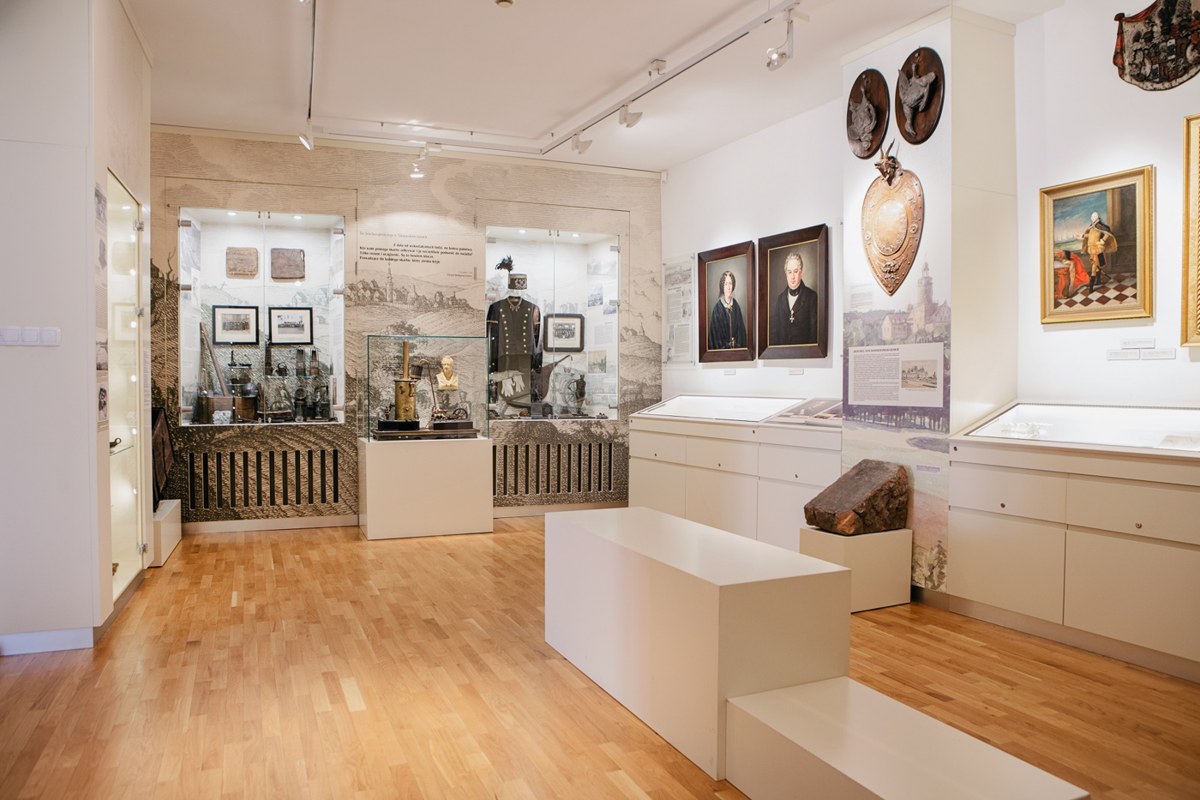
The largest permanent exhibition, Z dziejów Tarnowskich Gór, occupies three rooms. Its opening section connects early settlement and the town's beginnings with mining and metallurgy. Among the objects highlighted by the museum are historic tools, anniversary souvenirs and a nearly century-old steam-engine model from the local mining school. A processional painting of Saint Barbara places the patron saint within a mining landscape. These objects give a more specific local story than a generic account of industrial Silesia.
The civic section includes portraits of mayor Anton Klausa and his wife Paulina, copies of important municipal documents and material about distinguished visitors. Another part considers the Henckel von Donnersmarck family, including surviving items connected with their lost palaces at Świerklaniec and Repty. The museum identifies a portrait of Guido Henckel von Donnersmarck by Franz von Lenbach. Local businesses, the Sedlaczek wine establishment, pewter objects and guild material bring the story back from prominent families to the town's working and commercial life.
The later rooms address railways, associations and the town's different religious communities. The shooting brotherhood, founded in 1780, is represented through commemorative targets and cups. Masonic material relates to the Silberfels lodge. Separate displays cover Catholic, Protestant and Jewish life, including ritual vessels from the former synagogue. Further sections consider the Silesian uprisings, the plebiscite, the town's incorporation into Poland in 1922 and military units stationed here between the wars. The museum acknowledges that limited space leaves many later twentieth-century subjects outside this exhibition.
The Renaissance room is part of the building's story
The Renaissance room combines the townhouse interior with a gallery of Western European painting. The museum's account describes the painted ceiling's discovery in 1956 and subsequent conservation. It is worth noticing the room as an interior, not treating the paintings as if they were shown in a neutral modern gallery. The setting helps explain why an ordinary-looking town-square address can contain a different kind of museum experience upstairs.
For an English-speaking visitor, a reserved guide can help connect these collections rather than simply translate object names. Do not assume that every label or activity is available in English because the museum maintains an English visitor page. Ask about the service you need. Likewise, an exhibition title in the online catalogue is not a guarantee that every room will be open during a special event or temporary closure.
Take the physical barriers seriously
The museum's architectural declaration describes a demanding route for visitors with mobility needs. The entrance has manually opened doors and a threshold. The first-floor exhibitions are reached by stairs, preceded by an additional step without a handrail. Upstairs, some rooms are separated by narrow passages, thresholds, steps, stairs and slopes. The toilet is not adapted for people with mobility disabilities. These details should not be softened into a claim that help from staff makes the building step-free.
There is a tactile floor plan upstairs, but the declaration says there are no induction loops and no on-site sign-language interpreter. Assistance dogs are allowed. Contact the museum before travelling if you need a particular route or support, using [email protected] or 32 285 26 07. Describe the actual barrier you need to avoid. An answer about reaching reception may not settle whether you can reach every exhibition room or use the toilet.
The access declaration also distinguishes public exhibitions from the attic offices and technical rooms, which are not open to visitors. Keep that distinction in mind when asking what an alternative arrangement can cover. A map of the building is useful orientation, but it does not remove a flight of stairs. If one member of your party cannot follow the normal route, agree the practical plan before buying related travel or organising the rest of the day around an upstairs visit.
Keep the station branch separate
Dworzec Kultury is a different museum-operated venue in the railway-station building. It contains a contemporary-art gallery and the Tarnowskie Góry model railway. Its published hours are Tuesday to Sunday, 10:00 to 17:00, with free admission and last entry half an hour before closing. The model runs on the hour and half-hour. Organised groups require advance arrangements. Do not transfer the square museum's Friday-only free rule, family ticket or Sunday opening time to the station branch.
For the square museum, the operator places the bus and railway stations about 800 metres away and describes a route via Piłsudskiego, the Ranoszek roundabout, Plac Wolności and Krakowska. Treat that distance as an orientation, not a guaranteed walking time or an accessible-route assessment. Before leaving, settle the exact building, check exceptional closures, choose the right ticket and confirm any guiding or access arrangements. Those checks make this small-town museum much easier to enjoy without an avoidable detour.
Frequently asked questions
Do I need a resident card for free Friday entry?
No. The general visitor page and rules state free Friday exhibition admission.
Is English guiding included in the admission ticket?
No. English guiding is 120 zł per group plus admission, by advance accepted reservation.
Sources
- Official visitor hours, prices and guiding rules (checked 8 November 2026)
- Building-specific access declaration (checked 8 November 2026)
- Permanent town-history exhibition (checked 8 November 2026)
- Renaissance room and painting gallery (checked 8 November 2026)
- Separate station branch visitor information (checked 8 November 2026)
- Resident-card promotion, March 2025 (checked 8 November 2026)