Polish Driving 101: Licences, Road Rules, Parking and Fines
The essentials: EU licences are valid indefinitely. Non-EU convention licences (Canada, US, UK) work for six months after you become a resident - then you need a Polish licence by exchange. Limits: 50 in town, 90 on country roads, 120-140 on fast roads. Speeding fines run 50-2,500 zł.
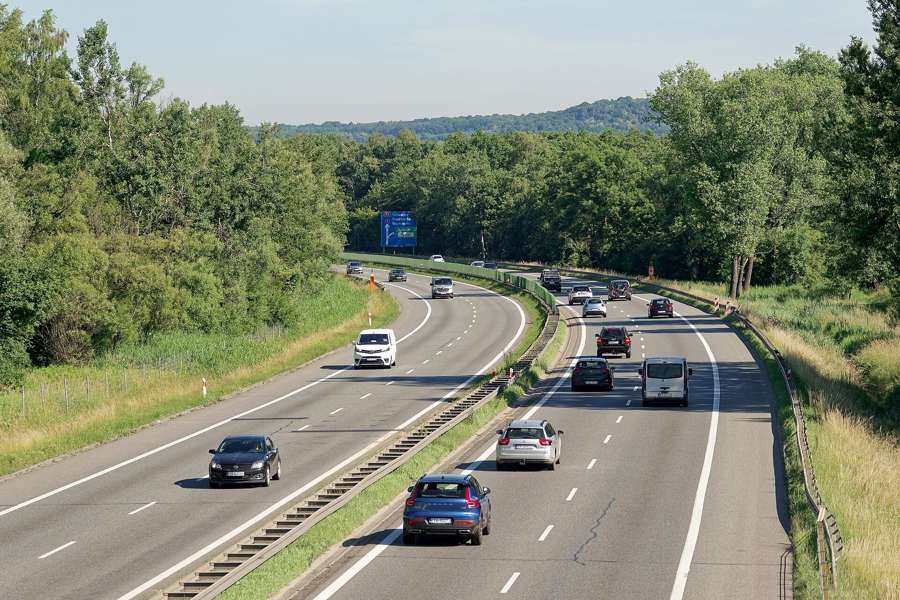
Driving in Poland as a foreigner is straightforward once you know three things: whether your licence is valid here, how the speed-limit system works, and how expensive the mistakes are. Fines have risen sharply in recent years, and Polish roads mix brand-new motorways with narrow local streets. This guide covers licences, limits, fines, parking, tolls and the rules that catch newcomers out.
Can you drive on your foreign licence?
It depends where the licence was issued:
- EU/EEA licences are fully valid in Poland. You do not need to exchange an EU licence for a Polish one, no matter how long you stay.
- EU/EEA and Swiss licences are fully valid in Poland for their entire validity period, with no exchange ever required (Article 5(6) of the Act on Vehicle Drivers).
- Non-EU licences from states in the Geneva (1949) or Vienna (1968) road-traffic conventions - which together cover, among others, the United States, Canada and the United Kingdom - let you drive in Poland as a visitor. The decisive rule for anyone who settles is Article 5(4) of the Act: a convention licence entitles you to drive in Poland for only six months from the day you begin permanent or temporary residence. After that, you may drive only with a Polish licence obtained by exchange. An International Driving Permit does not extend this limit - under Article 5(3) it is a companion document valid only together with your national licence.
- Licences not following the convention models need an IDP alongside them to be usable at all, and exchanging them additionally requires passing the theory part of the Polish state exam plus a sworn translation.
The exchange is done at your local district office (starostwo powiatowe): an application with a photo, ID or passport, a residence document, proof of registered address and a copy of your foreign licence, plus a 100 zl issuance fee; an expired licence also needs a medical certificate. Formally the application is filed on your own request, and the official service is framed for people who have lived in Poland for at least 185 days - but because recognition lapses six months after residence begins, a resident who wants to keep driving has no real alternative to exchanging. The office confirms what applies in your case.
Data source: gov.pl, "Exchange a foreign driving licence for a Polish one", checked 21 October 2026.
Speed limits: learn the pattern
Polish speed limits follow a simple grid for cars, motorcycles and vehicles up to 3.5 tonnes:
- 50 km/h in built-up areas (60 km/h between 23:00 and 5:00);
- 90 km/h outside built-up areas on ordinary single-carriageway roads;
- 100 km/h on dual-carriageway roads outside built-up areas and on single-carriageway expressways;
- 120 km/h on dual-carriageway expressways;
- 140 km/h on motorways (autostrady).
Vehicles over 3.5 tonnes are capped at 80 km/h on motorways and expressways. Two things override the grid: posted signs always win - road managers frequently impose lower limits for safety, noise or technical reasons, especially in tunnels and on older expressway sections - and the 30 km/h school zones and traffic-calmed areas are common in cities.
Data source: GDDKiA, "Speed limits on motorways and expressways" (gov.pl, 3 June 2024) and the Road Traffic Act, checked 21 October 2026.
Fines and penalty points
Poland's fine schedule (taryfikator) for speeding runs from 50 zł for exceeding the limit by up to 10 km/h to 2,500 zł for 71 km/h or more over, with one to fifteen penalty points attached. Typical steps: 100 zł at 11-15 km/h over, 200 zł at 16-20, 400 zł at 26-30, 800 zł at 31-40, and 1,500 zł at 51-60 km/h over. Above 30 km/h over the limit, repeat offences within two years of a conviction cost double.
Points are separate from fines and accumulate on your record; the current points table comes from a 2026 interior-ministry regulation applied from 3 June 2026. One threshold every foreign driver should know: exceeding the speed limit by more than 50 km/h in a built-up area means your licence is retained for three months.
Data sources: Police fine-schedule page (policja.gov.pl) citing the Council of Ministers regulation of 30 December 2021 with later amendments, and the 2026 speeding-fine breakdown at porachuj.pl, 1 October 2026, checked 21 October 2026.
Alcohol: effectively zero tolerance
Poland has one of the strictest drink-driving regimes in Europe. Driving with 0.2 to 0.5 per mille of blood alcohol is a misdemeanour (stan po uzyciu alkoholu); above 0.5 per mille is a crime under Article 178a of the Criminal Code, punishable by up to three years in prison, alongside a lengthy driving ban and a high financial penalty. The only safe rule is none at all - the morning after counts too.
Data source: Polish Police guidance on states of intoxication (policja.gov.pl), checked 21 October 2026.
Parking in Polish cities
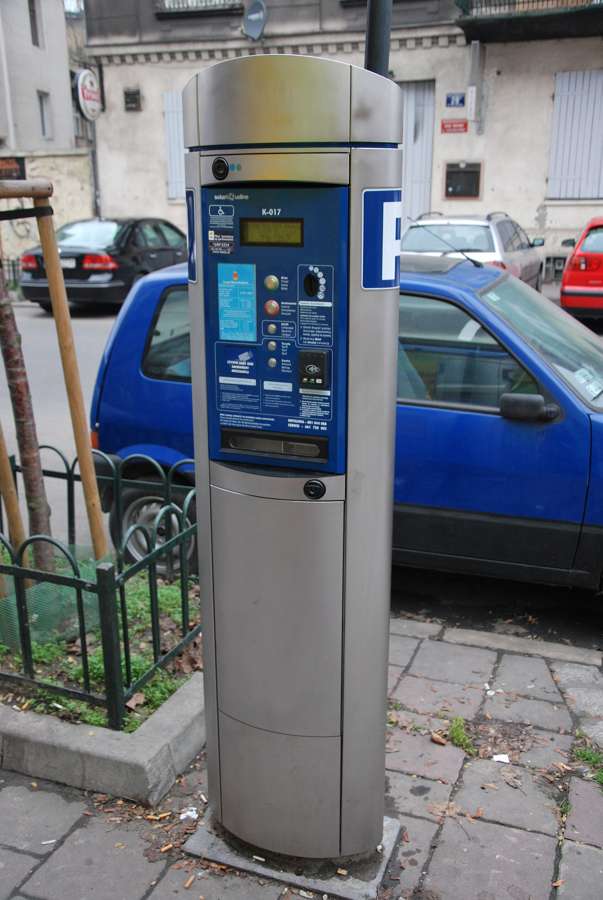
City centres run paid parking zones (strefa platnego parkowania, SPP): pay at the street meter or in a mobile app during charging hours, typically weekdays daytime. Rates, hours and zone maps are set by each city, so check the local rules where you park; unpaid parking draws an additional charge notice. Since the 2022 rule changes, parking on pavements is allowed only where a sign permits it and enough width is left for pedestrians - the era of the half-on-the-kerb default is over, and enforcement in big cities is active.
Data source: municipal paid-parking-zone rules and the Road Traffic Act, checked 21 October 2026.
Motorway tolls
Most Polish motorways are free for cars, but three state sections charge tolls: the A1 Gdansk-Torun section, the A2 between Konin and Strykow, and the A4 between Wroclaw and Katowice (Sosnica). Cars pay at toll plazas or through the e-TOLL app; vehicles over 3.5 tonnes pay across the whole state network via e-TOLL. Private concession sections have their own payment gates. Always check the route before a long drive - toll sections are clearly signed.
Data source: GDDKiA toll information (gov.pl), checked 21 October 2026.
Everyday rules that catch foreigners out
- Headlights all day, every day. Dipped beams are mandatory around the clock, all year.
- Reflective vest. If you leave your vehicle on a road outside a built-up area - a breakdown, a flat tyre - you must wear a reflective vest. Keep one in the car, not the boot.
- Right-hand priority. At unsigned junctions, traffic from the right has priority - including in residential streets.
- Trams have priority in most situations and can pass on either side; watch the tracks in city centres.
- Winter tyres are not mandated by law, but insurers and common sense strongly favour them from November to March.
- Children need appropriate child seats, and a child under 150 cm must not ride without one.
Insurance and documents you must carry
Third-party liability insurance (OC) is mandatory for every vehicle on Polish roads - driving an uninsured car brings a steep penalty from the Insurance Guarantee Fund (UFG), scaled to vehicle type and how long the coverage lapsed. Keep proof of insurance, the vehicle registration certificate (dowod rejestracyjny) and your driving licence with you on every trip; police can ask for all three at any stop. If you bring a foreign-registered car to live in Poland long-term, look into the re-registration and excise rules early - residents are generally expected to register their car in Poland.
Data source: UFG mandatory-OC rules and the Road Traffic Act, checked 21 October 2026.
If the police stop you
Roadside checks are routine: documents, sobriety, sometimes a quick look at the car. Stay in the vehicle unless told otherwise, switch off the engine and hand over documents when asked. Fines can be issued on the spot and paid by card at the patrol car - always take the receipt, which confirms what the fine was for. Speed-camera fines arrive by post to the registered owner. Penalty points are recorded against your licence; foreign residents exchange information under EU rules, so a Polish offence can follow your licence home.
Data source: Polish Police road-traffic guidance (policja.gov.pl), checked 21 October 2026.
Road quality and driving culture
Poland's road network has transformed in two decades: motorways and expressways now link every major city, and the main corridors between Warsaw, Krakow, Wroclaw, Gdansk and Poznan are fast and modern. Off the fast network, expect narrower two-lane roads, village traffic, unmarked agricultural vehicles and, in winter, ice and short daylight hours. Polish drivers have a reputation for assertive overtaking and tight tailgating on single-carriageway roads; drive defensively, keep your distance and do not be pressured into speed. Section speed control (odcinkowy pomiar predkosci) operates on many fast roads, so a quick brake before a camera does not help - average speed is measured over kilometres.
Frequently asked questions
Is my foreign driving licence valid in Poland?
EU/EEA licences are valid without any exchange. Non-EU licences from Geneva or Vienna convention countries - including Canada, the US and the UK - let you drive as a visitor, but for only six months from the day you begin permanent or temporary residence in Poland. After that you need a Polish licence, obtained by exchange at the district office.
What is the speed limit on Polish motorways?
140 km/h for cars, motorcycles and vehicles up to 3.5 tonnes; 120 km/h on dual-carriageway expressways. Posted lower limits always override the defaults.
How much is a speeding fine in Poland in 2026?
From 50 zł for up to 10 km/h over the limit to 2,500 zł for 71 km/h or more over, with 1-15 penalty points. Exceeding the limit by over 50 km/h in a built-up area means losing your licence for three months.
What is the drink-driving limit in Poland?
Between 0.2 and 0.5 per mille is a misdemeanour; above 0.5 per mille is a criminal offence under Article 178a of the Criminal Code, with up to three years in prison. In practice, do not drive after any alcohol.