Power Cuts in Poland: Who to Call and What to Check
The essentials: First check for immediate danger. Use 112 when life or property is threatened, then identify whether the problem affects your flat, building or neighbourhood and contact the appropriate administrator or distribution operator.
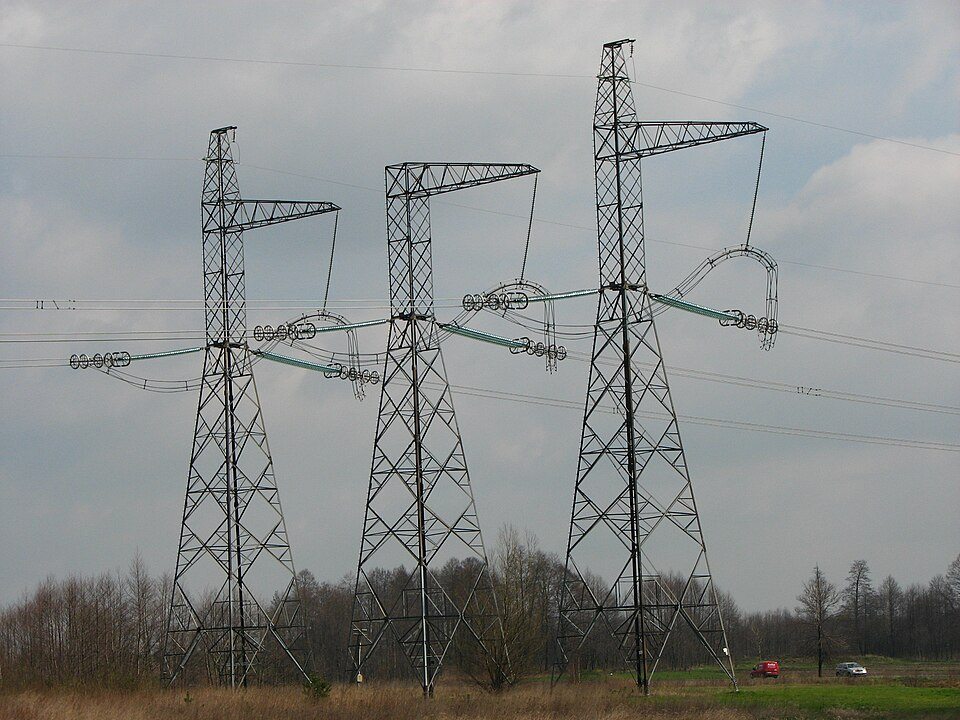
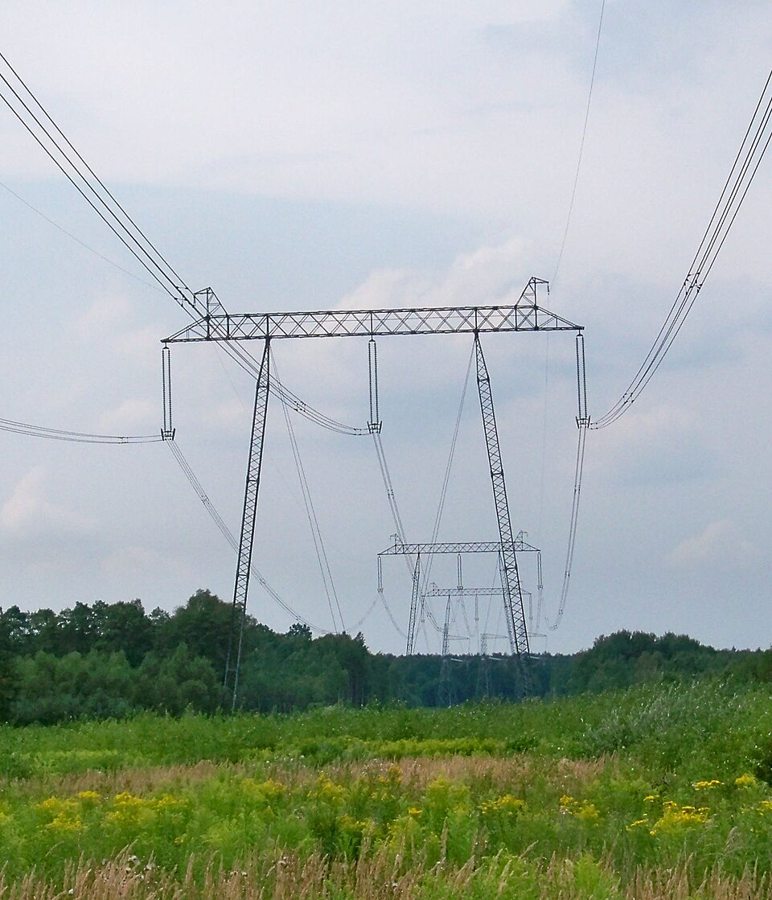
Illustrative power-line photograph in Nienadówka, Poland, taken in 2007, not evidence of a current outage or damaged equipment. Photo: Krzysztof Lasoń (Krzys L) / Wikimedia Commons, CC BY-SA 3.0. Resized and re-encoded under the same licence.
When the lights go out in Poland, the first useful question is not which electricity company to blame. It is whether the problem affects your flat, your building or the surrounding area. That distinction helps you reach the right person without attempting unsafe electrical work. A dark kitchen, a dark stairwell and a street-wide interruption can have different causes and different repair routes.
This guide brings together government safety advice, distribution-operator instructions and the energy regulator's current consumer information, checked on 2 November 2026. It explains what to record, where to look and when to escalate. It is not an electrical repair manual, a live outage alert or a promise that power will return at a particular time.
Start with danger, not the outage map
If there is a threat to life or property, call 112. Poland also has the electricity emergency number 991, listed on the government's emergency-number page. For a suspected damaged network, use the relevant operator's urgent reporting route. Do not wait for an online form to be processed if you can see fallen wires, an open transformer station, fire or another immediate hazard.
Stoen Operator explicitly asks people to urgently report broken overhead wires, open transformer-station doors and damaged cable equipment, and says emergency services should also be notified through 112 when life or property is threatened. Give the location from a safe position. Do not approach a cable to check whether it is live, move it out of the road, open a cabinet or enter a technical enclosure. Keep others away while following emergency-service instructions.
A normal loss of light is different from smoke, electric shock, a burning smell or water reaching electrical equipment. Tell the call handler what you actually observe rather than diagnosing the fault. If someone depends on powered medical equipment, use their agreed emergency plan and seek urgent help if their health is at risk. An outage estimate is not a medical backup plan.
Work out the scope without dismantling anything
TAURON Dystrybucja uses a simple three-part distinction: if only your home has no power, check its protective devices; if the stairwell or whole building is affected, contact the administrator or owner; if the neighbourhood is affected, check the operator's outage map. Stoen similarly distinguishes internal-building problems from faults on its electricity network.
| What you notice | Useful next step | Do not assume |
|---|---|---|
| Only your flat or a part of it is dark | Make a safe visual check, then contact the landlord, administrator or qualified electrician when needed. | That the distribution grid is responsible. |
| Several flats or common areas are dark | Tell the building administrator and check the network notice for the address. | That the fault is definitely outside the building. |
| Nearby buildings also have no power | Check the correct distribution operator's current interruptions and report an unlisted fault. | That every address shares the same circuit or restoration time. |
| There are damaged wires, fire or another immediate danger | Use urgent operator and emergency-service routes from a safe position. | That a map update or web-form receipt is enough. |
Checking does not mean removing covers, touching exposed components, breaking seals or repeatedly resetting a device that trips again. In an unfamiliar rented flat, ask the owner to explain the normal accessible controls. Leave diagnosis and repairs to an authorised professional. Lighting in a neighbouring stairwell is useful context, but it is not a technical test of your own installation.
Find the distribution operator, not only the seller
The company selling your energy and the company operating the local wires have different roles. For a network interruption, find the distribution operator shown in your supply documents or ask the person responsible for the building's electricity account. Do not choose an operator solely because its name appears in an advertisement or a search result for your city.
If utilities are handled through your landlord, ask for the operator's name and the correct premises or supply-point information. You can report an observed hazard without first assembling every billing reference, but a precise address helps staff locate an ordinary outage. Keep your bill and account details private: use the operator's own contact channel rather than posting a full bill in a public residents' group.
For the Warsaw network it serves, Stoen's checked instructions give 22 821 31 31 and its outage portal as network-reporting routes. TAURON's checked page gives 991 for calls from its service area and 32 303 0 991 for calls from outside that area, with the latter charged according to the caller's telecom tariff. These are operator-specific instructions, not interchangeable nationwide customer-service numbers.
Check planned work and current interruptions
Use the operator's official page for the exact address. TAURON publishes planned and emergency interruptions on its outage page. Energa-Operator has a current-interruptions map, while Stoen links its planned-interruptions and faults portal from its own instructions. A map can help distinguish announced maintenance from a newly reported failure, but it cannot prove that your flat's internal wiring is sound.
Energa warns that mapped areas and estimated restoration times are approximate and may change. It says updates can be delayed by several minutes, and emergency notices may cover large areas or groups of customers. TAURON also labels its map information approximate. An empty map is therefore not proof that there is no fault, especially just after the lights go out.
For planned work, Stoen says it informs low-voltage customers five days in advance using paper notices in the affected area and its online portal. Read the date, street and time range carefully. An announcement for a nearby street or a previous week does not establish what is happening at your address today. A planned end time is useful for preparation, not a guarantee that every appliance will restart at that instant.
Make a report that staff can use
Write down the address, approximate start time and whether the interruption appears to affect one flat, common areas or nearby buildings. Say whether it is a complete loss of supply or a repeated interruption. Describe visible hazards plainly and give a callback number through the official reporting channel. Ask for a reference if one is issued, and save it with the time you reported.
Useful Polish phrases include Nie ma prądu (there is no electricity), Awaria dotyczy całego budynku (the fault affects the whole building) and Zerwany przewód (a broken or fallen wire). Use only the statement that matches what you know. An English-language guide does not establish that every operator can provide an English-speaking call handler immediately.
Keep a brief timeline rather than repeatedly submitting the same ordinary report. Add new information if circumstances change, especially a newly observed danger. If neighbours already have a reference, that can help coordination, but do not assume their report covers an internal problem in your flat. The building administrator still needs to know when common installations are affected.
Keep the household safe while waiting
The government's blackout guide recommends torches and spare batteries, charged power banks, a battery radio, ready-to-eat food, water and some cash in different denominations. It suggests keeping household supplies for at least three days and at least three litres of water per person per day. That is preparation guidance for a prolonged interruption, not a prediction that your local fault will last three days.
During an interruption, the government advises conserving warmth, gathering household members in one room and limiting the opening of fridges and freezers so they retain their low temperature. Use the phone's power-saving mode. Its advice also calls for disconnecting electrical devices. Do so only where accessible and safe; do not handle plugs or equipment affected by water or visible damage.
Do not improvise a connection between a generator and the building supply. The government-hosted fire-service training material expressly warns against connecting a generator to installations powered from another source. This guide does not provide generator installation or operation instructions. Use qualified advice and the equipment's safety instructions rather than treating a power cut as a reason to experiment with household wiring or combustion equipment.
When the lights return, and when to ask about a discount
Stoen warns that supply can resume without separate notice, even while you are away. Keep that in mind when leaving appliances or tools connected. If protective devices trip again, something smells wrong or equipment appears damaged, stop using the affected equipment and get qualified help. A restored street supply does not certify every appliance in the flat as safe.
Save your outage timeline, report reference and relevant operator notice if you later seek a billing adjustment. The regulator URE explains that a bonifikata depends on the applicable quality standards, tariff or contract. Its current FAQ distinguishes different voltage groups and different types of failure, so do not rely on an old article offering one universal payment formula.
Stoen's instructions are especially clear that reporting an outage is not the same as applying for a discount. Its application asks for the place and time of the interruption and the customer's relevant account information. For an account held by your landlord, coordinate the request with that account holder. Ask the responsible company which conditions and documents apply, rather than deducting a self-calculated sum from the next bill.
Frequently asked questions
Which number is the electricity emergency service in Poland?
The government lists 991. Use the relevant operator's urgent route for network damage; call 112 when life or property is threatened. Some operators also publish geographic numbers for their own networks.
Does an empty outage map mean the fault is inside my flat?
No. Maps can lag, and mapped areas are approximate. Check the affected scope safely and report an unlisted network problem through the operator's official channel.
Should I repair or repeatedly reset the electrical installation?
No. Do not dismantle equipment, remove seals or keep resetting a device that trips again. Contact the landlord, administrator or qualified electrician.
Does an outage report automatically apply for a discount?
No. Stoen explicitly distinguishes the report from an application for a bonifikata. Eligibility and calculation depend on the applicable standards, tariff or contract.
Sources
- Government blackout preparation guide; checked 2 November 2026
- Government emergency-number list; checked 2 November 2026
- TAURON official outage instructions; checked 2 November 2026
- TAURON official reporting contacts; checked 2 November 2026
- Energa-Operator current-interruptions guidance; checked 2 November 2026
- Stoen official outage and discount instructions; checked 2 November 2026
- URE current consumer FAQ on discounts; checked 2 November 2026
- Government-hosted fire-service generator training; checked 2 November 2026