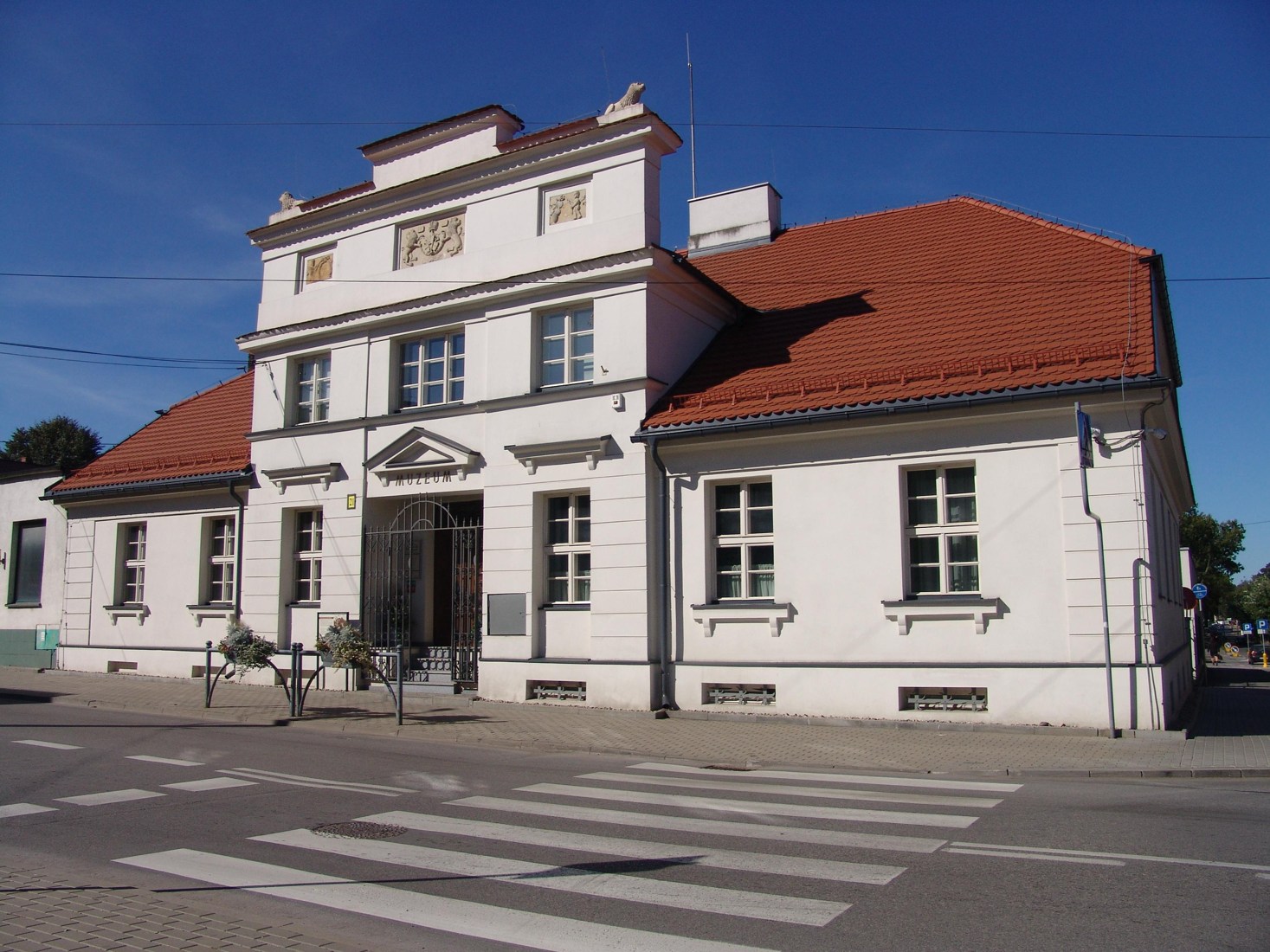
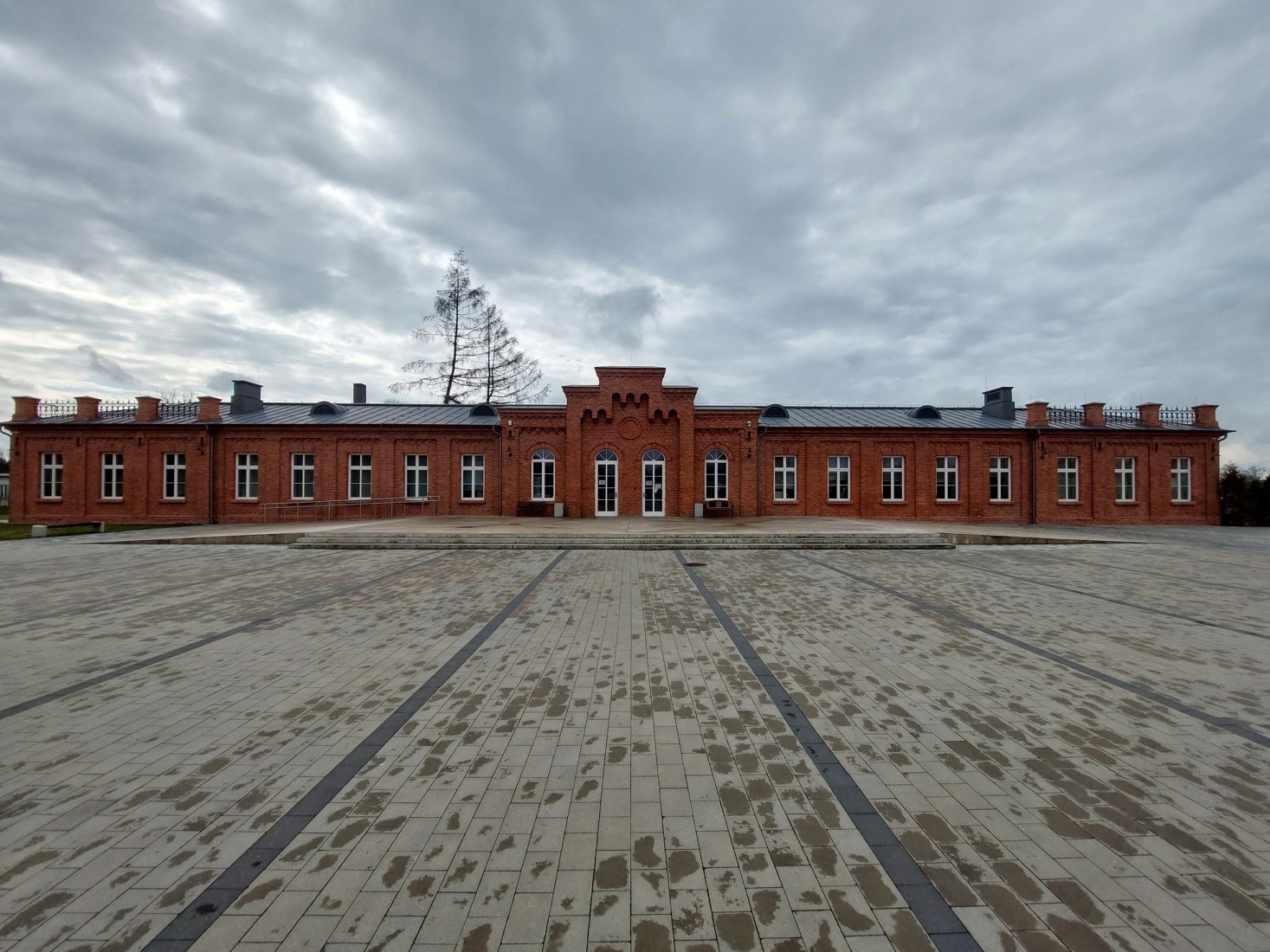
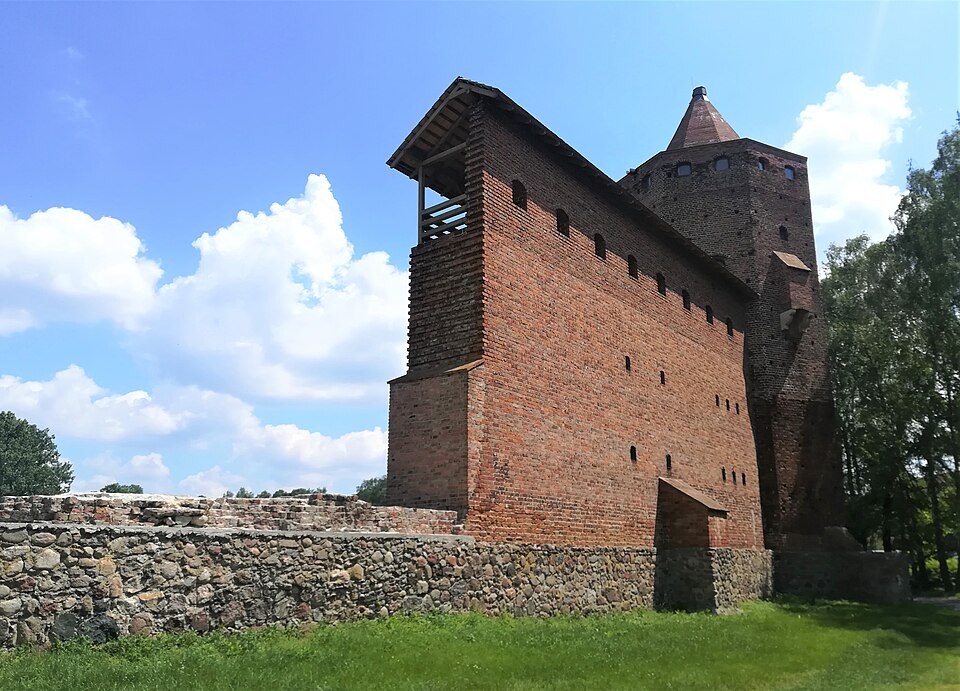
Sieradz Museum: Free Tuesday and Tubądzin Renovation Closure
The essentials: Main museum at Dominikańska 2: Tue 10:00-18:00, Wed-Fri 09:00-16:00, Sun 10:00-15:00; Monday and Saturday closed. Last entry 30 minutes before closing. Tubądzin branch closed from 19 October 2026 for renovation; ethnographic park normally April-October only.
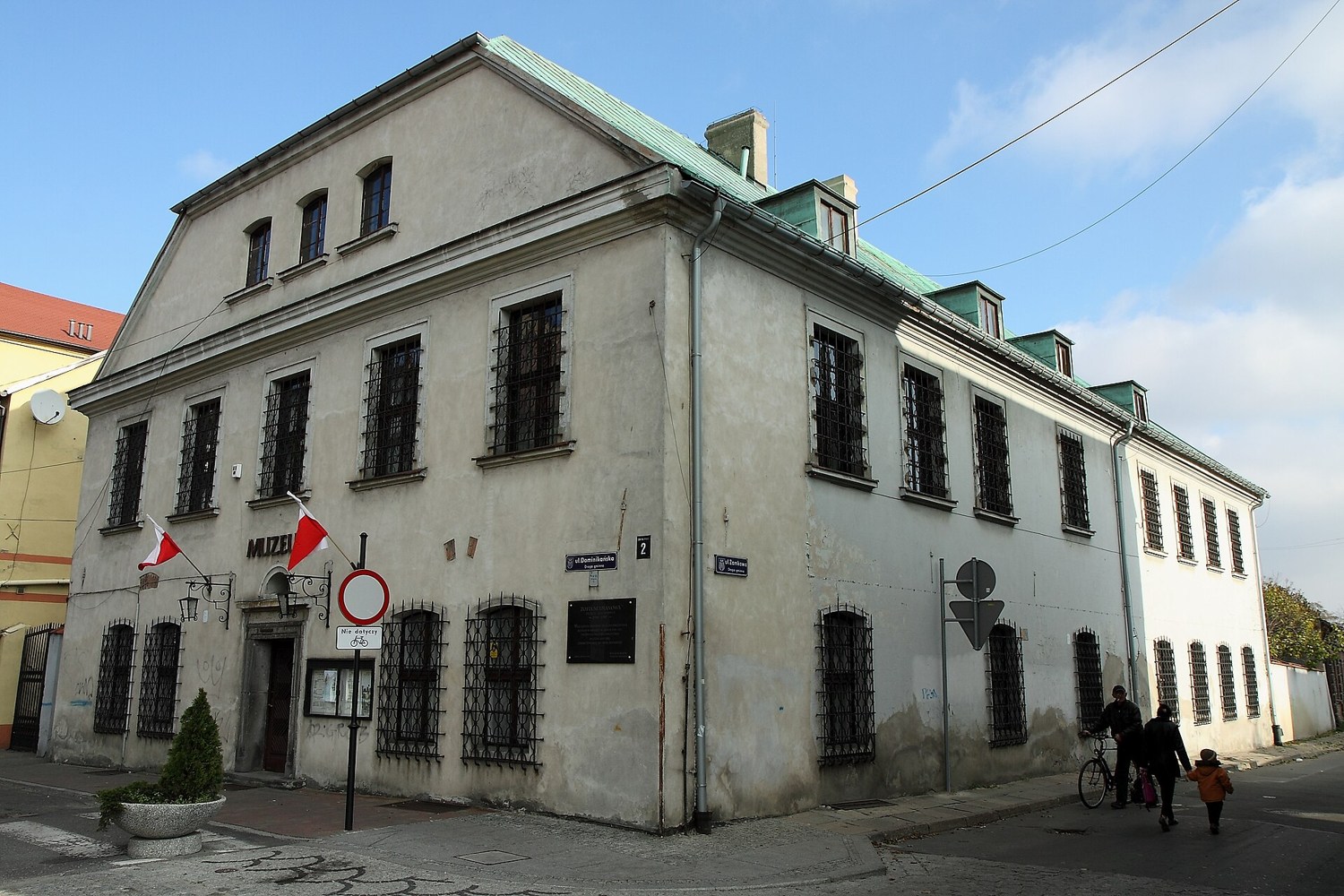
Cover: historic exterior of the regional museum at Dominikańska 2, Sieradz. Archive photograph, not a current access survey. Photo: Kurpicz / Wikimedia Commons, CC BY-SA 3.0 PL. Resized and recompressed under the same licence.
Sieradz Museum: choose the main building this winter
Sieradz's regional museum is a useful indoor stop, but its branches do not share one year-round opening promise. As checked on 27 November 2026, the main museum publishes Tuesday admission free of charge and ordinary tickets at 18 zł or 12 zł reduced. The Sieradz Ethnographic Park is outside its normal visiting season. More importantly, the Walewski Museum in Tubądzin has a specific renovation closure from 19 October 2026. Its general March-to-December timetable does not cancel that notice.
This guide separates those practical choices from the broader Sieradz weekend guide. Start with the exhibition entrance at Dominikańska 2, rather than the administrative address at Rynek 2. Check the museum's current notices before leaving, particularly around its December seasonal closure. A free-admission day does not reopen a closed branch, supply a guide or guarantee that every room is accessible.
Opening hours and the December boundary
The official visiting page gives the main museum's regular season as 2 January to 20 December. Within that period it lists Tuesday 10:00-18:00, Wednesday through Friday 09:00-16:00 and Sunday 10:00-15:00. Monday and Saturday are closed to visitors. Tuesday therefore offers the longest published visiting window as well as the free day. Do not build a Saturday outing around the assumption that a museum normally opens at weekends.
Last entry and ticket purchase are 30 minutes before closing. In the ordinary timetable that means 17:30 on Tuesday, 15:30 Wednesday to Friday and 14:30 Sunday. These are entry limits, not recommended arrival times for a full visit. The rules require visitors to leave by closing, allowing time to collect belongings. Arrive earlier if you want several exhibitions or need staff assistance between floors.
There is a small but important seasonal ambiguity. The visiting page describes a season ending on 20 December and starting on 2 January, while the 2026 regulations describe closure from 20 December to 2 January. Do not rely on either boundary date without asking. The museum also lists closures on state and religious holidays. An ordinary weekly timetable is not a holiday-opening guarantee.
Tickets, free Tuesday and Thursday's school rate
Published admission is 18 zł full price or 12 zł reduced, with a museum guide listed separately at 50 zł. Every Tuesday admission to the museum and its branches is free when those places are open. Thursday has a separate 1 zł admission rate for school-age pupils. That is not a universal Thursday ticket for adults, students of every kind or everyone accompanying a school group.
The regulations list reduced-admission categories including pupils and students, pensioners and people with disabilities with carers, subject to the appropriate documents. Children under seven and other specified categories qualify for free admission. Bring evidence of entitlement rather than expecting staff to infer it from age or circumstances. The museum also honours the national large-family card and its regional equivalent; ask which reduction applies to your party.
For a straightforward budget, two ordinary adult tickets total 36 zł before any guiding or activities. Tuesday removes the ordinary admission charge, but not automatically a separately arranged service. The published tariff does not explain a multi-building ticket's validity in enough detail to promise a single pass for every location. If you intend to move between buildings, ask the ticket desk what your ticket covers and whether any temporary exhibition has separate arrangements.
What the collections help you understand
The museum's institutional history describes a long local effort to protect regional objects, rather than a collection created in one administrative decision. Józef Stanisławski organised an antiquities and art exhibition in 1883. The later museum developed through donations and local organising, with its formal opening announced in 1937. That background helps explain why archaeology, village material culture and family collections sit together.
The archaeology department traces research across the Sieradz region, including medieval Sieradz and work at the castle hill. Anna Kufel-Dzierzgowska's discoveries included the brick rotunda associated with Leszek the Black in 1967. These are clues to the region's history, not a promise that every excavated object or excavation site is on today's visitor route. Ask which archaeological displays are currently available if that is your main interest.
The ethnographic collection gives another way into the area through clothing, ceramics, sculpture and paper cutting. Its account identifies early inventory entries as a wooden spoon, a hand-operated mortar and a silk scarf. It also describes work by paper-cutting artists from Monice and other villages. For a family visit, following how everyday materials were used can be more rewarding than trying to read every label. Collection descriptions explain the holdings, not a complete live checklist of objects on display.
Accessibility: ask about the building, not only the museum
The accessibility declaration is specific about Dominikańska 2. The visitor entrance has no threshold and is more than 90 cm wide. A gate stands behind the entrance doors; use the marked bell to call exhibition staff. Ground-floor displays are accessible for visitors with mobility impairments, and an accessible toilet is on that floor.
Access between levels involves staff-supported equipment described by the museum as a transfer platform, taking about five minutes per person. The declaration warns that moving a larger wheelchair group would take too long for everyone to visit the whole museum. Upstairs exhibitions are described as accessible by that route, but three basement rooms have passages that are too narrow. Some numismatic cases are also high and designed for standing visitors. This is partial access, not unrestricted independent access throughout.
The museum has no parking at the exhibition building. The declaration places the nearest accessible parking on the market square about 50 metres away and notes stone slabs and uneven paving on the approach. It describes a barrier-free entrance from Zamkowa to the temporary-exhibition and conference building, but different addresses appear across the declaration and regulations. Confirm the exact door and current exhibition before arranging a drop-off there.
Rynek 1 is a different case: three entrance steps lead to the communications-technology exhibition, and the museum says it has no staff member to carry wheelchairs inside. The Rynek 2 office and education building also has entrance steps. Do not transfer Dominikańska's entrance description to either address. For visitors with sight impairments, the declaration offers a free specialist guide by advance arrangement; printed guides are offered for visitors with hearing impairments. It does not establish an English-language tour service.
Why the ethnographic park is not a winter fallback
Sieradzki Park Etnograficzny is at Grodzka 1. Its normal season is 15 April to 15 October, with Tuesday-Friday 10:00-16:00 and Saturday-Sunday 10:00-17:00; Monday is closed. Those are seasonal hours, not November hours. The museum provides a virtual visit, which is a better starting point out of season than travelling there expecting ordinary admission.
Even during the season, access differs from the indoor museum. The declaration says wheelchair users can visit the grounds and agricultural-tool shelter, but grass surfaces may be difficult. Wooden-building interiors have high thresholds, narrow passages and small rooms. There is no accessible toilet on site. A pleasant-looking garden photograph cannot answer those practical questions, and free Tuesday does not remove physical barriers or seasonal closures.
Tubądzin: renovation overrides the usual season
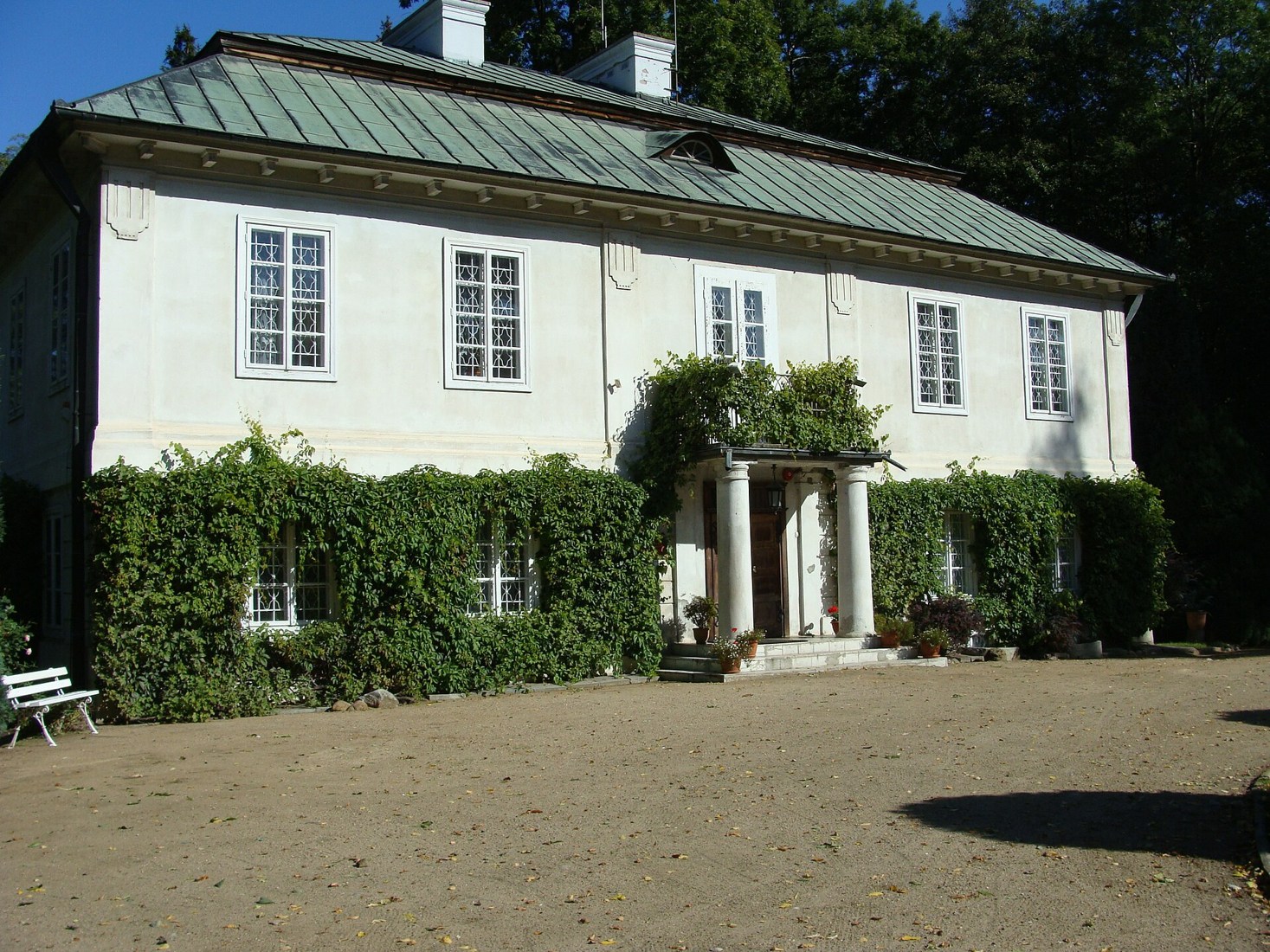
The Walewski Museum occupies an eighteenth-century manor. Its history links the house to collector Kazimierz Stanisław Walewski, who acquired the estate in 1891. After restoration, a museum of manor interiors opened in 1984; the Walewski name followed in 1999. The account describes family portraits and rooms arranged around nineteenth- and early-twentieth-century domestic life.
However, the current visiting page explicitly closes this branch from 19 October 2026 because of renovation. No reopening date is supplied there. Do not treat its underlying March-to-20-December season as a reservation or an invitation to enter the park during works. Ask the branch about reopening before planning a future trip. Its normal accessibility description also distinguishes accessible park paths from a manor interior with steps and thresholds, so eventual reopening will not itself establish full interior access.
Groups, children and the call worth making
The 2026 rules cap an organised exhibition group at 30 and require larger-group visits to be arranged by telephone. They also require coats, large bags, umbrellas, pushchairs and other bulky items to be left in the cloakroom. Families relying on a pushchair should check how that works with their children's needs. The tariff lists thematic lessons and workshops lasting 60 minutes at 10 zł per person, separate from simply walking around with an admission ticket.
Use the official contact page or call 43 827 16 39; group arrangements are also listed at 43 822 44 82. Administration works Monday-Friday 07:30-15:30 at Rynek 2, which is not the exhibition timetable. Settle four points when they matter: the available displays, the ticket's building coverage, the language of any guide and the accessible entrance or transfer equipment. That leaves the outing centred on the collection rather than an avoidable wrong door or closed branch.
Frequently asked questions
Is Tubądzin open in November 2026?
No. The official visiting page closes the Walewski Museum from 19 October 2026 for renovation, overriding its usual seasonal hours. No reopening date is given.
Is Tuesday admission free?
Yes, when the museum or branch is open. Free admission does not reopen a closed branch or automatically cover guiding and workshops.
Is the entire main museum wheelchair-accessible?
No. The declaration describes ground-floor access, assisted transfer between levels, narrow basement passages and some high display cases. Arrange the route with staff.