Swołowo Museum in Winter: Free Tuesdays, Tickets and Village Access
The essentials: Swołowo museum opens Tuesday 10:00-13:00 free and Wednesday-Sunday 10:00-16:00 in winter, except holiday closures. Admission is PLN 24/18. Start at Swołowo 15 and allow about three hours for the full route.
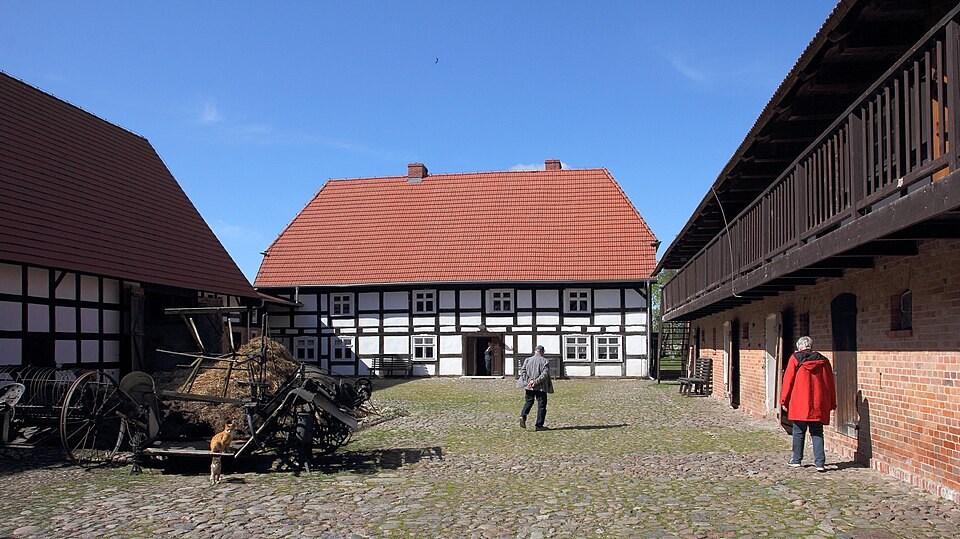
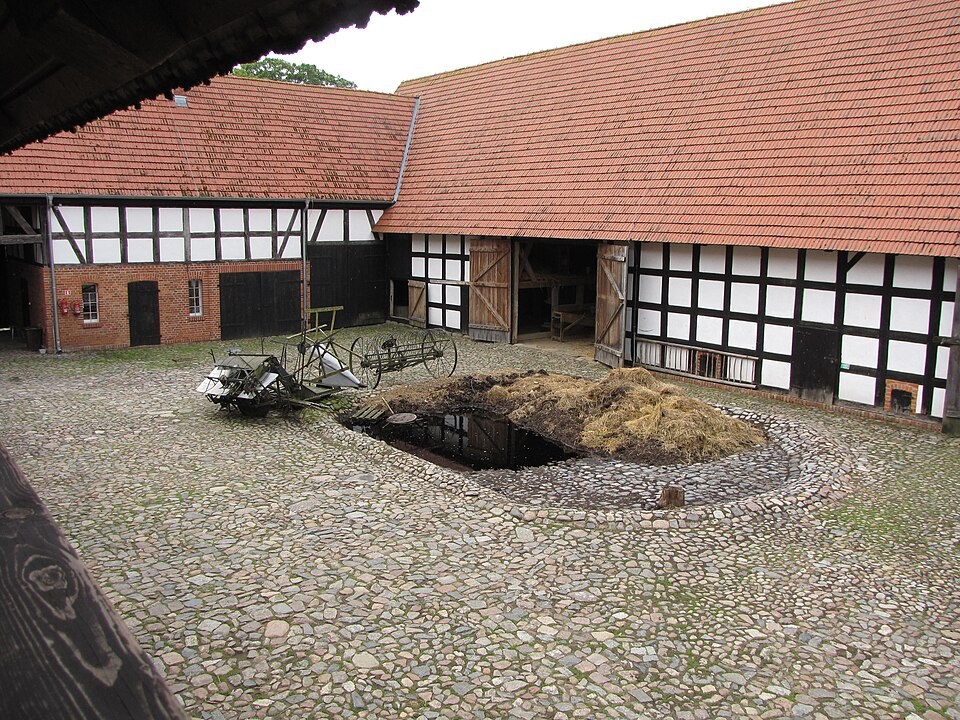
Cover: the Albrecht farmstead courtyard in Swołowo, photographed on 11 May 2019, not a current winter-conditions image. Photo: Helmut Seger / Wikimedia Commons, CC BY-SA 4.0. Resized and recompressed under the same licence.
A winter museum visit spread through a living village
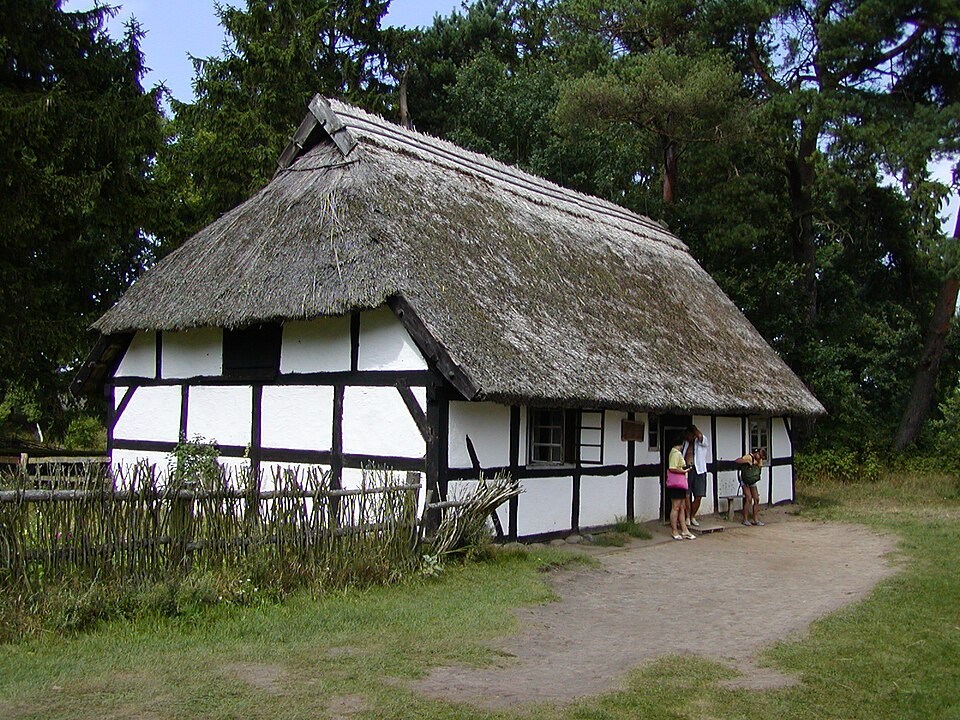
Swołowo is not a collection of cottages moved into a separate park. The Museum of Pomeranian Folk Culture occupies historic buildings within a village where people still live. Its half-timbered houses, farm courtyards and oval street plan make the village itself part of the visit, but a walk along the road is different from admission to the museum's exhibitions.
That distinction matters in winter. The museum's current visitor page describes a route through three farmsteads and two other village buildings, taking about three hours. Arriving shortly before closing does not leave enough time for that route. Nor should you treat a free Tuesday as an ordinary six-hour opening day.
This guide was checked on 28 November 2026 against the branch's visitor information, the parent museum's winter timetable and official exhibition descriptions. The practical starting point is Swołowo 15, where the current visitor and contact pages place the ticket office. Swołowo 8 is the Albrecht farmstead and the museum's administrative address, not the best address to substitute for the visitor entrance.
Winter hours: Tuesday is a shorter visit
For September 2026 through May 2027, the parent museum's dated timetable lists Swołowo as closed on Mondays, open free on Tuesdays from 10:00 to 13:00, and open Wednesday to Sunday from 10:00 to 16:00. The branch's own September-to-May schedule agrees with those hours.
Free admission applies to permanent exhibitions under the museum's published rules. It does not automatically include a paid guide, a special event or every temporary exhibition. Older information on the city tourism website gives a longer Tuesday opening and describes access to just one farmstead. Use the current museum timetable rather than building a winter plan around those older city details; ask the ticket office which buildings are included on your intended free Tuesday.
The parent museum lists closures on 24, 25 and 26 December and on 31 December, as well as 1 and 6 January. A normal weekly timetable is not a promise that the museum opens on those holidays. The branch visitor page also retains November goose-festival dates with special prices and opening exceptions. Those dates had already passed when this guide was checked and are not the price or programme for an ordinary winter visit.
Allow three hours, not a last-minute dash
The branch says that in the final hour before closing it sells a PLN 15 ticket for one selected part of the museum, and stops selling tickets half an hour before closing. That is a reduced visit, not a discounted way to complete all three farmsteads. On a normal 16:00 closing day, arrive by about 13:00 if you want to allow the museum's suggested three hours.
There is a difference between the branch and parent wording: the parent museum's general page says ticket sales end one hour before closing, while Swołowo's own page describes the final-hour single-part ticket. The safest plan is to arrive well before the last hour. If you specifically want that shorter ticket, confirm its sale and the available farmstead with the Swołowo desk before travelling.
The current arrival page gives Swołowo 15, 76-206 Słupsk as the visitor address. It places the village about 14 kilometres northwest of Słupsk and suggests parking near the entrance from the Darłowo road, then continuing on foot. It also describes parking by the museum farmsteads when approaching from the other side. These are directions, not a guarantee of an empty space.
For public transport, follow the operator links on that arrival page and check a return journey for your actual date. Do not rely on the number of daily buses in the museum's older accessibility declaration. A museum opening day does not establish that a useful winter bus connection runs.
Tickets, guides and the phone-audio option
The branch currently lists ordinary admission at PLN 24 and reduced admission at PLN 18. Children under seven enter free, with the page noting an exception for organised groups. Reduced admission requires the relevant supporting document. A 15 percent Large Family Card discount is also listed; do not assume discounts can be combined without checking the rules at the desk.
The all-sites ticket mentioned on the visitor page is valid in the May-to-October period. It is not a winter pass simply because it includes Swołowo among the parent museum's branches. Buy for the visit you are actually making, rather than comparing a seasonal multi-site product with a November single-site ticket as though they were interchangeable.
A Polish-language guided visit is listed at PLN 170, with a maximum group size of 30. A foreign-language guide is listed at PLN 200. The tariff does not by itself confirm which language or departure is available on your date. Use the branch contact details to arrange that before buying travel tickets, particularly if English interpretation is important. Do not read the guide-service price as an explicit promise that admission is included.
There is also a free Movi Guide option on your own phone. A borrowed audio device requires a signed declaration and a PLN 50 deposit, and must be returned to the ticket office no later than half an hour before closing. That return deadline shortens the time available for listening at the end of the day. The visitor page does not establish the available Swołowo audio languages, so check those rather than assuming the language list for another branch applies here.
Read the Albrecht courtyard as a working farm
The Albrecht farmstead description explains the four-sided arrangement: entry through a gate building, the house at the back, and a barn and livestock building enclosing the sides. The layout helps explain how work, storage and domestic life fitted together. It is more useful to notice those relationships than to treat each building as an isolated picturesque facade.
The museum took over the farmstead in 2002. Its history includes the German Albrecht family, their departure after the Second World War and Polish families who lived there afterwards. The house interiors were reconstructed using accounts from former German residents and early Polish settlers. The furnishings come from Swołowo and the surrounding area, rather than being presented as an untouched set of possessions left inside that exact house.
Inside, look for the division between the younger household's rooms and the separate older generation's living area, known as the Altenteil. The museum also explains that the patterned wall decoration was recreated from physical traces and archival photographs. These details make the house a source for understanding household arrangements, not simply a display of old furniture.
The livestock building also contains displays about local brewing and Pomeranian kitchens. The official description mentions historic wooden moulds for gingerbread and butter. These are useful objects to compare with the bread oven elsewhere on the route: one part of the visit explains domestic equipment, another the buildings that housed food production. A listed lesson or tasting is a separate activity, not something the ordinary ticket promises on demand.
Other buildings tell different kinds of history
At Swołowo 14, the museum describes a smallholder's house, a bread house with a large domed oven and a forge. The forge is a useful exception to the village's in-place buildings: it was moved from nearby Pęplino. The official description identifies it as the museum's only building not originating in Swołowo.
A forge containing tools does not mean a blacksmith will be demonstrating whenever you arrive. The same caution applies to bread baking, workshops and seasonal food events. Check a dated programme or book an activity if that is your main reason for coming; do not turn the museum's educational offer into a daily winter schedule.
The permanent Swołowo history exhibition at number 26 uses accounts and memories of former and present residents. Its themes include wartime forced labour, displacement, post-war settlement and later changes in village life. It adds a human history that an architectural walk alone cannot provide.
At number 39A, Effatha: folk healing rituals in Pomerania explores historical beliefs about illness, healing and ritual. The museum explicitly describes an interpretation of symbolic practices rather than an exhaustive reconstruction of medical treatment. Read it as cultural history, not health advice.
Check the particular access route you need
The museum's accessibility declaration, last reviewed in March 2021, describes thresholds in some buildings and steps to the temporary-exhibition building. It identifies adapted toilets on the ground floor of building number 2, the large barn near the route from the ticket office, and permits assistance and guide dogs.
That declaration also uses a ticket-office number that differs from the current visitor pages. For arrival, use their explicit Swołowo 15 address. For step-free entry, distances between exhibitions and which rooms can be reached, ask the branch to confirm a route for your needs rather than treating an older general declaration as a current building-by-building guarantee.
A good winter plan is straightforward: choose a non-holiday opening day, start at the correct desk early, decide whether you need arranged language support, and leave time to return any borrowed equipment. Swołowo rewards a visit that connects its courtyards, houses and residents' stories. The shorter Tuesday or final-hour ticket can still be useful, provided you choose it as a limited visit rather than expecting the full route.
Frequently asked questions
Where does a Swołowo museum visit begin?
Current visitor pages direct visitors to the ticket office at Swołowo 15. Swołowo 8 is the Albrecht farmstead and administrative address.
Is Swołowo museum free all day on Tuesday?
The winter free Tuesday timetable is 10:00-13:00. Free permanent-exhibition entry does not automatically include a guide, special event or every temporary exhibition.
Can I finish the museum in the last hour?
The full route takes about three hours. The branch describes a final-hour ticket for one selected part, with sales stopping half an hour before closing; confirm that option because the parent page uses an earlier general cutoff.
Sources
- Swołowo museum: current hours, tickets, route and audio rules
- Parent museum: September 2026-May 2027 timetable and holiday closures
- Swołowo museum: visitor address and arrival
- Swołowo museum: current branch contact details
- Swołowo museum: Albrecht farmstead history and interiors
- Swołowo museum: farmstead 14, bread house and relocated forge
- Swołowo museum: resident-history exhibition at number 26
- Swołowo museum: Effatha exhibition scope
- Swołowo museum: accessibility declaration, last reviewed March 2021
- Słupsk city tourism: older timetable and tariff, not used for current prices