Szamotuły Castle: Tickets, Free Thursday and Halszka's Tower
The essentials: ul. Wroniecka 30, Szamotuły. October-April: Tue-Fri 09:00-16:00, weekends 10:00-16:00; Mondays closed, holiday exceptions apply. Single object 8/5 zł, all objects 20/15 zł. Thursday free entry covers castle and granary only. Guides require at least seven days advance booking.
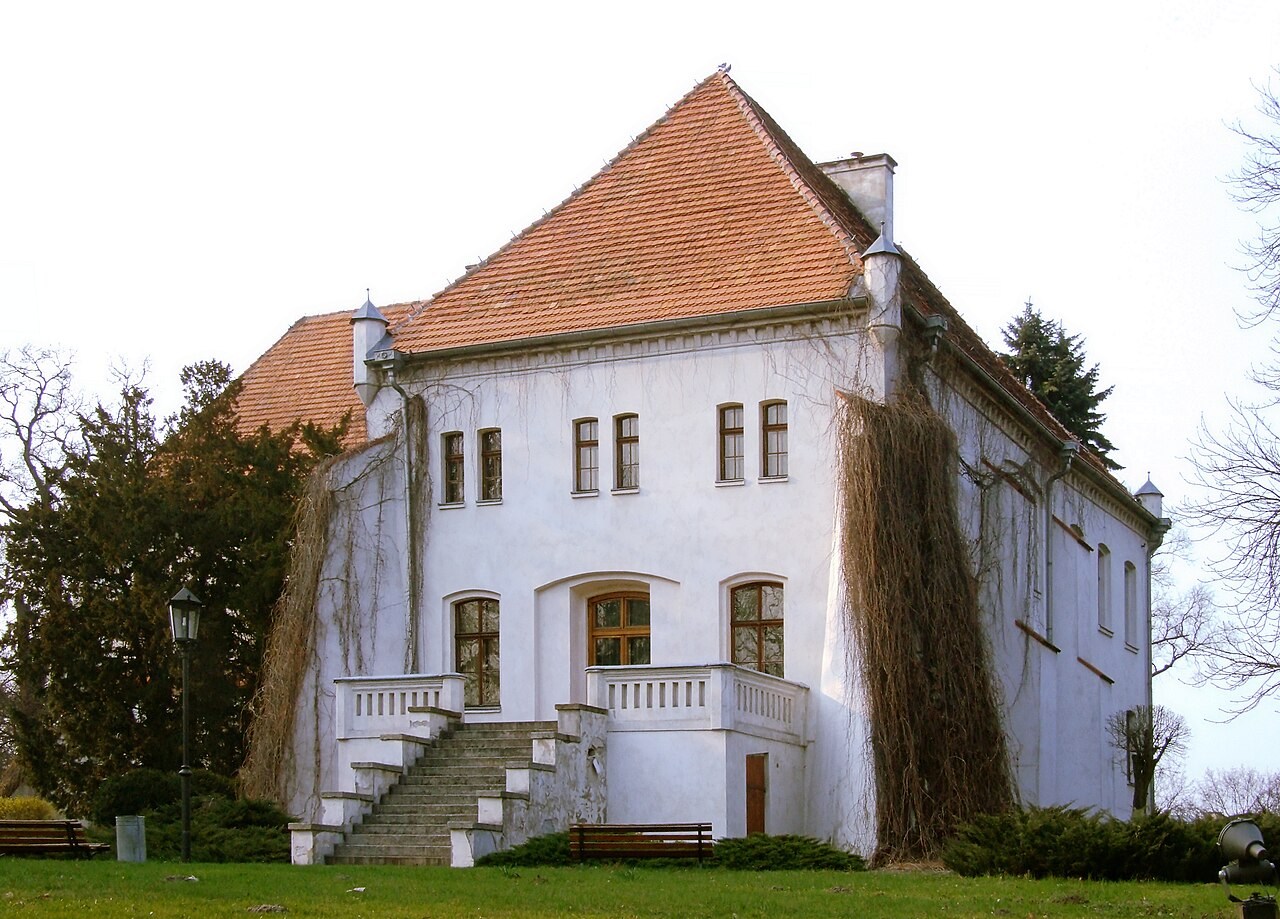
Cover: Górków Castle Museum in Szamotuły, photographed 1 April 2007. Archival grounds view, not a current access survey. Photo: Roweromaniak / Wikimedia Commons, CC BY-SA 3.0. Resized and recompressed under the same licence.
Szamotuły's Górków Castle Museum is a place where choosing the right ticket matters. The castle, Halszka's Tower, the ethnographic collection and the granary are separately priced, while a combined ticket covers all the objects. Thursday's free admission is narrower than that combined ticket: the museum names the castle and granary, not the whole complex. For an English-speaking visitor, understanding those boundaries is more useful than arriving with a vague promise of a free castle day.
The museum is at ul. Wroniecka 30 in Szamotuły. Its architectural-access declaration places the main entrance on ul. Szczuczyńska and the ticket office on the ground floor of the western outbuilding. Think of the visit as several buildings linked by outdoor paths, rather than one interior with a single entrance. That distinction affects the weather, mobility planning and how much you choose to see.
Choose the season before choosing your arrival time
The museum's opening-hours page divides the year into two seasons. From October through April, Tuesday to Friday hours are 09:00-16:00; Saturday, Sunday and holiday hours are 10:00-16:00. From May through September, Tuesday to Saturday hours are 09:00-16:00, with Sundays and holidays running 10:00-17:00. Mondays are closed throughout the year.
This makes a winter weekend visit different from a summer Saturday: the winter opening is an hour later. The page also says the museum is closed on days following holidays. Do not use the ordinary weekly timetable alone when planning around a public holiday. It gives the general framework, not a guarantee that every exceptional date follows it.
The listed closure dates include 1 January, 1 and 11 November, 24, 25 and 31 December, Holy Saturday, Easter Sunday, Easter Monday and Corpus Christi. The page lists 6 January, Good Friday, 1 and 3 May, 15 August and 26 December as open holidays, unless they fall on a Monday. Around these exceptions, check the museum's latest notice or ask directly rather than treating an open date as permission to ignore the following-day rule.
Single-building tickets or the combined ticket?
The official tariff lists normal admission at 8 zł and reduced admission at 5 zł for each of four choices: the main castle, Halszka's Tower, ethnography in the western outbuilding, and the granary. Admission to all objects is listed at 20 zł normal or 15 zł reduced. These are admission prices, separate from a booked guide.
For a normal-paying adult choosing two buildings, separate admission totals 16 zł; three would total 24 zł. The 20 zł combined option therefore becomes cheaper at three buildings. For a reduced-ticket visitor, three separate entries total 15 zł, the same as the combined price; the combined option saves money when visiting all four. These comparisons are simple calculations from the published tariff, not additional products sold by the museum.
Choose by what you actually want to see. Someone interested mainly in icons may prefer the castle alone. A visitor drawn to local history might put the tower first. A family interested in tools, clothing and domestic life may value ethnography more than another set of furnished rooms. Buying everything is not automatically the best use of a short visit.
Thursday is free for the castle and granary only
The tariff explicitly waives admission charges on Thursdays for individual visitors and groups entering the castle and granary. It does not extend that statement to Halszka's Tower or the ethnographic exhibition. If those are your priorities, budget for them and ask the ticket office which ticket arrangement fits that day's route.
Free admission also does not erase the guide tariff. A Thursday self-guided look at the named buildings and a privately booked guided tour are different services. Nor does the free-day rule guarantee a particular temporary exhibition: the granary's programme can change. Check what is on before deciding that it should be the centrepiece of your journey.
Reduced admission requires the relevant documents. The museum lists pupils and students, pensioners, PTTK members and organised groups of more than ten among eligible categories. It also lists free-entry categories, including disabled visitors with carers and children covered by its rule for those under five in non-organised groups. If relying on a concession with foreign documents, ask what evidence the desk accepts rather than assuming every overseas card is equivalent.
The castle's strongest reason to visit is its icon collection
The museum's collection account dates the beginning of its icon holdings to 1994, when objects intercepted by customs officers began arriving. This is not simply a group of devotional paintings preserved from the castle's original rooms. The collection has a separate modern history of acquisition and museum interpretation.
The museum describes roughly 1,200 objects in the wider collection and about 350 icons on permanent display. Treat those as the institution's approximate collection figures, not a promise that every listed object will be visible on your day. The holdings include tempera paintings on wooden panels, metal crosses and travelling altarpieces, and small enamel plaques. Much of the collection is nineteenth-century, with older examples also represented.
Its account identifies workshops in Russia and what are now Ukraine and Belarus, and explains differences between established icon-painting schools and small workshops serving poorer buyers. Looking at material as well as subject makes the exhibition easier to follow without specialist knowledge: a painted wooden panel, a metal travelling object and an enamel miniature served different settings and uses. Allow time for that contrast rather than treating the room as a quick list of saints.
Halszka's Tower is a local-history exhibition, not only a legend
The museum calls the tower the oldest and best-preserved element of the complex. Its tower description identifies a fifteenth-century defensive building adapted for residential use around 1518. The name connects it with Elżbieta Ostrogska, known as Halszka or the Black Princess. The museum's separate narrative about her is presented under a page titled the legend of Halszka; romantic retellings should not be confused with a documented reconstruction of every detail of her life.
The displays extend well beyond her chamber. The basement presents archaeology, including burial reconstructions from the Bronze Age through the early Middle Ages. Other levels cover the town's past from its earliest written mention through the eighteenth century, then selected subjects from the nineteenth century to 1945. The Halszka room interprets its residential function and includes a figure dressed in black made using film tape.
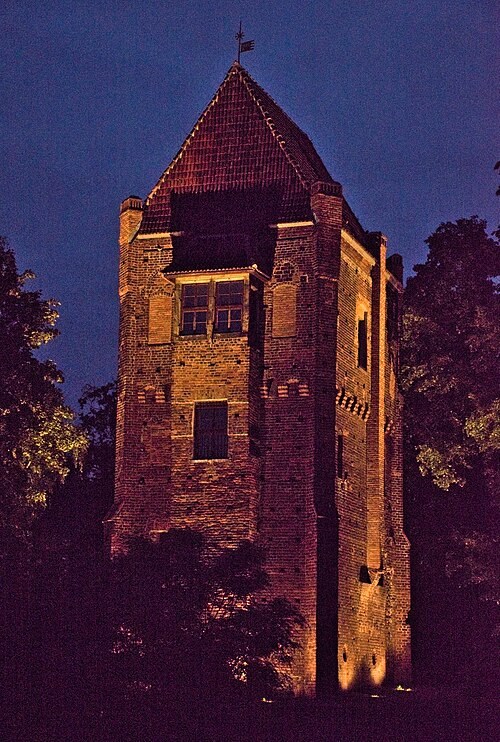
An August 2025 museum notice announced the tower's reopening from 9 August after repair work. That helps explain older reports of closure, but it is not a permanent guarantee against later maintenance. Use the current visitor information and any newer notice when organising a specific trip.
Ethnography gives the visit a different scale
The ethnographic exhibition is in the western outbuilding. Its ground floor includes blacksmithing, carpentry and weaving workshops, alongside a reconstructed rural room and adjoining storage space with domestic tools and everyday objects. Regional folk clothing is displayed upstairs.
This is the part to consider when your interest is how people worked and lived rather than the lives of castle owners. It also gives children concrete objects to compare: tools, a household interior and clothing can support a more specific conversation than an abstract chronology. That is a suggested way to use the collection, not a claim that a staffed children's activity is included with admission.
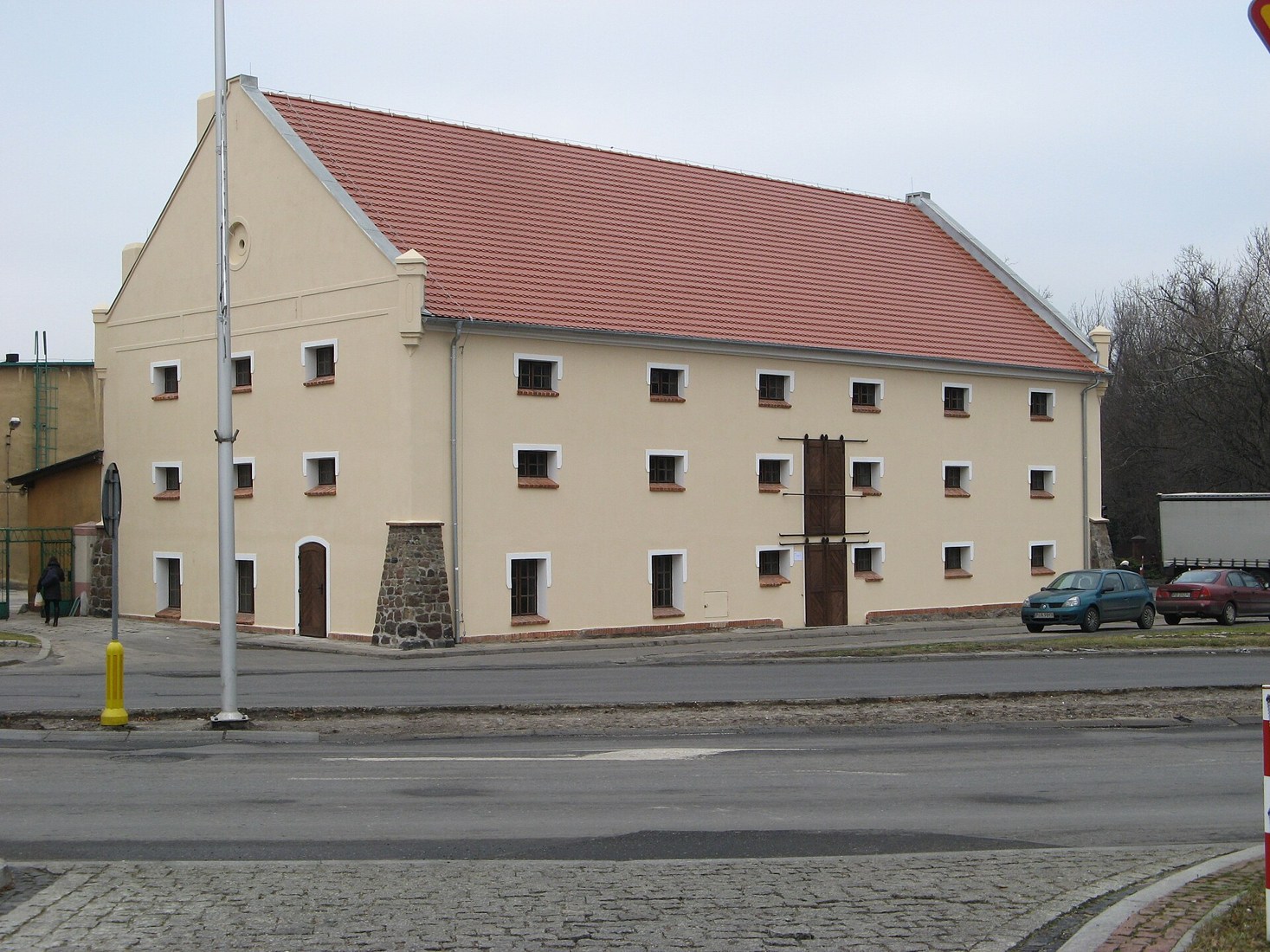
The museum's institutional history explains how the present complex grew: the regional museum opened in 1957, the castle opened to visitors in 1990, and the restored nineteenth-century granary joined the museum in 2000. Today's multi-building route is therefore a museum assembled over time, not an untouched residence with every room preserved exactly as one family left it.
Book a guide at least seven days ahead
The tariff requires guided visits for individuals and groups to be reserved at least seven days before the planned date. It lists 150 zł for a guide around the whole complex, 100 zł for one object and 100 zł for the market square and basilica. A group with one guide may have no more than 25 people; larger groups need an additional guide service. Out-of-hours guiding costs twice the basic guide fee.
Self-guided visitors do not need advance notification according to the hours page. English guiding, however, is not guaranteed by that statement or by the price list. Ask about language, availability, the buildings covered, admission on top of the guide fee and the final total before accepting a booking. Use [email protected] or +48 61 292 18 13. This guide does not reserve a time or promise an English-speaking guide.
Access is building-specific, and the declaration is dated
The accessibility declaration was prepared in June 2022. It describes paved paths between buildings, but steps without wheelchair ramps into the castle, tower and both outbuildings. It lists a ramp at the granary entrance, no lifts and no adapted toilets. These are the institution's dated descriptions, not a fresh on-site access inspection.
A ramp at one building does not establish step-free access across the whole visit. Contact the museum before travelling if steps, toilet access, assistance-dog arrangements or sensory support determine whether the trip is workable. Explain which exhibition matters and what route you need. Free admission for a disabled visitor and carer is a pricing provision, not evidence that the physical route meets their needs.
For a straightforward first visit, decide your buildings before buying, check the seasonal and holiday hours, and separate ordinary entry from guided services. On Thursday, start with the castle and the granary programme if those suit your interests. On another day, compare the combined ticket with your actual route. The reward is a visit shaped around icons, town history or regional everyday life, rather than an attempt to tick off every building regardless of time or access.
Frequently asked questions
Is the whole museum free on Thursday?
No. The official tariff waives admission to the castle and granary on Thursday. It does not extend that waiver to Halszka's Tower or ethnography, or waive guide fees.
Do I need to book?
Self-guided visits need no advance notification. Guided visits must be reserved at least seven days ahead; ask separately about English and the final admission-plus-guide total.
Is there wheelchair access?
The June2022 declaration lists a ramp at the granary but steps without ramps into the castle, tower and outbuildings, no lifts and no adapted toilets. Confirm current arrangements before travel.