How to Talk About Sexual Expectations Before a Hookup in Poland
The essentials: Say five things early: what this is, what you are into, protection, when you were last tested, and what happens after. Since 13 February 2025 Polish law requires prior conscious and voluntary consent for sex - only yes means yes, and it can be withdrawn at any point.

The conversation nobody teaches you is the one that happens between "want to come up?" and anything else: what you both expect, what is on and off the table, and what happens afterwards. In Poland this conversation has acquired a legal backbone - since February 2025, Polish criminal law defines consent as the standard, not resistance as the threshold. But beyond the law, the talk is simply what separates a good night from a story you both regret. This guide covers what to discuss, when, how to say it in Polish and English, and what the law now expects of everyone involved.
The legal frame: Poland is now a consent-law country
On 13 February 2025, an amendment to the Polish Penal Code (Dz.U. 2024 poz. 1228, passed 28 June 2024) changed the definition of rape. The new Article 197 § 1 reads that whoever leads another person to sexual intercourse *bez wcześniejszego wyrażenia świadomej i dobrowolnej zgody* - without that person's prior expression of conscious and voluntary consent - faces no less than three years in prison. The old model, built around proving force or threats, was replaced by a consent standard.
Three words in that sentence carry the practical meaning. Conscious: a person who is incapacitated - blackout drunk, asleep, otherwise unable to understand - cannot give consent. Voluntary: pressure, manipulation of someone's state, or exploiting dependence is not voluntariness. Prior expression: consent is something said or unmistakably shown, not something inferred from a dress, a date, a kiss, or the fact that you are already upstairs. The direction of Polish law is now the same as the Nordic model: only yes means yes, and yes can be withdrawn at any point.
Data source: Dz.U. 2024 poz. 1228 (amendment in force 13 February 2025) via pap.pl and legal commentary, checked 22 October 2026.
What the conversation actually covers
"Talking about expectations" sounds clinical until you list what it contains. Five topics, each one sentence long:
1. What this is. A one-time thing, the start of dating, something undefined. Mismatched answers are the single biggest source of bad feelings after hookups, and the cheapest to fix beforehand. 2. What you are into and not into. In broad strokes is fine. Nobody needs a spreadsheet; everybody deserves no surprises. 3. Protection. Condoms yes or no (the only responsible default with a new partner is yes), and anything else relevant to safety. 4. Health status. When you were last tested. In Poland, free and anonymous HIV testing is available at the nationwide network of consultation and diagnostic points (PKD), no referral or insurance needed - so "I got tested at a PKD point last month" is an easy standard for anyone to meet. 5. Afterwards. Staying the night or not, exchanging numbers or not. Thirty seconds now saves the 7 a.m. ambiguity.
One more note on afterwards, because Polish directness applies there too: if one of you does not want a repeat, the respected move is saying so plainly rather than disappearing. *Było mi miło, ale nie szukam kontynuacji* (it was nice, but I am not looking for a continuation) is a kind sentence, and ghosting reads as poorly in Warsaw as anywhere.
Data source: the PKD network is a standing NFZ-funded anonymous testing program; details at nfz.gov.pl, checked 22 October 2026.
When and how to have the talk
Earlier than instinct suggests. The natural moment is before clothes come off - on the walk, at the bar, or by message beforehand. On dating apps, a version of it fits in the chat before you even meet: *szukam czegoś niezobowiązującego* (I am looking for something casual) is a normal, respected sentence in Polish app culture, where stating intentions directly is the norm rather than a mood-killer.
Polish directness is your ally here. The communication style that feels blunt at the office makes this conversation easier: Poles generally say what they mean and expect the same. A clear question gets a clear answer, and neither side treats the asking as awkward.
The culture layer: Catholic on paper, secular in the cities
Poland's reputation abroad is a conservative Catholic country, and the reality of Warsaw or Kraków nightlife surprises many visitors: dating apps are mainstream, casual dating is ordinary, and the directness described above makes intentions easier to read than in most of Europe. The traditional layer has not disappeared - it shows up in how fast things move toward exclusivity once people do date seriously, and in family expectations later - but nobody at a Warsaw bar is operating under the assumption that you are. The honest summary: the surface is modern and direct, the long game is more traditional, and the expectations conversation is exactly where you find out which game you are in.
The phrases
Plain Polish for the moments that matter:
- Chcę... / Nie chcę... - I want... / I don't want... The two most useful sentences in the whole conversation.
- Zgadzasz się? / Pasuje? - Do you agree? / Does that work for you? The consent check.
- Możemy zwolnić? - Can we slow down?
- Stop. Nie chcę. - Stop. I don't want to. Complete, sufficient, requires no justification - under the February 2025 law, continuing past it is a crime.
- Masz prezerwatywy? - Do you have condoms?
- Kiedy ostatnio się badałeś/badałaś? - When were you last tested? (masculine/feminine ending).
- Zostajesz na noc? - Are you staying the night?
And the two English sentences that work in any accent: "Is this okay?" asked at each new step, and "Tell me what you want" - which in a direct culture gets answered honestly.
Common failure modes - and the fix for each
Most expectation disasters come from three skipped sentences. Assuming the app did the talking: matching on a hookup-friendly app is not an agreement to anything; say the sentence anyway. Ambiguity by politeness: softening "I want something casual" into hints so it sounds nicer, until it no longer says it - in a direct culture, clarity is the kindness. Alcohol doing the negotiating: the law's *conscious* standard exists precisely because blurred nights produce blurred consent; if either of you is past the point of holding this conversation, the conversation's answer is "not tonight." Each fix is the same five seconds of plain speech.
Consent is a process, not a signature
The law's logic and good practice agree here: consent applies to each step, not the evening as a whole. Agreeing to come upstairs is not agreeing to everything upstairs; agreeing once is not agreeing forever; and a yes turns into a no the moment it is withdrawn - the legal phrase *wcześniejszego wyrażenia* means the yes has to precede the act, each time. Watch for the difference between participation and passivity: someone who has gone quiet, frozen, or is too drunk to engage is not consenting, whatever happened an hour earlier. The conscious part of the standard puts drunk-enough-to-not-remember outside consent entirely.
The same principle protects you: your own no needs no reason, and stating expectations early is what makes later nos easy for both people.
If something goes wrong
If a boundary is crossed anyway: Poland's emergency number is 112, and sexual assault is investigated under the consent standard described above - you do not need to prove you fought back. Medical care and evidence collection are available at hospital emergency departments; going sooner preserves more options, and you can bring someone with you. For support in English and Polish, the nationwide Blue Line (*Niebieska Linia*) victim-support service runs a helpline, and city crisis centers assist foreigners as well. None of this requires you to decide immediately whether to report; medical help and support come first and stand alone.
If you are visiting: the tourist-specific notes
A few practical points for readers new to Poland. Language is rarely the barrier - in Warsaw's dating pool, English is common - but the consent phrases above are worth learning anyway, because in intimate moments people fall back to their first language, and understanding matters in both directions. Apps work as elsewhere, with the directness bonus described above. And the legal standard described here protects everyone on Polish territory equally, citizen or tourist, in either direction: as the person whose yes is required, and as the person required to have it.
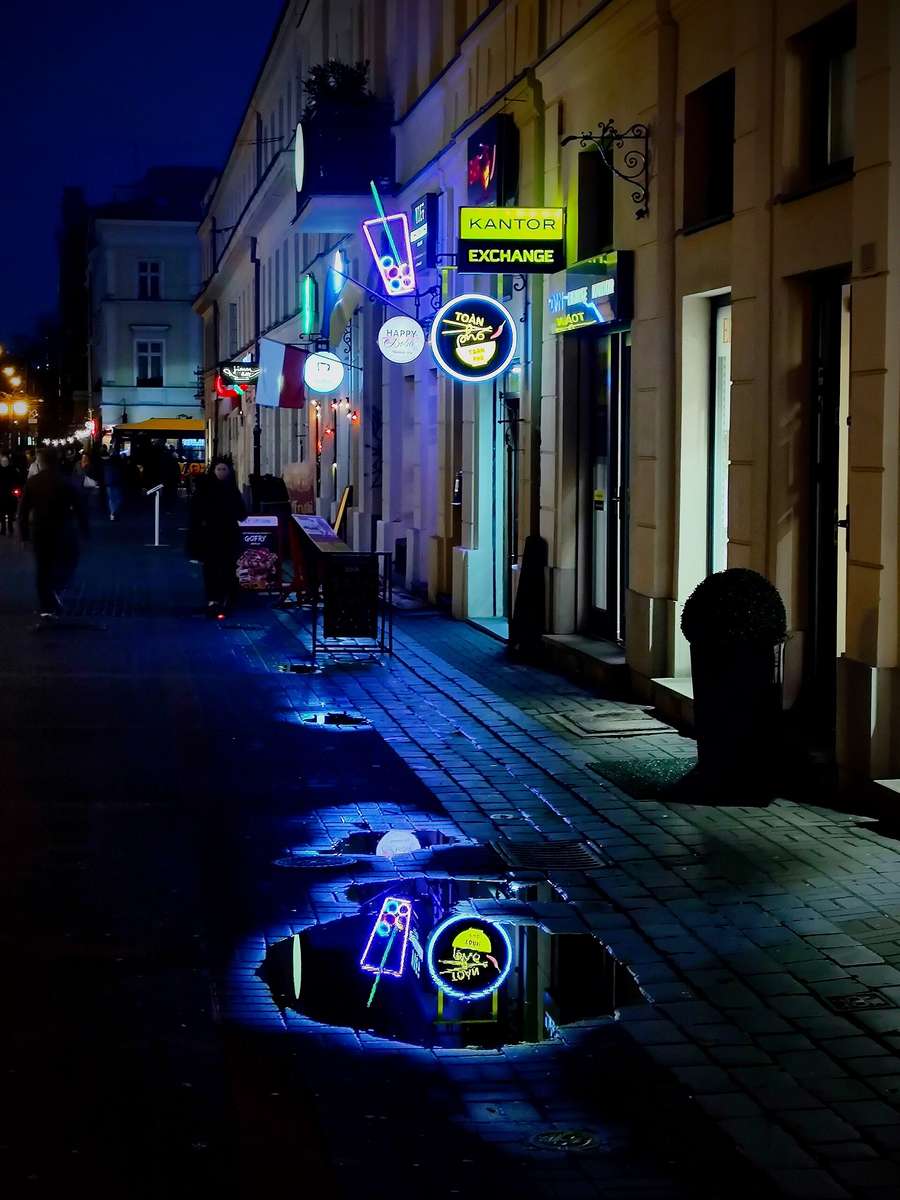
*Photos: cover - Panek, CC BY-SA 4.0, via Wikimedia Commons; interior - Krigore, CC BY-SA 4.0, via Wikimedia Commons.*
Frequently asked questions
What does Polish law say about sexual consent?
Since 13 February 2025, Article 197 of the Penal Code defines rape as sexual intercourse without the other person's prior conscious and voluntary consent - punishable by no less than three years in prison. Consent must be expressed, not assumed, and incapacity rules it out.
How do I say I want something casual in Polish?
*Szukam czegoś niezobowiązującego* - I am looking for something casual. Stating intentions directly is normal in Polish dating culture and respected, not awkward.
Where can I get tested for STIs in Poland?
At the nationwide network of free, anonymous PKD (consultation and diagnostic) points - HIV testing without a referral, insurance, or giving your name. Locations are listed on voivodeship NFZ branch pages.
Is talking about expectations before a hookup normal in Poland?
Yes. Polish communication is direct by default, and dating-app culture normalizes stating intentions in chat before meeting. The conversation takes five sentences and reads as confidence, not awkwardness.
Can consent be withdrawn during sex?
Yes. Consent in the Polish legal standard is prior to each act and can be withdrawn at any moment. Continuing after a withdrawal meets the criminal definition. A simple *stop, nie chcę* is a complete sentence.