Is Tap Water Safe to Drink in Poland? Sanepid Rules for 2026
Short answer: Polish authorities say public tap water is safe when suppliers meet the legal standards. New rules from May 2026 add risk-based checks. Check your county sanepid for notices.
Tap water in Poland is regulated and monitored, and Polish sanitary authorities describe it as safe to drink when the supplier meets the legal standards. This guide explains what the standard says, who checks it, what changed in 2026, and what to do if your water looks or smells wrong. It relies on pages from the Chief Sanitary Inspectorate (Główny Inspektorat Sanitarny, GIS) and local sanitary stations (PSSE), and on the Polish rules as described there. Figures and rules were checked on 16 October 2026.
What the law means by drinkable
A district sanitary station in Pyrzyce, part of the State Sanitary Inspectorate, explains the legal test this way: water is fit for use if it is free of pathogenic micro-organisms and parasites in numbers that could threaten human health, free of any substances in concentrations that could threaten health, and not corrosive, while meeting the microbiological and chemical requirements. Water companies and the sanitary inspectorate monitor this regularly.
The GIS report on water quality for 2020 to 2022 sets out the legal basis. Safety of water for human consumption is regulated by the Act of 7 June 2001 on collective water supply and collective sewage disposal and by a Ministry of Health regulation. The report defines drinking water as water intended for drinking, food preparation or other household purposes, whether it arrives through a network, a tanker, or in bottles or containers.
How good is the water, according to the inspectorate
The Pyrzyce sanitary station, quoting State Sanitary Inspectorate data, says that about 91 percent of people supplied by waterworks received water meeting the regulation in 2006 and about 93 percent in 2009. It says about 96 percent had water meeting the requirements in 2013 and about 98 percent in 2014, with the improving trend continuing in later years. Those figures cover public supply, so they say nothing about the pipes inside a particular building.
What changed in 2026
On 10 June 2026 the GIS published a notice about new rules. A Ministry of Health regulation of 22 May 2026 sets which parameters must be tested, how often, and who is responsible. It comes together with the Act of 13 March 2026, whose provisions apply from 21 May 2026. Together they implement the EU Drinking Water Directive 2020/2184.
According to the GIS notice, the main changes are these.
- Water suppliers must use a risk-based approach that covers the whole chain, from the source and treatment through the network to the tap.
- Materials and chemicals that touch drinking water must meet EU requirements, including a European positive list of materials.
- Permission to deviate from quality limits can now be granted at most twice. Before, three were allowed.
- Laboratories that do compliance testing must meet quality-system requirements and be on a register.
- Non-residential priority buildings where more than 50 people a day are exposed, such as hospitals and places for temporary stays, must carry out a risk assessment of their internal water systems, including Legionella and lead.
Some of the new requirements have transition periods, so not everything is in force from day one.
How to check your own water
The sanitary stations publish assessments and notices for their areas. For example, the Opole station posts quarterly assessments of tap water quality for the city and county, with an annual area assessment, and says that current results and recommendations are published as official notices. Look for your county's Powiatowa Stacja Sanitarno-Epidemiologiczna on gov.pl and search for the water quality section.
When a problem is found, the local sanitary inspector issues a notice. The notices found in 2025 show the three kinds of outcome: a finding that the water is fit for consumption (Braniewo, notice 11/2025), a finding of conditional fitness (Braniewo, notice 9/2025), and a finding that the water is not fit for consumption (Maków Mazowiecki, notice 3/2025). If your supplier or the sanitary station issues a notice for your area, follow the instructions in it.
If your water looks or smells wrong
The Pyrzyce station lists the unusual situations: water that is cloudy, brown or smells unpleasant, water that stood in the pipes for a long time, or an installation failure. Its advice is to run a few litres first. If the problem continues, contact your water supplier or the county sanitary station.
Tap or bottled
The same station notes that tap water is much cheaper than bottled water and reduces plastic waste, and that dietitians consider tap water as safe as spring or mineral water for daily use. The in-building plumbing in older flats is the part you cannot see from public data, so if you live in an old building and are concerned, ask your landlord or housing community about the pipes.
This is general information from official pages, not a guarantee for any address. Local conditions can change, so check your own supplier's and sanitary station's current notices.
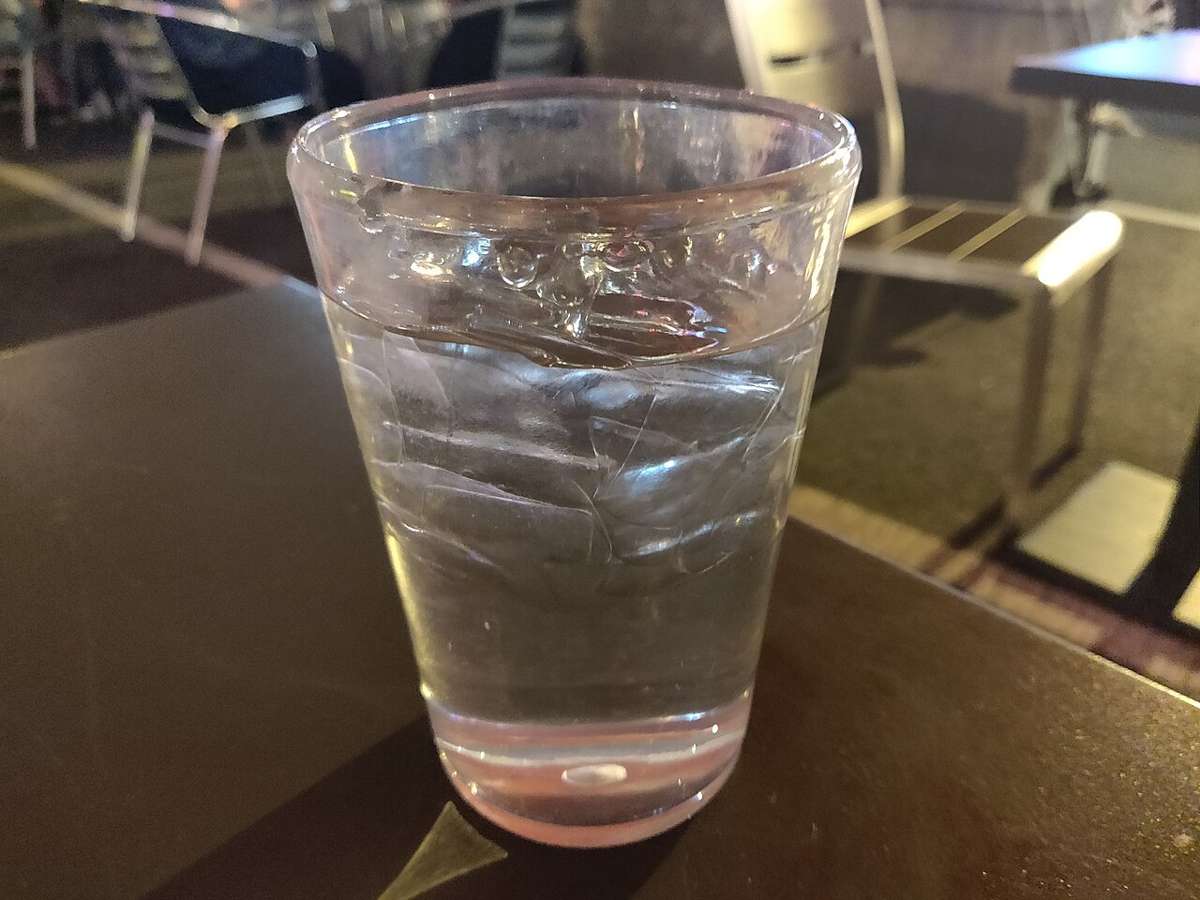
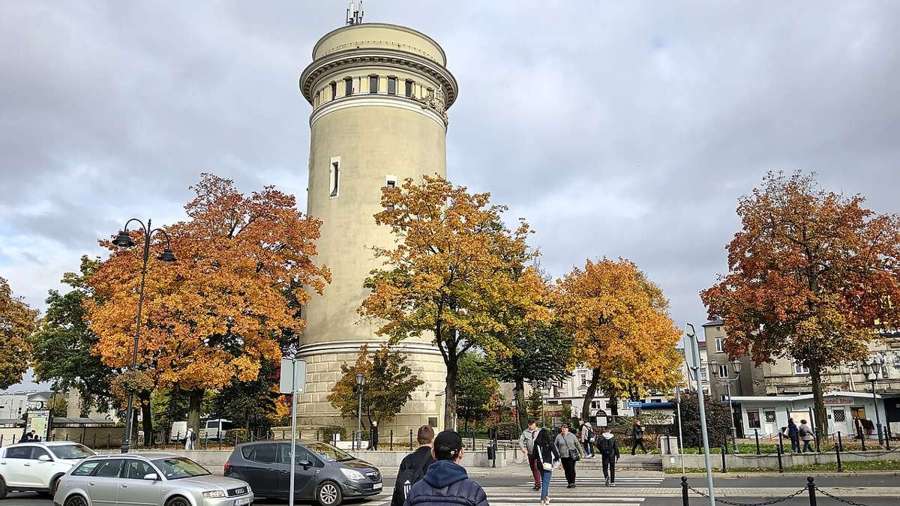
* Photos: Water tower in Piotrków Trybunalski (public domain) and a glass of water (CC0), both Wikimedia Commons; illustrative.
Frequently asked questions
Can you drink tap water in Poland?
Polish authorities describe public tap water as safe when the supplier meets the legal standards. Sanitary stations publish assessments and notices, so check yours for any warning about your area.
How do I find out if there is a problem with my water?
Check the website of your county sanitary station (PSSE) on gov.pl, which publishes quarterly assessments and notices, and your water supplier's announcements.
What should I do if my tap water is cloudy or smells?
Run a few litres of water. If the problem continues, contact your water supplier or the sanitary station, as the Pyrzyce station advises.
Did Poland change its drinking water rules in 2026?
Yes. A Ministry of Health regulation of 22 May 2026 and an act of 13 March 2026, in force from 21 May 2026, implement the EU Drinking Water Directive 2020/2184, with a risk-based approach and transition periods for some rules.