What Is Wigilia? Poland's Christmas Eve Traditions and Food
The essentials: Wigilia is Polish Christmas Eve, 24 December: a family supper of twelve meat-free dishes that starts at the first star, opened by sharing the opłatek wafer. Since 2025 it is a statutory day off in Poland. Traditions and dishes verified October 2026.
What is Wigilia? The short answer
Wigilia (vee-GEE-lya) is Polish Christmas Eve, celebrated on 24 December, and for most Polish families it is the emotional centre of the entire holiday season - bigger than Christmas Day itself. The name comes from the Latin *vigilia*, the eve of a feast. The evening revolves around a ceremonial meat-free supper that begins when the first star appears, and since 2025 it is also a statutory day off work in Poland. Here is what happens, dish by dish and custom by custom, as of October 2026.
The evening, step by step
The first star. Nothing starts until someone - usually the youngest child - spots the first star in the evening sky, a nod to the Star of Bethlehem. Only then does the family sit down. In practice this means the table is ready by late afternoon on 24 December.
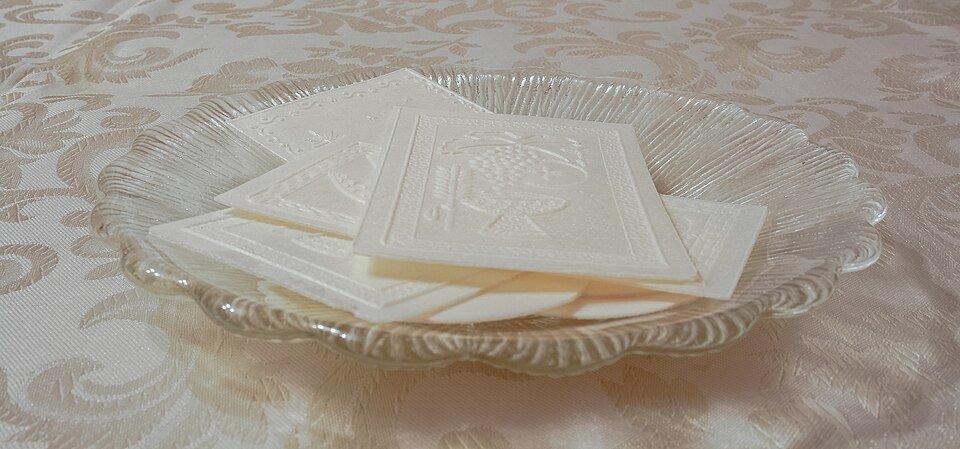
Prayer and the opłatek. The supper opens with prayer and a Gospel reading, then the most recognisable Wigilia ritual: sharing the opłatek, a thin white wafer embossed with nativity scenes. Each person breaks off a piece of everyone else's wafer, exchanging personal wishes for the year ahead - family member by family member, one at a time. It is intimate, sometimes tearful, and it is the moment Poles abroad miss most.
The empty seat and the hay. Tradition sets one extra place at the table for an unexpected guest - or in memory of those who cannot be there. Many families still slip a little hay under the tablecloth, recalling the manger.
Pasterka at midnight. After supper, many families head to church for Pasterka, the midnight Mass commemorating the shepherds who were the first to visit the newborn Christ. Even infrequent churchgoers often make an exception for Pasterka.
*Data source: Polskie Radio English Section, "Poles mark Christmas Eve", 24 December 2025 - checked 21 October 2026.*
The twelve dishes
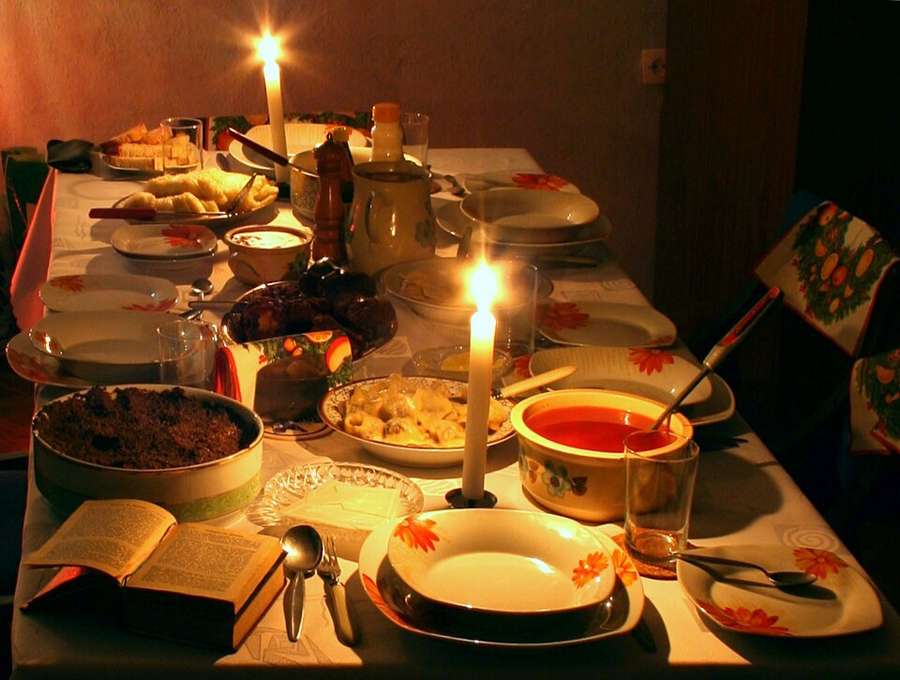
Tradition calls for twelve meat-free dishes, symbolising the twelve apostles - the Christmas Eve fast means no red meat, only fish and flour-based dishes. Menus vary by family and region, but the classics, as catalogued in the Polish Tourism Organisation's official culinary guide, are:
- Barszcz (beetroot soup) with uszka - clear, ruby-red barszcz served with tiny mushroom-filled dumplings, or alternatively mushroom soup.
- Pierogi - especially the Christmas Eve filling of cabbage and mushrooms. Poles treasure childhood memories of making them by hand with mothers and grandmothers in the days before Wigilia.
- Herring (śledź) - typically served in oil with onions, though cream and vinegar versions exist too.
- Carp (karp) - the centrepiece freshwater fish, nowadays eaten almost exclusively at Christmas Eve.
- Kutia - an eastern-Poland dish of wheat grains mixed with honey, poppy seeds, nuts and raisins.
- Makowiec - poppy-seed cake, glazed and sprinkled with candied orange peel, alongside aromatic gingerbread.
- Dried-fruit compote - a sweet, intense drink of stewed plums, apples or pears that accompanies the meal.
Counting to twelve is easy once you add the regional extras: carp in aspic, fish Greek-style (ryba po grecku), cabbage with split peas, dumplings with lentils, and more. Nobody polices the number - but the abundance itself is the point.
*Data source: poland.travel (Polish Tourism Organisation), "Kulinaria / Culinary" guide (EN edition), December 2025 - checked 21 October 2026.*
The tree and the gifts
The choinka (Christmas tree) goes up close to Christmas Eve - in many homes it is decorated on the morning of 24 December itself, traditionally with apples, nuts, gingerbread, straw ornaments and lights. Polish Radio's rundown of Christmas Eve customs lists decorating the tree and exchanging gifts alongside the opłatek and the empty seat as the pillars of the evening. And this is the moment that surprises foreigners most: Polish children open their presents on Christmas Eve, not Christmas morning. The practical result for expats: if you are spending the holidays with a Polish family, have your gifts wrapped and ready by the afternoon of the 24th, and do not be surprised when the children vanish mid-supper to "look for the star" - the signal that presents can appear under the tree.
*Data source: Polskie Radio English Section, "Poles mark Christmas Eve", 24 December 2025 - checked 21 October 2026.*
The strange history of the Christmas carp
Ask a foreigner to name one Polish Christmas food and they will say carp - yet the carp's reign is younger than your grandparents. Polskie Radio's English service traced the story: before World War II, carp was simply one of several Christmas Eve fish, alongside herring, pike and zander. The change came in the late 1940s, when Poland lay in ruins and the communist Minister of Industry, Hilary Minc, promoted carp as an inexpensive farmed fish - effectively declaring that every Polish table should have one. Carp farms made it cheap and available, and a tradition was born.
Traditionally the carp came home alive - bought from street stalls and kept in the bathtub for a day or two, to the delight of children. Today most families buy it filleted, and many quietly swap in salmon, but the carp stall appearing on street corners in mid-December remains a reliable sign that Wigilia is coming.
*Data source: Polskie Radio English Section, "Polish Christmas Customs: Carp - the communist infiltrator?", 25 December 2023 - checked 21 October 2026.*
Wigilia is now a public holiday
For decades 24 December was a working day, and the Wigilia rush - cooking twelve dishes after a full shift - was a national sport. That changed with the Act amending the law on public holidays: Parliament passed it, the President signed it on 24 December 2024, and since 2025 Christmas Eve is a statutory day off work in Poland. The Ministry of Family, Labour and Social Policy noted the change was backed by roughly 70% of Poles in opinion polls. The same law guarantees retail workers every second Sunday off in December (a maximum of two working Sundays), in exchange for three pre-Christmas shopping Sundays instead of two.
Poland now has 13 statutory days off per year, and 24 December is also a statutory holiday in Bulgaria, Cyprus, Czechia, Denmark, Estonia, Finland, Ireland, Lithuania, Latvia, Slovakia and Hungary.
*Data source: gov.pl, Ministry of Family, Labour and Social Policy - "Wolna Wigilia od przyszłego roku", 27 December 2024 - checked 21 October 2026.*
If you are invited to a Wigilia supper
An invitation to Wigilia is a big honour - this is the most family-centred evening of the Polish year. A few things to know:
1. Bring something, but keep it modest. A good dessert, a bottle of kompot-friendly juice or sweets for the hosts works. The food is already abundant. 2. Do not eat beforehand - but pace yourself. Twelve dishes means small portions of many things; the meal lasts hours. 3. Take part in the opłatek. You will be handed a wafer; break, exchange wishes, repeat with everyone. It is fine to keep wishes simple - "health and happiness for the coming year" is perfectly normal. 4. Expect no alcohol-or-little. Wigilia is traditionally a fasting day; many families keep the table alcohol-light or alcohol-free until Christmas Day. 5. Respect the empty seat. It is intentional, and touching stories sit behind it. 6. Gifts come tonight, not tomorrow. In Poland, presents are exchanged on Christmas Eve after supper - not on Christmas morning as in the UK or US.
After Wigilia: two more days at the table
The festivities continue on 25 and 26 December (Boże Narodzenie and the second day of Christmas, both public holidays), when the menu flips to cold cuts and roasted meats and families visit each other's homes. If Wigilia is the ceremony, the next two days are the feast.
Frequently asked questions
What is Wigilia in Poland?
Wigilia is Polish Christmas Eve, 24 December - the most important family celebration of the Polish holiday season. It centres on a meat-free supper of twelve dishes that begins when the first star appears, preceded by sharing the opłatek wafer and exchanging wishes.
Is Christmas Eve a day off in Poland?
Yes. Since 2025, 24 December is a statutory day off work in Poland, under an act signed by the President on 24 December 2024. Retail workers are also guaranteed every second December Sunday off.
Why are there twelve dishes at Wigilia?
The twelve meat-free dishes symbolise the twelve apostles. The menu typically includes barszcz with uszka, pierogi with cabbage and mushrooms, herring, carp, kutia, makowiec and dried-fruit compote, varying by family and region.
Why do Poles eat carp at Christmas?
The carp tradition dates to the late 1940s, when post-war authorities promoted cheap farmed carp; before the war, Poles ate various fish at Christmas Eve, including herring, pike and zander. Today carp is eaten in Poland almost exclusively at Wigilia. *Photos: cover - Wigilia supper table by Przykuta, CC BY-SA 3.0, via Wikimedia Commons; opłatek wafers by Diego Delso, CC BY-SA 3.0, via Wikimedia Commons.*