Polish Winter 101: Weather, Clothing, Heating and Survival Tips
The essentials: Polish winters are cold and grey but rarely extreme: Warsaw averages -1.5°C in January and -0.1°C in December (IMGW 1991-2020 normals). Dress in layers, protect exposed skin, test your flat's ventilation and fit a CO detector, and watch GIOŚ air-quality alerts in smog season. Verified October 2026.
Polish winter 101: what to actually expect
A Polish winter is cold, grey and long, but rarely extreme in the cities. The official 1991-2020 climate normals from Poland's Institute of Meteorology and Water Management (IMGW-PIB) put Warsaw's average monthly temperature at -1.5°C in January, -0.4°C in February and -0.1°C in December, with November at 3.8°C and March at 3.2°C. The real challenge is less the thermometer than the combination of wind, damp and short days. Here is how winter works in Poland and how to handle it, based on official data and government safety guidance, as of October 2026.
The weather: official numbers
IMGW-PIB's climate normals, calculated from synoptic-station data over the 1991-2020 reference period under WMO methodology, give Warsaw (station 12375) the monthly averages above. Two things follow for daily life:
- Most winter days hover around zero. Average does not mean constant - cold snaps below -10°C happen, and thaw weeks happen too. Slush and refrozen ice are more typical urban hazards than deep snowdrifts.
- Recent winters run warm. In IMGW's monthly climate analysis, January 2025 averaged 2.0°C across Poland - 3.2°C above the 1991-2020 norm, and the 7th-warmest January since 1951. The coldest January in that ranking was 1987 at -10.7°C; the warmest was 2007 at 3.7°C. Pack for real cold, but do not expect a Siberian winter every year.
What the averages do not show is daylight: in December and January the sun sets around 15:30, and overcast skies are the norm. Many expats find the darkness harder than the cold - plan outdoor time for midday and keep lights bright at home.
*Data sources: klimat.imgw.pl "Normy klimatyczne 1991-2020" (Warsaw station data); imgw.pl "Charakterystyka wybranych elementów klimatu w Polsce w styczniu 2025 roku" - checked 21 October 2026.*
Wind chill and damp: why it feels colder than it is
The Government Security Centre (RCB) warns that strong wind combined with a temperature only slightly above 0°C can have the same chilling effect as -30°C in still air, and humidity intensifies the feeling of cold. Water cools the body 20 times faster than air, which is why getting wet in winter - slush in your boots, sleet on your jacket - is dangerous, not just uncomfortable.
Hypothermia begins when body temperature drops below 36.6°C; shivering is the first warning sign. If shivering comes together with muscle trembling, weakness, dizziness and disorientation, that is mild hypothermia (body temperature around 34-35°C) and you must warm up immediately. The RCB is explicit: never drink alcohol to "warm up" - it accelerates heat loss. A chilled person should be warmed slowly: remove cold clothing, wrap in blankets, give warm (not hot) drinks only if they are conscious, and call for medical help if they are not.
Frostbite hits the face, hands and feet first. First-degree frostbite shows as chalky-white skin turning reddish-bluish, with burning and numbness. The RCB's rules: never rub frostbitten skin or apply snow - that damages the tissue - and never pop the blisters of second-degree frostbite. For pale skin, use warming baths in lukewarm water around 25°C, gradually raised to about 40°C, then cover with a sterile dressing. Third- and fourth-degree frostbite requires a doctor.
*Data source: gov.pl, Rządowe Centrum Bezpieczeństwa - "Bezpieczna zima", checked 21 October 2026.*
Clothing: the RCB checklist
The government's winter clothing guidance translates directly into a shopping list for your first Polish winter:
- Dress in layers, preferably natural fabrics or fleece, loose enough not to restrict circulation.
- Warm boots with room for your toes - tight footwear restricts blood flow and makes feet colder.
- Insulated, loose gloves and a hat covering your forehead and ears.
- Do not wrap a scarf over your face - breath makes it damp, which accelerates frostbite on the skin underneath.
- Apply protective cream or vaseline to exposed skin (cheeks, nose, chin) before going out in frost - especially for children.
- Keep moving. If you start feeling cold outside, jump, stamp your feet, rub your hands - do not stand still.
*Data source: gov.pl, Rządowe Centrum Bezpieczeństwa - "Bezpieczna zima", checked 21 October 2026.*
Heating your apartment - and the carbon monoxide danger
Polish apartment blocks heat through the autumn-winter season, and this is exactly when the carbon monoxide risk peaks. The RCB's "Nie dla czadu" campaign calls CO colourless, odourless and deadly: breathing air with a CO concentration of just 0.16% by volume causes death within two hours. The gas forms during incomplete combustion in gas heaters, boilers and stoves, and the main causes of poisoning are faulty heating appliances, blocked chimney flues and poor room ventilation.
Symptoms to know: headache, loss of concentration, dizziness, weakness, vomiting, convulsions, loss of consciousness, slowed breathing. Protection is simple and worth doing in your first week in a Polish flat:
- Test the ventilation grille by holding a sheet of paper to it - with healthy airflow the paper sticks to the grille.
- Never cover or seal ventilation grilles, even when trying to keep heat in.
- Check that gas heaters and stoves work correctly and are used per the manufacturer's instructions; chimneys should be inspected and cleaned regularly (in Poland this is the building manager's or owner's statutory duty - ask yours when the last inspection was).
- Install a battery CO detector - they cost little and are sold in every hardware store.
*Data source: gov.pl, Rządowe Centrum Bezpieczeństwa - "Nie dla czadu", checked 21 October 2026.*
One more winter reality: smog
The cold half of the year is also smog season in Poland. The Chief Inspectorate of Environmental Protection (GIOŚ) explains that elevated pollution typically appears from October or November, when temperatures drop and emissions from individual building heating rise. Autumn-winter smog is air polluted by fine dust particles (PM10 and PM2.5) bound with water droplets, produced by dust and gas emissions reacting with meteorological conditions.
You can track conditions hour by hour on the official "Jakość Powietrza" (Air Quality) portal and the GIOŚ mobile app "Jakość Powietrza w Polsce", which publish hourly measurements of PM10, PM2.5, ozone, nitrogen dioxide, sulphur dioxide, benzene and carbon monoxide from monitoring stations across Poland. When pollution risks crossing the alarm level for PM10, residents receive SMS alerts sent by the Government Security Centre. On heavy smog days, limit outdoor exertion - and this is one more reason to ventilate your flat briefly rather than long.
*Data source: gov.pl, Główny Inspektorat Ochrony Środowiska - "Jakość powietrza w Polsce", checked 21 October 2026.*
Everyday winter life in Poland
Sidewalks. Property owners are responsible for clearing snow and ice from the pavement along their buildings, but standards vary - expect icy patches and wear boots with grip. City services grit main routes first.
Looking out for others. The RCB asks everyone not to walk indifferently past elderly people moving with visible difficulty or anyone sleeping on benches or at bus stops in freezing weather - call the police, city guards (straż miejska) or the emergency number. An unconscious person in frost can die quickly, and alcohol-related pass-outs are especially dangerous because alcohol speeds up heat loss.
Mood and routine. Poles fight the dark months with routines: weekend walks whatever the weather, winter swimming (morsowanie) for the brave, and Christmas markets from late November. You do not have to jump into an icy lake, but a daily midday walk genuinely helps with the 15:30 sunsets.
Driving. Winter driving in Poland deserves its own preparation - tires, ice and snow rules are covered in our separate guide to preparing your car for a Polish winter.
Your first Polish winter: a checklist
1. Buy proper boots with grip and room for toes before December. 2. Get a layered kit: thermal base, fleece, windproof outer, hat, insulated gloves. 3. Stock protective face cream for frosty days - especially for children. 4. Test your flat's ventilation grille and buy a CO detector in week one. 5. Save the emergency numbers: 112 (EU emergency), 997 (police), 986 (straż miejska in cities). 6. Plan a midday walk into every grey day - the light matters more than the temperature. 7. Watch the IMGW weather warnings before travel; conditions change fast in a cold snap.
Frequently asked questions
How cold does Poland get in winter?
According to IMGW-PIB's 1991-2020 climate normals, Warsaw averages -1.5°C in January, -0.4°C in February and -0.1°C in December. Cold snaps below -10°C occur, but recent winters have been mild: January 2025 averaged 2.0°C across Poland, 3.2°C above the norm.
What should I wear in Poland in winter?
The Government Security Centre recommends layered clothing in natural fabrics or fleece, warm boots with room for toes, insulated loose gloves, a hat covering forehead and ears, and protective cream on exposed skin. Avoid wrapping a scarf over your face - moisture from breath accelerates frostbite.
Is carbon monoxide a real risk in Polish apartments?
Yes - the RCB warns that CO poisonings peak in the autumn-winter heating season, mainly from faulty heaters, blocked chimneys and poor ventilation. Test your ventilation grille with a sheet of paper, never cover vents, and install a CO detector.
Does it snow a lot in Warsaw?
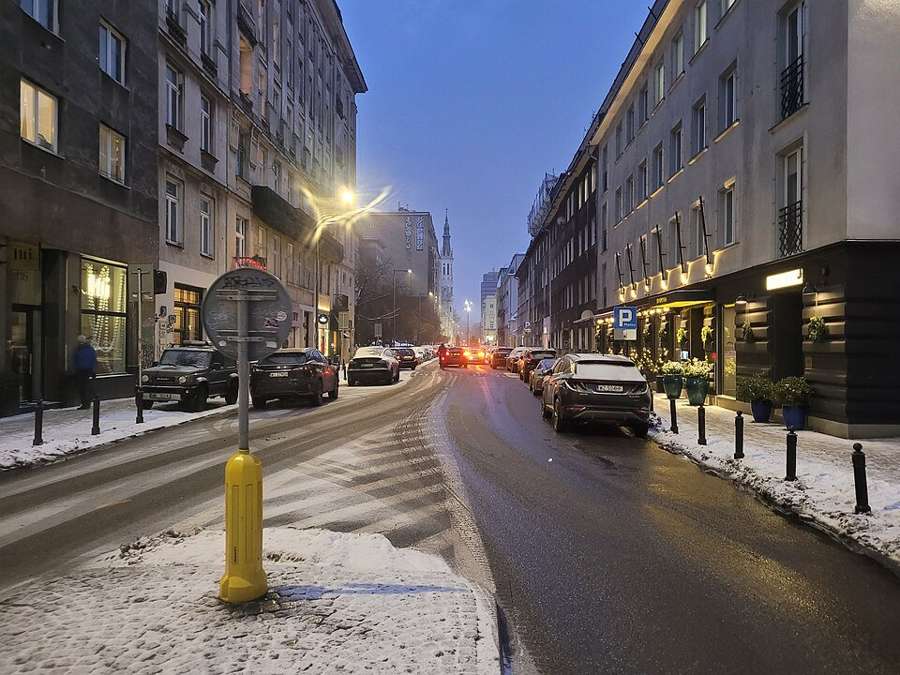
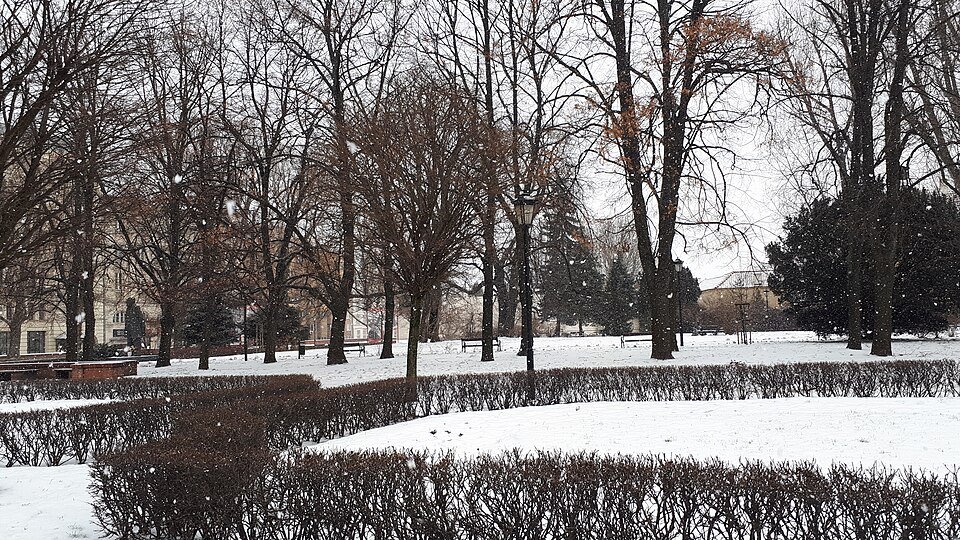
Warsaw winters are more slush-and-refreeze than deep snow. Average monthly temperatures hover around zero (-1.5°C to -0.1°C in December-February per IMGW normals), so precipitation alternates between snow, sleet and rain, and icy sidewalks are the main everyday hazard. *Photos: cover - Mokotowska street, Warsaw, January 2026, by Wistula, CC BY-SA 4.0, via Wikimedia Commons; Warsaw park in January snow by Rakoon, CC0, via Wikimedia Commons.*