How Do Polish People Celebrate Christmas? A Guide for Expats (2026)
The essentials: Polish Christmas centers on Wigilia, the December 24th supper that starts at the first star: families break the opłatek wafer, share twelve meatless dishes (barszcz with uszka, carp, pierogi, makowiec), set an extra place for a stranger, and exchange gifts after dinner. Dec 25-26 are public holidays with shops closed.
Your first Polish Christmas will confuse you in the best way: the big day is not the 25th but the evening of the 24th, the meal has no meat, there is an empty chair at the table, and someone will hand you a wafer to break before anyone eats. Here is what is actually going on - and how to take part gracefully as a foreigner - drawn from Poland's official cultural institute and Warsaw's own seasonal announcements for 2026.
Wigilia: the evening that is the holiday
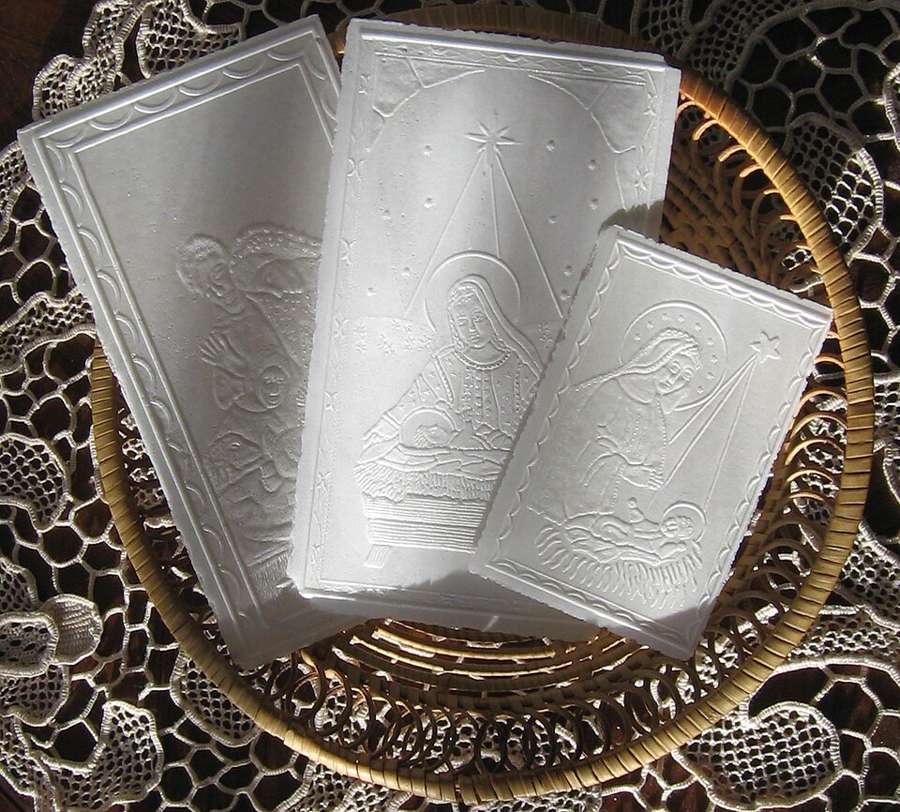
Polish Christmas centers on Wigilia, the Christmas Eve supper on December 24th - one of the most important celebrations of the Polish year, and one reserved for the closest family. The meal begins only when the first star appears in the evening sky, a rhythm children enforce with astronomical vigilance. Before anyone eats, the family breaks the opłatek - a thin embossed Christmas wafer - exchanging personal wishes with each person present. It is intimate and slightly formal at once: if you are invited to a Wigilia, understand that you have been admitted to the inner circle, and bring your full attention to the wafer ritual, because your Polish hosts will remember what you wished them.
*Data source: Culture.pl (Adam Mickiewicz Institute), "The 12 Dishes of Polish Christmas", updated December 24, 2025, checked October 21, 2026.*
The table: twelve dishes, one empty chair, hay under the cloth
The traditional supper runs to twelve dishes - a number symbolizing prosperity, the twelve Apostles and the twelve months of the year - and the rules around the table are as meaningful as the food. An extra place is set for an unexpected guest, a custom extending hospitality even to a stranger; bits of hay are spread beneath the tablecloth in memory of the manger; and the entire meal is meatless, built from winter's traditional ingredients. Etiquette expects every guest to taste at least a little of every dish, which is a marathon, not a sprint: pace yourself, because refusing a course outright reads as refusing the cook's year of care. Gifts are exchanged after the meal, not in the morning.
*Data source: Culture.pl, "The 12 Dishes of Polish Christmas", updated December 24, 2025.*
What you will actually eat
The canon is remarkably consistent across Poland. The evening often opens with Christmas barszcz - a beetroot soup soured with a home-fermented base - served with uszka, tiny porcini-stuffed "little ear" dumplings; in some homes a dried-mushroom soup takes its place. Carp is the famous main: Poland has farmed it for at least 700 years, though it became the holiday staple only after World War II, and regional versions include the certified karp zatorski and Małopolska's Jewish-style carp in jelly with almonds and raisins. Around it orbit herring (in oil, or with cream and apple), pierogi stuffed with sauerkraut and dried mushrooms, braised sauerkraut with forest mushrooms, and meatless gołąbki filled with buckwheat or rice. Dessert brings poppy-seed makowiec, honey-spiced piernik - Toruń's gingerbread tradition dates to the 17th century - kutia (a wheat-and-poppy dessert with eastern roots), and kompot z suszu, a dried-and-smoked-fruit compote that closes the meal.
*Data source: Culture.pl, "The 12 Dishes of Polish Christmas", updated December 24, 2025.*
The carp question newcomers always ask
Yes, the bathtub story is real - or at least real enough that you should not be surprised by it. Many families still buy their Christmas carp live a few days before Wigilia, and in homes without a balcony or garage, the bath is where it waits. Children routinely adopt the fish as a pet, which is why a certain percentage of Polish adults carry a complicated relationship with carp. Supermarkets now sell prepared fillets that skip the entire drama, and plenty of younger families take that route - but if your hosts mention the carp "settling in" at home, they are not joking, and asking to meet it is a perfectly normal move.
*Data source: editorial custom; carp traditions per Culture.pl, October 2026.*
The days after: Pasterka, two holidays and a quiet city
After supper, many families attend Pasterka, the midnight Mass - even households that rarely go to church treat it as part of the season's texture. December 25th and 26th are both public holidays (First and Second Day of Christmas), and Poland observes its shop-closing law on both: supermarkets and malls shut, restaurants mostly rest, and cities go beautifully quiet. The practical expat lesson: do your food shopping by the 23rd, expect public life to pause for 48 hours, and enjoy one of the few moments when Warsaw genuinely empties.
*Data source: Polish public-holiday framework and shop-closing rules; Culture.pl context, October 2026.*
Season, not day: Advent, markets and Gwiazdka
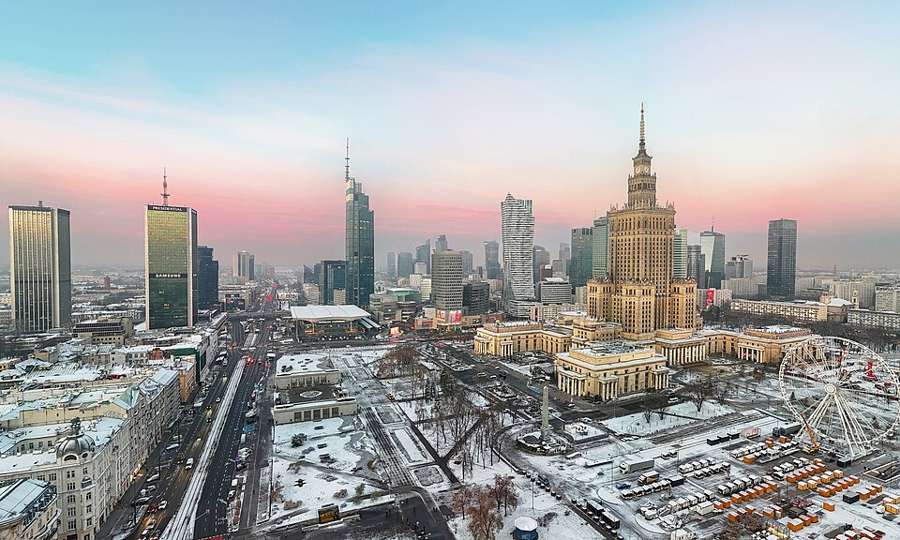
The celebration stretches far beyond the 24th. Cities decorate from late November, and Warsaw's own Christmas market - the Jarmark Warszawski on Plac Defilad by the Palace of Culture - runs its second edition from November 20, 2026 to January 6, 2027, open daily 11:00-22:00. December 6th brings Mikołajki (St. Nicholas Day), when children receive small gifts; the tree traditionally appears in homes only in the days before the 24th; and the season closes on January 6th with Epiphany, a public holiday marked by Three Kings parades in Polish cities. For expats, this elongated calendar is a gift: weeks of market evenings, mulled wine (grzaniec) and lights before the intense family core of the holiday itself.
*Data source: Jarmark Warszawski official site (jarmark.waw.pl), checked October 21, 2026; editorial on season customs.*
If you are invited: the guest's protocol
A Wigilia invitation comes with unwritten rules that are easy to keep once you know them. Arrive before dark, because the first star is the start signal; bring good chocolates, flowers or a bottle, but not extravagant gifts that upstage the family's exchange. Learn two words - "Wesołych Świąt" (Merry Christmas) - and use them during the opłatek round. Taste everything, compliment the barszcz specifically, and expect the evening to run for hours; leaving early is the one true faux pas. If carp's bones worry you, ask quietly for the fillet - hosts expect the question from foreigners and usually have one.
*Data source: editorial guidance within the traditions documented by Culture.pl, October 2026.*
If you are staying solo or hosting your own
Not everyone gets an invitation the first year, and a solo Wigilia is a respectable expat rite of passage. Many churches hold English-language Christmas services in Warsaw, restaurants and hotels serve bookable Wigilia dinners, and friends-of-expats gatherings on the 24th are common precisely because so many people are far from family. Hosting your own miniature version is easier than it looks: bakeries sell ready barszcz, uszka, pierogi and makowiec in the days before Christmas, so a believable Wigilia table can be assembled without cooking for three days - and Polish friends will be delighted you tried. The empty-chair custom is optional; the first star is not.
*Data source: editorial; food traditions per Culture.pl, October 2026.*
What it all means to a newcomer
Under the folklore sits a simple architecture: Christmas Eve is for family and memory, the days after are for rest, and the weeks around are for everyone. Expats who engage the season on those terms - markets with colleagues in December, quiet respect for the family core on the 24th, gratitude when included - find that Christmas becomes the fastest language course in Polish culture there is. Come hungry, start at the first star, and say yes to the wafer.
*Data source: synthesis of the sources above, October 2026.*
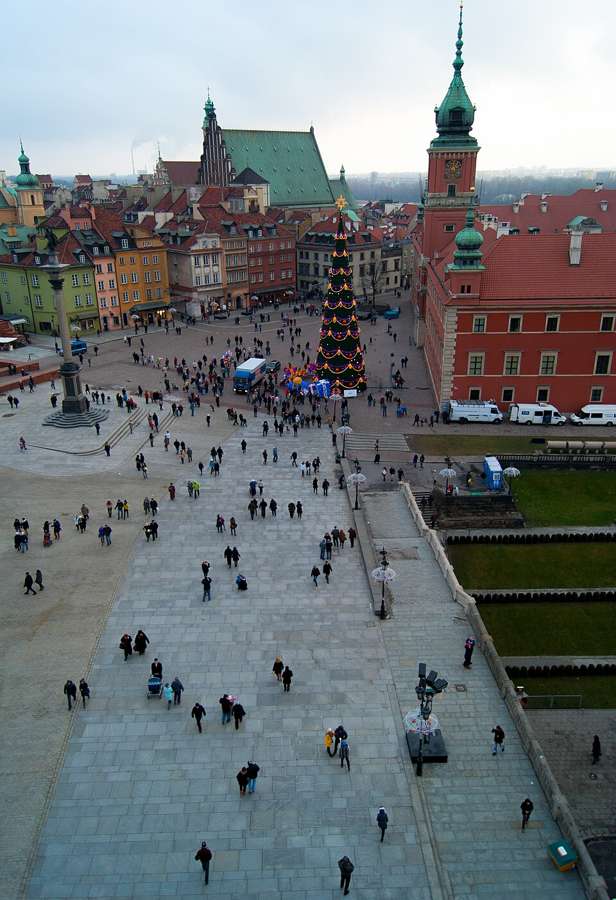
*Photos: the Christmas tree on Warsaw's Castle Square by Guillaume Speurt, CC BY-SA 2.0; opłatek wafers, public domain, both via Wikimedia Commons.*
Frequently asked questions
What is Wigilia in Poland?
Wigilia is the Christmas Eve supper on December 24th - the heart of Polish Christmas. It begins when the first star appears, opens with breaking the opłatek wafer and exchanging wishes, and features twelve meatless dishes, an extra place set for an unexpected guest, and gifts exchanged after the meal. Source: Culture.pl (Adam Mickiewicz Institute), updated December 24, 2025.
Why do Poles serve twelve dishes at Christmas Eve?
The twelve dishes symbolize prosperity, the twelve Apostles and the twelve months; tradition expects guests to taste a bit of everything. Typical plates include barszcz with uszka, carp, herring, pierogi with sauerkraut and mushrooms, makowiec and dried-fruit compote - all meatless. Source: Culture.pl, updated December 24, 2025.
Are shops open in Poland on December 25 and 26?
No - both are public holidays covered by Poland's shop-closing rules, so supermarkets and malls are shut; do your shopping by December 23rd. Warsaw also empties noticeably for the two days. Source: Polish public-holiday framework; editorial, October 2026.
Is there a Christmas market in Warsaw in 2026?
Yes - the Jarmark Warszawski on Plac Defilad runs its second edition from November 20, 2026 to January 6, 2027, open daily 11:00-22:00. Source: jarmark.waw.pl, checked October 21, 2026.