How to Prepare Your Car for Winter in Poland: Tires, Ice and Snow
The essentials: Poland sets no winter-tire dates - police say weather and region decide - but tests show winter tires stop a car in 55 m on frozen snow where summer tires need 98 m. Fully clear windows and roof snow before driving (fines apply), and change tires around +7°C before the first-frost rush.
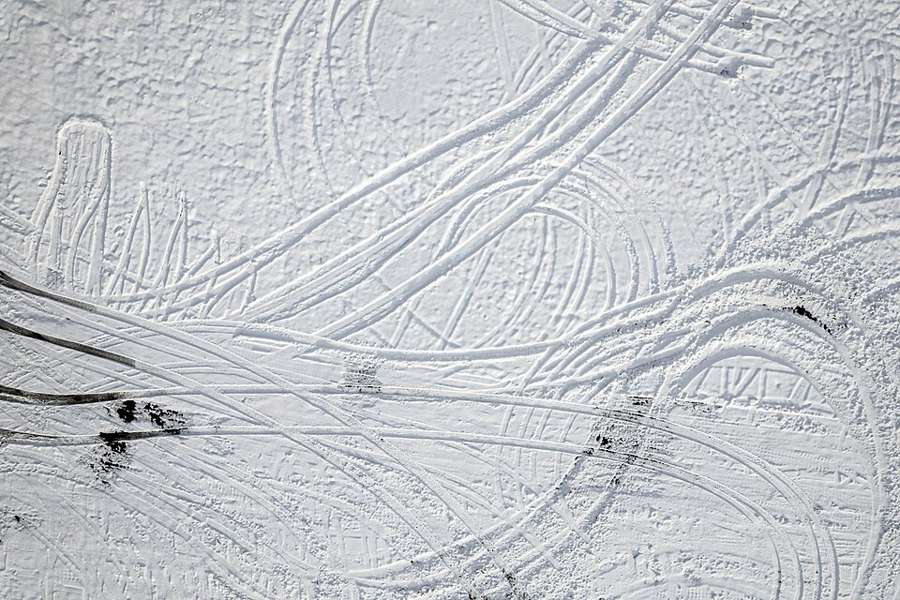
Poland's winter arrives differently than many expats expect: the rules are looser than Germany's, the roads are salted rather than closed, and the real hazards are the mornings when minus ten follows a rainy afternoon. Here is how to get a car through a Polish winter safely and legally, grounded in what the police and the national road authority actually say - not forum folklore - as of October 2026.
The legal position: recommended, not mandated
Start with the fact that surprises most Germans, Austrians and Scandinavians: Poland has no law setting dates for winter tires. The police themselves spell it out - there are no prescribed dates for fitting or removing winter tires in Poland; the timing depends on weather conditions and the region where you drive. Mountain areas and the colder north-east argue for an earlier change than a big central city. The road authority GDDKiA phrases the expectation differently - a car setting out on a longer winter journey "should have winter tires fitted" - which is official guidance, not an enforceable mandate. Practically: nobody will fine you for summer tires in January, but your insurer and your braking distance will both notice.
*Data source: Polish Police, "Opony zimowe - fakty i korzyści" (policja.gov.pl); GDDKiA winter guidance (gov.pl), January 17, 2025; checked October 21, 2026.*
Why tires are the whole game
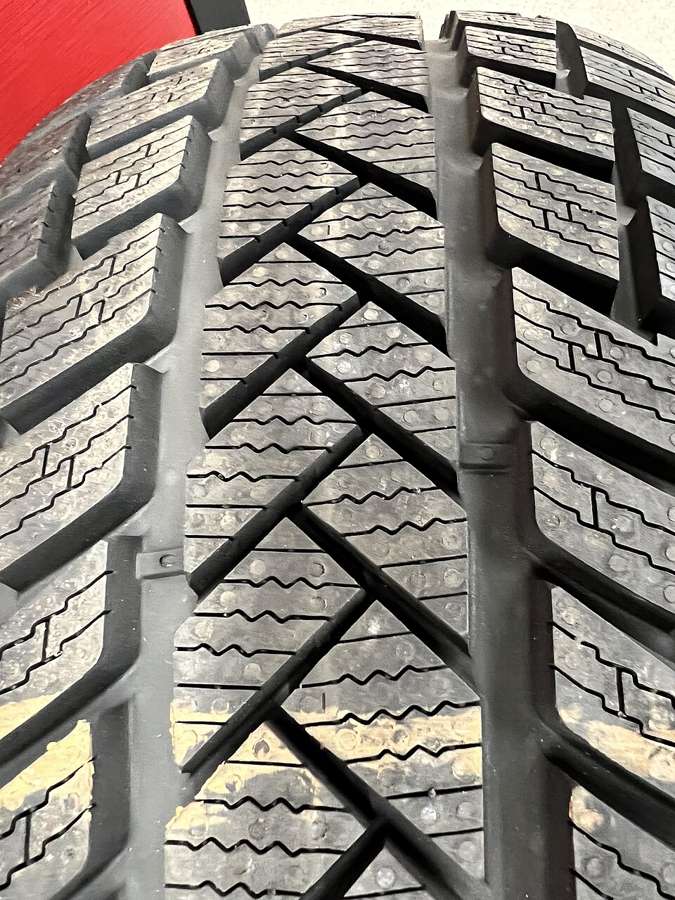
The police test numbers make the case better than any slogan. On packed frozen snow at 60 km/h, a car on summer tires with ABS needed 98 metres to stop - and 174 metres without ABS - while the same car on winter tires stopped in 55 metres. That difference, nearly two extra bus lengths, is the winter accident statistics in miniature. The physics: summer-tire rubber hardens near freezing and loses grip exactly when you need it, while winter compounds stay elastic and their tread's dense sipes bite into snow and slush. Two more official points worth internalizing: fitting winter tires on only one axle - typically the driven one - makes acceleration better but cornering and braking dangerously unstable, so always change all four; and all-season M+S tires are an acceptable compromise for mild city winters but struggle in mountain snow.
*Data source: Polish Police winter tire guidance (policja.gov.pl), checked October 21, 2026.*
What the law does demand: a fully cleared car
Where Poland does regulate is visibility and loose snow. GDDKiA reminds drivers that moving off in a partially or fully snow-covered car is not permitted: before driving, you must clear all windows completely, and the snow cap on the roof is not optional decoration - snow sliding off a moving car can cause a crash behind you and earn a fine. The classic Warsaw offender scrapes a letterbox-sized hole in the frosted windshield and drives off; that is precisely the behavior the guidance singles out. Budget five minutes and two tools: an ice scraper and a snow brush, both sold at every petrol station from October.
*Data source: GDDKiA winter guidance (gov.pl), January 17, 2025, checked October 21, 2026.*
The pre-season checklist
Before the first frost, GDDKiA's checklist covers the whole car: working lights, a healthy battery (cold kills weak ones - winter is when five-year-old batteries fail), fluid levels, effective wipers, and - the classic expat mistake - winter-grade washer fluid that will not freeze in the lines below zero. Add the winter kit: scraper, brush, a pair of gloves for using them, and a phone charger. For longer trips, especially toward the mountains, the authority advises carrying tire chains; if you use them, the police cap chain driving at 50 km/h and they are unpleasant on cleared asphalt, so they are a mountain emergency tool, not city equipment.
*Data source: GDDKiA (gov.pl), January 17, 2025; Polish Police (policja.gov.pl); checked October 21, 2026.*
Salt, plows and how Polish roads are kept in winter
Understanding the system helps you drive it. GDDKiA maintains national roads - about 18,000 km, under 5% of Poland's public road network - with 24/7 winter operations run by contracted crews; voivodeships, counties and municipalities handle their own roads, and within Warsaw the city itself is responsible. Plows pre-salt before snowfall, and the salt reaction needs traffic to work - which is why the authority asks drivers to use all lanes rather than huddle in one. During heavy snowfall, a black road minutes after the plow is physically impossible; winter maintenance mitigates conditions, it does not abolish them. Give the wide yellow-lit plows room: they move at 40-50 km/h and leaving them space is both courtesy and survival.
*Data source: GDDKiA winter guidance (gov.pl), January 17, 2025, checked October 21, 2026.*
Driving technique: the 48 hours that matter
Polish winter driving skill is mostly about two moments: the first icy morning, and the wet-to-frozen transition after sunset. On both, braking distances stretch and grip vanishes without visual warning - the official advice is unglamorous: match speed to conditions, not to the limit sign, and leave a real gap to the car ahead. In snowfall, use dipped beams rather than daytime running lights alone, so traffic behind sees you; automatic light systems do not always detect weather and can leave your rear dark. Black ice deserves its own sentence, because it is the hazard foreign drivers underrate most: it forms first on bridges, overpasses and shaded stretches, often while the rest of the road is merely wet, and it announces itself only as a sudden steering lightness. The response is counterintuitive - ease off the accelerator, keep the wheel straight, and do not brake until grip returns. And if you pass an accident, brake smoothly and keep moving rather than slowing to stare - sudden speed scrubbing near crash sites causes the secondary collisions.
*Data source: GDDKiA winter guidance (gov.pl), January 17, 2025, checked October 21, 2026.*
Timing the change in practice
With no legal dates, use the temperature rule Polish tire shops work by: change when daily temperatures settle around or below +7°C, typically late October to November, and change back when spring consistently exceeds it. The practical warning the police add: do not wait for the first frost, because every tire shop in the country books solid the week it arrives. October is the cheap, calm month for the swap - and many Polish drivers use hotel-style tire storage at the same workshops, which solves the apartment-dweller's where-do-four-tires-live problem.
*Data source: Polish Police guidance on timing (policja.gov.pl), checked October 21, 2026; editorial.*
The expat shortcuts that backfire
Three patterns recur among foreign drivers. Trusting all-wheel drive: it helps you go, never helps you stop - the braking table above applies to SUVs exactly as to hatchbacks. Trusting "the city will be plowed": it will, eventually, and residential streets come last. And trusting winter tires from five seasons ago: rubber ages, and tread depth below 4 mm undermines the sipes that do the winter work - check yours before the season, not during it. A Polish winter rewards the boring, prepared car and humbles the clever shortcut.
*Data source: editorial within the official guidance cited above, October 2026.*
*Photos: tire tracks in fresh snow by Gabriel Picard, CC BY-SA 4.0; winter tire tread by Oregon Department of Transportation, CC BY 2.0, both via Wikimedia Commons.*
Frequently asked questions
Are winter tires mandatory in Poland?
No. Poland has no legal dates or mandate for winter tires - the police state timing depends on weather and region - but the national road authority says a car on a longer winter journey should have them, and test data shows winter tires nearly halve braking distance on frozen snow. Source: policja.gov.pl; GDDKiA (gov.pl), January 17, 2025.
Do I have to clear snow off my car in Poland?
Yes. Driving a partially snow-covered car is not permitted: all windows must be fully cleared before departure, and snow left on the roof can cause accidents behind you and result in a fine. Source: GDDKiA winter guidance (gov.pl), January 17, 2025.
Can I fit winter tires on just the front wheels?
You should not. Police guidance warns that winter tires on one axle only improve acceleration but seriously degrade steering and stability in corners and braking - always change all four. Source: policja.gov.pl, checked October 21, 2026.
When should I change to winter tires in Poland?
When daily temperatures settle around +7°C - usually late October to November. Book early: the police note tire shops are overwhelmed the week of the first frost. Source: policja.gov.pl, checked October 21, 2026.