Whistleblower Protection in Poland: Reporting Wrongdoing at Work
Short answer: Poland's whistleblower act protects workers, contractors and former employees who report legal breaches. Retaliation is banned and can bring compensation of at least one average monthly wage.
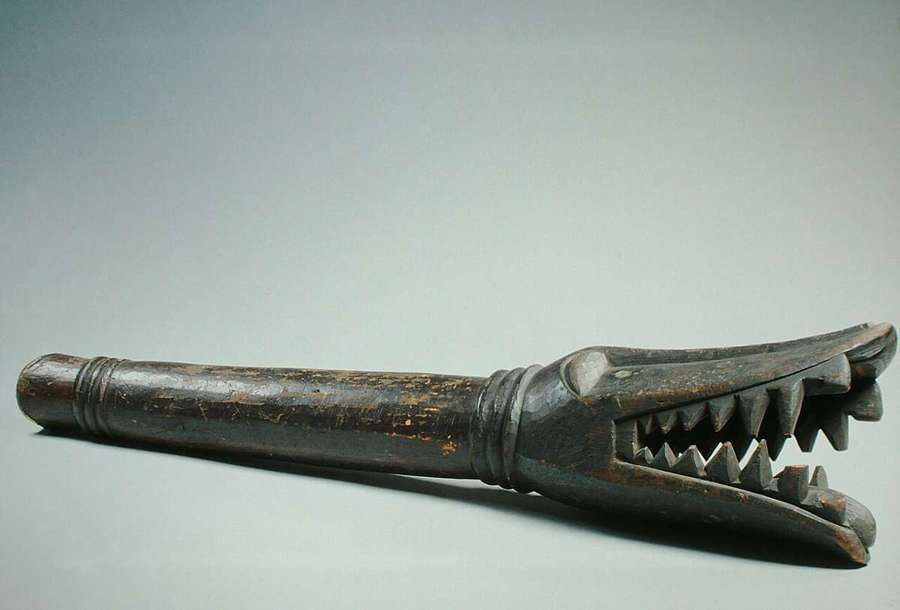
If you notice something illegal at work in Poland, can you report it without losing your job? Since the whistleblower protection act came into force, the answer is yes in many cases. This guide follows the official pages of the Whistleblower Team on gov.pl: "Pytania i odpowiedzi" and "Ochrona prawna sygnalistów". The same site has a notice that from 25 December 2024 the Commissioner for Human Rights (Rzecznik Praw Obywatelskich, RPO) receives external reports. The pages we read do not show a publication date, and we read them on 18 October 2026. They are written for everyone covered by the act and do not mention foreigners separately, so a foreign worker is covered if they meet the conditions described below. This is general information, not legal advice.
Who counts as a whistleblower
According to the Whistleblower Team, a whistleblower is a natural person who reports or publicly discloses information about a breach of law obtained in a work-related context. That can be before the working relationship begins or after it ends. The list on the page includes:
- an employee or temporary worker,
- a person working under a civil-law contract,
- a self-employed person, a shareholder or a partner,
- a person working under the supervision of a contractor, subcontractor or supplier,
- an intern, a volunteer or a trainee.
A former employee can be a whistleblower. A witness of a breach in another company can too, as long as the information was obtained in a work-related context and they risk retaliation. Without a work-related context the person does not have whistleblower status under the act.
Three ways to report
The page describes three routes:
1. Internal report, inside the organisation through a channel at the workplace. 2. External report, to a public body such as the Commissioner for Human Rights or another competent institution. 3. Public disclosure, in exceptional situations.
The law does not require you to report internally first. The page says it is worth considering an internal report, because it lets the organisation check the breach itself, while an external report is especially justified if you are worried about the effectiveness or safety of the internal procedure or if the situation requires it, for example a direct threat to the public interest.
For public disclosure the page gives conditions. You are protected if you first reported internally and then externally and no authority acted or gave feedback (unless earlier reports were anonymous). The same applies if you reported only externally and the authority did nothing. You are also protected if you have reasonable grounds to think that the breach may pose a direct or obvious threat to the public interest, that an external report exposes you to retaliation, or that there is little chance an external report will stop the breach, for example because evidence could be hidden.
Protection against retaliation
Protection starts from the moment of the report or public disclosure, provided you had reasonable grounds to think the information was true at that time and that it concerned a breach of law (art. 6 of the act, as cited by the Team). It does not cover people who knowingly passed on false information. You cannot waive your protection. Per the Team, protection is not limited in time and lasts as long as there is a risk of retaliation.
Retaliation is any action aimed at harming you that is motivated by the report. A threat or an attempt can also count. If something bad happens to you, the employer has to show that it was not retaliation. The act's examples include refusing to hire, cutting pay, withholding or skipping a promotion, causing financial loss, mobbing and discrimination, and the list is open.
What the law says about penalties and compensation
The Team describes these consequences:
- Obstructing or preventing a report is punishable by a fine, restriction of liberty or imprisonment of up to one year (up to 3 years if violence, a criminal threat or deceit is used).
- Retaliation is punishable by a fine, restriction of liberty or imprisonment of up to 2 years, and persistent retaliation by restriction of liberty up to 3 years.
- Illegally revealing a whistleblower's identity is punishable by up to one year.
- Under art. 14 a whistleblower who suffered retaliation has the right to compensation of not less than the average monthly wage in the national economy of the previous year, or to redress for harm.
Confidentiality, feedback and anonymous reports
Every report must be treated as confidential, including information that could reveal the whistleblower's identity indirectly. You should receive feedback from the authority on actions planned or taken. For external reports you may ask for a written certificate of protection. The authority has a month to issue it, and you do not have to show it to the entity you reported. The RPO issues it only in a limited scope, when the case concerns constitutional freedoms and human and civil rights. Anonymous reports are possible, but then you will get no information about actions taken.
* Photos: megaphone and figure whistle from the Metropolitan Museum of Art (CC0), Wikimedia Commons. Illustrative.
Frequently asked questions
Do I have to report internally before going to an authority in Poland?
No. The Whistleblower Team says the act does not require an internal report before an external one, though an internal report is worth considering first.
Does whistleblower protection cover former employees and contractors?
Yes. The Team's Q&A says a former employee can be a whistleblower, and so can people working under civil-law contracts, interns and volunteers, if the information was obtained in a work-related context.