Wsola Gombrowicz Museum: Winter Saturdays Closed, Sundays Free
The essentials: November-March exhibitions open Tuesday-Friday and Sunday, 10:00-17:00, last entry 16:30. Monday and Saturday are closed. Sunday admission is free; standard tickets otherwise cost 15 PLN, reduced 8 PLN. Check holiday and event closures.
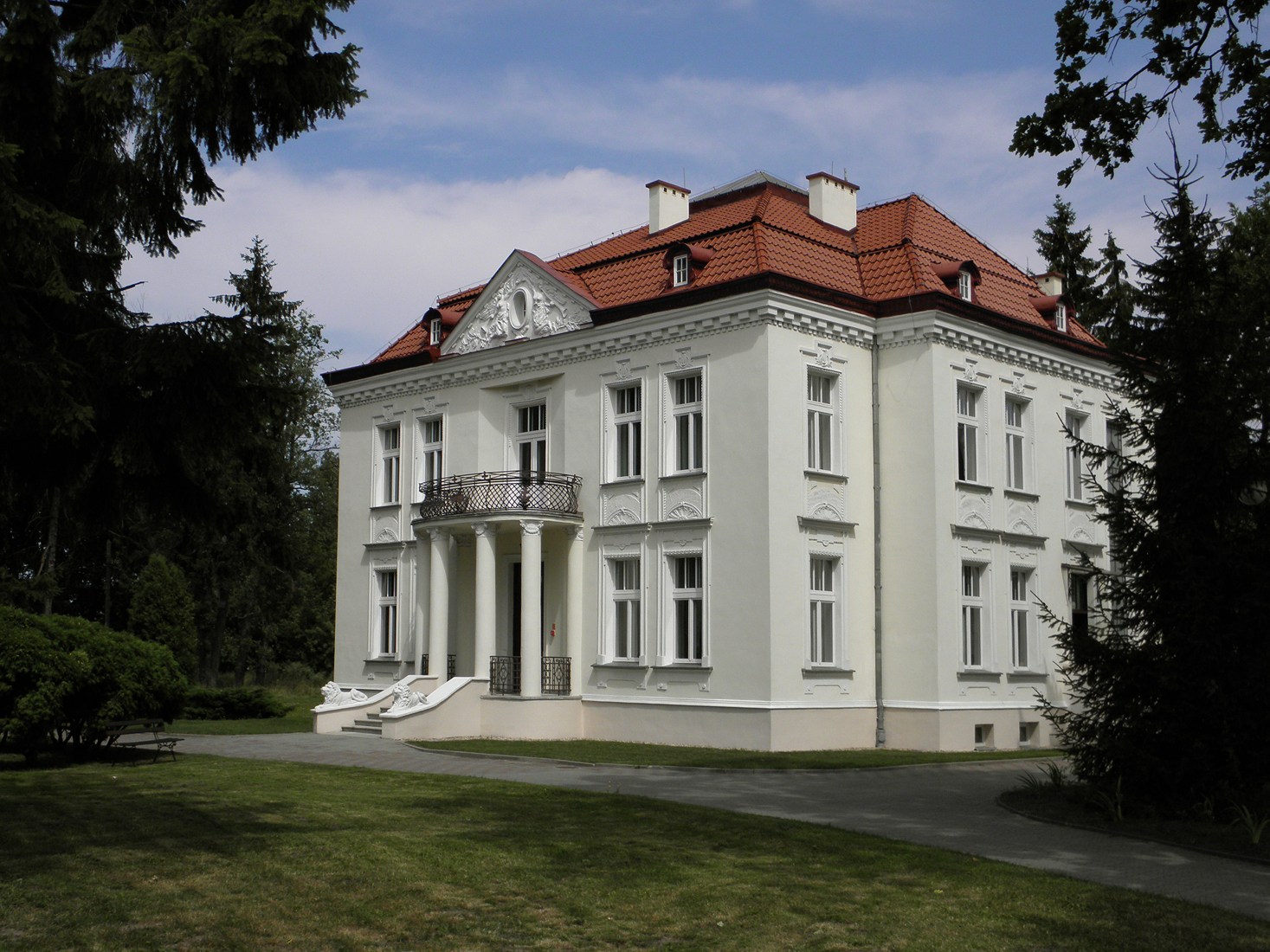
Cover: Wsola palace, photographed on 25 July 2012. Archival summer view, not current conditions. Photo: Rafał Terkner / Wikimedia Commons, CC BY-SA 3.0 PL. Resized and recompressed under the same licence.
A winter weekend at the Witold Gombrowicz Museum in Wsola needs a different plan from a summer visit: the permanent exhibition is closed on Saturdays from November through March, but normally opens on Sundays, when admission is free. The published winter timetable is Tuesday-Friday and Sunday, 10:00-17:00, with last entry at 16:30. The museum is in a historic palace at ul. Gombrowicza 1, Wsola, 26-660 Jedlińsk. Check the current notices before setting off, particularly around Christmas and the end of the year.
Winter Saturdays are not exhibition days
The museum's dedicated visitor-information page separates the year into two seasons. From 1 November to 31 March, the exhibition opens Tuesday-Friday and Sunday, 10:00-17:00. Monday and Saturday are closed. From 1 April to 31 October, it normally opens Tuesday-Sunday, again 10:00-17:00, with Monday closed. Last admission is 16:30.
This is an easy distinction to miss if you have saved summer information or assume Saturday is the safest museum day. The winter timetable is also repeated by the parent Museum of Literature's branch directory. A homepage notice contains inconsistent weekday wording, but also explicitly says the exhibition is closed Mondays and Saturdays. Use the dedicated visiting timetable, not an isolated phrase from a search result. For an unusual date or special event, ask the museum directly.
The 16:30 cutoff is the latest admission, not a recommended starting time for a relaxed visit. Arrive earlier if you want to read the documents, look at personal objects and discuss the exhibition with a companion. A half-hour arrival buffer does not extend the 17:00 closing time. If you have booked a guide or an educational activity, use the agreed meeting time rather than treating the general last-entry rule as your appointment.
Sunday admission is free, but check exceptions
The visitor page states that entry is free every Sunday, a policy in force since October 2025. That makes Sunday the natural winter weekend option for the permanent exhibition. Free admission does not overturn a closure notice or mean that a separately priced guide, workshop or special event is automatically included. Check the programme if your main reason for going is something beyond an ordinary exhibition visit.
The museum lists specific 2026 closures, including 24, 25 and 26 December, and 31 December. A normal weekly timetable therefore does not make Christmas Eve or New Year's Eve an opening day. The list also contains dates earlier in the year; do not copy it forward as a complete 2027 calendar. If planning beyond the published year, confirm the new holiday arrangements rather than assuming that the old list remains current.
Start with the museum homepage for exceptional notices and then check the visiting page for the regular season. Events may have different hours from the exhibition. A concert, seminar or outdoor programme on a normally closed day does not by itself mean the permanent display is open throughout the day. Ask specifically about exhibition access if that is what you want.
Tickets, reductions and guide fees
The tariff, marked as effective from 1 February 2025, lists 15 PLN standard admission and 8 PLN reduced admission. A group of more than ten people pays 8 PLN per person. The wording is 'more than ten', so a party of exactly ten should not assume the group rate without checking. The Karta Dużej Rodziny rate is also 8 PLN. Sunday free entry is a separate rule.
The reduction list includes pupils, students, doctoral students and other eligible categories, with nationality or status conditions applying to some groups. It also covers certain older visitors, pensioners, disabled visitors and carers, teachers and people with specified distinctions. Do not assume that any foreign student card or age alone proves entitlement in every case. Read the detailed list and ask which document the ticket desk accepts for your situation.
Children under seven are listed among those exempt from admission charges, alongside other specified categories. If a family includes a child who has already turned seven, do not translate 'under seven' into a blanket free-child policy. Keep ages and documentation clear when asking about tickets. The museum's own tariff is the reference, not a third-party summary that may round an age boundary differently.
Guiding for groups or individual guests is listed separately at 50 PLN. Museum lessons cost 70 PLN per group, while workshops are listed at 20 PLN per person. Confirm availability, language, party limits and whether admission is added before arranging a visit around one of these services. A service on a price list is not a reserved slot. The seasonal one-zloty cycling promotion shown on the page ran only from 3 June to 30 September 2026, so it is not a winter discount.
A family palace, not the writer's birthplace
The parent museum explains that the Wsola palace was the home of Witold's brother Jerzy Gombrowicz, his wife Aleksandra and their daughter Tereska. Witold visited repeatedly, for the last time in 1939 before the war. The museum connects the place with work on his literary debut and parts of Ferdydurke. That is the setting to keep in mind: a family residence associated with his stays and writing, rather than a birthplace claim.
The museum opened in October 2009 after renovation and preparation. Its permanent display, JA, Gombrowicz, follows the writer's biography through documents, photographs, letters, typescripts, manuscripts and first editions. The palace and the literary collection work together, but they are not the same kind of evidence. Architecture gives the family setting; documents and personal objects follow the writer across the different periods of his life.
Following the five exhibition spaces
The visiting page describes five spaces: the 'Ferdydurke' café area in Witold's former room, the Polish room, a hall displaying personal objects, the Argentine-European room and the 'czyStelnia' reading space. These names give a useful outline before arriving. The café name forms part of the exhibition description; it should not be treated as a guarantee of current food service or opening hours for a separate café.
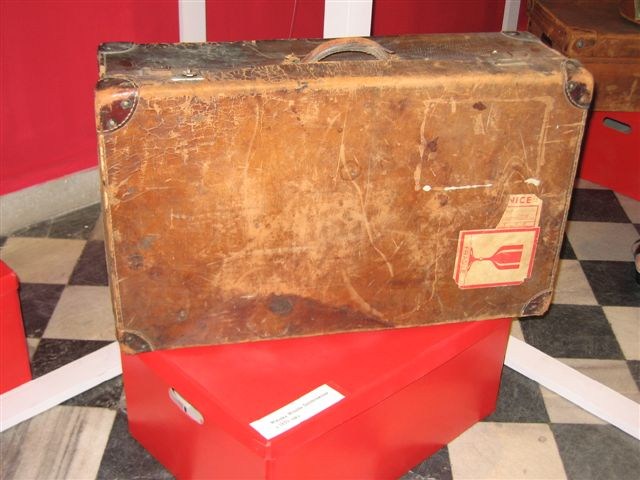
The parent museum identifies a suitcase associated with thirty years of emigration, a typewriter, pens and glasses among the personal objects visitors can see. Such objects offer a practical starting point if you have not read the novels in Polish. Consider what can be carried on a journey, what is kept and what is left behind. Then compare that physical evidence with letters and photographs. If a particular object is essential to your trip, ask whether it is currently displayed.
Language, families and educational visits
The published visitor information does not confirm an English guided tour or a complete English audio or label service. If that determines whether the visit will work, call before travelling. Give your preferred date, party size and language, and ask whether the 50 PLN guiding service can meet those needs. Paying for a guide does not by itself establish the language or availability of the person leading the visit.
For families, choose a manageable focus rather than promising children a workshop that has not been booked. A suitcase, glasses or a typewriter can be an easier entry point than a long panel of literary history. Ask what can be touched or used; display objects are not automatically interactive. School groups should arrange the lesson or workshop separately and confirm the subject and age level, instead of assuming that admission includes a scheduled class.
Accessibility and the route to the museum
The sources checked for this guide do not establish a complete, current room-by-room accessibility route at Wsola. The parent museum's accessibility declaration deals with its website and cannot certify every entrance, floor or toilet in this branch. Do not infer full access from the palace photograph or from a generic listing saying an entrance is adapted.
If you use a wheelchair or walking aid, ask which entrance to approach, whether all five exhibition spaces can be reached without steps, what assistance is available and whether there is a suitable toilet. Ask about the outdoor route from parking or a drop-off point as well as the building itself. Hearing support, assistance-dog arrangements and any alternative-format material should also be checked for the particular visit rather than assumed from another branch's offer.
The official contact page places the museum in Wsola near Radom and gives the full street address and telephone number. It also includes road and bus guidance, but this guide has not independently verified a current operator timetable. Plan the return journey with the transport operator and check the exact stop or drop-off location. A museum opening time is not evidence that a useful return bus runs after closing.
The final check before a winter visit
Save ul. Gombrowicza 1, Wsola, 26-660 Jedlińsk, and phone 48 321 50 73 if you need to confirm a closure, guide, language or access arrangement. For an ordinary winter weekend, Sunday is the published free-entry day; Saturday is normally closed for the exhibition. Arrive comfortably before 16:30, keep separately charged services separate in your budget, and check the homepage for exceptions. That small amount of planning avoids the two easiest mistakes: arriving on a winter Saturday or expecting a special activity to be included without arranging it.
Frequently asked questions
Can I visit the exhibition on a winter Saturday?
Not under the normal timetable. From November through March, Monday and Saturday are closed. Tuesday-Friday and Sunday open 10:00-17:00, last entry 16:30. Check exceptional notices.
Does free Sunday include a guided tour?
The museum lists free Sunday admission and a separate 50 PLN guiding service. Confirm availability, language and any charge before arranging a guided visit.
Was the palace Gombrowicz's birthplace?
The parent museum describes it as the home of his brother Jerzy and family. Witold visited and worked there. It is not presented here as his birthplace.