Adopting a dog or cat in Poland: a shelter guide for expats
The essentials: Foreigners can adopt from Polish shelters - no citizenship is required. Expect a questionnaire (Paluch publishes English versions), an interview, pre-adoption walks for adult dogs, ID and landlord consent. At Warsaw Paluch adoption is free; dogs take about two weeks, cats a day.
Poland's shelters are full, and the country's animal-welfare community will tell you so in plain terms: municipal and charity shelters across the country take in tens of thousands of dogs and cats every year, and every adoption frees a place for the next animal. For an expat, adopting here is easier than most people expect - you do not need Polish citizenship, the fees are low or zero, and the biggest shelter in the country publishes its adoption paperwork in English. What you do need is patience, an honest look at your housing and travel situation, and a realistic picture of what happens after the happy photo. Here is how the process works, from the first listing to the first vet visit.
Where to look
Every larger Polish city has a municipal shelter (schronisko) or a charity-run one, and most post their animals online with photos, age estimates and notes on temperament. Warsaw's shelter is Schronisko na Paluchu - the largest in the country - with listings on its website and adoption hours seven days a week. Kraków's shelter is run by KTOZ, the Kraków Society for the Care of Animals, whose listings (accessed 26 October 2026) show the range beyond dogs and cats: rabbits and other small animals regularly appear too. Smaller cities and private foundations work the same way, often through Facebook. A search for "schronisko" plus your city name, or "adopcja" plus the animal you want, will get you to current listings faster than any directory.
One habit worth copying from locals: read the animal's description closely and take the warnings seriously. Polish shelters write honest notes - "for an experienced owner", "does not accept children", "needs an active home" - and they mean them. The matching is deliberate, not bureaucratic theatre.
How adoption works at Paluch, step by step
Warsaw's Paluch shelter publishes its full procedure online (napaluchu.waw.pl, accessed 26 October 2026), and it is a fair model of the careful end of Polish adoption practice:
You start with the listings, on the website or social media - puppies have their own dedicated page - and dogs can be viewed at the shelter daily from 12:00 to 17:00. Cats can only be viewed by people ready to adopt that day, and you must bring a cat carrier with you.
You file a pre-adoption questionnaire. Paluch publishes the dog and cat questionnaires in both Polish and English - a rare and welcome touch for expats. An adoption-office worker then calls you to discuss it; questionnaires are processed in the order received.
For dogs over four months, at least two pre-adoption walks are required before the decision. For puppies under four months the process is lighter: one meeting, and you can take the puppy home the same day or within three days, though the shelter does not hold reservations while you prepare.
The contract. Adoption ends with a signed adoption contract - a donation-style agreement in which you commit to the animal's care. The whole process takes about two weeks for a dog; for cats it can be done in a single day.
And the price? "Nothing," says the shelter's own FAQ (updated 4 March 2026): "We do not charge fees for the adoption of our animals." The one hard rule to know: you cannot adopt on behalf of someone else - the person who will actually live with the animal must go through the process.
Refusals happen and are not personal. The shelter is explicit that not every home fits every animal: some need experienced handlers, some will not accept children or other pets, and a young high-energy dog needs an active household. If your first choice falls through, ask the staff who would fit - matching is their daily work.
Kraków and the rest of the country
Kraków's KTOZ shelter runs a similar questionnaire-and-interview process, with its own twist worth knowing: the city introduced a scheme (krakow.pl, 29 February 2024) giving animals adopted from the Kraków shelter free veterinary care for an initial period in their new home - a direct response to rising vet costs discouraging adoptions. Gdańsk, Wrocław, Poznań and other cities have their own shelters with their own rules; check the local shelter's website rather than assuming Warsaw's procedure transfers.
Private foundations and breed-rescue groups are the other big channel. They usually place animals from foster homes rather than kennels, interview by phone and video, and sometimes ask for a home visit. Fees, where they exist, are typically a few hundred zloty to cover vaccinations and sterilization.
The paperwork question for foreigners
No Polish shelter's published rules ask for citizenship. What the process does require is identity and a verifiable life situation: expect to show an ID document, give an address, and sign a Polish-language contract - bring a Polish-speaking friend if your Polish is not up to a legal conversation. Paluch's English questionnaires help, but the interview and contract will likely run in Polish. A residence card or passport plus a rental agreement is a sensible document set to have in hand.
That rental agreement matters twice. Most Polish leases either ban animals or require the landlord's consent, and shelters can ask about your housing situation in the interview. Get written permission from your landlord before you start the process, not after a shelter refusal teaches you why.
The real costs start after adoption
"Free adoption" does not mean a free animal. Budget for the starter kit - carrier or lead, bed, bowls, litter for cats - and then the recurring reality: food, routine vet visits, vaccinations, and the unpredictable bills. Poland has no national dog licence fee in the way some countries do, but microchipping and registration matter: since the rules on mandatory microchip registration tightened, our guide to the KROPIK register covers what owners must do. Pet insurance exists here too, including the owner-liability policies that cover damage your dog might cause - our pet insurance guide explains the options.
If you plan to travel with your new family member - and most expats eventually do - the animal will need a microchip, current rabies vaccination and an EU pet passport before crossing borders, with extra steps for the UK and Ireland. That is a separate set of rules, covered in our pet-travel guide, and it takes weeks to arrange, so plan it well before the first trip.
Making it stick
The shelters' warnings about matching are really about returns: an animal bounced back to a shelter is a small tragedy, and the honest questionnaire answers are how you avoid causing one. Be truthful about your working hours, your travel frequency and your landlord. A dog left alone ten hours a day in a studio flat is a welfare problem in the making, and expat life - with its trips home and uncertain timelines - needs a plan for who takes the animal when you travel, and a commitment that the animal comes with you if you leave Poland. If your future is genuinely uncertain, fostering (dom tymczasowy) is the honourable middle path: shelters and foundations actively recruit temporary homes, and it helps an animal without a decade-long commitment you cannot guarantee.
Adopted animals are not broken goods. Shelter staff will tell you that most of their animals ended up behind bars through human failure - a move, a divorce, a death, a bored child - not through any fault of their own. The grateful, settled dog or cat on your sofa three months from now is the normal outcome, not the lucky one.
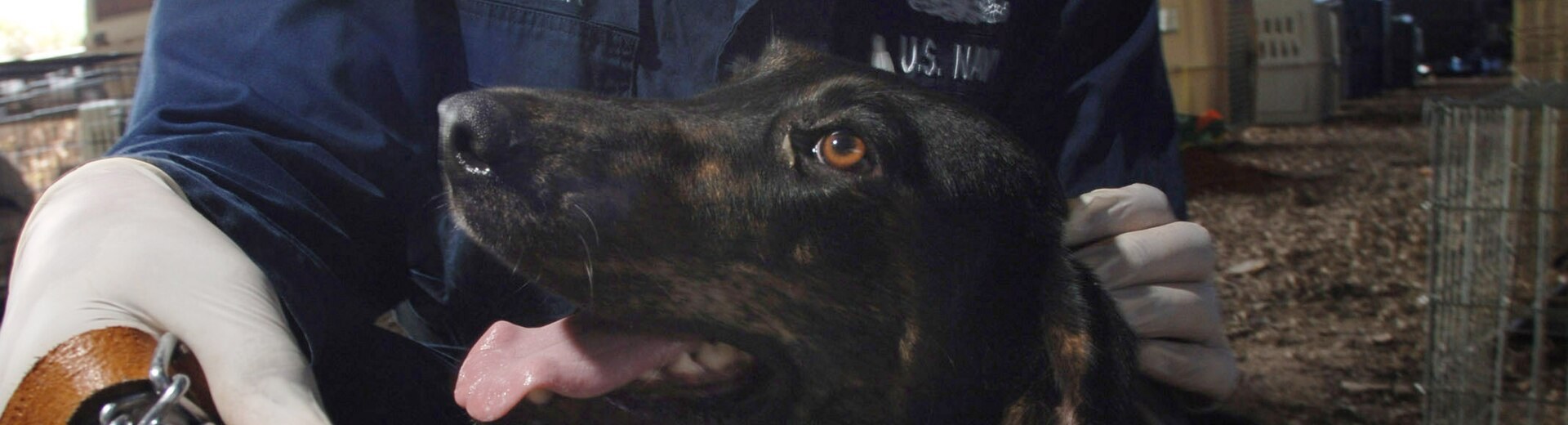
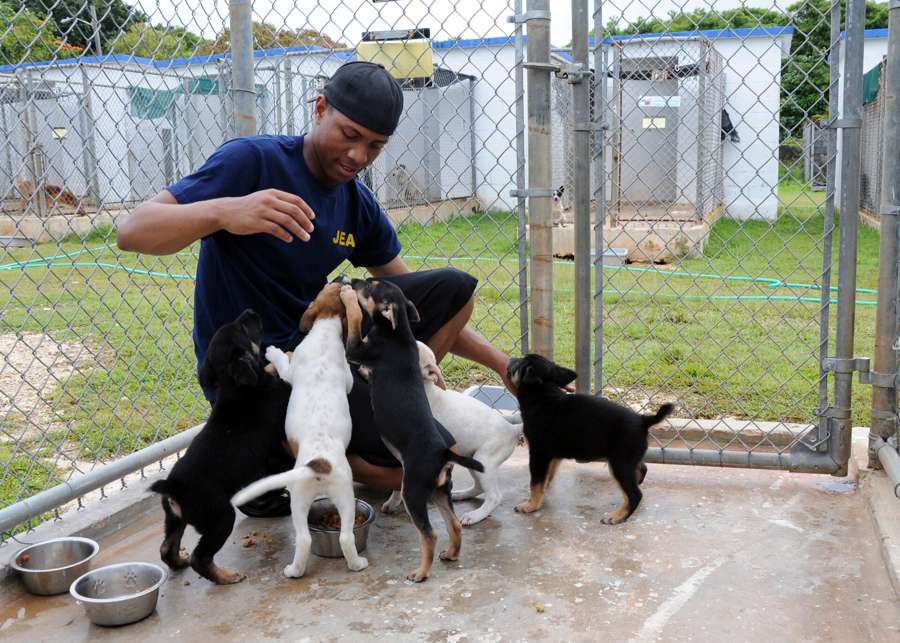
Cover: a volunteer with puppies at an animal shelter - U.S. Navy photo by Mass Communication Specialist 3rd Class Corey Hensley, public domain, via Wikimedia Commons; illustrative. Body: a shelter worker with a stray dog - U.S. Navy photo by Chief Photographer's Mate Chris Desmond, public domain, via Wikimedia Commons; illustrative.
Frequently asked questions
Can a foreigner adopt a pet from a Polish shelter?
Yes - no published shelter rules require Polish citizenship. You will need ID, an address, a signed Polish-language contract, and usually proof that your housing allows animals. Warsaw's Paluch shelter even publishes its pre-adoption questionnaires in English.
How much does shelter adoption cost in Poland?
Often nothing: Paluch states it charges no adoption fees. Some private foundations charge a contribution, typically a few hundred zloty, covering vaccination and sterilization costs. The meaningful costs are after adoption: food, vet care, insurance and equipment.
How long does the adoption process take?
At Warsaw's Paluch: about two weeks for a dog (questionnaire, phone interview, at least two pre-adoption walks), potentially a single day for a cat. Puppies under four months can go home the same day or within three days of the meeting.
Can I adopt a pet as a gift for someone else?
No. Paluch's FAQ is explicit that the person who will live with the animal must take part in the process personally. If you want to gift a pet, bring the recipient along - or better, gift the accessories and let them choose the animal.
What if the adoption does not work out?
Contact the shelter first. Adoption contracts are built around the animal's welfare, and shelters would rather take an animal back or help solve the problem than see it passed around. Do not advertise a shelter animal on OLX - go back to the organization that entrusted it to you.