MultiSport and gym cards in Poland: a guide for expats
The essentials: MultiSport and Medicover Sport are employer-funded sport cards that open 6,000-6,700+ Polish gyms and pools for a small monthly co-payment. Without an employer, you can buy PZU Sport online as an individual, join as an accompanying person, register as a sole trader, or use pay-per-entry apps.
Walk into almost any mid-size Polish office and ask about benefits, and you will hear two brand names within a minute: MultiSport and Medicover Sport. These prepaid sport cards are Poland's most common non-cash employee benefit - a single card (or phone app) that opens the doors of thousands of gyms, swimming pools, fitness studios and climbing walls across the country, usually for a fraction of what individual memberships would cost. For expats, they are also one of the least explained parts of a Polish job offer. What is the card actually worth, who can get one, and what are your options if your employer does not offer it - or you work for yourself? Here is how the system works.
How the employer card works
The classic model is simple: your employer signs a group agreement with an operator such as Benefit Systems (MultiSport) or Medicover Sport, and you order your card through HR. The employer typically covers part of the monthly fee and the rest is deducted from your salary, though the exact split depends on the company. The card is personal - according to the official MultiSport knowledge base (27 February 2025), each card is issued to a named holder, cannot be lent to anyone else, and stops working when your relationship with the employer ends.
In practice, the rhythm of the month looks like this: you pick a card type when you sign up, the card activates from the following month, and you check in at each facility with the operator's mobile app - no physical card needed at most venues. Most programs also let you add an accompanying person (osoba towarzyszaca) - a partner, family member or friend who gets their own card under your employer's scheme, usually at a higher price than the employee rate but still below market. Child and senior variants exist too.
MultiSport: the card types
MultiSport, the market's biggest name, advertises access to more than 6,700 facilities in Poland and over 8,300 abroad, spread across six countries (kartamultisport.pl, accessed 26 October 2026). The current line-up runs in three tiers:
MultiSport Plus - the top tier: unlimited daily visits to the full network of over 6,700 Polish facilities, including the operator's own gym chains such as Zdrofit, Fabryka Formy and My Fitness Place.
MultiSport Classic - one visit per day to a slightly smaller network (over 5,800 facilities in Poland). For most people who train at one gym and swim occasionally, this is the standard choice.
MultiSport Light - a budget tier with a monthly entry cap (6, 8 or 10 visits depending on the variant, maximum one per day) across over 5,700 facilities.
All three cover a wide range of activities - gym floor access, swimming pools, group fitness classes, yoga, dance, martial arts - though premium venues and some sports (tennis courts, squash, golf) may cost extra or sit outside the card, and each facility sets its own rules for things like sauna access or class booking. The operator's app doubles as a facility search: check a venue before you go, because "MultiSport accepted" can mean different things at a budget gym and a boutique studio.
Medicover Sport: the other big network
Medicover Sport, part of the Medicover healthcare group, works on the same employer-benefit principle with its own package tiers (currently marketed as Fit&more and goFIT packages for companies, medicoversport.pl, accessed 26 October 2026) and a network it describes as over 6,000 facilities. The mechanics differ slightly: entry registration runs through the Medicover Sport app or by SMS - you send the service code to a dedicated number and show the confirmation at reception (official instructions, accessed 26 October 2026). Children can be added to a package and check in through a parent's phone if they do not have their own.
Which network is "better" depends entirely on geography. Both have dense coverage in Warsaw, Krakow, Wroclaw, Poznan, Gdansk and other big cities; in smaller towns one operator may have the only decent gym. Before you choose a tier - or accept an employer's offer of one operator over the other - open both facility maps and check the places you would actually use: your nearest pool, the gym by your office, the yoga studio your partner likes.
What the card is worth in money
The honest answer is that there is no single public price list for employer cards, because the fee is negotiated per company and usually split between employer and employee. What an employee actually pays out of pocket commonly lands somewhere between a symbolic amount and roughly a hundred zloty a month, depending on how generous the company's funding is. Compare that with a standalone gym membership in a big city - typically 130-200 zl a month for a single chain - and a pool entry at 25-35 zl per visit. If you train twice a week or more, the card almost always wins. If you train twice a month, it may not, and the Light-tier caps exist for exactly that profile.
One rule to know before you build a routine around the card: it is tied to your job. Change employers and the card dies with the old contract - the official MultiSport help page is explicit that cards "are employee benefits intended only for employees and their accompanying persons" and deactivate when the employment relationship ends (27 February 2025). If the new employer offers the same operator, the transition is a new order through the new HR, not a continuation.
No employer card? Your realistic options
This is the question most expat freelancers, B2B contractors and people between jobs ask, and the honest landscape - mapped in a January 2026 overview by fitmade.pl (6 January 2026) - looks like this:
PZU Sport is the only large network that openly sells to individuals online, no employer required. Packages come with monthly and weekly entry limits depending on the variant, a network PZU describes as over 4,000 facilities, and reported starting prices around 180 zl a month.
Self-employed (JDG) with MultiSport is possible but indirect: sole traders are onboarded as an "accompanying person" (osoba towarzyszaca) rather than through the employee program. Reported gross monthly prices from a February 2026 market overview (w8w.pl, 11 February 2026) run from about 131 zl for Light through 188 zl for Classic to about 210 zl for Plus, with cheaper Kids and Senior variants - figures that shift with periodic price rises, so treat them as orientation and confirm on the eMultiSport platform before you sign.
Freelancer benefit programs such as Useme Plus bundle access to benefit cafeterias (including MultiSport) for a monthly program fee - reported at 599 zl a month - which only makes sense if you use the wider package, not the sport card alone.
An accompanying person on a partner's or family member's employer scheme is often the cheapest legitimate route in, where the employer's rules allow it.
Pay-per-entry apps (Gymsteer and similar) flip the model: no subscription, you pay per actual visit. For anyone training four to eight times a month, or seasonally, the maths can beat any card.
City and university sport schemes round out the picture - municipal sports centres sell cheap standalone passes, and students usually get faculty gym access included.
Making the card actually work for you
A few habits separate happy cardholders from people paying for plastic they never use. Register entries the way the operator wants - app check-in or SMS - because a missed registration can count against monthly limits. Watch the one-visit-per-day rule on Classic and Light tiers: a morning swim and an evening gym session are two entries, and on capped tiers that burns your allowance fast. Book group classes through the facility's own system where required; the card pays the entry, not the reservation. And if you travel inside Poland, the card travels with you - the same network works in every city, which makes it genuinely useful on work trips in a way a single-gym membership never is.
For families, run the numbers on the child variants before adding kids out of habit: a child's card makes sense once they actually use pools or classes regularly, and the rules for child check-in (through the parent's app or SMS with the child's ID number) are worth setting up before the first visit, not at the pool reception.
The bottom line
If your employer offers a sport card, take the information meeting or read the HR page before you decline: at typical employee co-payment levels it is one of the best-value benefits in Poland, and it covers exactly the activities - gym, pool, classes - that cost real money paid per visit. If you are self-employed or uncovered, the direct routes are narrower but real: PZU Sport for a straightforward individual purchase, the accompanying-person route into MultiSport, or pay-per-entry if your training is occasional. The one thing not to do is pay full retail for a single-gym membership before checking whether a network card would cover the same building for less.
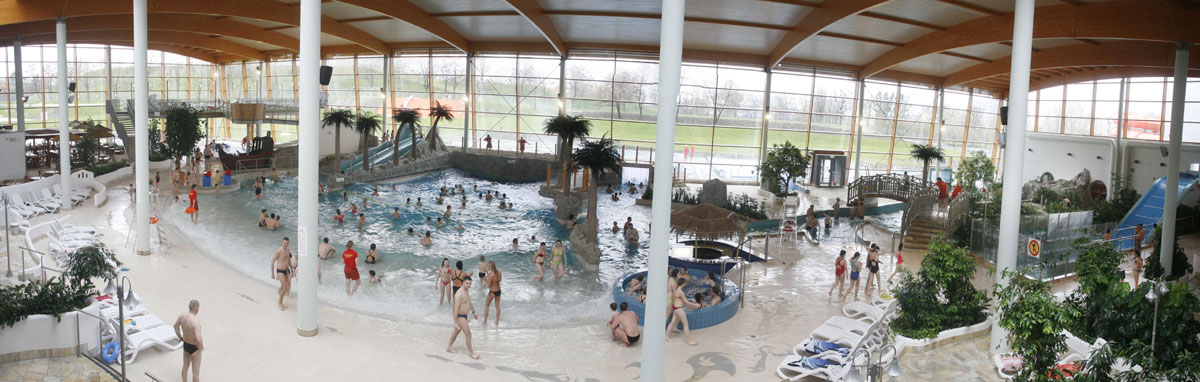
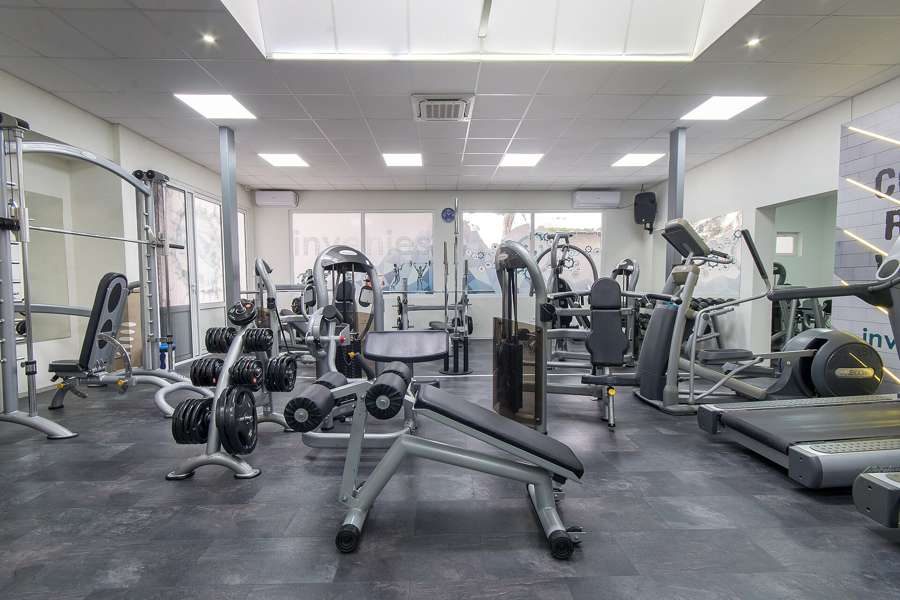
Cover: a modern gym interior - photo by Shixart1985, CC BY 2.0, via Wikimedia Commons. Body: the Wrocław Water Park recreational pools - photo by Wrocławski Park Wodny S.A., CC BY-SA 3.0, via Wikimedia Commons.
Frequently asked questions
Can I buy a MultiSport card without an employer?
Not directly as a retail product. MultiSport is built around employer agreements. The realistic routes are: being added as an accompanying person on someone else's employer scheme, registering as a sole trader (JDG) through the "osoba towarzyszaca" track on the eMultiSport platform, joining a freelancer benefit program such as Useme Plus, or choosing PZU Sport instead - it sells to individuals online.
What happens to my sport card when I change jobs?
It stops working. MultiSport states that cards are employee benefits and deactivate when the employment relationship ends. Your new employer's HR would need to order a fresh card under their own agreement, even with the same operator.
Is a MultiSport or Medicover card cheaper than a normal gym membership?
Usually yes if you train at least twice a week. Employee co-payments are commonly well below the 130-200 zl a month a single-chain membership costs in a big city, and the card covers thousands of venues rather than one chain. If you train only a few times a month, a capped Light tier or a pay-per-entry app may cost less.
Can my partner or child use my card?
Not your card - it is personal and non-transferable. But most employer schemes let you order separate companion cards for a partner or family member, and both MultiSport and Medicover Sport have child variants, with children checking in through a parent's app or SMS.
Does the card cover every gym and pool in Poland?
No. Each network lists its own facilities - MultiSport says over 6,700 in Poland, Medicover Sport says over 6,000 - and premium venues, some classes and extras like saunas can be excluded or surcharged. Check the operator's map for the specific places you plan to use before choosing a tier.
Sources
- MultiSport official offer (accessed 26.10.2026)
- MultiSport knowledge base: program rules (27.02.2025)
- Medicover Sport: how to use a package (accessed 26.10.2026)
- Medicover Sport: sport packages (accessed 26.10.2026)
- fitmade.pl: individual sport card options in 2026 (06.01.2026)
- w8w.pl: MultiSport prices for sole traders (11.02.2026)