Adult Music Lessons in Poland: Trials, Language and Instruments
The essentials: Describe your starting point, confirm the teacher and language, and read what the trial includes. Ask about scheduling and instrument access before paying for a package or buying equipment.
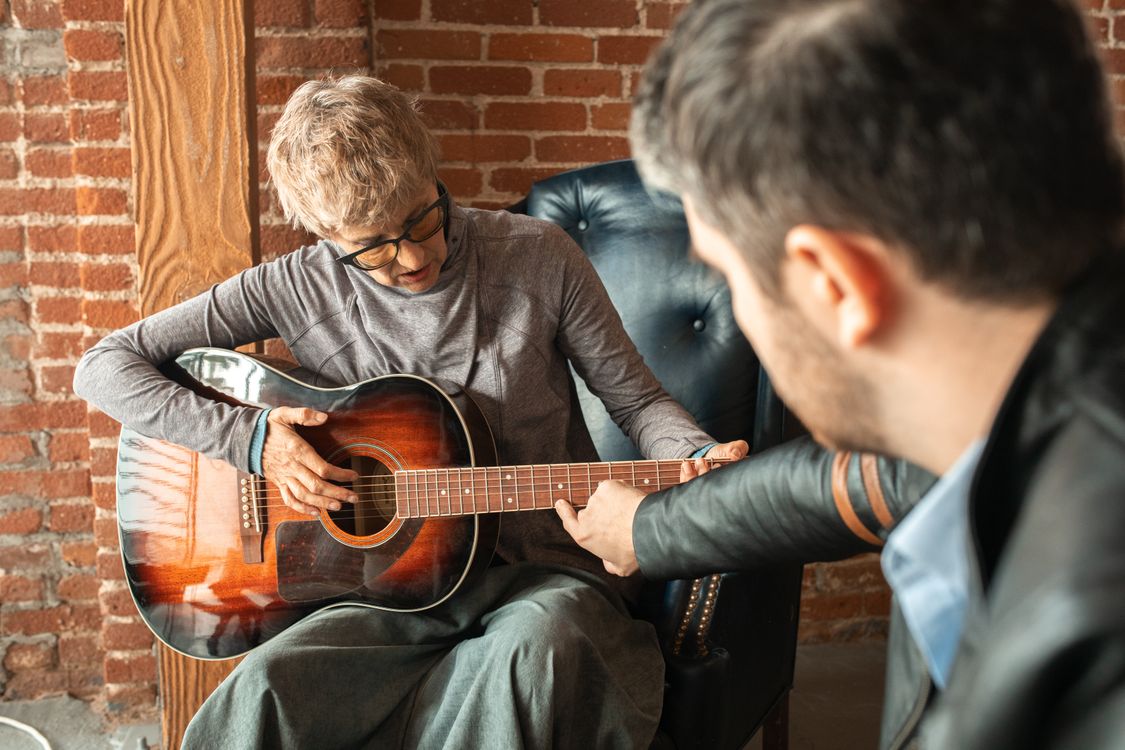
Cover: RDNE Stock project, source photograph, Pexels License. Image unchanged. An adult guitar lesson with a tutor. Illustrative tuition context, not a pictured Polish school or recommended teacher.
Starting music lessons as an adult in Poland can mean learning an instrument from zero, returning after childhood lessons or working towards a particular piece. The practical choice is the teacher and lesson arrangement, not simply the nearest place with a piano. A trial, a clear language agreement and a realistic practice plan help you choose without buying an instrument or a long course too soon.
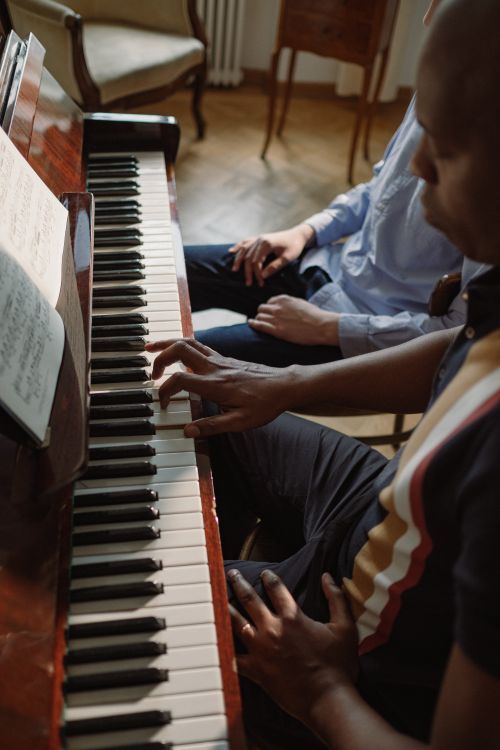
This guide covers ordinary adult tuition, using named private schools as examples. It is not admission advice for a degree programme, a teacher ranking or a guarantee of musical progress. The photographs illustrate guitar and piano instruction, not the Polish schools named below.
Say whether you are beginning or returning
Describe your actual experience when enquiring. Starting from zero, reading music but not playing and returning to an instrument after a long break are different starting points. There is no need to exaggerate what you remember to qualify for a conversation.
Unisono's adult-lesson page explicitly addresses beginners and returning players. It says the teacher starts by checking what remains from earlier learning rather than automatically treating every returner as a complete beginner.
That is a useful model for the first discussion, not proof of your present level. Explain which instrument you played, how long ago and what you want now. The teacher can then tell you how the first lesson would be organised.
Identify the kind of learning you want
A lesson can focus on a named instrument, singing or another skill. Read the school's actual offer and the teacher attached to it. Do not treat a general music-school label as proof that every instrument and style is available.
Unisono describes separate teachers and instrument areas, while Music School's trial information discusses meeting the teacher and agreeing goals. These examples show why the match needs more detail than music lessons for an adult.
If you want to play a particular kind of repertoire, say so. Ask how it fits into the teaching approach without demanding a guaranteed performance result by a fixed date. This guide does not decide which instrument is easiest or promise that one style can be learned without practice.
Distinguish individual tuition from a group
One-to-one and group lessons offer different arrangements. Unisono says its adult teaching is individual; Love Music also publishes an adult individual-lesson offer. Those descriptions belong to the named schools, not to all adult music education in Poland.
For another provider, ask how many students attend, whether they are adults and whether they share an instrument or work separately. A broad class listing may not answer those questions. Do not assume the format from the price alone.
An individual lesson is not the same service as hiring a rehearsal room or joining a choir. The teaching time, goals and teacher's role need to be understood on their own. This guide does not repackage those separate activities as private tuition.
Check the actual teacher and instruction language
Read the teacher's profile and confirm who would teach your lesson. A school's overall reputation does not settle the fit with a particular instrument, timetable or teaching approach. Ask what happens if the regular teacher is unavailable.
Unisono explicitly advertises Polish and English tuition on its adult page, with additional languages for its guitar class. That is useful source information, but confirm the actual language and teacher for the slot you want rather than treating it as universal availability.
For other schools, an English webpage or a receptionist's English does not establish lesson language. Explain that you need to discuss technique, understand feedback and ask questions, not merely complete a payment form. Keep that agreement with the lesson details.
Read what the trial actually includes
Lekcja próbna means trial lesson. It does not automatically mean free, shortened or without a commitment. Music School describes a trial as meeting the teacher, discussing goals, choosing a programme and beginning exercises.
Read the duration, price, format and any conditions before booking. A discounted introductory purchase and a regular lesson may differ. If the offer uses the same word trial for several products, establish which one you are selecting.
Use the trial to assess the teaching arrangement rather than to demand proof of a promised result. Could you understand the explanations? Were your goals discussed? Did you learn what would happen next? Those are more useful questions than expecting a complete performance after a first meeting.
Separate paying from securing the time
Music School's published trial route describes payment followed by contact to arrange the lesson time. That is a reason to check the sequence before paying, especially if you can attend only a narrow set of hours.
Ask whether a suitable teacher and time can be confirmed first, how long scheduling takes and what happens if no acceptable slot can be agreed. Do not treat an unscheduled payment as an appointment already placed in your calendar.
This article does not validate a particular checkout or current availability. Follow the school's current official route and read the actual terms. An old description of a payment provider should not be treated as a promise about the system you will see today.
Understand duration and frequency
Unisono's adult page describes lessons of thirty, forty-five or sixty minutes. Those are its options, not a universal standard. Read the duration attached to the product you are considering and how much of it is individual teaching.
Ask whether the time is fixed each week, arranged separately or sold as a course pattern. A monthly amount alone does not explain the number of lessons, holiday treatment or what happens in a month with a different calendar.
Do not select a longer lesson solely because it sounds more serious. Explain your goals and ask the teacher how the options are used. This guide does not prescribe a duration for every beginner or decide how quickly you should increase your learning time.
Ask about an instrument before buying one
Unisono says an instrument does not have to be purchased before the first lesson and that it can advise on selection, including rental for string instruments. That is the school's stated approach, not a promise that every provider lends equipment.
Ask what is available during the lesson, what you must bring and what access you will need between lessons. A piano in the teaching room does not automatically solve the home-practice question. A guitar lesson may have a different arrangement.
Avoid buying an instrument solely from a generic beginner list before the teacher understands your plan. This guide recommends no model, size or budget. The next step is to establish the relevant instrument requirements rather than create an unnecessary purchase.
Make a realistic practice conversation
Ask what kind of practice the teacher expects between lessons and how the work will be given. Written notes, selected exercises and a repertoire plan can be discussed without assuming every student has the same home environment or schedule.
Unisono's page emphasises regular practice and an individual approach. Treat that as the school's teaching philosophy rather than an independent scientific guarantee of results. This article does not promise that a fixed number of minutes produces a fixed level of playing.
Tell the teacher about practical limits, such as instrument access or available time. It is better to build a plan around the actual week than buy a demanding package and hope the constraints disappear. A clear expectation also helps you judge whether the lesson arrangement fits.
Keep hobby learning and optional exams separate
Ask whether your goal is ordinary learning, a personal repertoire project or preparation for an examination. Unisono describes exam preparation as an option while also describing its own adult programme without a compulsory entrance audition.
Do not turn one school's description into a rule for all formal music education. A private lesson offer and admission to a qualification programme are different routes. This guide does not verify external exam eligibility, recognition or a particular school's claimed exam partnership.
If an exam becomes your aim, check the actual examining body's requirements separately. For an ordinary first lesson, a teacher should be able to explain the intended learning plan without assuming that every adult needs a certificate or a public performance.
Read missed-lesson and continuation terms
Before buying more sessions, ask about cancellation deadlines, rescheduling, teacher absences and any expiry of prepaid lessons. This guide has not established a single rule shared by the named schools and does not invent one.
A trial can help settle the teacher fit while leaving the longer commitment undecided. Read what a recurring or package purchase actually does before treating it as flexible. Keep the agreed terms and confirmation rather than relying only on a friendly conversation.
A useful first music lesson brings together a suitable teacher, understandable language, a clear trial and realistic instrument access. You can begin with questions and curiosity rather than equipment you bought too soon. The important commitment is the lesson arrangement you understand, not a promise that adulthood, talent or a marketing slogan determines the outcome.
Keep the teacher's name, lesson format and agreed time together in your booking record. If a different arrangement is offered later, compare it with those details before assuming that the replacement supplies the same service.
Frequently asked questions
Must I buy an instrument before a trial?
Not necessarily. Unisono says it can advise before purchase. Ask the actual teacher what is available for the lesson and needed for practice.
Does paying for a trial always secure a specific time?
No. The cited Music School route describes payment followed by scheduling contact. Establish the actual sequence before paying.