Concentrated Milk in Poland: Unsweetened, Sweetened and Kajmak
The essentials: Keep niesłodzone, słodzone and kajmak distinct. Unsweetened concentrated milk, a sweetened ingredient and a prepared masa krówkowa have different formulations and uses; match the exact product your recipe requests.
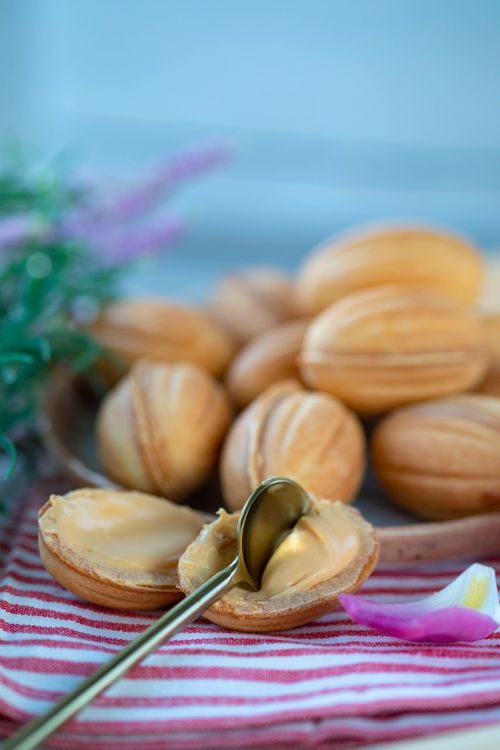
Cover: Valeria Boltneva, source photograph, Pexels License. Resized and JPEG-compressed. Walnut-shaped biscuits with condensed-milk filling. Illustrative dessert context, not a cited Polish product or verified filling formulation.
A Polish baking shelf can offer mleko zagęszczone niesłodzone, mleko zagęszczone słodzone and kajmak or masa krówkowa. Similar tins, tubes and creamy product photographs do not make them the same ingredient. One product may be positioned for coffee and sauces, another may already contain a substantial sugar component, and a prepared kajmak is sold as a filling or topping ready to use when opened.
Start with the complete name your recipe requests, then check the selected product. The examples here come from the Polish producer pages of Spółdzielnia Mleczarska w Gostyniu and Mlekovita. They identify real products and suggested uses, not a universal conversion between concentrated milks, an account of personal cooking tests or a method for making caramel at home.
Niesłodzone is part of the ingredient identity
Gostyń's Mleko zagęszczone niesłodzone gostyńskie 7.5% tłuszczu 200 g is presented in a small carton with a screw cap. Its page describes the product as ready to use on opening and suggests coffee, tea, cocoa, baking, creams, liqueurs and sauces. These are the maker's intended uses for the named unsweetened concentrated product, rather than proof that it can replace every other dairy ingredient in those dishes.
The page's composition field is labelled main ingredients and says milk, with a 7.5% fat statement. That wording is not presented here as an independently verified exhaustive ingredient list. When the full formulation matters, inspect the current carton rather than assuming a short producer summary contains every detail that would appear on the pack. This distinction keeps a useful product description from becoming a stronger claim than the source supports.
The practical note is simple: retain zagęszczone and niesłodzone, not just milk. A recipe using an unsweetened concentrated ingredient has a different starting point from one that asks for a sweetened product. The shared pale colour or similar brand design cannot establish which one the recipe intended, particularly when an online store shortens the name in its search results.
Another unsweetened product has an explicit list
Mlekovita's Wypasione mleko zagęszczone 500 g page gives ingredients as milk and carrageenan as a stabiliser. It states fat content 7.5% and separately gives non-fat dry matter 17.5%. These are different measurements in the product information. The guide does not add them into an invented milk percentage or treat either figure as a spoonful conversion for a recipe.
Mlekovita suggests this product for coffee or tea and also mentions cocoa, baked goods, creams and desserts. That overlaps with some uses on the Gostyń page, but overlapping uses do not prove identical formulations. A producer's suggestion that a concentrated milk can be used in a cream does not mean the product is already a finished pastry filling or that it behaves like every other concentrated milk.
The explicit Mlekovita list is useful because it demonstrates why each product should be read individually. Do not transfer its stabiliser statement to Gostyń's carton merely because both have a 7.5% fat figure. Equally, the shorter main-ingredient summary on another page should not be used to claim that a competing product has no stabiliser. Keep the evidence attached to the product it actually describes.
Słodzone changes the starting mixture
Gostyń's Mleko zagęszczone słodzone gostyńskie 530 g is a separate sweetened product in a tin. Its main-ingredient field names evaporated milk and sucrose and states 8% fat. The producer describes a thick, creamy, very sweet character and lists uses including cakes, ice cream, coffee, sweet creams, sauces and liqueurs. Again, the main-ingredient field is a producer summary rather than an exhaustive label transcription supplied by this article.
The important comparison is that sweetness is already part of the selected product. If a recipe separately specifies an unsweetened concentrated milk and its own sugar, buying the sweetened tin changes the starting formulation. This guide does not supply a universal amount of sugar to remove, a dilution recipe or a promise that the final texture will remain unchanged after a substitution.
The producer also says the sweetened product is ready to use when opened. That identifies its availability as an ingredient, not a claim that every dessert listed can be made without further steps. A recipe for a cake or frozen dessert still needs its own complete method. The tin's product description does not replace those instructions or provide an all-purpose cooking time.
A sweetened tube has another actual recipe
Mlekovita's Wypasione mleko zagęszczone słodzone 150 g page describes a ready-to-eat product in a tube. Its ingredients are sugar 44.5%, cream, skimmed milk powder and milk. The producer suggests drinks such as coffee or chocolate, ice cream, fruit desserts and sweet baking, and points to the tube as useful for decorating desserts. This is a concrete formulation, not a generic definition of every condensed-milk tube.
The 44.5% figure belongs to the sugar component in this named product. It does not establish the sugar percentage of Gostyń's 530 g tin, which has a differently worded producer summary. Do not borrow the number because both products are called sweetened concentrated milk. The same broad category can contain separately formulated items in different formats and sizes.
The tube is also a purchase and dispensing format, not proof that its contents are interchangeable with a ready kajmak filling. A product can be convenient for adding a sweet element to a dessert without being the same prepared confection mixture as another tin. Save the full name and intended role when you want to repeat the particular ingredient you liked.
Kajmak and masa krówkowa identify the prepared product
Gostyń's Kajmak masa krówkowa gostyńska 510 g is presented as ready to use when opened. Its main-ingredient field names evaporated milk and sucrose and gives a 7.2% fat statement. The producer describes a thick, sweet product and suggests pancakes, waffles, wafers, cake creams, small pastry fillings, ice cream, desserts and spreading on bread. Those uses support its position as a prepared sweet topping or filling ingredient.
This is not simply the sweetened-milk tin with a different weight printed on it. The producer lists it as a distinct product with a distinct name, character and intended uses. If a recipe asks for ready kajmak, retain that identity in the shopping note instead of buying sweetened concentrated milk and assuming the remaining work is already done.
The sweetened-milk page mentions kajmak as a possible use after cooking, but this guide deliberately supplies no can-heating or caramel-making procedure. A brief use suggestion is not enough to establish a complete safe method. For this shopping decision, the useful distinction is between a product sold ready as kajmak and a different ingredient that a separate recipe might transform through further preparation.
Słony karmel is its own variant
Gostyń's salted-caramel kajmak 510 g page keeps the prepared masa krówkowa identity but adds a named flavour choice. Its main-ingredient summary lists evaporated milk, sucrose and edible salt, with a 7.2% fat statement. The producer again suggests pancakes, waffles, wafers and desserts and describes it as ready to use when opened. This is evidence for the particular salted variant, not a salt formula for all kajmak.
If you want the classic product for a recipe, a salted-caramel substitution should be deliberate. The variant has already made an extra flavour decision. The guide gives no universal correction, such as omitting an assumed spoonful of salt elsewhere, because the producer summary does not supply the information needed for that calculation and recipes have different balances.
Likewise, a caramel-coloured image is not enough to identify the salted version. Retain słony karmel with the brand and full product name. In a store listing, open the selected variant rather than relying on a shared photograph for the range. The name and written product information are more reliable than trying to distinguish two similar tins by colour alone.
Keep product measurements and handling separate
A fat figure, a sugar-ingredient share and a pack weight answer different questions. The cited 7.5%, 8% and 7.2% fat statements do not identify the percentage of concentrated milk in the package. The tube's sugar figure is not a whole-range specification. The gram weight tells you how much of the named product is sold, not its volume in millilitres or an equivalent amount of another ingredient.
Read the current pack's handling instructions, particularly after opening. Some producer pages give general storage information without clearly separating an opened container from a sealed one. This guide does not turn those summaries into a blanket opened-pack storage rule. Nor does it give dietary-suitability assurances, health rankings or a guarantee that one dairy formulation meets an individual's requirements.
Match the complete name before changing a recipe
For the unsweetened concentrated ingredient, keep niesłodzone and the exact product in the note. For a sweetened ingredient, retain słodzone and read its actual formulation. For a prepared filling or topping, keep kajmak or masa krówkowa and any flavour variant. Check whether the recipe wants the starting ingredient or a product already sold in its finished sweet form.
You do not need a universal concentrated-milk conversion chart to avoid the wrong tin. A clear product identity, the source's actual ingredient wording and the intended recipe role are enough to make a deliberate choice. That preserves what the dish asked for without inventing a cooking process, a sugar correction or a promise about the result that the producer never supplied.
Frequently asked questions
Is sweetened concentrated milk already the same as ready kajmak?
The cited producer lists separate products and uses. This guide supplies no can-heating or caramel-making method.
Can the producer's main-ingredient field be treated as a full label?
Not automatically. Gostyń labels those fields as main ingredients; check the current pack when the complete formulation matters.