Cultivated Mushrooms in Poland: Fresh, Frozen and Preserved
The essentials: Keep the cultivated mushroom name, form and format together. Fresh whole caps, boczniak cups, frozen slices and preserved mushrooms are different ingredients; any stated drained weight or heating method belongs to its named product.
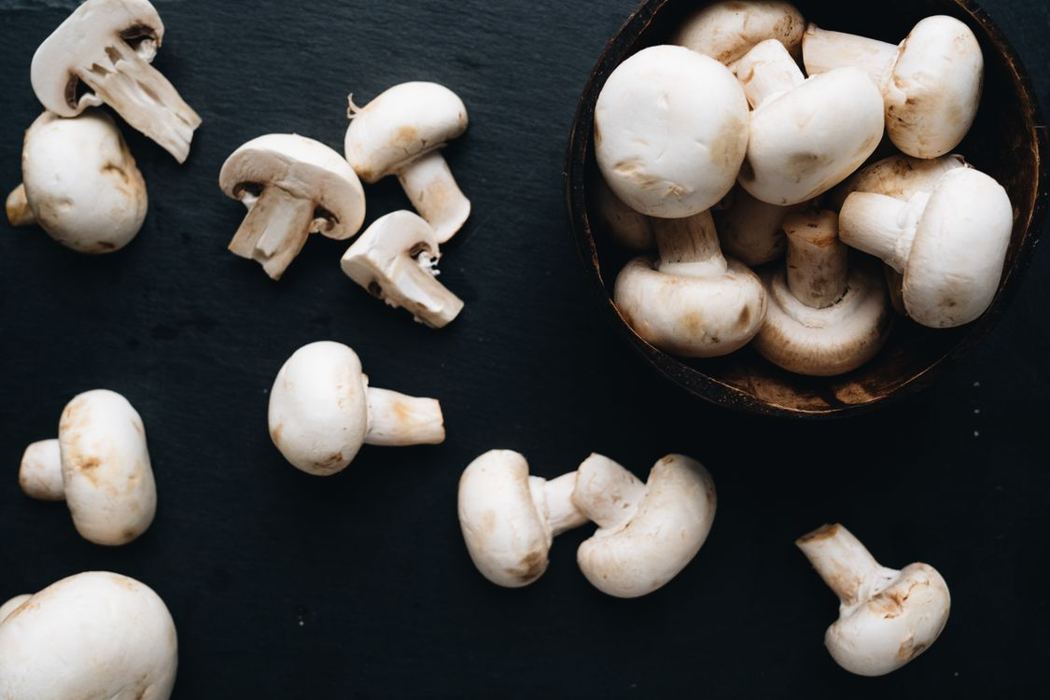
Cover: alleksana, source photograph, Pexels License. Resized and JPEG-compressed. Whole and sliced white button mushrooms on a dark surface. Illustrative product-form context, not a cited grower pack or mushroom-identification aid.
Packaged cultivated mushrooms in Poland can be whole fresh pieczarki, larger Portobello, fresh boczniaki, sliced frozen pieczarki or a preserved product in liquid. These forms are different ingredients for a meal. The word grzyby alone does not tell you whether you are buying a fresh base, a ready-to-use drained product or a frozen ingredient with its own heating directions.
This guide stays with cultivated pieczarki and boczniaki supported by grower evidence and named packaged products. It does not identify mushrooms from appearance, cover gathering wild mushrooms, or make a safety judgment about a specimen. The sources are Polish growers and actual product pages, not a firsthand taste test or a promise that every item is available in your local shop today.
Pieczarka biała has several commercial forms
The Suchożebry grower's offer describes cultivated white pieczarki in several sizes and forms. It distinguishes small mushrooms for marinating, calibrated sizes including 30–40 mm and 40–50 mm, a closed-cap rizen form and an open-cap flat form suggested for grilling and stuffing. Those are the grower's commercial descriptions, not a mushroom-identification key supplied by this article.
The practical point is to retain the form your dish needs. If a recipe asks for larger whole caps, a packet of sliced mushrooms is not the same physical starting point. A shopping note that records whole, sliced or large caps carries more useful information than white mushrooms alone. The guide does not invent a cap capacity or promise that every pack contains mushrooms of one identical size.
The grower says it supplies mushrooms loose, on trays and in retail or larger packaging according to customer requirements. Its range is evidence that these are distinct commercial formats, not a guarantee that a walk-in buyer can purchase any requested format directly. A producer's business offer and a specific supermarket pack answer different questions about what is sold and how you can buy it.
Brown pieczarki and Portobello need their full names
The same grower explicitly describes cultivation of brown pieczarki and identifies Portobello as large mature brown mushrooms within its offer. That supports treating Portobello as a named cultivated product choice here. It does not support assigning every brown mushroom in a photograph to that product, or using this article to decide whether an unknown mushroom belongs in a meal.
For shopping, keep pieczarka brązowa or Portobello with the named producer and pack. A smaller brown pieczarka and a larger Portobello format may serve different purposes in your recipe. This guide gives no universal substitution weight, shrinkage factor or cooking-time conversion between them. Select the form deliberately and follow the complete method for the actual dish.
Kaczmarek's product page supplies further concrete pack examples: brown pieczarki in 150 g or 250 g cups, and Portobello in a cup or a four-piece tray. The four-piece statement belongs to the listed Portobello tray, not every mushroom cup on the page. Keep count and net weight separate rather than inferring the weight of each cap from a different product's package.
Boczniak is another cultivated packaged ingredient
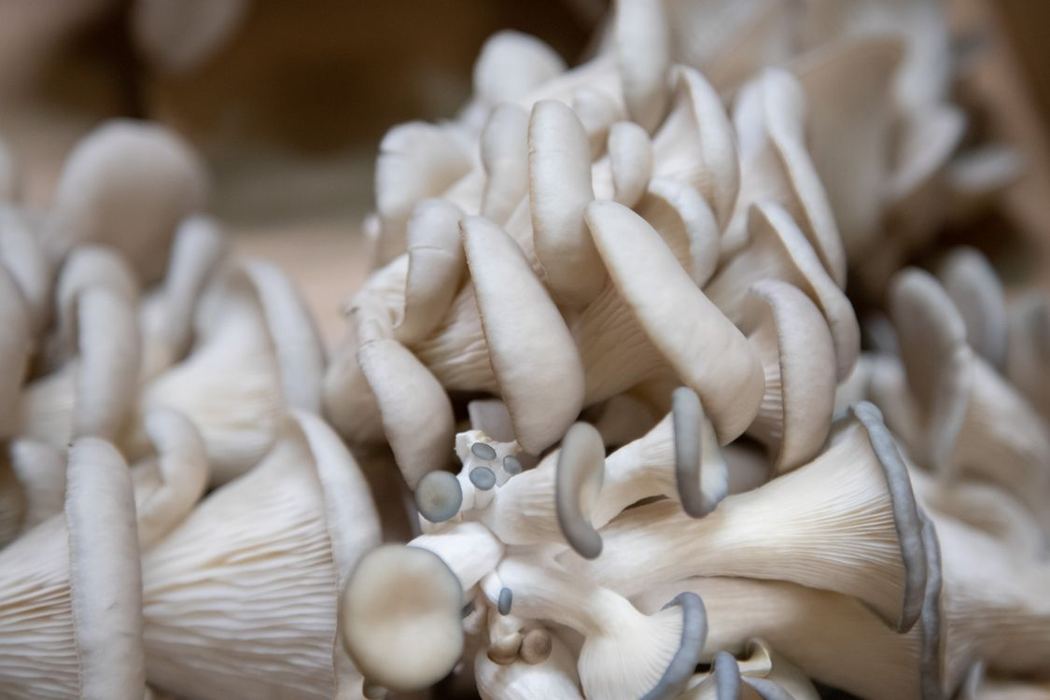
The Suchożebry grower states that its boczniaki are grown in controlled conditions and supplied loose or in retail packs. This is the cultivation evidence for including oyster mushrooms in the guide. The choice is a named cultivated product, not a claim that any oyster-shaped mushroom seen elsewhere is edible or commercially grown.
Kaczmarek lists Boczniak karpa in 150 g or 250 g cups. That gives a specific product form and pack-size choice. Retain karpa with the name if that is what you want to buy, rather than treating a picture of separated mushroom pieces as a guarantee of the packet's contents. The guide does not turn that pack form into an instruction about trimming or which parts to discard.
The grower's wider page gives cooking ideas, but its health and medicinal statements are not repeated here. A useful ingredient-shopping comparison does not need a health ranking or a promise that mushrooms deliver a particular treatment effect. The grounded facts are the cultivated product, the named form and the packaging, with the recipe supplying the actual preparation method.
Grower pack sizes are not all household buying options
The Suchożebry offer includes plastic crates with a maximum stated capacity of 3 kg and cups in several gram weights, including 200 g, 250 g, 400 g and 500 g. These describe the producer's packing capabilities. They are not proof that every combination of mushroom, size and cup weight is stocked at a nearby supermarket or available for a single retail purchase.
If you find an online listing, distinguish the net mushroom contents from a delivery box or a multi-pack. Kaczmarek also lists boczniaki in larger crates, separately from its small cups. Do not copy a crate weight into a shopping note for one cup. A clear product identity should include the actual pack offered by the seller you choose.
That distinction matters when your recipe needs a modest quantity rather than a catering purchase. It is enough to identify the correct format before ordering. This guide does not invent price-per-portion comparisons, claim a grower accepts small orders, or assume that a trade catalogue is a direct household checkout route. Current stock and purchase terms need the chosen seller's own current listing.
Sliced frozen pieczarki have a formulated product statement
Bonduelle Food Service's Polish Greenology page for Pieczarki krojone identifies a 2500 g frozen product. Its ingredients are sliced pieczarki and sodium sulphite as an antioxidant. This is a named packaged example with an additional ingredient, not a rule that every sliced mushroom contains the same substance. The source also gives a sulphite allergen statement; no dietary-suitability assurance is supplied by this guide.
The product's sliced form does not make it the same as fresh sliced mushrooms or ready drained mushrooms from a can. Its source gives specific heating requirements. Keep frozen, sliced and the full product identity together if this is what you choose. A recipe that expects another form may need a different method, and the guide does not promise an unchanged result from substituting one for another.
The 2500 g size is also a food-service format. The page's number of portions is the producer's stated measure, not a recommendation about how much everyone should eat or the yield of your recipe. This guide uses the net contents to identify the actual product rather than constructing a household serving plan from the trade page.
Preserve the frozen product's complete instructions
The Greenology frozen pieczarki page gives a pan method for 500 g: fry for ten minutes in strongly heated fat without prior thawing. Its descriptive section separately says not to consume directly after thawing and to heat before use for two minutes until the product reaches 70 degrees Celsius internally. Keep those source statements with this product, rather than choosing one number as a universal mushroom timer.
The guide does not equate ten minutes on a pan with a measured internal temperature or extend the method to fresh boczniaki, fresh Portobello or another frozen brand. It also does not supply a different appliance method. If you choose the named product, use the current pack's full directions and retain any stated temperature requirement instead of relying on a shortened web headline.
This is a selection guide, not a general defrosting or food-safety tutorial. The point is that the cited frozen product carries preparation obligations that a ready-to-use can does not describe in the same way. Do not decide whether a packet is ready to eat merely from the words sliced mushrooms, a serving photograph or its similarity to another product.
Pieczarki w zalewie are a separate ready-to-use product
Greenology's Pieczarki krojone w zalewie page identifies a 3000 g can with 1920 g net contents after draining. Its ingredient list is pieczarki, water and salt. The producer says the product is ready to use: open the can and drain. These are actual details for the named food-service product, not a definition of all mushroom cans or jars.
The 3000 g figure and the 1920 g drained figure answer different questions. The first identifies the whole net contents; the second identifies the stated contents after draining the liquid. Keep the supplied figures rather than guessing the amount of usable mushroom from the size of the tin. The guide does not calculate a price comparison or transfer this drained weight to another brand.
The producer suggests pizza, stews, sauces and soups as uses. Those are possible recipe roles, not evidence that a complete sauce or stew is already inside the can. Equally, the can's ready-to-use wording belongs to its mushroom contents. It does not establish the preparation requirements of meat, dough or any other ingredient you add to a finished dish.
Preserved does not automatically mean the same liquid
Kier's whole marinated pieczarki product lists a 280 g net weight and a 160 g drained weight. Its ingredients name whole pieczarki 53%, water, carrot 8%, onion 7%, spirit vinegar, sugar, salt, spices including mustard seed, citric acid as an acidity regulator and sodium pyrosulphite as an antioxidant. This is a distinctly formulated marinated example, not plain mushrooms in water and salt.
Keep the whole form and marinated identity together. If a recipe needs the neutral canned product described above, this jar introduces other listed ingredients and a different intended flavour profile. The guide does not invent a rinsing method to make the formulations identical or guarantee that exchanging the liquid removes a particular ingredient. Choose the intended product rather than trying to erase its identity afterward.
Make the product, form and method one shopping decision
For a repeat purchase, save the brand or grower, full mushroom name, whole or sliced form, fresh or frozen or preserved format, net contents and any separately supplied drained weight. Keep the current product's preparation route with that note. A fresh Portobello tray, a boczniak cup, sliced frozen pieczarki and a marinated jar are distinct meal ingredients, not one interchangeable purchase.
Check the actual current label when a web listing is incomplete. Use grower descriptions as evidence of cultivated commercial products, never as a way to identify an unknown specimen. This keeps the guide focused on a supported shopping decision: the correct packaged cultivated mushroom and a preparation method that actually belongs to it.
Frequently asked questions
Can this guide identify mushrooms found outdoors?
No. It covers named cultivated commercial products and actual packaged examples, not wild-mushroom identification or foraging.
Are frozen slices and canned mushrooms ready to use in the same way?
No. The cited frozen product has heating requirements; the separate canned product is described as ready to use after opening and draining.