Ketchup and BBQ Sauces in Poland: Mild, Hot and Named Variants
The essentials: Read the selected ready sauce, not just mild, hot or BBQ. Tomato-puree shares and tomato-input grams have different stated bases, while named sweeteners, plum juice, smoked sugar and other additions distinguish actual formulations.
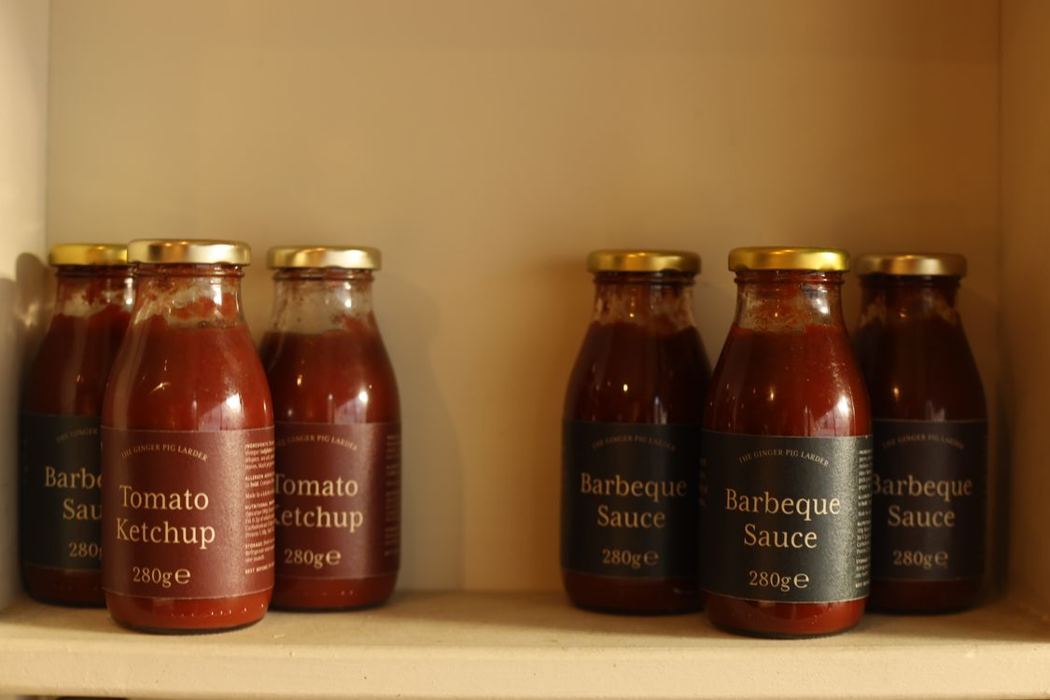
Cover: Yelena from Pexels, source photograph, Pexels License. Resized and JPEG-compressed. Bottles labelled tomato ketchup and barbecue sauce on a shelf. Illustrative ready-sauce context, not the cited brands or verified formulas.
Ready ketchup and barbecue sauces in Poland can share tomatoes, vinegar and sweet ingredients while having very different actual formulas. Łagodny, pikantny, BBQ and a named flavour variant help locate a product, but they are not a complete ingredient list or a measured heat scale. Keep the selected sauce's full name, pack and producer statement together.
This guide compares actual Pudliszki and Roleski products as ready table sauces and cooking additions. It does not repeat a guide to passata or concentrate, invent a tomato conversion, rank sauces by health or supply meat-marination and cooking times. For the separate ingredient-base question, see Tomato Products in Poland: Chopped, Passata and Concentrate. Here the focus is the prepared sauce you choose to serve or add to a dish.
A mild ketchup is an actual named product, not a universal formula
Roleski's Ketchup Łagodny in a 2000 g bag is described by the producer as a HoReCa product for food service. Its list gives tomatoes with the statement 151 g per 100 g ketchup, followed by sugar, spirit vinegar, modified starch, salt, onion, garlic, bay leaf and clove. Keep that exact product and the stated tomato-input basis in the comparison.
The 151 g statement is not a 151% share of finished ketchup. This guide does not convert it into a puree percentage or use it to calculate an equivalent quantity of another tomato product. It remains the producer's input statement for this named ready sauce. A shopping comparison is clearer when it preserves unlike units instead of forcing them into an invented ranking.
The 2000 g bag is a food-service pack, not a typical small squeeze bottle promised at every supermarket. Its size is useful for identifying the source product, but this guide does not recommend it as the best household purchase or infer that a smaller Roleski mild ketchup has an identical formula. Check the actual format you intend to buy.
A hot ketchup should keep its own list and pack
Pudliszki's producer page for Ketchup pikantny 480 g lists tomato puree 62.5%, sugar, spirit vinegar, salt, modified corn starch, natural flavourings containing celery, cayenne pepper 0.01%, seasoning and herbs. This is a concrete hot-ketchup formula, not the mild Roleski product with one optional spice added by the buyer. The producer and pack identify a separate choice.
The 0.01% cayenne figure belongs to this product's list. It does not establish a Scoville measurement, a universal hot-ketchup standard or a personal tolerance guarantee. The guide does not calculate how hot a spoonful will feel or promise that another brand with pikantny on the front has the same pepper content. Retain the actual variant rather than relying on the adjective alone.
The celery statement is also part of the named source. This guide does not turn the absence of a detail from a shortened description of another sauce into a dietary-safety assurance. If a particular ingredient matters to your purchase, read the selected current pack's complete information instead of borrowing the list of a visually similar bottle.
A same-brand mild-and-hot comparison is still product-specific
Roleski's Ketchup Pikantny 5000 g food-service page gives tomatoes with the same 151 g per 100 g ketchup input statement. Its further ingredients include sugar, spirit vinegar, modified starch, salt, onion, cayenne pepper, garlic, black pepper, bay leaf and clove. That is a different named pack and formula from the brand's cited mild 2000 g bag.
The comparison supports a limited point: the hot list explicitly names cayenne and black pepper, while the selected mild list differs. It does not supply a measured pepper share for the Roleski product or an intensity ranking against the Pudliszki 480 g ketchup. The guide does not borrow Pudliszki's 0.01% figure to fill that gap.
Both Roleski examples are food-service formats. Their size, listed ingredients and stated tomato basis belong to those exact pages, not every household bottle in the brand's range. A useful comparison can acknowledge the format without claiming current local stock, a direct small-order route or a price advantage that has not been checked with the actual seller.
A zero-named variant can include a named sweetener
Pudliszki's Ketchup łagodny zero cukru 440 g producer page lists tomato puree 86%, spirit vinegar, modified corn starch, salt, malic acid as an acidity regulator, natural flavourings and sucralose as a sweetener. The page expressly says the product contains a sweetener and is pasteurised. Those details identify this actual variant rather than a general rule about every zero-labelled sauce.
The guide does not infer that the absence of sugar as an ingredient means the sauce is unsweetened in flavour or that no sweetening ingredient is present. Here the list explicitly names sucralose. Equally, it does not expand the product name into a health claim or a promise that it suits a particular diet. The useful information is the named formula the producer actually supplies.
Keep the 440 g variant separate from the 480 g hot product. Their tomato-puree statements and other ingredients differ. The 86% and 62.5% figures can be read as their respective source statements, but this guide does not turn them into a universal quality score, compare them with a whole-tomato input figure or invent an unchanged substitution in a recipe.
A Mexican-named ketchup can contain a compound pepper ingredient
Roleski's Ketchup Premium Meksykański Keto 425 g page lists tomatoes using a 245 g per 100 g ketchup input statement, apple vinegar 8%, preserved red pepper 6%, tomato pulp 5%, Himalayan salt 2.3%, spices and sucralose. The preserved-pepper entry itself contains pepper, water, spirit vinegar and salt; the tomato-pulp entry contains tomatoes and tomato juice.
Preserve those nested components rather than treating the 6% preserved pepper as a promise of 6% pepper flesh alone. The guide does not flatten the list into a new recipe or calculate the remaining tomato share. The input statement, compound ingredients and finished-product percentages answer different questions about the actual product and should remain on their supplied bases.
The producer describes this version as mild and salsa-inspired. The Mexican wording therefore should not be treated as a guarantee of a particular heat level. Nor does the Keto name authorise this guide to recommend a diet or make a health claim. It remains one named prepared ketchup variant whose actual ingredients and intended flavour role are more precise than the style word alone.
BBQ Original has a specific plum and smoked-sugar formulation
Roleski's Sos BBQ Original 370 g page lists tomato puree 45%, sugar, unrefined cane sugar, spirit vinegar, concentrated dried-plum juice 2%, garlic, modified starch, salt, jalapeno paste, smoked sugar 1.4%, caramelised sugar and spices. The jalapeno paste itself names red and green jalapeno, water, salt and sugar. This is a multi-ingredient ready sauce with a particular producer recipe.
The source attributes the product's smoky character to smoked sugar. This guide does not substitute a smoke-flavouring ingredient from another sauce or turn its 2% concentrated dried-plum juice into a fresh-plum equivalent. Keep the actual ingredient terms and shares rather than reconstructing a different formula from the descriptive flavour language.
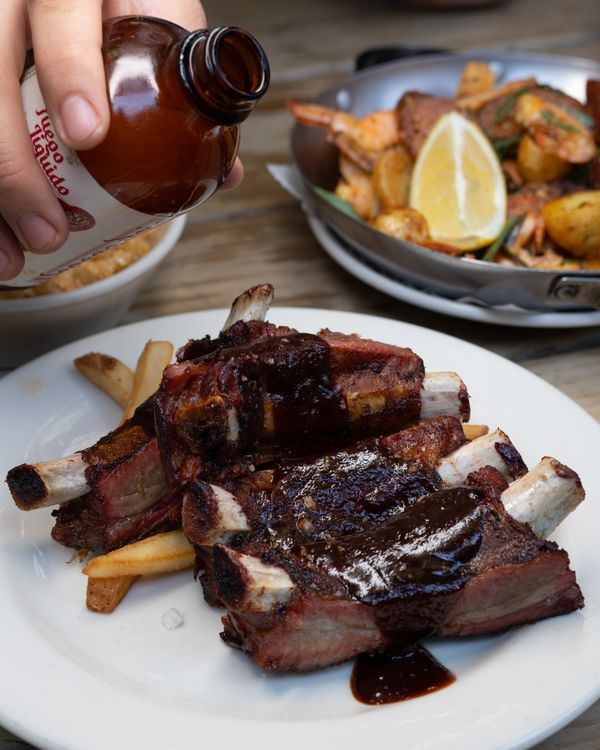
The producer suggests roles including a meat marinade, rib glaze, burger addition and dip. These identify possible uses, not a complete food-preparation method. The guide supplies no marinating duration, meat temperature or grilling timer, and it does not claim that pouring sauce over a dish proves the food has been prepared correctly. Follow a complete recipe for any cooking application.
Another BBQ-style sauce is not the same Original formula
Roleski's Sos do Karkówki i Żeberek 370 g page describes a sauce with BBQ notes. Its list gives tomato puree 35%, sugar, water, apple vinegar, cane molasses, modified starch, salt, spices, mustard flour, smoke flavouring and natural flavouring. This is a separate named sauce from BBQ Original, even though both are suggested for foods associated with grilling.
The differences are actual ingredients, not a claim based on bottle colour. The cited karkówka-and-ribs sauce names smoke flavouring and mustard flour, while the Original list supplies its own smoked-sugar and plum-juice details. This guide does not combine them into a single Roleski barbecue recipe or assume that a shared serving role proves identical formulations.
The producer's descriptive prose mentions clove and ginger, while the detailed list groups spices without supplying individual shares. The guide does not invent those quantities or present the summary as a complete specification. Use the actual current label when that level of detail matters. A flavour suggestion and a quantified ingredient statement are not interchangeable evidence.
Choose the ready sauce, then use the right recipe
For a repeat purchase, record producer, full product and flavour name, net contents and the actual ingredient statement that mattered to your choice. Keep food-service bags separate from household bottles. A mild ketchup, a cayenne-containing ketchup, a sucralose-sweetened variant and a plum-and-smoked-sugar BBQ sauce are distinct ready products, not merely interchangeable red condiments.
Use the current selected packet for handling instructions and a complete recipe for any cooking. Do not transfer a tomato-input figure, heat claim or marination time from another product. The aim is a deliberate sauce choice with its formulation intact, while the separate tomato-base guide handles the different question of buying chopped tomatoes, passata or concentrate.
Frequently asked questions
Does 151 g tomatoes per 100 g ketchup mean 151% finished tomato puree?
No. It is the cited producer's tomato-input statement. This guide does not convert it into a puree share.
Does pikantny establish a measured heat level?
No. The cited pepper ingredients do not provide a Scoville measurement or personal tolerance guarantee.
Can the BBQ use suggestions supply a meat-cooking timer?
No. Marinade, glaze and dip describe roles. A complete recipe is still needed for cooking.