Bottled Salad Dressings in Poland: Four Actual Formulations
The essentials: Read each bottled dressing as its own formula. The cited Vinaigrette Classic list has no oil entry; Caesar has yogurt and cheese-flavour wording but no cheese ingredient. Garlic and Dijon have separate quantified components.
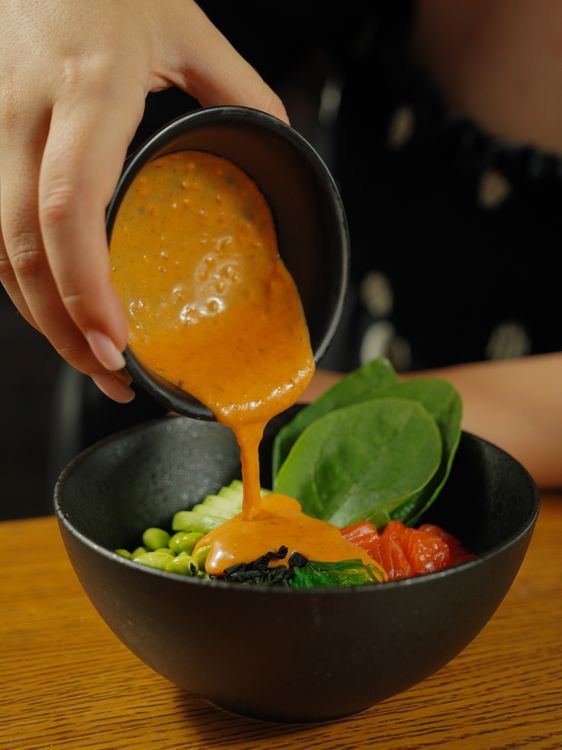
Cover: Nadin Sh, source photograph, Pexels License. Resized and JPEG-compressed. A hand pouring creamy dressing over a vegetable salad. Illustrative serving context, not a cited bottle or verified ingredients.
A bottle labelled vinaigrette, Caesar or garlic dressing in Poland is a finished formulation, not a universal homemade recipe. Two dressings from the same range can differ in their oils, vinegar ingredients, yogurt and flavouring statements. The familiar style name helps locate the product, but the actual list tells you what you are choosing.
Four Develey 250 ml products provide the concrete examples below: Premium Vinaigrette Classic, Caesar in an American style, garlic in a Greek style and Winegret Dijon in a French style. These are named ready dressings, not instructions for mixing oil and vinegar, lessons in mayonnaise or mustard, or taste-test rankings. The serving photographs are illustrative, not the cited bottles or proof of their formulas.
Vinaigrette Classic does not declare an oil ingredient
Develey's Premium Vinaigrette Classic 250 ml page lists water, apple vinegar, spirit vinegar, unrefined cane sugar 6%, white balsamic vinegar 5.8%, rock salt, herbs, paprika, acidity regulators, xanthan gum and spice extracts. The captured ingredient list has no oil entry. That matters if you were about to complete the formula from a remembered homemade vinaigrette.
The word vinaigrette does not authorise adding a three-to-one oil-and-vinegar ratio to this product description. The guide neither reconstructs the bottle nor converts it into a recipe. It preserves the maker's actual list, which contains several vinegar ingredients and a thickener. A pale or translucent appearance would not independently establish any missing ingredient.
Keep Premium Vinaigrette Classic and 250 ml in a repeat order. A different bottle called winegret within the same range may have oil in its own list. The shared family name is therefore not enough to treat the products as equivalent. Choose the actual formulation you intend rather than using one general dressing word as a substitute for the full product.
The balsamic ingredient has its own nested list
The same Vinaigrette Classic page identifies white balsamic vinegar 5.8%, with wine vinegar and concentrated grape must inside that component. The 5.8% belongs to the named white balsamic ingredient, not to all vinegar in the bottle. Apple vinegar and spirit vinegar appear as separate entries without their own percentages in the captured list.
This guide does not add those unknown amounts or invent a total acid concentration. Nor does it describe the bottle as 5.8% grape must, since grape must is nested inside the white balsamic component. The printed structure tells you which preparation is being quantified. Keeping that structure avoids turning a useful detail into a false headline.
The maker describes the product as a ready salad dressing based on balsamic vinegar, in an Italian style. That is a product description, not a certification of origin or a claim that balsamic vinegar is the only vinegar used. The specific ingredient list supplies the fuller shopping picture. A style phrase and a component share answer different questions.
Caesar names a flavour, not a cheese declaration
Develey's Dressing Caesar in an American style 250 ml is described as a ready cheese-flavoured salad sauce with yogurt. Its actual ingredient list includes water, rapeseed oil, spirit vinegar, yogurt 7%, sugar, salt, garlic, oregano, milk proteins, spices containing celery, modified starch, xanthan gum, lactic acid, natural flavouring and lemon juice from concentrate.
There is no cheese entry in the captured ingredient list. The guide therefore does not invent Parmesan, another cheese or an amount of cheese from the cheese-flavour description. It also does not add anchovies because they might be expected from a different Caesar recipe. The named bottle must be described from its own statement rather than a remembered restaurant salad.
The yogurt 7% is a declared ingredient share for this product. It does not describe all dairy components, because milk proteins are also listed separately. Keep both facts visible without guessing a total dairy percentage. If an ingredient affects your choice, inspect the current bottle's complete declaration rather than using the Caesar name as an ingredient checklist.
Garlic dressing supplies a separate yogurt share
Develey's Dressing Czosnkowy in a Greek style 250 ml lists water, rapeseed oil, yogurt 11%, garlic 3.4%, unrefined cane sugar 3.3%, onion, spirit vinegar, modified starch, rock salt, milk proteins, spices, herbs, citric acid, xanthan gum and natural flavourings. This is another actual formula, not the Caesar dressing with its name changed.
The 11% yogurt and 3.4% garlic figures are separate ingredient statements. Neither establishes the amount of every dairy component, the intensity perceived by every diner or a homemade garlic-sauce ratio. The list also includes milk proteins without a percentage. As with the Caesar example, the guide does not calculate an undeclared total from the ingredients that happen to be quantified.
Greek style is part of the product's description. It does not prove Greek manufacture, a particular regional recipe or a yogurt-making method. Keep the full ready-dressing name if this is the purchase you want, and read the actual ingredients alongside the style wording. A serving photo of a creamy white sauce would not distinguish these two yogurt-containing bottles reliably.
Dijon dressing is a finished mixture with oil
Develey's Dressing Winegret Dijon in a French style 250 ml lists water, rapeseed oil, apple vinegar 7.5%, unrefined cane sugar 4%, Dijon mustard 1.5%, rock salt, spirit vinegar, paprika, onion, spices, herbs, lemon juice from concentrate, xanthan gum, carotene colouring and natural flavourings. Unlike the cited Vinaigrette Classic list, this one expressly names rapeseed oil.
That contrast is useful without becoming a calorie ranking or a claim that one bottle is better. It shows why a search result shortened to Develey vinaigrette can lose the product you intended. Classic and Dijon are not interchangeable names within one fixed recipe. Save the named variant and 250 ml quantity when placing or repeating an order.
The apple-vinegar percentage belongs to this particular list. It should not be used to fill the missing apple-vinegar quantity on the Classic page. Likewise, the presence of lemon juice does not establish a universal acidity or a measured sourness comparison. The product is already formulated; the guide identifies its declared components rather than designing a substitute.
Prepared Dijon mustard is a nested component
Inside the Dijon dressing's 1.5% mustard entry, the producer names water, mustard seed, spirit vinegar and salt. The 1.5% therefore describes prepared Dijon mustard, not a claim that the entire dressing contains 1.5% mustard seed. The nested list should stay attached to the component it explains.
This is not a lesson in choosing a jar of mustard or recreating Dijon dressing from scratch. It is a practical reading point for the actual bottle: a multi-ingredient preparation can itself appear inside another finished preparation. Shortening the entry to mustard seed 1.5% would change what the maker declared and would overstate what the source supports.
The same care applies across the range. A white balsamic component can contain wine vinegar and grape must; a yogurt-containing dressing can also list milk proteins. Preserve each level rather than flattening all the names into guessed totals. You can compare products accurately without calculating ingredients for which the producer did not supply a separate quantity.
A salad role does not make every bottle the same purchase
The producer suggests dressings for salads of fresh, cooked or grilled vegetables and as dips for vegetables. Those are serving roles for the range, not proof that each variant has the same ingredients or that a photograph shows a particular bottle. This guide has not tested which dressing suits every salad or measured coating performance.
Choose the named flavour and formula you want before considering the serving role. A bottle for a dip can still be Vinaigrette Classic, garlic, Caesar or Dijon, each with its own list. A store's generic dressing category should not erase the difference. If the selected variant changes, revisit the actual declaration instead of assuming only the label colour changed.
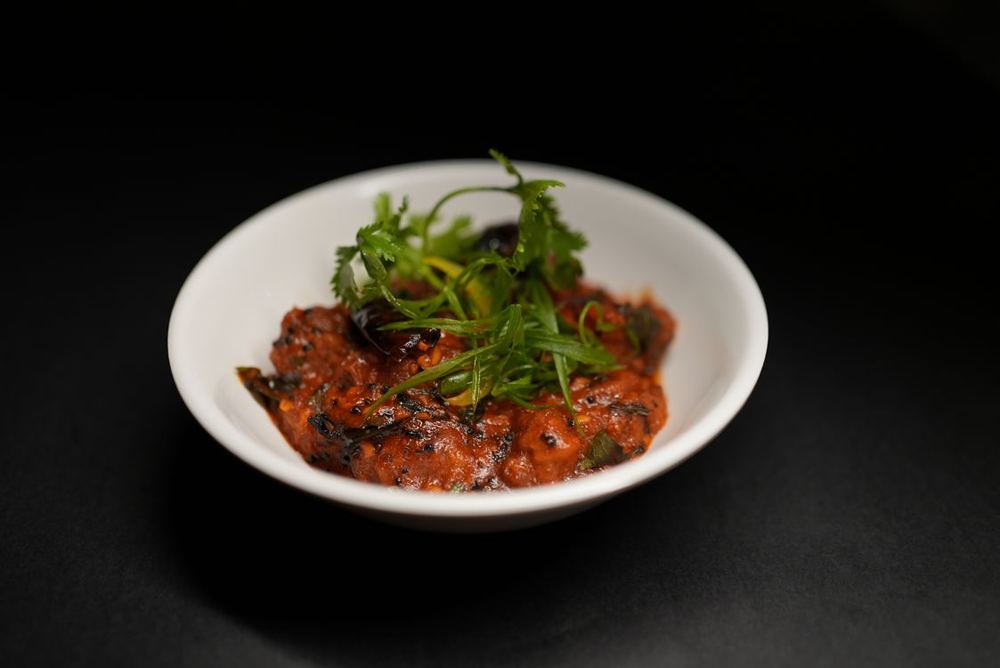
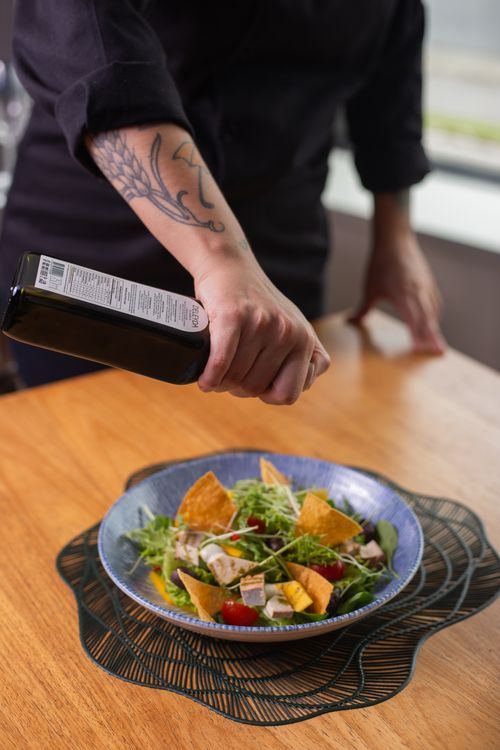
The photographs illustrate dressing being added to salads. They do not verify an oil identity, cheese component, brand or amount. In particular, they must not be used to put oil into the Classic formula or cheese into the Caesar declaration. The written producer statement remains the evidence for those specific products.
Handling belongs to the selected product
The cited producer pages instruct the user to shake the dressing before use and refrigerate it after opening. The Dijon page also says to close the bottle after each use. These are product handling instructions, not a universal opened-life period. The guide does not add a number of days where the captured page does not provide one.
Follow the current bottle if its directions differ or include more detail than an online listing. A ready dressing's appearance does not establish how long an opened container remains suitable, and another sauce's instructions are not a substitute. This shopping comparison does not diagnose changes in a bottle or provide food-safety advice from a photograph.
For an accurate saved order, keep brand, full variant and 250 ml pack together. Add any ingredient distinction that drove the choice: Classic's declared vinegar formulation without an oil entry, Caesar's yogurt and cheese-flavour wording without a cheese ingredient, garlic's own yogurt share, or Dijon's nested prepared mustard. Those details preserve the actual purchase without an invented homemade recipe.
Frequently asked questions
Can an oil-to-vinegar ratio be assigned to Vinaigrette Classic?
No. The captured producer list has no oil entry and does not supply a homemade ratio.
Does the cited Caesar list contain cheese or anchovies?
Neither appears in the captured ingredient declaration. The maker describes a cheese flavour with yogurt; the guide does not invent additional ingredients.
Does 1.5% Dijon mean 1.5% mustard seed?
No. It is a prepared Dijon mustard component with its own nested list, not a whole-dressing mustard-seed share.