Yogurt in Poland: Fruit Preparations and Thick-Style Products
The essentials: Keep the exact yogurt and pack. Strawberry puree from concentrate, strawberries and a multi-ingredient fruit preparation have different stated bases. Preserve thick-style wording without inferring origin, straining or cooking performance.
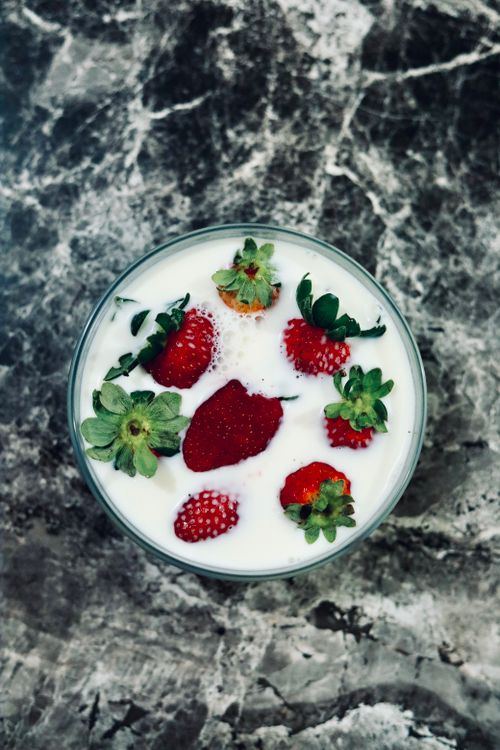
Cover: Anderson Martins, source photograph, Pexels License. Resized and JPEG-compressed. Strawberries in a bowl of yogurt. Illustrative serving context, not a cited product or verified fruit share.
Two strawberry yogurts from the same Polish producer can contain different forms and amounts of fruit. A carton may declare strawberry puree from concentrate, while a cup names strawberries and pieces of fruit. A thick-style yogurt or a fruit-layer skyr has another actual formula again. Buying by brand and flavour alone can lose the product you intended.
The named Mlekovita and Piątnica examples below focus on yogurt formulations, fruit preparations and product formats. They are not a lesson in fermented drinks, a culture comparison or a health ranking. The useful shopping details are the full name, the exact pack, the ingredient wording and the basis of any percentage. No tasting, straining or home preparation was carried out for this guide.
The strawberry carton names puree from concentrate
Mlekovita's Jogurt Polski truskawka page identifies a 1 kg carton with a screw cap. Its ingredient list starts with pasteurised milk and sugar, followed by strawberry puree from concentrate 3.6%, skimmed milk powder, starch, a black-carrot and beetroot-juice concentrate, flavourings and yogurt cultures. The fruit ingredient's form belongs in an accurate description of this product.
Keep puree from concentrate attached to the 3.6% figure. The producer has not simply printed strawberries 3.6%, and this guide does not rewrite the ingredient into an equivalent quantity of fresh berries. Nor does a strawberry picture establish fruit pieces in the carton. The written list supplies a more specific answer than a generic shopping request for strawberry yogurt.
The 1 kg figure is the unit pack, while the producer separately lists a collective package of eight units. That is useful when reading a supplier listing: an outer carton quantity is not the same as the single yogurt you intended to buy. Keep the unit size in the order rather than assuming a number near the product describes the household purchase.
The strawberry cup is a separate actual formulation
Mlekovita's Jogurt Polski truskawkowy z kawałkami owoców page identifies a 350 g cup and a product with pieces of fruit. Its list names milk, strawberries 9%, sugar, starch, pectin as a stabiliser, a carrot and beetroot-juice concentrate, flavouring and yogurt cultures. This is not the carton formula presented in a smaller container.
The 9% strawberries statement and the carton's 3.6% strawberry-puree-from-concentrate statement identify different fruit ingredients in different formulas. Preserve each as printed rather than treating the two numbers as a simple fresh-fruit comparison or calculating how much to add to one product to recreate the other. The guide has not measured the pieces or compared their texture.
The ingredient lists also differ beyond the fruit. The carton names skimmed milk powder; the cited cup list names pectin. These details reinforce why the exact pack matters. They do not justify a claim that one product is more natural, better or suitable for a particular diet. A useful shopping note says 350 g cup with fruit pieces if that is the version you want.
A skyr fruit preparation has a nested quantity basis
Piątnica's Skyr z truskawkami 150 g page lists pasteurised milk, strawberry preparation 20% and yogurt cultures. Inside that preparation, the producer lists strawberries 40%, sugar, concentrated lemon juice, pectin and locust bean gum as thickeners, beetroot-juice concentrate and natural flavourings. There are two levels of declaration, not one flat strawberry percentage.
The 20% figure belongs to the strawberry preparation in the finished product. The 40% figure sits inside that preparation's ingredient statement. This guide preserves both levels and does not call the entire yogurt 40% strawberries. It also does not turn the calculation into a recipe for adding fruit to another yogurt. The practical task is identifying the actual packaged formula.
The maker describes strawberries with a layer of thick yogurt. That gives a product-format distinction from the Mlekovita fruit-piece cup and the carton. It is not evidence that every skyr flavour has the same fruit preparation, proportions or arrangement. Save z truskawkami and 150 g rather than treating skyr as the complete order or borrowing the strawberry statement for another variant.
Greek-type natural yogurt has its own short list
Piątnica's Jogurt typu greckiego naturalny 150 g page lists pasteurised milk and live yogurt cultures. The producer describes the yogurt as thick and creamy. Those are the supported details for this named product, not proof of a particular straining method, Greek origin or a guaranteed result when heated in a dish.
Typu greckiego is part of the product identity to retain when shopping. The guide does not turn a style name into a geographical certification or infer the manufacturing steps from the texture description. Likewise, the short list does not authorise silently assigning the same ingredients to another producer's thick-style yogurt. The selected item's actual statement remains the comparison point.
This example is useful beside the fruit products because it shows a named yogurt without the separately declared fruit preparation used in the strawberry skyr. The distinction concerns formulation, not a broad lesson in plain versus flavoured fermented drinks. It also does not supply a universal swap for cream, mayonnaise or another dairy ingredient in a recipe.
Vanilla wording can include several separate ingredients
Piątnica's Jogurt waniliowy 100 g page is presented in its HoReCa range. The ingredient list names milk, sugar, natural vanilla flavouring, concentrated lemon juice, crushed vanilla pod 0.02%, carotene colouring and yogurt cultures. The small pack and the food-service context should stay attached to this example rather than being presented as a promise about every retail vanilla yogurt.
The crushed-pod percentage belongs to that specific ingredient. It is not the total share of every vanilla-related component because natural vanilla flavouring appears separately without a percentage. The guide therefore does not say the yogurt contains only 0.02% vanilla in all forms, or invent an extract quantity. Keep the named components and their stated detail distinct.
The presence of a pod ingredient does not remove the colouring or flavouring entries from the actual formula. Conversely, the flavouring entry is not a reason to claim there is no vanilla-pod ingredient. Reading the complete list prevents both shortcuts. If the product form matters to an order, retain the 100 g HoReCa identity and verify the selected seller's actual pack rather than assuming a larger cup shares the list.
Compare fruit form before comparing a flavour word
The three strawberry examples demonstrate why truskawkowy is not a complete formulation. Mlekovita's carton identifies puree from concentrate. Its cup identifies strawberries and fruit pieces. Piątnica's skyr declares a fruit preparation with its own nested ingredients. These are useful differences for choosing the purchase you intended, even without a taste ranking.
A shopping comparison should retain the ingredient noun beside the number. Writing fruit 9% versus fruit 20% would lose that the second figure describes a multi-ingredient preparation. Writing strawberries 40% for the skyr would lose the nested basis entirely. Shortening the carton's puree wording to fresh strawberries would make a different unsupported claim.
If a delivery service substitutes another strawberry yogurt, check both full name and format before treating it as a repeat purchase. A familiar producer logo does not establish the same fruit ingredient, stabiliser or pack quantity. Where the actual product differs, keep the difference visible rather than trying to repair it by borrowing an ingredient list from another page.
A serving picture is not an ingredient declaration
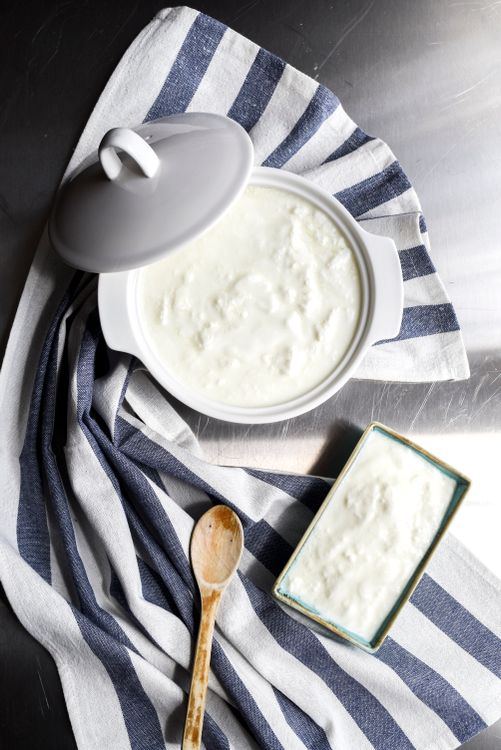
Fresh berries on top of a bowl can illustrate a yogurt serving without being ingredients in the packaged product. The photographs here show yogurt contexts, not the Mlekovita or Piątnica containers discussed above. They cannot verify the fruit share, brand, pack size or the way a producer arranged a fruit layer.
The same care applies to a producer's serving suggestions. A suggestion involving fruit or a dessert does not put those additions into the unopened yogurt's ingredient list. It also does not establish a tested substitution for a recipe. Use the written declaration to identify the packaged starting product, then keep any separately added food as a separate choice.
Thick and creamy descriptions also have limits. They can be attributed to the named producer but do not establish a measured viscosity, a straining process or identical behaviour across products. This guide has not tested spoonability or cooking performance. Its comparison is based on what is actually declared for each yogurt, not a result inferred from an attractive photograph.
Save an exact repeat-purchase note
For the carton, save Mlekovita Jogurt Polski truskawka, 1 kg and the puree-from-concentrate identity. For the fruit-piece cup, save the 350 g name with z kawałkami owoców. For Piątnica strawberry skyr, keep the 150 g variant and the nested preparation statement where it affects your comparison. Those notes distinguish the product more reliably than strawberry yogurt alone.
For Greek-type natural and the HoReCa vanilla example, preserve the style or food-service format rather than assuming every short yogurt name describes the same thing. Check the current selected pack when a particular ingredient matters. These examples do not certify individual dietary suitability, create a shared opened-life rule or make a health claim from the producer's promotional language.
The result is a clearer yogurt purchase: the actual fruit form, named style, component basis and package you want. You do not need an invented fresh-fruit conversion or a homemade formula to use those distinctions. Keep unresolved details unresolved until the actual label supplies them, and treat a different variant as a different product rather than a convenient spelling change.
Frequently asked questions
Is Piątnica strawberry skyr declared 40% strawberries overall?
No. The cited list puts 40% strawberries inside a 20% strawberry preparation. The guide preserves the nested basis.
Does Greek-type prove Greek origin or a straining method?
No. The cited producer gives a named style, milk-and-cultures list and thick texture description, not those additional claims.
Is the 350 g strawberry cup just the carton in a smaller pack?
The cited Mlekovita formulas differ: the carton names 3.6% puree from concentrate; the cup names 9% strawberries and fruit pieces.