Canned Pulses in Poland: Plain Beans and Ready Sauce Products
The essentials: Choose the product role first: cooked pulses as ingredients, seasoned beans or a ready sauce dish. Keep net and drained weights separate, preserve multipack units, and do not invent missing quantities or dry-pulse conversions.
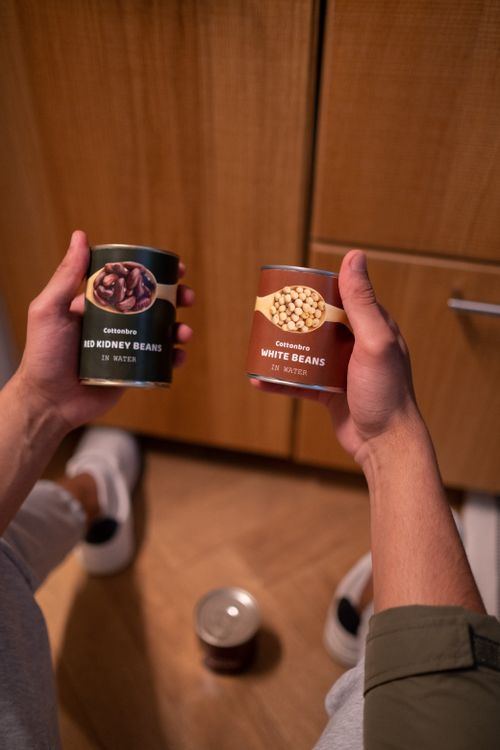
Cover: Ron Lach, source photograph, Pexels License. Resized and JPEG-compressed. A person holding tins labelled kidney beans and white beans. Illustrative packaged-pulse context, not cited Polish products or verified drained quantities.
A tin of chickpeas, a tin of kidney beans and a ready white-bean dish in tomato sauce solve different shopping problems. The first question is not simply which pulse appears on the front. It is whether you are buying cooked beans as an ingredient, a seasoned preparation or beans already combined with a sauce. In Poland, keep the full product name and the declared weight basis together.
Named Bonduelle, Heinz, Dawtona and Rolnik products make those differences visible. The examples below concern cooked packaged pulses and ready bean preparations, not dried-bean soaking, cooking times or home canning. They are not taste tests or dietary recommendations. Producer statements establish the individual product details; an incomplete page remains incomplete rather than being filled from a similar tin.
Cooked chickpeas: one product, two stated weights
Bonduelle's Cieciorka Ugotowana Na Parze page identifies a steam-cooked chickpea product. It lists soaked dried chickpeas, water and salt, with net weight 310 g and drained weight 265 g. The word dried appears inside the producer's ingredient description, but the product being sold is the cooked packaged item. It is not a 310 g bag of dry chickpeas needing the preparation used for a dried-pulse recipe.
The two weights answer different questions. Keep 310 g as the cited net quantity and 265 g as the cited drained quantity. If your recipe specifically asks for drained cooked chickpeas, the second is the relevant declared comparison. That does not justify a dry-to-cooked conversion, a claim about the exact number of portions or a universal yield for every chickpea tin.
The producer suggests salads and other dishes as uses. Those are useful shopping roles, not evidence that this guide tested a particular salad. For a repeat purchase, save the name, steam-cooked wording and pack quantity. A search for ciecierzyca or cieciorka alone may lead to a different package or a product in a sauce rather than this specific starting ingredient.
Kidney beans have their own declared quantities
Bonduelle's Czerwona Fasola Kidney page gives net weight 400 g and drained weight 240 g. Its ingredient list is water, red beans and salt. Those figures differ from the steam-cooked chickpea example, which is why using a generic one-tin amount can lose information. Neither the larger net figure nor the shared manufacturer establishes an identical drained quantity.
Keep kidney and the red-bean identity when a recipe or previous purchase specifies it. Fasola is the broad shopping word in these product names, but the selected type still matters. A plain cooked kidney-bean ingredient is a different purchase from a finished bean dish. The photographs here illustrate packaged beans and a serving context; they are not a transcription of a Polish retail label.
A useful comparison note might therefore say Bonduelle kidney, 400 g net, 240 g drained, water/beans/salt. This records what the producer actually supplies without inventing a drained ratio for a different can. If a store offers another size, inspect that item's own statement rather than scaling this example and assuming the packing arrangement is unchanged.
Small lentil tins: do not repair an unclear weight basis
Bonduelle's Soczewica Porcja na Raz na Twoją Sałatkę page describes two small tins of 75 g each and states net weight 150 g. Its drained-weight field says 65 g without making the relationship to the two-tin pack clear in the captured text. That uncertainty matters if you are buying to meet a precise drained quantity.
This guide does not multiply the 65 g figure by two or present it as the guaranteed drained weight of the entire multipack. Both would silently choose an interpretation the page does not settle. Check the actual pack for the quantity basis if your recipe or purchase calculation depends on it. A multipack's total and an individual tin's amount must remain distinguishable.
The ingredient list names beluga lentils, water, salt and calcium chloride as a firming agent. That is a particular cooked lentil formulation, not a general statement about every product called soczewica. The small-pack idea may fit a purchase where separate units are useful, but the producer's serving suggestion does not establish the right portion for your meal or prove that no leftovers will remain.
A white-bean name is not proof of an unseasoned list
The Bonduelle Biała Fasola page states 400 g net and lists water, white beans 48%, sugar, salt, spirit vinegar, paprika, garlic and white pepper. The captured page does not supply a drained-weight figure. Its short white-bean name should therefore not be expanded into an assumption that the only ingredients are beans, water and salt.
This is a useful contrast with the kidney example. Read the actual white-bean declaration even when the front name sounds plain. The list already contains seasoning ingredients. That may suit the intended dish, but it is a different starting point from a list limited to water, beans and salt. The guide does not assign a taste or heat level from those names.
The 48% is the page's declared white-bean share. It is not a drained-weight statement and does not supply the missing field. Nor does it justify treating the 400 g pack as 400 g of drained beans. Keep the percentage, net weight and unanswered drained-quantity question separate. If the packet in your hand differs from the online list, read that packet rather than forcing it to match this example.
Heinz Beanz is a ready tomato formulation
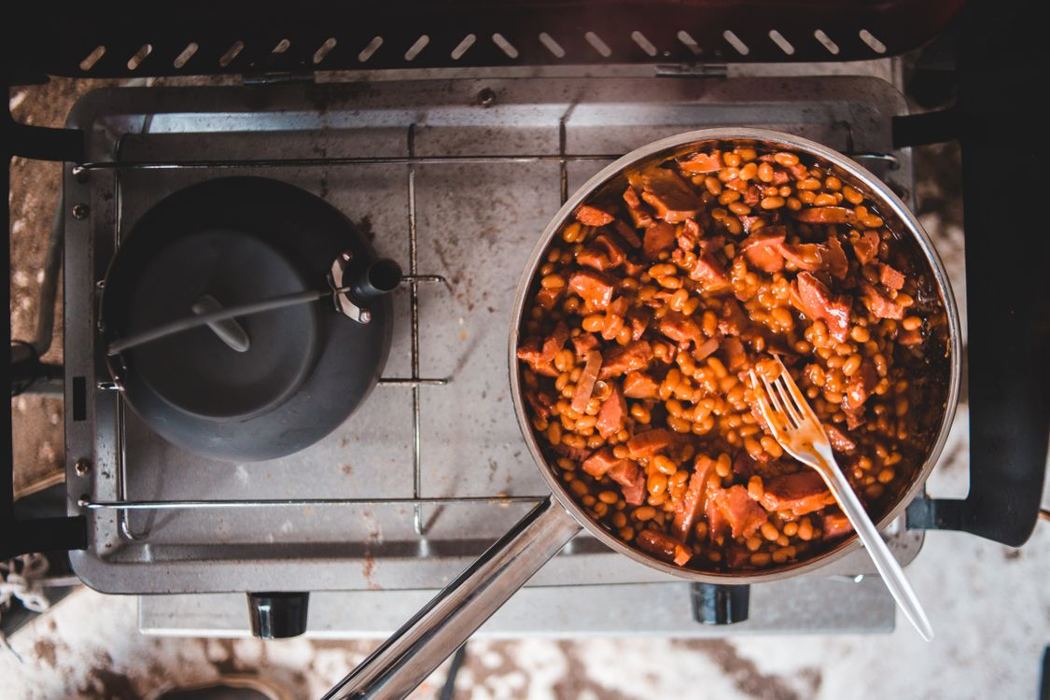
Heinz's Polish page for Fasolka Heinz Beanz lists white beans 50%, tomatoes 36%, water, sugar, spirit vinegar, modified corn starch, salt, spice extracts and herb extract. This is beans with an existing tomato-based formulation, not the same ingredient as the earlier kidney beans in water and salt. The sauce brings several choices into the dish before you add anything else.
Keep the declared tomatoes 36% attached to this particular ingredient statement. It is not a tomato-concentrate figure or a fresh-tomato conversion for another product. A recipe asking for plain drained beans plus its own sauce has specified a different starting point. Using Beanz instead changes that combination; the guide does not offer a universal correction by spoonful.
The producer page also gives heating directions, which reinforces that this is a prepared product with its own method. Follow the selected pack when serving it. This shopping guide does not turn those directions into a cooking timetable for all canned pulses or a food-safety rule for another dish. It also does not invent a drained weight where the cited page does not provide one.
Dawtona confirms the sauce product, not a complete online list
Dawtona's Fasola Biała w sosie pomidorowym 400 g page identifies white beans in tomato sauce and the 400 g pack. It describes the sauce and seasoning but does not expose a full ingredient declaration in the captured readable text. That is enough to distinguish the product role, not enough to reconstruct its complete formula from the promotional description.
A retailer, Polski Koszyk, transcribes white beans 50%, water, tomato concentrate 5.5%, sugar, modified starch, salt, vegetable oil and spices, with a separate celery statement. This is retailer-transcribed information, not a complete ingredient list independently supplied by the maker's captured page. Use the current can for the final declaration, especially where an ingredient affects your choice.
The retailer's concentrate figure and Heinz's tomatoes figure name different ingredients on different products. This guide does not put them on a single strength scale or infer which sauce tastes more of tomato. The useful decision is that both are prepared bean-and-sauce products, while their actual lists must be read separately. A similar picture of white beans does not make the two formulas identical.
Fasolka po bretońsku can name a more complete dish
Rolnik's Fasolka po bretońsku 355 ml page describes a ready dish made with beans and sausage, with a meat-and-tomato character. That places it in a different shopping role again. It is not merely another name for plain canned white beans, and the maker's description should not be shortened to beans if the presence of sausage matters to the meal you intended.
The captured producer page does not provide a complete quantitative ingredient list. The guide therefore does not invent the bean share, meat share, net weight in grams or a drained quantity. The 355 ml appears in the product identity as a volume statement. It should not be silently rewritten as 355 g or treated as the same purchase quantity as a 400 g can.
This example also explains why preserving the full ready-dish name is useful in an online order. A substitution between plain cooked beans, beans in tomato sauce and a sausage-containing bean dish changes more than the package. Choose the role first, then compare the exact named products within it rather than letting a shared bean photograph decide the order.
Make a shopping note that survives substitutions
For cooked pulse ingredients, record the pulse, exact product, net quantity and a drained quantity only where clearly supplied on the relevant basis. For a multipack, retain both the unit count and the total statement. An unresolved figure deserves a label check, not arithmetic based on another tin or an assumption that all brands pack the same way.
For sauce products and ready dishes, add the full variant to the note. Heinz Beanz, Dawtona white beans in tomato sauce and Rolnik fasolka po bretońsku are distinct preparations, not three interchangeable labels for beans. Keep any listed tomato ingredient, seasoning and other components with their own product. A drained-weight comparison is not automatically the right way to compare a dish whose sauce is part of what you want.
The aim is a deliberate purchase rather than a ranking. Pick cooked chickpeas or kidney beans when that is the ingredient your recipe names, choose a prepared sauce product when that is what you want to serve, and check the actual pack where the web leaves a quantity or ingredient question open. None of those decisions needs a guessed dry-pulse conversion or an invented cooking result.
Frequently asked questions
Is 400 g net the same as 400 g drained beans?
No. The cited Bonduelle kidney product states 400 g net and 240 g drained. Other products need their own declarations.
Does the lentil page clearly resolve the multipack drained quantity?
No. It describes two 75 g tins and 150 g net but a 65 g drained field of unclear scope. The guide does not multiply it.
Are all bean dishes plain cooked pulses?
No. The named ready sauce and sausage-containing products have distinct preparations.