Tomato Products in Poland: Chopped, Passata and Concentrate
The essentials: Krojone means chopped tomatoes, całe bez skórki means whole peeled tomatoes, passata is a smooth base and koncentrat is a concentrated addition. Match form and variant to the recipe rather than using a universal conversion ratio.
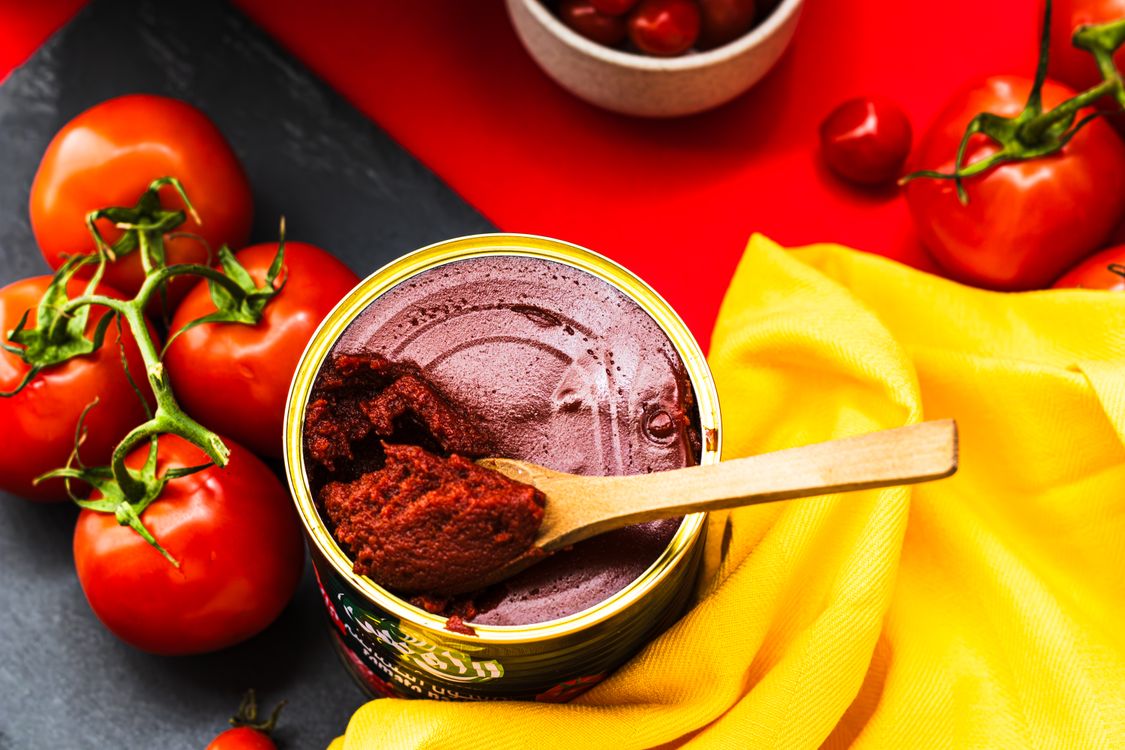
Cover: The Design Lady, source photograph, Pexels License. Image unchanged. Tomato paste in an open tin beside fresh tomatoes. Illustrative context, not a cited brand or verified concentration.
A Polish grocery shelf can offer tomatoes in pieces, whole peeled tomatoes, a smooth passata and a small pack of concentrate. All may show ripe red tomatoes, yet they are different starting ingredients. The useful choice is usually about the texture and intensity your recipe expects, not which packet has the most appealing photograph or the most Italian-looking name.
Start by deciding whether you want visible tomato pieces, a smooth base or a concentrated addition. Then read the actual product description. Mutti's Polish range provides clear examples of pulpa, passata, koncentrat and pelati, while Dawtona's range shows how plain chopped tomatoes sit beside variants with added flavourings. These examples help decode the shelf without suggesting every producer uses an identical formula.
Four names that answer different questions
Pomidory krojone means chopped tomatoes, and pomidory całe bez skórki means whole peeled tomatoes. Przecier pomidorowy describes tomato purée or a sieved tomato product in the range discussed here; Mutti uses that Polish description for passata. Koncentrat pomidorowy identifies tomato concentrate. The precise product matters because English translations of purée and paste can be used differently in recipes and grocery interfaces.
If a recipe names passata, keep that word in your shopping note instead of translating it only as purée and hoping the shop uses the same convention. If it calls for concentrated tomato paste, look for koncentrat and confirm the description. A broad translated search for "tomato purée" can hide the very distinction you need. The Polish product name and the producer's explanation together are more useful than either on its own.
Pulpa: chopped flesh with tomato juice
Mutti describes its Pulpa as finely chopped tomato flesh combined with tomato juice. The Polish page calls it pomidory drobno krojone. The producer identifies tomatoes and a little Mediterranean salt as the two ingredients and suggests uses including sauces, stews and soups. This is a product with tomato pieces and liquid together, rather than a completely smooth passata.
That combination helps explain why an uncooked ingredient can look loose when the can is opened. The juice is part of the described product, not evidence that the can contains only drained pieces. If your recipe expects the whole contents, do not automatically discard the liquid because you wanted "chopped tomatoes". If a recipe specifically asks for drained tomatoes, follow that separate requirement and check what the chosen package actually provides.
Mutti says its chopped product contains more water than its passata or tomato paste and links it to longer cooking or higher-temperature uses. That is the producer's comparison within its range, not a universal specification for every chopped tomato sold in Poland. It provides a useful cooking cue without supporting a fixed substitution ratio or a promise that two different brands will reduce at exactly the same speed.
Whole peeled tomatoes keep a different starting shape
Mutti's Pelati page identifies whole peeled tomatoes and describes them as being placed in passata. The producer suggests uses including soups, stews, sauces, marinara and pizza. The important shopping distinction is the starting form: whole tomatoes in a tomato medium rather than finely chopped pieces or a fully smooth product. Whether a recipe later breaks them down is a separate step.
Do not confuse "whole" with "unpeeled". The phrase bez skórki means without skin, and both words belong in the description if that is what your recipe needs. A listing shortened to "whole tomatoes" can lose that detail. Equally, a can showing a whole tomato on the front may still contain chopped tomatoes as the actual product. The written name is more reliable than the serving image.
Mutti's whole-tomato page contains an imprecise manufacturing paragraph that can read as if the tomatoes themselves are turned into purée. Its main product identity and description are clear about whole peeled tomatoes in passata. There is no need to build a technical factory explanation from that ambiguous paragraph. For buying purposes, identify the form and surrounding tomato medium, then inspect the actual can rather than treating web copy as a substitute for the package.
Passata: a smooth base rather than visible pieces
Mutti labels its Passata as przecier pomidorowy and describes removing skins and seeds before producing a smooth tomato product. Its Polish page also mentions a little Mediterranean salt. The suggested uses include sauces, baked dishes, soups and cold dishes, with an emphasis on quick preparation. That makes it a useful starting point when your recipe wants a smooth tomato base rather than chunks that you later need to break down.
Smooth does not mean concentrated to the same degree as tomato paste. Passata and koncentrat are listed as separate products in the producer's range for a reason. If a recipe asks for a bottle-sized amount of passata, replacing it with the same amount of concentrate is not a translation. It changes the ingredient. Follow a recipe's specified product rather than trying to solve the difference by colour alone.
The producer suggests that this passata can be heated or eaten cold. Keep that statement attached to this named product rather than turning it into a rule for every tomato preparation or homemade sauce. This guide is about choosing commercial ingredients, not instructions for preservation or a general judgement about when food is safe to eat. The actual package remains the place to check the directions for your purchase.
Koncentrat: an intense addition, not another bottle of passata
Mutti's Koncentrat page describes a dense product intended to add concentrated tomato flavour, colour and consistency. The Polish range shows a 130 g format. The producer suggests both long-cooked dishes such as stews and casseroles and quicker preparations such as sauces and dips. The intended job is different from simply supplying chopped tomatoes or a smooth, larger-volume base.
The page says one kilogram of its double concentrate is made from 5.6 kilograms of fresh tomatoes. That is a producer-specific manufacturing statement. It is not an instruction to replace 5.6 kilograms of fresh tomatoes with one kilogram of concentrate in any recipe, and it does not supply a universal conversion to passata. Recipes depend on water, texture and the other ingredients as well as tomato intensity.
This is a useful example of a number that looks more transferable than it is. A factory input relationship tells you something about the product; it does not automatically become kitchen arithmetic. If your recipe calls for a stated amount of concentrate, buy that kind of ingredient. If you want to use a different tomato form, choose a recipe that accounts for the change rather than guessing a ratio from the label.
Plain products and flavoured variants need different checks
Dawtona's own chopped-tomato page lists a 400 g product intended for soups, sauces and other dishes. Its range also lists chopped versions with garlic, basil and oregano, onion or chilli. These are concrete examples of why the phrase "chopped tomatoes" is not always the complete shopping identity. A flavoured variant makes decisions about the base that a plain tomato product leaves to your recipe.
If you plan to add your own garlic and herbs, inspect whether they are already included in the selected variant. This is not a reason to avoid flavoured products. They can be convenient when their formulation fits the meal. It is a reason not to accept a substitute solely because both cans say krojone. Preserve the exact variant when you save a product you like or send someone a shopping list.
Likewise, do not assume every tomato product is an unseasoned single ingredient. The named Mutti pulpa and passata pages describe a salt addition, while other variants may include different components. Read the actual ingredients for the exact product. A national flag, a tomato percentage claim or a photograph of fresh fruit does not by itself tell you whether herbs, salt or another ingredient has been added.
Read quantities in the context of the recipe
A recipe may use the entire can, only pieces after draining, or a small amount of concentrate alongside another tomato base. Those are different instructions. Check which one you are following before comparing package sizes. The total can weight is not automatically a promise of that weight in drained tomato pieces. Use any drained-weight statement the actual package provides rather than inventing one from an online front image.
This guide does not give product-specific drained quantities because the cited pages do not establish a consistent figure for the exact examples. That is better than transferring a number from a similarly sized can. If your recipe depends on a drained quantity, inspect the selected package and buy accordingly. If it simply asks for the contents of a particular can size, retain that instruction rather than introducing a draining step that was never requested.
Match the form before choosing the brand
For visible small pieces, look at krojone or drobno krojone. For whole peeled tomatoes, retain całe bez skórki. For a smooth base, investigate passata and its actual Polish description. For a concentrated addition, look for koncentrat and the product's stated intensity or intended uses. Then decide whether you want a plain or a flavoured variant.
Keeping those distinctions in your shopping note makes later purchases more repeatable. "Passata, plain variant" is clearer than "tomato sauce", and "whole peeled tomatoes in tomato medium" is clearer than "a can of tomatoes". You can choose among producers without pretending every product is identical. The aim is a tomato ingredient that fits the recipe you intend to cook, with no accidental switch in texture, concentration or built-in seasoning.
Frequently asked questions
Is passata the same as tomato concentrate?
No. The cited producer lists them separately, with different textures and intended uses. Preserve the product named by the recipe.
Are all chopped tomatoes plain?
No. The cited Dawtona range includes plain chopped tomatoes and variants with garlic, herbs, onion or chilli.