Culinary Syrups in Poland: Maple, Agave, Date and Flavours
The essentials: Choose the actual syrup and flavour variant, not just its colour. Maple, agave and date products differ from formulated caramel-family syrups, and shared branding does not make every variant's ingredients or handling identical.
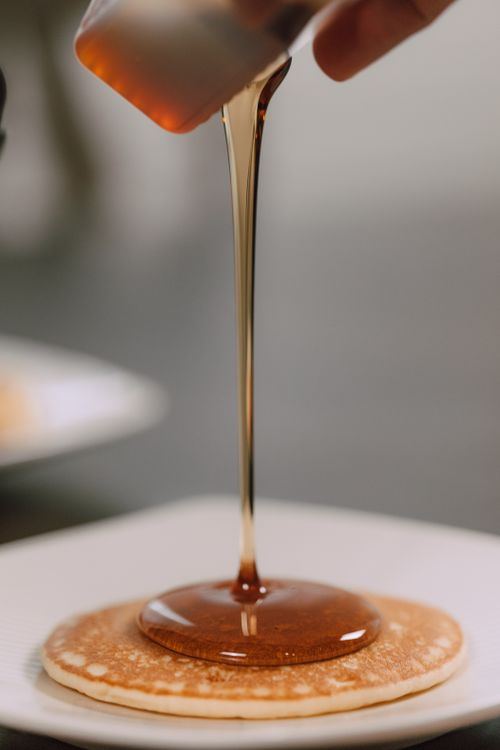
Cover: RDNE Stock project, source photograph, Pexels License. Resized and JPEG-compressed. Syrup being poured onto a pancake. Illustrative serving context, not a cited brand, verified formulation or measured recipe.
Culinary syrups sold in Poland include named maple, agave and date products as well as deliberately flavoured formulations. The word syrop does not establish that all bottles contain the same base or work as an unchanged replacement for sugar, honey or another syrup in a recipe. Start with the ingredient statement and the intended role in your dish.
This guide compares actual Targroch, Fungopol and Mount Caramel product information. It is not a health ranking, a tasting report or a conversion chart for baking. The examples stay with culinary sweetening, dessert and flavour choices rather than juice or nectar definitions. Any serving suggestion below identifies a possible use, not a promise that the pictured meal or drink contains a cited product.
A maple product should be identified by its own statement
Fungopol's Syrop klonowy 170 ml page lists maple syrup as the ingredient and says the product is made in Canada for Fungopol. It identifies a pasteurised product and gives the net volume as 170 ml. This is a concrete maple-syrup example. The guide does not infer that every amber liquid or every maple-flavoured topping has that same ingredient statement or origin.
The page suggests pouring it on pancakes, ice cream, wafers and fruit, as well as adding it to drinks. Those are product-specific use ideas, not a universal quantity or a complete recipe. If a recipe specifically asks for maple syrup, retaining that product identity is more useful than buying any syrup with a similar colour and assuming the result will be unchanged.
The same page gives a total weight of 351 g in a separate field. That is not presented as the net mass of syrup. Keep the explicitly stated net volume rather than treating the gross-style weight field as an ingredient conversion. This guide does not calculate density or translate the bottle's 170 ml into grams that the producer has not supplied as a net-content figure.
An opened-bottle instruction belongs to that bottle
Fungopol's maple page says to keep the product in a dry, cool place and, after opening, at about plus four degrees Celsius. It directs the reader to the lid for the best-before information and batch number. Those handling details stay with this named product. They do not establish an opened-storage rule for every syrup in this comparison.
The page does not give an opened-bottle use period in the captured statement, so the guide does not add one. A date printed on a package and a specific after-opening duration are different pieces of information. Read the current bottle when planning how you will use it, rather than borrowing a shelf-life promise from another brand's sales description.
The producer also states that sediment can occur naturally. This guide does not expand that observation into a diagnosis of any bottle, a guarantee about an individual change in appearance or advice about whether an uncertain product should be consumed. It retains the actual source statement without pretending that a shopping article can assess the condition of the reader's bottle.
Agave is a named ingredient, not a guessed recipe
Targroch's Syrop z agawy page identifies a 350 g product whose ingredient statement is agave syrup. Its description suggests baking, desserts and pancakes, and its use instruction is to sweeten according to preference. The source does not provide a measured sugar-replacement ratio or a promise that the same spoonful works in every recipe. This guide does not invent either one.
That makes agave a distinct product choice rather than a generic name for all liquid sweeteners. If a recipe calls for a particular agave product, save the producer and full name. A different bottle may be suitable for another purpose, but colour, squeeze-bottle shape or placement beside honey does not establish the same formula or cooking behaviour.
The 350 g pack statement is a mass, unlike the Fungopol maple bottle's 170 ml volume. Keep the units as supplied. This guide does not compare the two as if the numbers described identical volumes, calculate a cost per spoon or assign a density. A clear comparison first preserves what each package actually measures before drawing a conclusion about quantity.
Date syrup is not the same shopping form as dried dates
Targroch's Syrop daktylowy page also identifies a 350 g product. Its ingredient statement is syrup from dates. The producer suggests baking and pouring over cakes, desserts, pancakes, porridge, omelettes, ice cream and waffles, with sweetening according to preference. These are possible culinary roles for this product, not a claim that every use needs the same amount or no further preparation.
Retain the syrup identity when that is what your recipe requests. A bag of dried dates, a date paste and this named date syrup are different starting ingredients. The cited page does not supply a method for turning one into another, and this guide does not add a homemade blending or soaking procedure. A fruit name alone does not establish the product's physical form.
Nor does the ingredient statement make this a universal substitute for maple or agave syrup. The useful choice is which actual ingredient and flavour the complete dish calls for. This guide does not rank them by health, promise equivalent sweetness or calculate a liquid correction in baking. Those would require evidence beyond the product statements and the broad instruction to use according to preference.
Caramel syrup has an actual multi-ingredient formulation
Mount Caramel's own Coffee syrups page lists its Natural Caramel Syrup ingredients as caramelised sugar, water, Polish multifloral honey 0.4% and lemon juice. The brand's English page is a producer source for this stated formula. The honey is part of the named product, not an ingredient inferred from a photograph or from caramel colour.
The producer describes a use in coffee and related drinks, while its wider range includes dessert applications. This guide uses the caramel formula to distinguish the product from single-named-ingredient syrups, not to claim it is better or worse. If you choose it for a dessert, make that a deliberate flavour decision rather than treating it as a neutral liquid sugar of an unspecified recipe.
The 0.4% statement belongs to the named honey component of this formula. It is not a maple content, a claim about all the brand's products or a measurement of the finished dish after you add syrup. Do not move that percentage to another flavour just because the bottles share a design. Retain the complete product name with its own ingredient list.
Salted caramel is a separate named formulation
On the same producer page, Natural Salted Caramel Syrup lists caramelised sugar, water, Polish multifloral honey 0.4%, lemon juice and salt. Salt is an actual listed addition in that example. A product called salted caramel and the plain caramel product are therefore separate choices in this source, not an identical ingredient sold under two interchangeable front labels.
The page does not give a universal amount of salt to remove from a recipe after adding this syrup. The guide supplies no correction and does not promise that plain caramel plus an improvised pinch reproduces the selected product. If you want a repeatable flavour, keep the named salted version rather than reconstructing it from a different bottle.
Likewise, a salted-caramel colour in a serving picture cannot distinguish the variants. Product wording and the actual list carry that information. This comparison is about choosing a named culinary ingredient, not tasting the photograph or predicting the exact intensity of the finished dish. It preserves the producer's formula without claiming firsthand experience of either syrup.
Rosemary and vanilla show why a shared base is not enough
Mount Caramel's Natural Caramel with Rosemary Syrup lists caramelised sugar, water and rosemary extract. Its list differs from the plain caramel statement, which includes honey and lemon juice. The guide therefore does not assume that every caramel-family product has the same additions, or silently carry the honey percentage into the rosemary variant where the supplied list does not name it.
The producer's Natural Vanilla Syrup lists caramelised sugar, water, vanilla-bean extract, fresh lemon juice and alcohol up to 0.5%. Keep that stated upper-bound wording. It is a fact about the cited formulation, not an assertion about every vanilla syrup or the alcohol content of a completed drink or baked dish. The guide makes no claim about removal during heating.
These examples make the practical reading task clear. A shared syrup base can still lead to distinct honey, salt, herb, vanilla and alcohol statements. Save the exact variant that worked for your dish. Do not replace it with another flavour in the same range and assume that only the front-label word has changed while every other ingredient remains the same.
Keep culinary roles separate from a complete recipe
A producer's suggestion to pour a syrup over pancakes is not a tested baking conversion. Adding a topping after cooking and replacing part of a batter's ingredients are different uses. This guide gives no gram-for-gram swap, oven adjustment or promise of an unchanged texture. Follow the complete recipe for the dish you intend to make and identify its requested syrup before shopping.
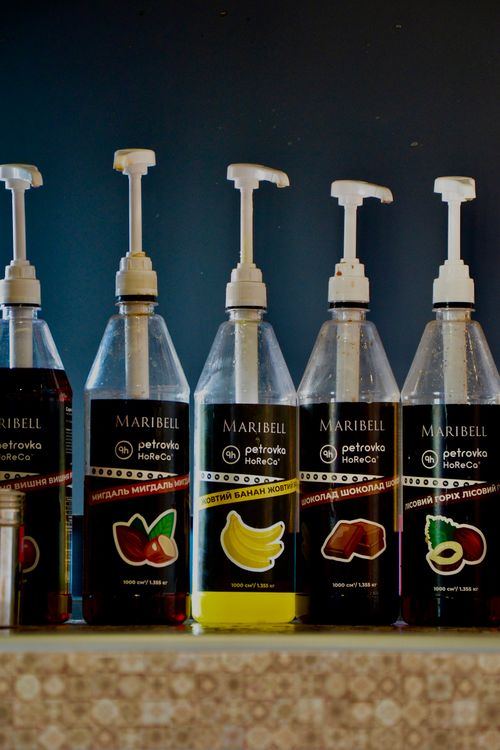
Serving photographs are useful illustrations of a culinary role, but they do not verify the brand, formula, amount or finished result. Likewise, a pump bottle is a dispensing format, not an established dose across products. The guide does not assume how much an unspecified pump supplies or turn an image of several flavours into an ingredient list for any cited brand.
Keep a repeat-purchase note that preserves the differences
Record brand, full product and variant name, stated ingredients, net quantity with its actual unit and the current bottle's handling instructions. For these examples, maple, agave, date, plain caramel, salted caramel, rosemary caramel and vanilla represent distinct choices. The aim is the correct culinary ingredient and flavour, not a universal healthiest-syrup verdict.
Check the current bottle when a web page lacks the detail you need. Keep product-specific opened-storage directions and ingredient percentages where they belong. A careful name and a complete list prevent a similar colour, broad syrup category or attractive serving picture from silently changing the product you intended to use.
Frequently asked questions
Can these syrups replace sugar gram for gram in baking?
The cited product pages do not establish a universal conversion. This guide supplies no substitution ratio or oven adjustment.
Do all caramel-family syrups contain honey?
Do not assume that. The cited plain and salted caramel lists include honey0.4%, while the producer's rosemary-caramel list names caramelised sugar, water and rosemary extract.
Does the maple bottle's total weight give its net syrup mass?
No. Fungopol explicitly gives170ml net volume and a separate351g total-weight field. This guide does not turn that into a net-mass conversion.