Apostille in Poland: how to get one, 60 zł, which office
Short answer: An apostille on a Polish document costs 60 zł from the Ministry of Foreign Affairs, booked via e-Konsulat or by post. Diplomas, school and court papers need other offices first.
If a Polish document has to be used abroad, many countries want an apostille: a standard certificate that confirms the official character of the document. This is the reverse of the question most newcomers ask, which is how to get foreign documents recognised in Poland. It matters for foreigners living in Poland who need to send a Polish birth or marriage certificate, a police clearance certificate or a diploma to their home country. This guide is based on the Polish Ministry of Foreign Affairs (MSZ) pages on apostille, checked in October 2026. The page is undated, so confirm the fee and procedure before you file.
What an apostille is
According to the MSZ, an apostille is a certification of the official character of a Polish document that is needed if the document is to be used abroad, in a country on the list of states that recognise it. It confirms the signature, the capacity in which the signer acted and the identity of the seal on the document. Poland and more than 120 other states recognise and issue apostilles. Countries that do not accept it require a legalisation of the foreign document instead. In Poland the apostille is a printed sticker with the official's handwritten signature, an official stamp and a hologram.
An apostille is issued at the request of the document holder, on Polish official documents on paper or on letters with official certifications.
When you do not need one
The MSZ says that authorities of EU member states cannot require an apostille on certain documents issued in another EU state. This covers documents relating to birth, death, being alive, name, marriage (including capacity to marry and civil status), divorce, separation or annulment, parentage, adoption, residence, citizenship, and the absence of a criminal record. If you are sending such a document to another EU country, an apostille should not be required by that country's authorities.
The fee and how to apply
The MSZ states that the fee is 60 zł for each certified document, repeated for most of the document types on its page (university, school and art school documents are handled by the offices named below, so ask them about fees). A visit to receive an apostille is possible only after booking an appointment in the e-Konsulat system. Bring:
- A printed confirmation of the appointment
- The full set of documents
- A completed application form
- A printed confirmation that the stamp duty (opłata skarbowa) was paid
Applications can also be sent by post. The MSZ says the procedure is fully open to people acting by themselves, including those who live outside Warsaw or outside Poland, because of correspondence handling. It also warns that intermediary companies offer paid help with apostilles and legalisation, that the MSZ does not work with them, and that it is not responsible for their quality or price. The matter can be handled in person at the MSZ, through a third person, or by post.
Which document goes where
The MSZ page sets out a different path for different documents.
- Civil status records (birth, marriage, death): the record must come from the civil registry office, with the round seal of the office, the official's name stamp and a signature. An apostille cannot be placed on a photocopy or on a printout from the ePUAP platform.
- Sworn translations: you can get an apostille on a sworn translation, but not on a photocopy of it.
- Notarial documents: first certified by the district court competent for the place, because only courts hold the notaries' signature and seal samples.
- Court documents: first certified by the president of the competent district court, even if the document comes from a district court.
- Commercial documents: certified first by the National Chamber of Commerce or a regional chamber. Documents directly about a commercial transaction or customs operations cannot get an apostille under the 1961 Convention.
- University documents such as diplomas: the apostille is given by the National Agency for Academic Exchange (NAWA). It certifies diplomas and diploma supplements, copies and duplicates, certificates of completed studies, doctoral and habilitation diplomas, and postgraduate certificates. Other documents are certified by the university that issued them.
- Art school documents: the Ministry of Culture and National Heritage.
- School certificates: the Ministry of National Education for certificates of the kinds listed on its page, the school superintendent (kurator oświaty) for other school documents, and the director of the regional examination board for matura certificates and similar documents issued by those boards.
- Criminal record certificates: obtained from the National Criminal Register information points in district and regional courts. No apostille on a copy or an ePUAP printout.
- Medical qualification documents: first certified by the Ministry of Health.
- National Court Register (KRS) extracts: must carry the stamp of the Central Information of the KRS and the signature of a KRS employee.
- Master craftsman diplomas and journeyman certificates: first certified by the Polish Crafts Association in Warsaw.
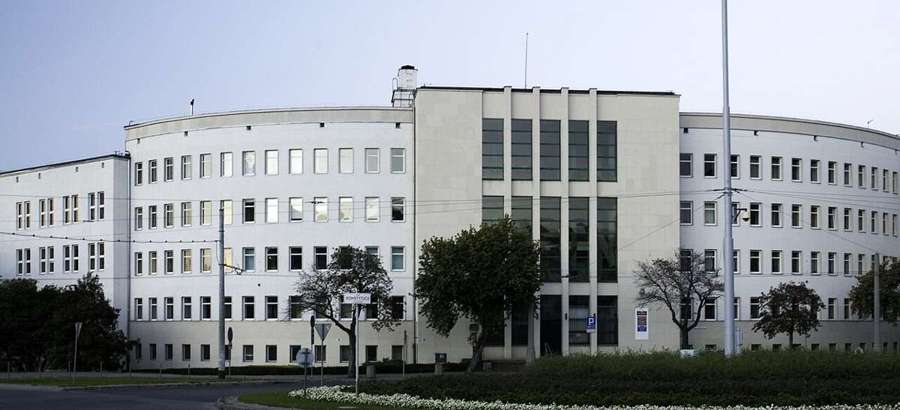
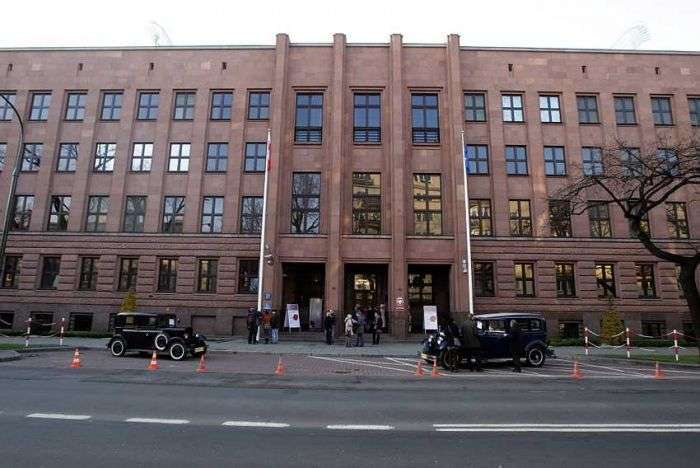
* Photos: Ministry of Foreign Affairs building in Warsaw (public domain, Wikimedia Commons); postcard of Aleje Ujazdowskie, Warsaw, after 1906 (public domain, Wikimedia Commons). Photos are illustrative.
Frequently asked questions
How much does an apostille cost in Poland?
The MSZ page states 60 zł for each certified document, and the stamp duty payment confirmation must be shown when you file.
Can I get an apostille on a photocopy?
No. The MSZ says an apostille cannot be placed on a photocopy of a document, nor on an ePUAP printout of a civil status record or criminal record certificate.
Do I need an apostille for a Polish birth certificate used in another EU country?
According to the MSZ, authorities of EU member states cannot require an apostille on documents issued in another EU state that relate to birth, marriage, death and several other listed matters.