Are Polish People Friendly to Foreigners? Etiquette and Tips
The essentials: Yes - reserved first, then deeply warm. CBOS's February 2025 survey found majority sympathy toward Italians (60%), Americans (58%) and the English (50%). Warmth follows respect signals: greet with dzień dobry, use pan/pani until invited to first names, bring flowers when invited, and keep showing up.
The honest answer, with data
Are Polish people friendly to foreigners? The stereotype says Poles are reserved, even gruff, until they know you - then fiercely loyal. The experience of most expats confirms the pattern but softens it: everyday interactions are polite and correct rather than effusive, and genuine warmth arrives through repetition and invitation rather than first contact. There is also hard data on how Poles view the nations foreigners belong to, and it is mostly reassuring.
Every year CBOS, Poland's state-founded public opinion research centre, asks a representative sample of adult Poles how they feel about other nations. The February 2025 edition - a mixed-mode survey of 972 adults drawn from the PESEL register, run 9-19 January 2025 - found the warmest feelings toward the nations many expats come from: Italians top the ranking at 60% sympathy (with only 7% declaring dislike), followed by Americans at 58%, Spaniards at 55%, Czechs at 54% and the English at 50%, with Slovaks and Norwegians at 48% each, Lithuanians at 43%, the French at 42% and Hungarians at 40%. Dislike concentrates elsewhere: 72% toward Russians, 48% toward Belarusians, 43% toward Roma.
Data source: CBOS research paper 13/2025 "Stosunek Polaków do innych narodów" (Attitudes of Poles toward other nations), published February 13, 2025, checked October 21, 2026.
Reading the trends honestly
The same CBOS series, running since 1993, lets us say how things are moving - and the honest picture is mixed. After an improvement recorded in 2024, the 2025 edition registered a cooling expressed mainly as falling sympathy rather than rising hostility: feelings toward Slovaks, Lithuanians, Czechs and Hungarians all declined somewhat year on year. Sympathy toward Americans slipped from 65% to 58% and toward the English from 55% to 50% - still firmly positive territory.
The sharpest change concerns Ukrainians: sympathy fell from 40% to 30% while declared dislike rose from 30% to 38% - the second consecutive deterioration after the wave of warmth that followed February 2022. For the hundreds of thousands of Ukrainians living in Poland this is a real social fact, and an honest guide should not hide it. For most Western expats the practical takeaway is different: baseline attitudes toward their nations remain among the most favourable CBOS records, and individual experience in Poland is shaped far more by personal behaviour than by passport.
Data source: CBOS research paper 13/2025, trend tables 1993-2025, checked October 21, 2026.
Generational and regional texture
Age and place shift the dial. Poles under forty largely grew up with English at school and Western culture at home; in Warsaw, Kraków, Wrocław, Gdańsk and Poznań, service in English is routine and international colleagues unremarkable. Older generations, whose foreign language was often Russian, may be more formal at first but compensate with a hospitality style that younger Poles sometimes find excessive - the table that cannot let a guest leave hungry. Smaller towns and villages run warmer on the hospitality axis and slower on the language one; a foreigner who learns twenty Polish words is received there as something between a guest and an event.
The cities' diversity is also newer than it feels. Large-scale foreign presence in Polish cities is a phenomenon of roughly the last decade, which means the social playbook is still being written in real time - expats who arrived before 2020 watched Warsaw's service industry, schools and neighbourly habits internationalise around them. The direction of travel, whatever the annual opinion-poll noise, has been toward a country increasingly used to sharing its streets with other nations.
The etiquette that unlocks people
Polish friendliness is conditional in a specific, learnable way: it responds to respect signals. Foreigners who send them report a completely different country from those who do not. The core set:
- Learn ten words of Polish and use them. Dzień dobry (good day), dziękuję (thank you), przepraszam (sorry/excuse me), proszę (please/here you go), do widzenia (goodbye). Entering a small shop with a "dzień dobry" changes the entire interaction - skipping it reads as rude.
- Mind the pan/pani line. Adults who are not friends address each other formally - pan, pani - often for months or years. Take the formal route until a Pole proposes first names; being invited to "przejść na ty" (switch to informal speech) is a real milestone, sometimes sealed with a small ritual drink called bruderszaft.
- Bring something when invited. Flowers (an odd number, unwrapped), wine, or a cake for a home visit; arrive on time - Poles are punctual about dinners; take your shoes off if hosts do; expect to be overfed and accept at least some of it.
- Toast correctly. Maintain eye contact when clinking glasses; "na zdrowie" covers every occasion.
- Learn the name days. Many Poles celebrate imieniny (name day) as warmly as birthdays - a calendar lookup and a two-word wish earns outsized goodwill.
- Respect the reserved public face. Quiet on trams, no loud phone calls, a measured tone in offices. What reads as coldness is often just a public-private split: the same person may be expansive at their own table.
Friendliness in practice: shops, stairwells and offices
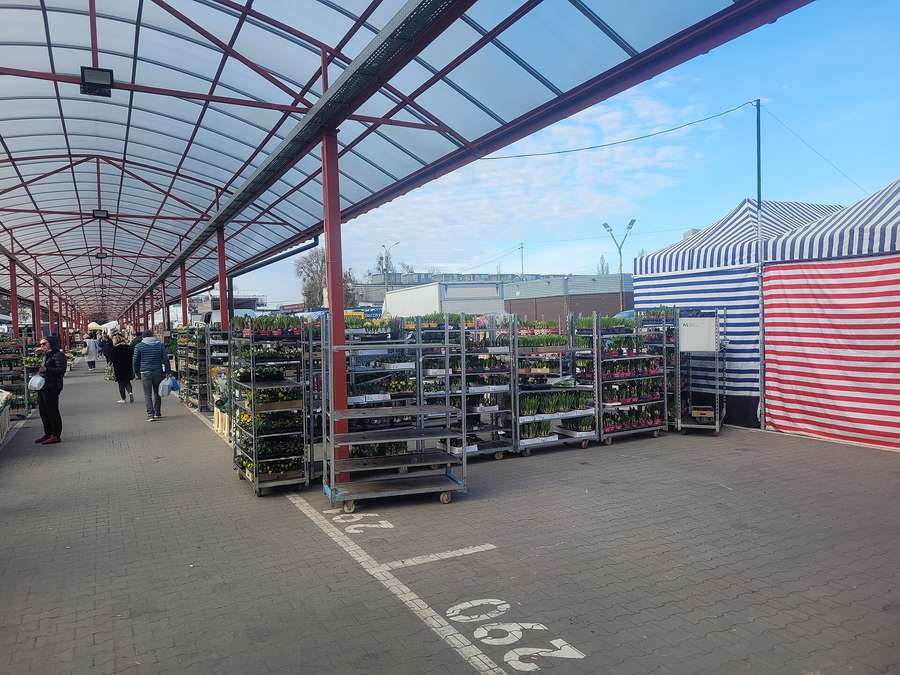
Three everyday arenas calibrate expectations quickly. In shops and services, the Polish norm is efficiency over performance: the cashier will not ask about your day, and this is politeness, not hostility - the smile-and-chat model is genuinely not the local register, and nobody is singling you out. In the stairwell, neighbours exchange a nod or a quiet "dzień dobry" and otherwise respect privacy; the same neighbours will reliably hold the door, accept a parcel, and knock if your lights are left on. In offices, the first weeks are professional and measured - and then the kitchen culture kicks in: name-day cakes, shared lunches, and the gradual discovery that the quietest colleague is the one who will spend an hour helping you fight a bureaucratic form.
Friendship, the Polish way
The pattern expats describe most consistently is slow-burn depth. Acquaintanceships form at work, through children's schools, sports clubs and courses; Polish friendship culture then invests heavily in few relationships rather than lightly in many. Being asked into someone's home - the real threshold - typically comes later than in Mediterranean or American social life, but once crossed it tends to be durable: Poles help friends move flats, drive them to airports at 4 a.m. and remember their children's names for decades.
One more observation from long-settled foreigners: Polish directness cuts both ways. A Polish friend will tell you your plan is unwise where an English friend would politely nod - this is care, not criticism, and learning to hear it that way removes half the friction of the first year.
Three accelerators work reliably. Recurring commitment beats one-off socialising - join something weekly and keep showing up. Hospitality reciprocity matters - invite back, promptly, even to something modest. And vulnerability works: asking for help with something small (a form, a phone call in Polish, a recommendation) gives people a role, and Poles respond strongly to being needed. The reserved exterior, in other words, is not a wall but a filter - and it filters in favour of people who keep coming back.
Where this leaves the nervous newcomer
If your first weeks feel socially cold, the data and the etiquette both say the same thing: it is not you, and it is not dislike. The baseline attitude toward the nations most expats carry is among the warmest in Europe; the social style simply loads its warmth at the back of the relationship. Send the respect signals, accept every invitation that arrives, bring the flowers, and give it three months. The people who complain that Poles are unfriendly are almost always the ones who stopped showing up before the warmth was scheduled to start.
* Cover photo: Chris Olszewski, CC BY-SA 4.0, via Wikimedia Commons. Body photo: Wistula, CC BY-SA 4.0, via Wikimedia Commons.
Frequently asked questions
Are Polish people welcoming to foreigners?
Yes, in a reserved register. CBOS's February 2025 survey recorded majority sympathy toward Italians (60%), Americans (58%), Spaniards (55%), Czechs (54%) and the English (50%). Everyday politeness is formal rather than chatty; warmth arrives through repeated contact and home invitations rather than first meetings.
What etiquette mistakes do foreigners make in Poland?
Skipping the "dzień dobry" greeting in shops, using first names too fast instead of pan/pani, arriving empty-handed or late to a home dinner, and loud behaviour on public transport. All are easily fixed, and Poles noticeably warm when the signals are corrected.
Is Poland safe socially for expats who do not speak Polish?
Yes. English is widely workable in cities, and Poles respond warmly to even basic Polish phrases. The social penalty for not speaking Polish is slower friendship, not hostility - formal politeness still applies to you, and invitations follow effort, not fluency.