New Year's Eve in Poland: Traditions, Fireworks and What to Expect
The essentials: Poles call it Sylwester. Fireworks law is a patchwork: no single nationwide ban, but local restrictions (Kraków, Tatra NP), year-round misdemeanour liability up to 5,000 zł, and adults-only purchase. Expect house parties, gala balls, city events announced in December, closed shops on 1 January.
First, the name: why Poles say "Sylwester"
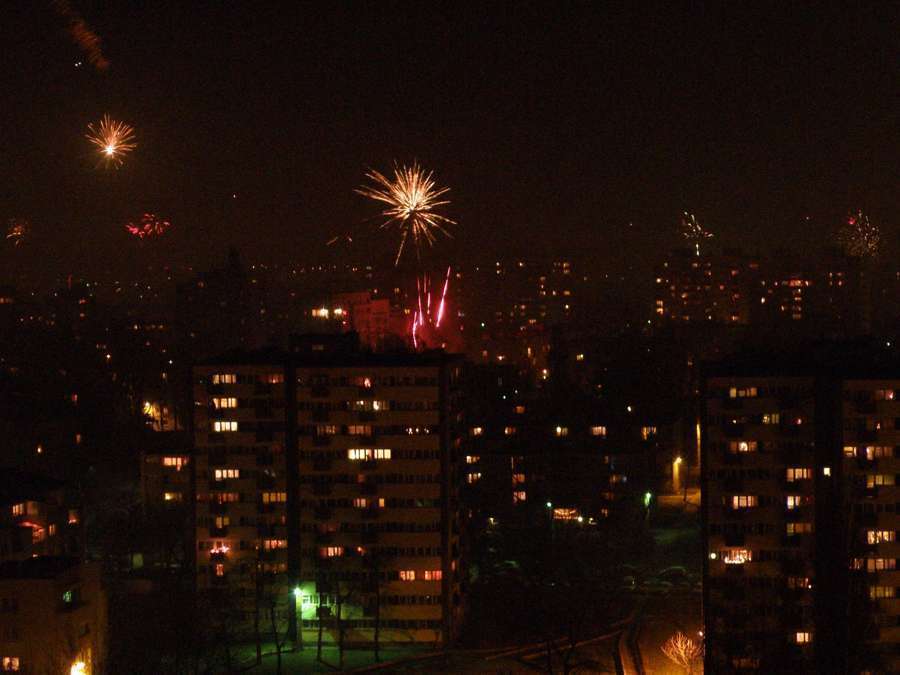
Poland does not call 31 December "New Year's Eve". It calls it Sylwester, after Saint Sylvester, the pope whose feast day falls on 31 December in the calendar of name days that Poles consult far more naturally than most expats expect. Ask a colleague what they are doing for Sylwester and you will get the full plan - house party, restaurant ball, mountain trip or city square - because in Poland the night is organised around the name day, not the calendar date. New Year's Day itself (Nowy Rok, 1 January) is a public holiday: shops close, offices shut, and the country sleeps in. The two days are legally and socially distinct, and the distinction matters for one very practical reason explained below - fireworks law.
For expats, Sylwester is usually the first Polish celebration that feels simultaneously familiar and foreign. The midnight toast, the countdown and the champagne (or more often sparkling wine, since "szampan" is used loosely for anything with bubbles) will be recognisable anywhere in Europe. What is distinctly Polish is the texture: the night sits inside a longer winter season that starts with Wigilia, runs through the quieter Christmas days, and does not truly end until the carnival season - karnawał - kicks off on 6 January with Epiphany. Sylwester is the hinge between the two halves of the Polish winter.
The fireworks law: patchier than the headlines say
Ask around in December and you will hear a confident rule: fireworks are legal in Poland only on 31 December and 1 January. Police advisory pages repeat it. The reality, as Poland's Commissioner for Human Rights (Rzecznik Praw Obywatelskich) set out in early 2026, is messier - and expats should know the actual shape of it.
There is no single nationwide ban with a two-day exception. Reviewing the legal landscape in February-March 2026, the RPO states that the use of fireworks is an area "not fully regulated by law", that using fireworks is not directly banned by any general legal provision, and that enforcement authorities sometimes decline to intervene for precisely that reason. Restrictions instead exist as a patchwork: some gminas (municipalities) limit fireworks through local bylaws - Kraków is the prominent example - though such bylaws have sometimes been contested or struck down, and the Tatra National Park bans them entirely. A bill before the Sejm (print 350) would ban F2 and F3 fireworks nationally while letting gmina councils exempt 31 December and 1 January. It had its second reading on 10 June 2026 and was sent back to committee; as of the Sejm's legislative record checked October 21, 2026, it has not passed - so any two-day rule remains a proposal, not law.
What does apply everywhere, on every day of the year - including Sylwester itself - are the general misdemeanour provisions. Warsaw Police enumerate them in their annual safety guidance: disturbing public peace or night quiet (art. 51 of the Code of Petty Offences), careless handling of fire or breach of fire-safety rules (art. 82), and careless handling of explosive materials (art. 83) - each carrying a fine from 20 to 5,000 zł, restriction of liberty, or in cases arrest of 5 to 30 days. A firework that endangers people, property or the peace is chargeable on New Year's Eve exactly as on any other night. One-off local bans also exist on top: the Mazovian voivode, for example, banned carrying and using pyrotechnics across Warsaw on Independence Day (11 November) this year.
The minors rules are clear and criminal. Police guidance is unambiguous here: only adults may purchase fireworks, selling them to minors is a criminal offence punishable by a fine, restriction of liberty or up to two years in prison, and police ask the public to report shops that sell to children. Children around fireworks must be under constant adult supervision.
Data source: Rzecznik Praw Obywatelskich, "Sprawa ograniczenia używania fajerwerków - odpowiedzi MSWiA i MZ" (bip.brpo.gov.pl, February-March 2026); Sejm legislative record for print 350 (sejm.gov.pl); Kodeks wykroczeń consolidated text (Dz.U. 2025 poz. 734); Komenda Stołeczna Policji, "Dekalog bezpiecznego korzystania z fajerwerków"; Mazowiecki Urząd Wojewódzki notice on the 11 November 2026 Warsaw pyrotechnics ban (gov.pl); all checked October 21, 2026.
Safety rules the authorities repeat every December
The Ministry of the Interior and Administration (MSWiA) runs a standing public guidance page on safe fireworks that is worth reading in full before your first Polish Sylwester, because Polish balconies, courtyards and housing-estate lawns turn into launch pads at midnight and the environment is unlike a regulated public display. The ministry's core rules: buy only from checked, reliable sellers; never buy pyrotechnics from street sellers or through private classified ads; check that the product carries the producer's name and address, a Polish-language instruction, and intact packaging without cracks or dents; and read the instruction before lighting, not during. Items designed to stand vertically must have proper mounting; only items explicitly designed for hand-held use may be held, and even then with the correct handle.
The usage rules are equally concrete: keep the safe distance stated in the instructions; never lean over a lit fuse - stand to the side with the flame source in an outstretched hand; never light anything while intoxicated; never use pyrotechnics indoors, near buildings, or anywhere that could catch fire, and check overhead for trees and power lines; and if a firework fails to go off, do not approach it to check why. The MSWiA and police both stress animals: New Year's Eve is the single most stressful night of the year for domestic pets - dogs panic at the bangs and flashes, bolt off leads and clear fences - so owners should keep animals indoors and away from windows. If an accident happens, the emergency numbers are 112 (European emergency), 999 (ambulance), 998 (fire brigade) and 997 (police).
Data source: Ministry of the Interior and Administration, "Bezpieczne fajerwerki" (Safe fireworks), gov.pl/web/mswia, checked October 21, 2026.
How Poles actually spend the night: three main routes
Polish Sylwester plans sort into three broad camps, and knowing them helps you plan (and budget) your own.
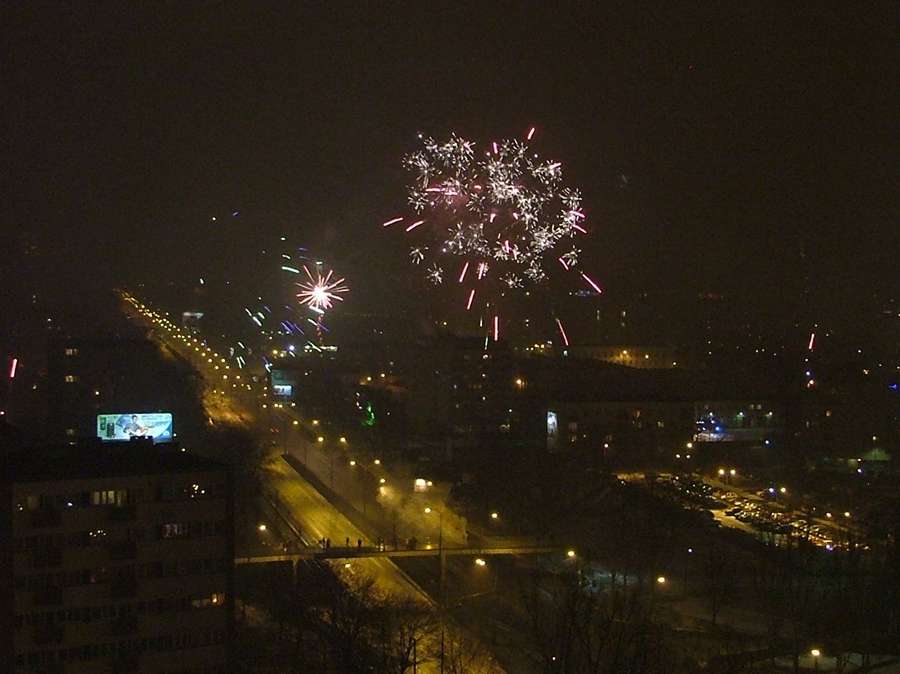
The house party. The most common format, especially among Poles in their thirties and beyond, is the private house or flat party - "domówka" - with a long table of cold dishes laid out before midnight, a toast at twelve, and music until early morning. If you are invited to one, bring a bottle of something sparkling and something small for the table; the midnight moment itself usually spills onto the balcony or into the courtyard to watch the neighbourhood fireworks. These parties are long - arriving at 20:00 and leaving before 2:00 reads as leaving early.
The ball or restaurant night. The formal end of the market is the bal sylwestrowy: hotels, restaurants and event venues sell ticketed gala nights with a set menu, open bar options and a DJ or band, typically at prices several times a normal dinner. Booking happens in October and November; by mid-December the good ones in Warsaw, Kraków and the Tri-City are gone. If you want this format, decide early and read what the ticket actually covers - drinks packages and menu inclusions vary enormously.
The city and the mountains. Big Polish cities stage public celebrations, though formats change year to year. Warsaw's official city programme for the coming Sylwester is announced in December through the city's events calendar (um.warszawa.pl/kalendarz) - check there rather than relying on last year's pattern, because the city has alternated over the years between big square concerts, ice-rink events and deliberately quiet years. Kraków's Main Square fills regardless of whether an official stage exists. And a substantial share of the country simply leaves the cities: Zakopane and the Tatra resorts are Poland's classic Sylwester escape, where hotels sell multi-night packages with a gala dinner included and the streets are wall-to-wall visitors. Book Zakopane months ahead or not at all; the same applies to the mountain rail and bus connections on 30-31 December.
Television provides the national backdrop even for people out at parties: the big commercial and public broadcasters each run an outdoor Sylwester concert with popular acts, and the midnight countdown on TV still synchronises millions of living-room toasts. You will see the broadcast on in the corner of almost every house party.
Data source: City of Warsaw events calendar, um.warszawa.pl/kalendarz, checked October 21, 2026.
Practical notes for your first (or fifth) Sylwester
Transport runs, but differently. Night public transport in the big cities usually operates on Sylwester with special schedules, and some cities have historically offered free rides on the night - but this changes year to year and city to city, so check your city's transport operator in the last week of December. Ride-hailing prices surge brutally between 0:30 and 3:00; experienced locals either stay put until after the surge or book a scheduled taxi earlier in the evening. Driving your own car means planning to leave it overnight - Poland's drink-driving limit is among the strictest in Europe and New Year's enforcement is heavy.
Expect noise from around 22:00 to 1:30. Custom, more than law, makes the soundscape predictable: a few early test shots in the late evening, a continuous roar at midnight that in a big-city neighbourhood can last thirty to forty minutes, then a rapid die-down. Light a firework yourself only where you are sure it is permitted (no local ban in force) and safe (clear of buildings, lines and trees, sober, adults only, instructions read). Given the balcony-and-courtyard launch culture, the authorities' advice about distance and never re-approaching duds is not boilerplate - it is the difference between a great night and an emergency room.
Pets and small children need a plan. Keep pets indoors, curtains drawn, some background sound on; vets and shelters repeat the same advice every year for good reason. With small children, remember the midnight racket is unavoidable even if your own building is quiet - some families decamp to the countryside for exactly this reason.
Shops and services. 31 December is a normal working day with shortened hours - supermarkets close early, often by early afternoon, so do the party shopping in the morning. 1 January everything is shut: plan food, pharmacy needs and any travel accordingly. The first working day after New Year is when normal life, and the January sales, resume.
A resolution postscript. Poles treat New Year's resolutions ("postanowienia noworoczne") with the same mixture of sincerity and irony as everyone else, and the gym-rush in the first two weeks of January is as real in Warsaw as anywhere. If joining a club or starting a sport is on your list, note that municipal sports centres open their spring enrolment in January - a far cheaper door than the January-fee private gyms.
Frequently asked questions
Is it legal to set off fireworks in Poland on New Year's Eve?
Broadly yes, with caveats. There is no single nationwide ban reserving fireworks for 31 December and 1 January - Poland's Commissioner for Human Rights notes the area is not fully regulated, though a 2026 Sejm bill would change that. Local bans exist (Kraków restricts them; the Tatra National Park bans them), and noise, fire-safety and explosives misdemeanour rules apply every day, New Year's Eve included.
Are shops open in Poland on New Year's Day?
No. 1 January is a public holiday and shops, including supermarkets, are closed. Stock up by midday on 31 December, when most supermarkets close early. Restaurants and some petrol-station shops operate, but normal retail does not.
What is a "bal sylwestrowy"?
A ticketed New Year's Eve gala - a set-menu dinner with drinks and dancing, run by hotels, restaurants and event venues. Prices are several times a normal night out, the better ones sell out weeks ahead, and inclusions vary, so check exactly what the ticket covers before buying.