BHP Training in Poland: What New Employees Must Complete
Short answer: Before starting work in Poland you must complete BHP training: a general briefing of at least 135 minutes and, for most manual or exposed roles, a workstation briefing ending in a test, according to PIP.
Before you start a job in Poland, your employer has to give you health and safety training, known as szkolenie BHP (bezpieczeństwo i higiena pracy). This guide follows the advice page of the National Labour Inspectorate (Państwowa Inspekcja Pracy, PIP) on OHS training. The page carries no date, so check the current rules if you need an exact answer for your situation. It also cites articles 211 and 2373 of the Labour Code.
Two kinds of training
The rules provide for two types. Initial training takes place before you are allowed to work. It gives you the knowledge needed to do the job safely and explains the hazards at your specific workstation. It has two parts, a general briefing (instruktaż ogólny) and an on-the-job briefing at your workstation (instruktaż stanowiskowy). Periodic training is repeated during employment, to refresh your knowledge and to introduce new technical and organisational solutions. How often it happens depends on the type of work and its conditions.
The general briefing
According to PIP, the general briefing should introduce you to the OHS provisions in the Labour Code, to the workplace rules if your employer has them, and to first aid. Newly hired employees, student trainees and vocational pupils employed for practical training all take it before they start work.
It is led by an OHS service employee, a person doing the tasks of that service, or an employer who performs them. An employee appointed by the employer can also run it, if they have the knowledge and a current certificate of completing the required OHS training. PIP says the training may not be shorter than 135 minutes.
The on-the-job briefing
This one takes place at the workstation where you will work. It covers the hazards there, how to protect yourself and how to do the work safely. PIP lists four steps: an introductory talk with the instructor, such as your supervisor, a demonstration and explanation of every task you will perform, a trial run by you with corrections from the instructor, and independent work under supervision.
It ends with a test of your knowledge about safe work. Passing it is the basis for letting you work in that position. The length depends on your qualifications, your work history and the hazards of the job. The instructor is a person appointed by the employer who manages workers, or the employer, with suitable qualifications and training in running such briefings.
The on-the-job briefing is required for workers in manual positions and other positions with exposure to harmful, burdensome or dangerous factors, for workers moved to such positions, and for pupils and students on practical training. If you work at several workstations, you need the briefing at each. If conditions change, for example a new machine, tool or substance, you get a new briefing for the changed conditions.
When training is not required
PIP says initial training is not required if you return to the same workstation you held with the same employer directly before signing a new employment contract with them. For periodic training, an employee in an administrative or office position does not need it where the employer's main activity falls into a group with no higher than the third accident-insurance risk category, unless the workplace risk assessment says it is needed.
Records
You confirm both parts of the initial training in writing on an initial training card (karta szkolenia wstępnego). The employer keeps it in part B of your personnel file.
Periodic training
Periodic training applies to workers in manual positions, employers and other managers, OHS staff, office workers who are not exempt, engineering and technical staff, and others whose work involves harmful, burdensome or dangerous factors. Employers and other managers should take the first periodic training within 6 months of starting in those positions. Other groups should take it within 12 months. An employee can be exempted from the first periodic training only by showing a current certificate that they completed the required periodic training with another employer in that time, or in some cases by completing training for another position that matches the programme.
Periodic training, except for workers in manual positions, may be a course of at least 15 teaching hours, a seminar of at least 5 teaching hours, or guided self-study. Employers can organise it themselves or commission a training provider.
Your duties as an employee
Under article 211 of the Labour Code, as cited by PIP, you must know OHS rules, take part in training and instruction and take required tests, and follow the instructions of your supervisor on safety. PIP also says that for people working under civil-law contracts the decision on training depends on the type of work and the hazards involved, and the employer may require training.
The PIP page does not say in which language training is given or whether it is held during working hours. Ask your employer, and ask for the language you understand best, especially if the work is hazardous.
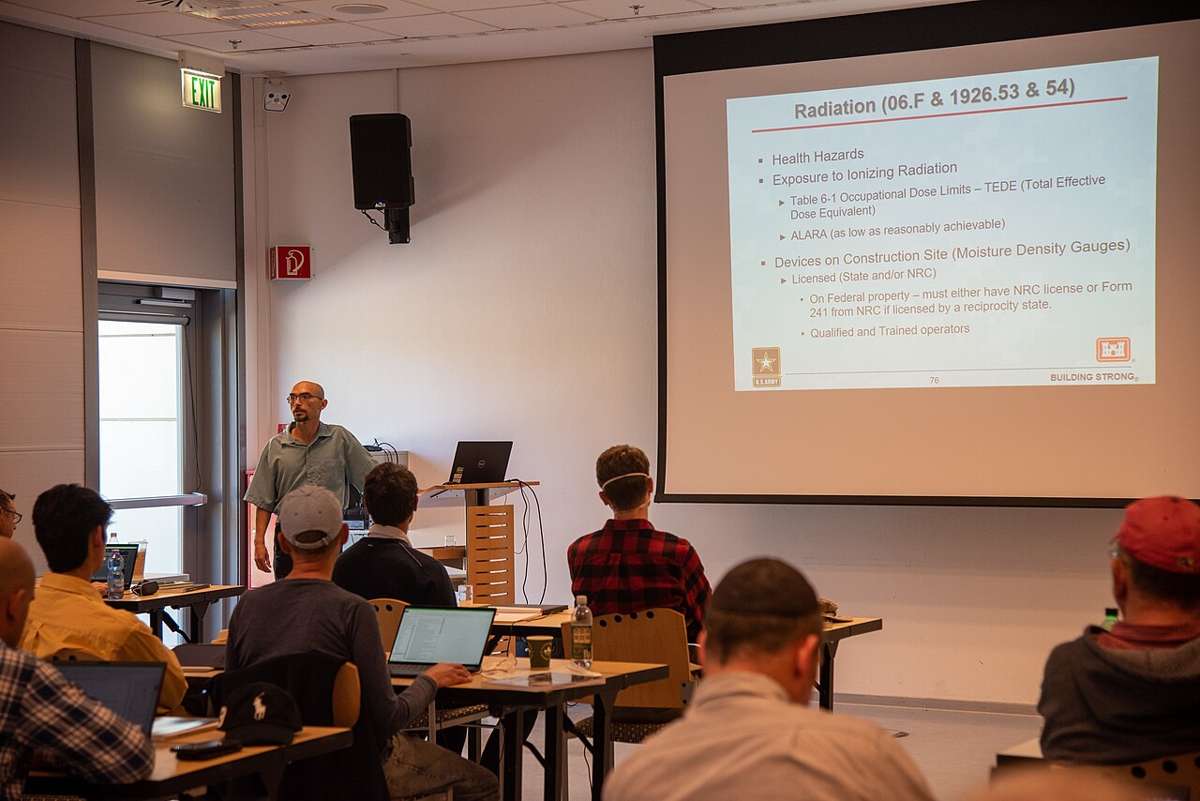
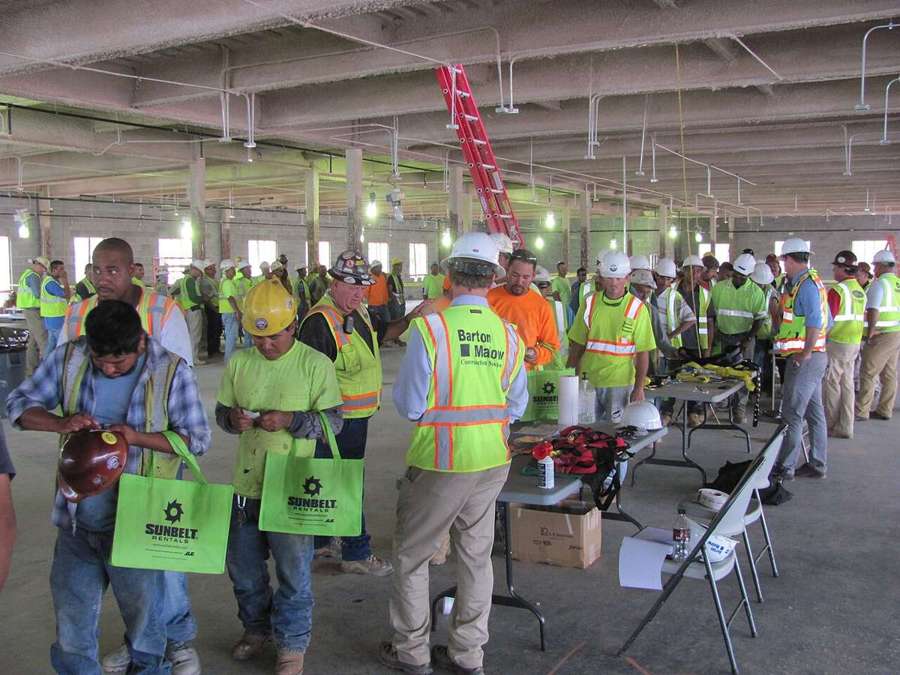
* Photos: US Department of Labor, OSHA training photos, Wikimedia Commons, public domain. Illustrative, not taken in Poland.
Frequently asked questions
How long is the general OHS briefing for a new employee?
According to PIP, it may not be shorter than 135 minutes, and it must be completed before you start work.
Do I need OHS training if I return to the same job?
Not for initial training, if you take the same workstation you held directly before with the same employer on a new contract, says PIP..
Where is my OHS training recorded?
On the initial training card you sign, which the employer keeps in part B of your personnel file.