Białystok Weekend Guide: Palace, Podlasie Food and the Wild East
The essentials: Białystok pairs the baroque Branicki Palace and gardens with the Muzeum Podlaskie (14 zł, family 28 zł, closed Mondays), a rich borderland food scene and day trips to Supraśl, the Tatar mosques, Biebrza marshes and Białowieża. Direct trains from Warsaw take about two hours.
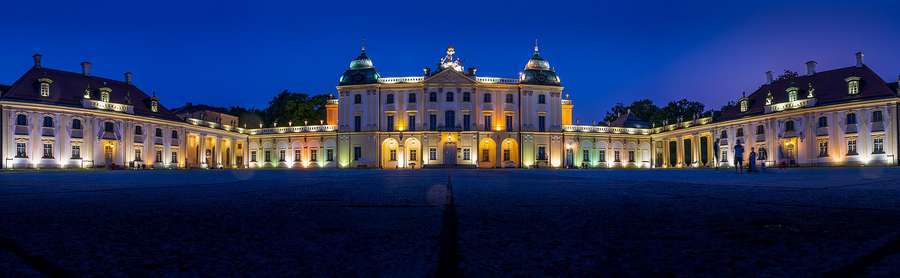
Białystok is Poland's most surprising city break: a baroque palace locals call the Versailles of Podlasie, a food culture built on potato, dough and the borderland's mixed table, the birthplace of Esperanto, and the gateway to the marshes, forests and wooden-mosque villages of the country's wild east. It is big enough for a full weekend, cheap by big-city standards, and sees a fraction of the visitors its sights deserve. The city of four hundred thousand grew from a magnate's estate into a textile boomtown and then a university and medical hub, and each era left a layer you can still walk through in an afternoon. This is the plan.
Getting there
Białystok lies about two hours northeast of Warsaw by direct train, with frequent InterCity and regional services through the day; the station sits a fifteen-minute walk from the main square. By car the S8 expressway makes it an easy drive. The centre is compact and walkable, and the palace, the main square, the cathedral basilica and most restaurants sit within a twenty-minute loop.
Branicki Palace and its gardens
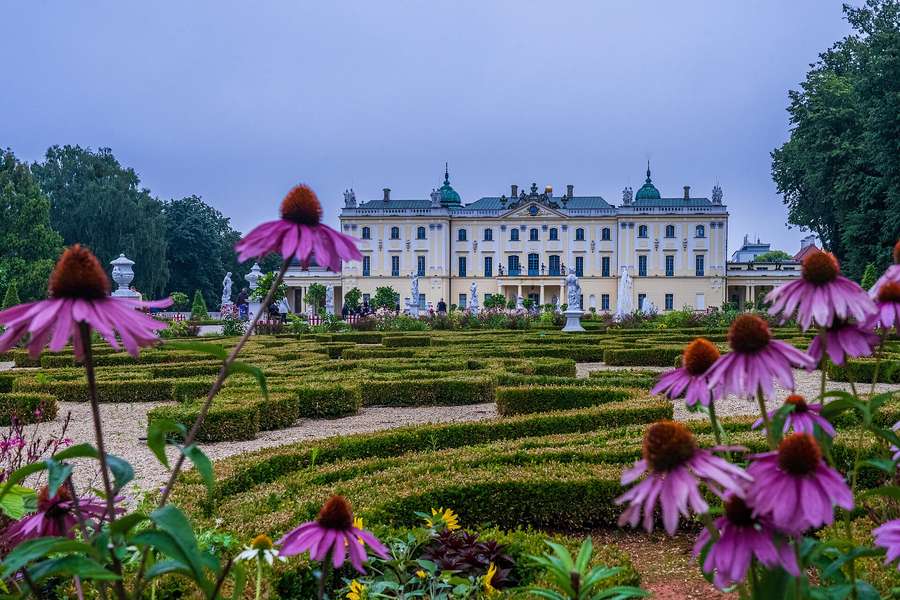
The city's crown is the Pałac Branickich, the baroque residence built up in the 18th century by Jan Klemens Branicki, the wealthiest magnate of the Polish-Lithuanian Commonwealth, whose court here rivalled kings'. The palace today houses the Medical University, so the interiors are mostly academic, but that misses the point: the glory is the setting. The formal baroque gardens, clipped parterres, fountains and cascades behind the palace, are open to walkers and form the city's finest stroll, and the courtyard and gate ensembles rank with any aristocratic residence in the country. The scale still tells the story of the man who built it: Branicki ran his estates like a small state, with his own factories, theatre, military court and diplomatic service, and the palace was its capital. Come at dusk when the facade is floodlit, then loop the gardens in the morning before the day crowds; in summer the flower beds carry the full baroque scheme, and even in the bare months the geometry of the parterres holds the design together.
The museum in the town hall
The Muzeum Podlaskie, the regional museum, keeps its main seat in the town hall on Rynek Kościuszki, the market square. Its collections cover the art and history of the Podlasie region and the old Grand Duchy of Lithuania, and the building anchors the square's cafe life. Tickets cost 14 zł normal and 7 zł reduced; a family ticket covering two adults with children up to 25, maximum five people, costs 28 zł, and groups of eight or more pay 7 zł each. The museum opens Tuesday to Sunday, 10:00-17:00 from October to April and 10:00-18:00 from May to September, and closes on Mondays; last entry is an hour before closing. Its branch network adds the 17th-century Great Synagogue interiors at Tykocin, the icon museum at Supraśl and the wooden villa of the sculptor Alfons Karny, so the one ticket office opens the whole region's story.
Data source: Muzeum Podlaskie official town-hall branch page (muzeumpodlaskie.pl), checked 22 October 2026.
Esperanto and the borderland's many worlds
Białystok is the birthplace of Ludwik Zamenhof, the Jewish ophthalmologist who grew up on these streets, watched the city's communities argue in Polish, Russian, German, Yiddish and Belarusian, and invented Esperanto as an answer. The Ludwik Zamenhof Centre tells that story with warmth, and the city marks his trail with plaques and a memorial. Esperanto still echoes here: the city hosts Esperanto gatherings, and the idea that language could be a bridge rather than a wall feels entirely natural on streets that have always mixed faiths and tongues. The multicultural past survives vividly in the present: the onion domes of the Orthodox church of St Nicholas rise beside the Catholic cathedral basilica, the Old Synagogue memorial square recalls the Great Synagogue burned with hundreds inside in 1941, and the city's Tatar heritage, centuries old, points east to the wooden mosques of Kruszyniany and Bohoniki, among the oldest in Europe, an hour's drive away.
The food: Podlasie on a plate
Come hungry. Podlasie's kitchen is the borderland's: kartacze, fist-sized potato dumplings with meat, babka ziemniaczana, the dense baked potato cake, and kiszka, the potato sausage, anchor every traditional menu. The Tatar layer adds pierekaczewnik, a coiled meat pastry, and the regional sweets are sękacz, the tree cake baked on a spit, and buza, the old millet dessert drink. Prices run well below Warsaw's, and the square and its side streets concentrate the good tables. If one meal sums up the region, it is kartacze followed by a wedge of sękacz with coffee. Breakfast culture leans on the local bakeries' rye breads and the market halls' smoked meats and white cheeses, and autumn visitors should look for the mushroom dishes that appear the moment the forests start producing.
Day trips into the wild east
Białystok is the base camp for Poland's most distinctive landscapes. Supraśl, about half an hour away, holds the fortified Orthodox monastery and its Museum of Icons, one of the finest collections of Orthodox art in the country, set in deep forest that smells of resin and incense. Tykocin's small-town Baroque and synagogue lie half an hour west. The Biebrza National Park protects Europe's largest surviving marsh valley, a birding and kayaking world about an hour north, and the Białowieża primeval forest, with its free-ranging bison, begins about ninety minutes southeast. Each makes a full day; two make the case for a long weekend. In autumn, Biebrza's cranes and elk rutting season are the draw; in spring, the marshes flood and the bird migration turns the valley into one of Europe's great spectacles.
With children
The palace gardens are a free, open-air playground of hedges and fountains, the museum's family ticket keeps the indoor option cheap, and the square's fountain and ice-cream arcades do the rest in season. The city runs a modern aquapark for cold days, the puppet theatre is one of Poland's oldest and best, and the Zwierzyniec forest park at the city's southern edge gives you a real forest walk, with a goat enclosure the children love, without leaving the urban bus network. The day trips work for families too: Supraśl's monastery walls and forest setting feel like a storybook, and Biebrza's boardwalks turn birdwatching into a treasure hunt with beavers and elk as the prizes. Winters are the coldest in lowland Poland, so pack seriously in the cold months; the reward is a city that keeps going regardless, with the palace under snow looking like a Christmas engraving.
A realistic weekend plan
Day one: train in by midday, the market square and town-hall museum, the cathedral and St Nicholas domes, then Branicki Palace and the gardens at dusk, dinner on kartacze and sękacz. Day two: the Zamenhof trail in the morning, a half-day run to Supraśl or Tykocin, and the evening train home. With a third day, add Biebrza or Białowieża and the weekend becomes a proper eastern expedition. Book city-centre accommodation near the square; everything above then walks, and the only wheels you need are for the day trips. In any season, leave an unplanned hour for simply sitting in the square with coffee; Białystok's pace is part of the point.
Frequently asked questions
How much does the Białystok regional museum cost?
The Muzeum Podlaskie in the town hall costs 14 zł normal and 7 zł reduced; the family ticket is 28 zł for two adults with children up to 25, maximum five people. It opens Tuesday to Sunday and closes Mondays.
Can you visit Branicki Palace inside?
The palace houses the Medical University, so interiors are limited, but the courtyard ensembles and the baroque gardens behind the palace are the real draw and open to walkers. Come at dusk for the floodlit facade, then return in the morning for the parterres in full light.
What food is Białystok known for?
Podlasie's borderland kitchen: kartacze potato dumplings, babka ziemniaczana potato cake, kiszka sausage, Tatar pierekaczewnik pastry, and sękacz tree cake and buza for dessert.
What are the best day trips from Białystok?
Supraśl's fortified Orthodox monastery and icon museum, the wooden Tatar mosques of Kruszyniany and Bohoniki, Tykocin's synagogue, the Biebrza marshes and the Białowieża primeval forest with its bison.
How do I get to Białystok from Warsaw?
Direct InterCity and regional trains run between Warsaw and Białystok in about two hours, and the S8 expressway makes it an easy drive. The station is a fifteen-minute walk from the main square. * Photos: Cover - Branicki Palace floodlit at night by Stanislaw.bochnak, CC BY-SA 4.0, via Wikimedia Commons. Body - the palace from its baroque gardens by Stanislaw.bochnak, CC BY-SA 4.0, via Wikimedia Commons.