Kielce Family Weekend: Toy Museum, City Caves and Old Mountains
The essentials: Kielce mixes a baroque bishops' palace, the Museum of Toys and Play (25 zł, free first two hours on weekends, closed Mondays) and the Kadzielnia city gorge with caves (20/15 zł), with the Holy Cross Mountains an hour away. Direct trains from Warsaw take about 2.5 hours.
Kielce rarely makes the first draft of anyone's Poland itinerary, and that is a mistake, especially for families. The city of two hundred thousand sits in the bowl of the Holy Cross Mountains, greener and quieter than its size suggests, and it has spent the last decade turning its industrial edges, quarries above all, into genuine attractions. The capital of the Świętokrzyskie region packs a proper baroque bishops' palace, one of Poland's best toy museums, a wild limestone gorge with caves in the middle of the city, and the oldest mountains in Europe on its doorstep. It is cheap, uncrowded and two hours by train from Warsaw. This is the plan.
Getting there
Direct InterCity and regional trains link Kielce with Warsaw in about two and a half hours and with Kraków in about two; the station sits a fifteen-minute walk from the main promenade. By car it is an easy run down the S7 from either city. The centre is compact: the palace, the cathedral, the toy museum and the Sienkiewicza promenade all walk, and city buses reach Kadzielnia in minutes, with stops right at the reserve's edge.
Kadzielnia: a gorge in the middle of the city
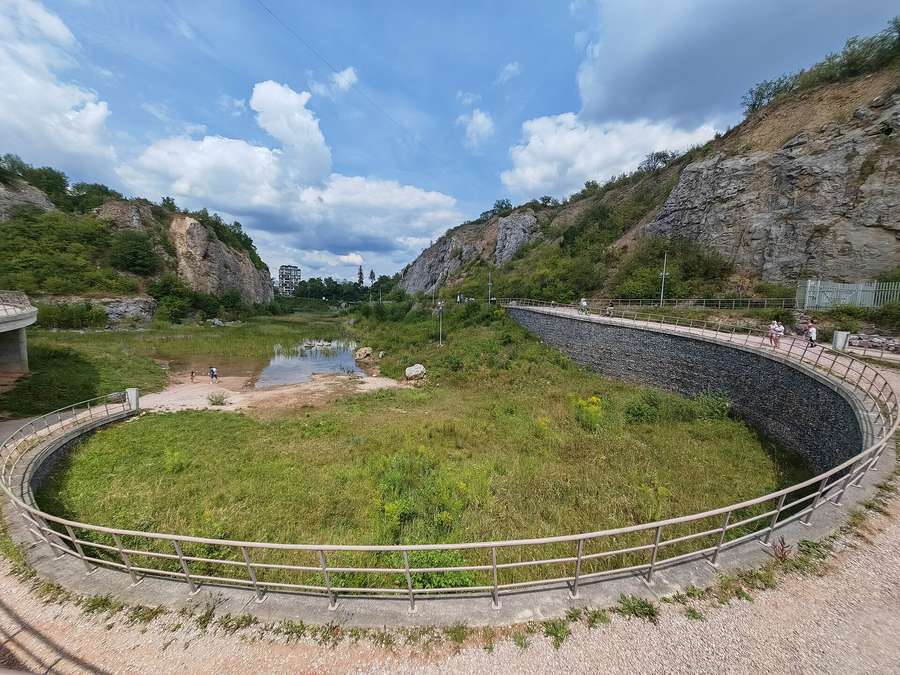
Kielce's strangest sight is a nature reserve inside the city limits: Kadzielnia, a former limestone quarry turned red-rock gorge five minutes by bus from the centre. Walking paths circle the cliffs, an amphitheatre hosts summer concerts, a zipline runs over the pit for the brave, and under it all lies the underground tourist route through the Kadzielnia caves, a chain of three linked caverns that miners once worked and bats now winter in. The cave route costs 20 zł normal and 15 zł reduced; it runs Tuesday to Friday 10:00-16:30 and weekends 11:00-17:30, with Monday closed and extended hours in July and August. The reserve above ground is free to wander, and the Geopark education centre beside it explains how these rocks were a Devonian sea floor, corals and all, hundreds of millions of years before the Alps existed.
Data source: Kielce city travel portal, Kadzielnia caves page (kielce.travel), checked 22 October 2026.
The toy museum: Poland's childhood under one roof
The Muzeum Zabawek i Zabawy, the Museum of Toys and Play, is the city's family ace: thousands of toys from the 18th century to the present, from porcelain dolls and tin railways to the plastic heroes of PRL childhoods that send Polish parents into instant nostalgia. The displays are arranged so each generation finds its own childhood on the shelves, which turns a visit into an unexpectedly warm three-generation conversation. Tickets cost 25 zł normal and 15 zł reduced, with a family ticket for two adults and two children at 66 zł; on Saturdays and Sundays entry is free for the first two opening hours. The museum opens Tuesday to Sunday and closes on Mondays. Allow two hours; children will demand more.
Data source: Museum of Toys and Play official hours and tickets page (muzeumzabawek.kielce.eu), checked 22 October 2026.
The Bishops' Palace and the centre
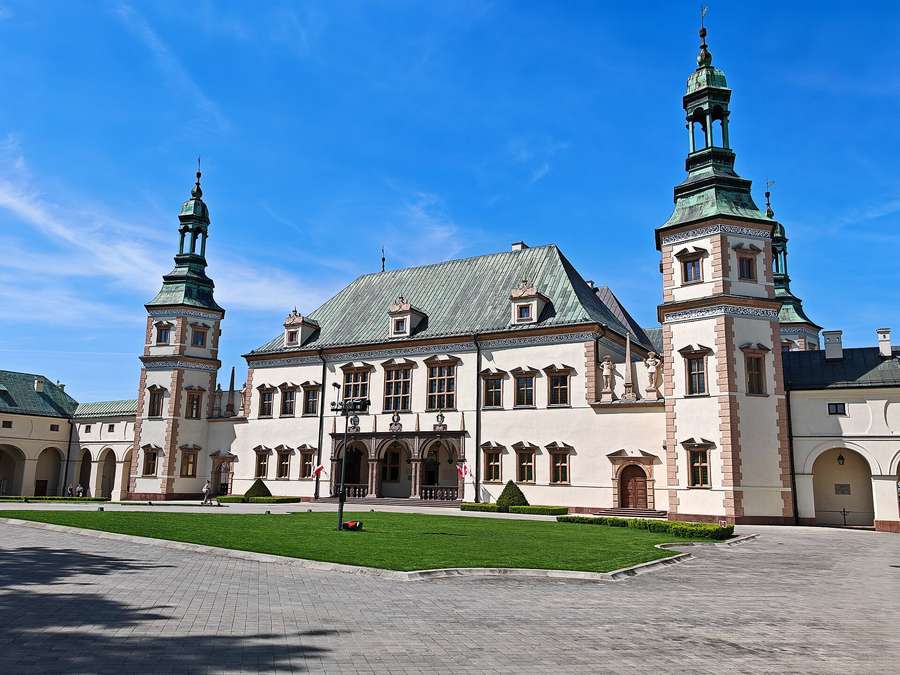
The Pałac Biskupów Krakowskich, the baroque palace of the Kraków bishops, is one of the finest early baroque residences in Poland, and its state rooms, now the National Museum in Kielce, keep their original painted ceilings and diplomatic-hall splendour. The bishops of Kraków were among the richest churchmen in Europe, and the palace they built in their Kielce residence shows it: loggias, towers and a facade that would not shame a Roman villa. The Italian-style garden behind it is small and perfect. From the palace, Sienkiewicza street, the city's pedestrian spine, runs down to the market square and the 12th-century cathedral basilica, rebuilt in baroque dress, whose hilltop position makes it the city's natural compass point. The cathedral's baroque interior and the small hill around it give the best sense of the old town's shape, and the streets between hold a scattering of interwar modernism from the city's industrial boom years. Kielce is also the hometown of Stefan Żeromski, one of Poland's greatest novelists, and his school and museum mark the literary trail that local students still walk.
The Świętokrzyskie mountains on the doorstep
Kielce is the gateway to the Góry Świętokrzyskie, the Holy Cross Mountains, modest in height but among the oldest ranges in Europe. The headline is Święty Krzyż, Holy Cross Mountain: the former Benedictine abbey on its summit, the relic tradition that drew pilgrims for a thousand years, and the gołoborza, the famous boulder fields of shattered quartzite that children can clamber over for hours. The range's low, rounded profile makes it ideal first-mountain terrain: real forest, real silence and real views, without any of the crowds or danger of the Tatras. Waymarked trails run from the villages at the range's foot, and the national park keeps the routes gentle enough for school-age walkers. Łysica, the range's highest point at 612 metres, offers a proper half-day hike through fir forest, and the ruins of Chęciny castle, guarding the western approach, make an easy sunset stop. All three sit within an hour of the city by car or regional bus. In autumn the beech and fir forests turn quietly spectacular, and the mushroom pickers outnumber the tourists by a factor the cities never see.
Food and the region's table
Kielce eats from the hills: forest mushrooms in autumn, game in season, regional cheeses, and the Świętokrzyskie honey that ends up in half the desserts. The Sienkiewicza promenade and the market square hold the restaurants, from milk bars doing pierogi and potato pancakes at student prices to modern rooms plating the region's produce with ambition. The local fast lunch is the zapiekanka from one of the square's windows, eaten standing, and the local gift is a jar of dębniak or spadziowy honey from the market hall.
With children
Kielce might be Poland's most underrated family weekend: a toy museum with free weekend-morning entry, caves and a gorge inside the city, a zipline for older kids, gołoborza boulder fields that work as a natural playground, and a forested hill with a monastery at the top of the region's story. The Kadzielnia paths are pram-manageable on the main circuits, the palace garden offers a calm hour between activities, and hotel prices run well below the big-city level. Prices stay gentle throughout, distances stay short, and the city's compactness means no long transfers between activities, which any travelling parent will recognise as the true luxury.
A realistic weekend plan
Day one: train in by midday, the bishops' palace and garden, Sienkiewicza to the cathedral, the toy museum in the afternoon, dinner on the promenade. Day two: Kadzielnia in the morning, gorge paths and the cave route, then a half-day run to Święty Krzyż and the gołoborza before the evening train. With a third day, add Chęciny castle or Łysica and let the mountains have their full say. Base yourself near the promenade: everything in the city then walks, and only the mountain day needs wheels or a bus.
Frequently asked questions
How much does the Kielce toy museum cost?
The Museum of Toys and Play costs 25 zł normal and 15 zł reduced, with a family ticket at 66 zł for two adults and two children. Entry is free during the first two hours on Saturdays and Sundays. Closed Mondays.
What is Kadzielnia and what does it cost?
Kadzielnia is a nature reserve in a former limestone quarry inside Kielce, with cliff paths and an underground cave route. The caves cost 20 zł normal and 15 zł reduced, open Tuesday to Sunday with Mondays closed; the gorge above ground is free.
How do I get to Kielce from Warsaw?
Direct InterCity and regional trains run between Warsaw and Kielce in about two and a half hours, and Kraków is about two hours away by train or bus. The centre is walkable, with city buses to Kadzielnia.
When is the best season for Kielce and the Świętokrzyskie?
Late spring to early autumn for the mountains and the gorge; autumn for mushrooms and colour. The toy museum and palace make Kielce a year-round weekend, and the caves keep their cool in summer heat.
Is Kielce good for a family weekend?
Yes, unusually so: the toy museum, city-centre caves and gorge, a zipline, and the Holy Cross Mountains' boulder fields and monastery trails all sit within an hour, at gentle prices.
How many days do you need in Kielce?
Two days cover the city: palace, cathedral, toy museum and Kadzielnia. Add a third for the Holy Cross Mountains, which deserve their own full day. * Photos: Cover - the Kadzielnia reserve gorge by Dwxn, CC BY-SA 4.0, via Wikimedia Commons. Body - the Bishops' Palace in Kielce by Zala, CC BY-SA 4.0, via Wikimedia Commons.