Włocławek for a Weekend: Faience, a Gothic Giant and the Vistula
The essentials: Włocławek rewards a weekend: one of Poland's largest Gothic cathedrals with Mehoffer stained glass, the national faience museum (10 zł, free Fridays) and wide Vistula boulevards. Around two hours by train from Warsaw.
Trains between Warsaw and Toruń pass through Włocławek every day, and almost everyone stays on board. That is a mistake. Perched on a high bank above the widest stretch of the lower Vistula, this small city holds one of Poland's great Gothic cathedrals, the national capital of faience pottery, and a riverside that delivers the best sunset between Warsaw and the Baltic. 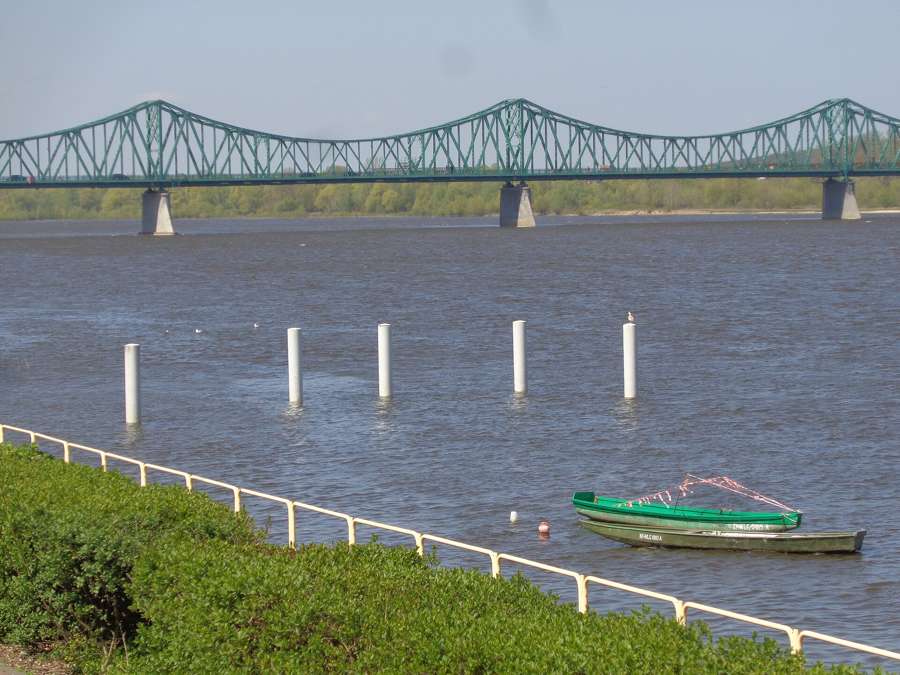
Getting there
Włocławek sits in the Kujawsko-Pomorskie region, roughly halfway between Warsaw and Bydgoszcz on the main rail line. Trains from Warsaw take around two hours, from Toruń about an hour, and from Bydgoszcz around 45 minutes, which makes the city an easy add-on to any stay in either. The station is a short walk from the centre, and the city itself is compact: the cathedral, the museums and the riverfront all fit into a comfortable walking loop. Drivers from Warsaw follow the A1 motorway south of Łowicz; allow around two hours.
Włocławek is one of the oldest cities on the Vistula: it was the seat of the Kujawy bishops from the 12th century and for a time gave its Latin name, Vladislavia, to the whole region. The cathedral chapter and the river trade made it prosperous, and that long continuity explains the city's layered feel: a Gothic core, a 19th-century factory boom, and a working river city that never turned itself into a stage set for tourists.
Data source: rail operator and Włocławek city information, checked 22 October 2026.
The cathedral on the hill
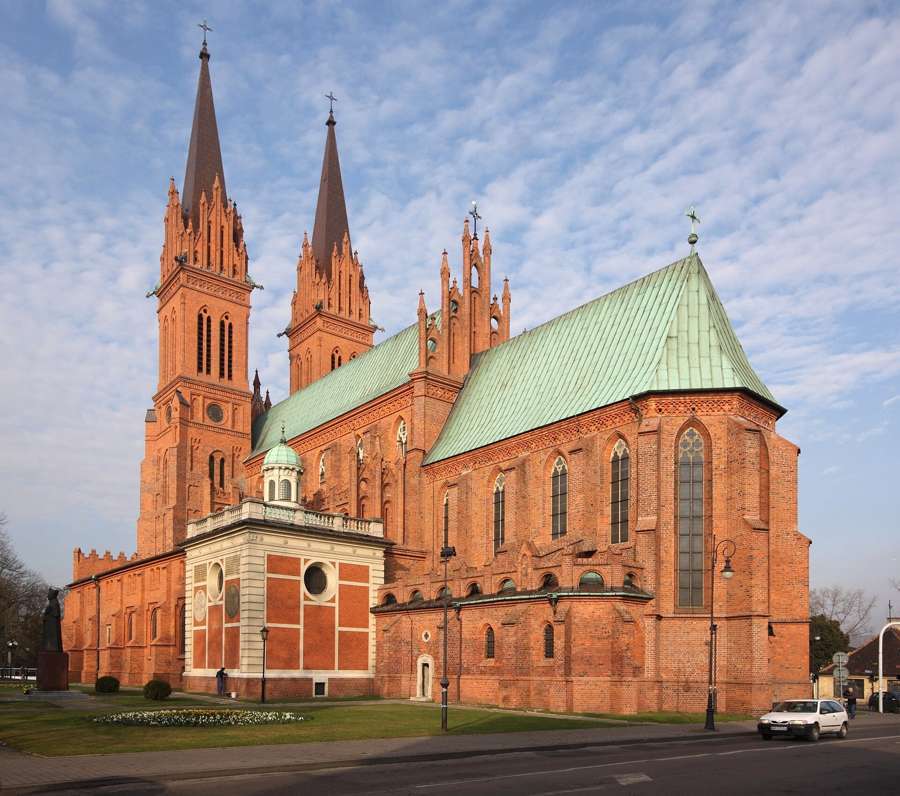
Włocławek's skyline belongs to one building: the Cathedral Basilica of the Assumption of the Blessed Virgin Mary, a brick Gothic giant begun in 1340 and among the largest Gothic churches in Poland. From the riverbank its copper-green roof and twin spires dominate the city exactly as they did six centuries ago. Inside, look for two things. First, the medieval wall paintings: the cathedral preserves rare figural polychromies from its earliest centuries, survivors of a kind that most Polish churches lost. Second, the celebrated Young Poland stained-glass windows designed by Józef Mehoffer, jewel-coloured and unmistakable, which turn the light of the nave into something closer to a gallery than a church. Give the interior a slow half hour, then walk the cathedral hill for the view over the Vistula.
The cathedral quarter rewards aimless wandering. Below the hill, the small streets of the old town hold the Baroque church of St John and fragments of the medieval layout, and the Diocesan Museum nearby keeps the cathedral's treasury: chalices, vestments and manuscripts from eight centuries of the Kujawy bishopric. Between them, the hilltop gardens offer the classic photograph: green copper roof in the foreground, the Vistula shining beyond.
Data source: Włocławek cathedral and diocesan information, checked 22 October 2026.
Faience: the city's signature
Since 1873, Włocławek has been Poland's faience capital: its pottery factory made the city a household name for hand-decorated ceramics, and the craft never really left. The Museum of the Kujawy and Dobrzyń Land cares for the country's most important faience collection, from 19th-century factory pieces to interwar art ceramics, and displays it alongside the region's history and ethnography in a complex of buildings in the centre. If you have ever wondered why so many Polish kitchens hold a particular blue-and-white pottery style, this is where the story starts.
Tickets are 10 zł normal and 7 zł reduced, children under seven enter free, and Fridays are free for everyone. The museum is closed on Mondays; it opens 10:00-18:00 on Tuesdays, 10:00-16:00 Wednesday to Friday, and 11:00-17:00 at weekends. Holders of the Polish Large Family Card pay reduced rates, and school groups have their own pricing. Check the programme before your visit: the museum regularly runs ceramic-painting workshops that are worth timing a trip around, especially with children.
The faience story continues outside the museum walls. Small studios and shops around the centre sell contemporary Włocławek ceramics, from traditional cobalt patterns to modern design, and they make the city's best souvenir by a wide margin. Prices for hand-painted pieces are modest compared with the better-known pottery towns of Lower Silesia, and you are buying from the tradition itself, not an import.
Data source: Museum of the Kujawy and Dobrzyń Land official ticket and opening-hours pages, checked 22 October 2026.
The river and the dam
Włocławek's second personality is the Vistula. The city stands where the river spreads wide, and its boulevards run along the top of a high escarpment with open views across the water. The green steel truss bridge, built in 1937, destroyed in 1939 and rebuilt after the war, is the city's postcard: walk the boulevards at dusk and watch the light go down behind it. Downstream stands the Włocławek dam, completed in 1970 and the first great dam on the lower Vistula; its reservoir stretches kilometres upstream and gives the city its sailing and kayaking scene. In summer the riverfront fills with strollers, ice-cream stands and small boats, and the sandy banks along the reservoir draw local families on hot weekends.
The boulevards themselves have been rebuilt in recent years and now carry a long promenade with viewing terraces, cycle paths and seasonal food stalls. Cyclists can continue along the Vistula trails in both directions, and paddlers treat the reservoir as one of the friendliest touring waters in central Poland: wide, calm and lined with beaches. Even if you never leave the promenade, budget an hour here at the end of the day; the view west along the river at sunset is the image of Włocławek you will remember.
Data source: Włocławek city and regional information, checked 22 October 2026.
With children
Włocławek is an easy, inexpensive family weekend. The museum is the indoor anchor: the faience displays are tactile and visual enough to hold young attention, the ceramic workshops give children something to make and keep, and free Fridays keep the budget intact. The riverfront handles the outdoor hours: the boulevards have space to run, scooters and bikes work well on the flat paths, and the bridge-and-boats view entertains longer than you would expect. The cathedral visit works best kept short and turned into a game: count the colours in the Mehoffer windows, find the animals in the medieval wall paintings. Everything sits within walking distance, so there is no wrangling of prams onto buses. One practical note: the museum keeps reduced weekend hours outside the summer season, so check the current timetable before planning a Sunday visit, and remember the Monday closure when building your itinerary.
Data source: museum and city visitor information, checked 22 October 2026.
A simple weekend plan
Saturday: arrive by late morning, the cathedral and its hill, lunch in the centre, then the museum (or save it for a free Friday if your trip starts then). Evening on the boulevards for the bridge at sunset. Sunday: a slow morning by the river, the reservoir banks if the weather is kind, and an early-evening train home. Włocławek will not exhaust you, and that is precisely its charm: it is a weekend that costs little, asks little, and sends you home with a plate or a bowl you will use for years.
Practical notes: the cathedral is a working basilica, so visit outside mass times and dress accordingly. The centre's restaurants cluster around the pedestrianised streets between the Rynek and the river, and prices are gentle even by regional-city standards. If you are combining Włocławek with Toruń, the two cities pair naturally into one rail loop, with an hour of track between them.
Frequently asked questions
How much do Włocławek's museums cost?
The Museum of the Kujawy and Dobrzyń Land charges 10 zł normal and 7 zł reduced, with free entry for children under seven and for everyone on Fridays. The museum is closed on Mondays.
How do I get to Włocławek from Warsaw?
Direct trains from Warsaw take around two hours, and drivers use the A1 motorway for a similar journey time. From Toruń the train takes about an hour, and from Bydgoszcz around 45 minutes, so the city also works well as a stop on a longer Kujawy rail itinerary.
What is Włocławek famous for?
Three things: its 14th-century Gothic cathedral, one of the largest in Poland, with medieval wall paintings and Mehoffer stained glass; its faience pottery tradition, which began in 1873; and its wide Vistula riverfront with the green 1937 truss bridge.
Is Włocławek good for a family weekend?
Yes. The museum's ceramic workshops and free Fridays, the walkable centre and the open riverfront make it a low-cost, low-stress family trip. The cathedral visit can be kept short and playful for younger children, and the flat boulevards make an easy evening walk with a buggy before bedtime. * Photos: Włocławek Cathedral by Pko, CC BY-SA 3.0; the Vistula at Włocławek by Mariochom, CC BY-SA 4.0, both via Wikimedia Commons.