Breast Health in Poland: Free Screening, Mammograms and Advice
The essentials: Women aged 45-74 entitled to public healthcare in Poland get a free mammogram every 24 months with no referral, at programme clinics or mobile mammobuses. Private mammograms average 147 zl and breast ultrasound 240 zl. Anyone with symptoms should see a GP, gynecologist or oncologist directly - no referral needed.
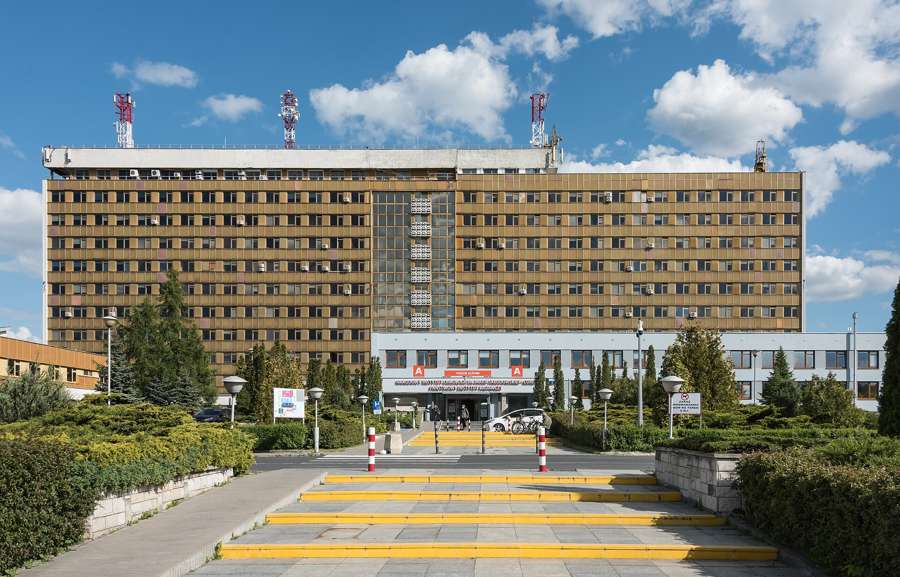
Poland runs one of Europe's more accessible breast-screening systems: free mammograms every two years for women aged 45-74, no referral needed, delivered through clinics and a fleet of mobile mammobuses. Yet many expat women never use it, either because they do not know it exists or because they assume language and paperwork will defeat them. Here is how breast screening and breast health care actually work in Poland in 2026.
The free national screening program
The national breast cancer prevention programme offers a free mammogram to every woman aged 45 to 74 (counted by year of birth) who has not had a mammogram in the last two years - so the standard rhythm is one examination every 24 months. Two groups qualify annually instead: women who, five years after surgical breast cancer treatment, are still on follow-up hormone therapy, and women who completed breast cancer treatment plus the five-year monitoring period. Women already under specialist high-hereditary-risk family care or comprehensive oncological care are outside the programme, because they are monitored more intensively elsewhere.
No referral is needed - you simply book with a facility that runs the programme. You fill in a short questionnaire, the mammogram is taken in two projections, and the images are assessed independently by two radiologists, with a third reading any disagreement. Results are registered in the central SIMP system. Around 95 percent of screenings come back normal. If yours does not, you are informed in writing or by phone and handed your full documentation plus a referral list of facilities running the programme's second stage - deeper diagnostics such as additional imaging and biopsy - which is also free.
Data source: National Oncology Institute programme page (profilaktykaraka.nio.gov.pl), checked 22 October 2026.
Where to get screened: clinics and mammobuses
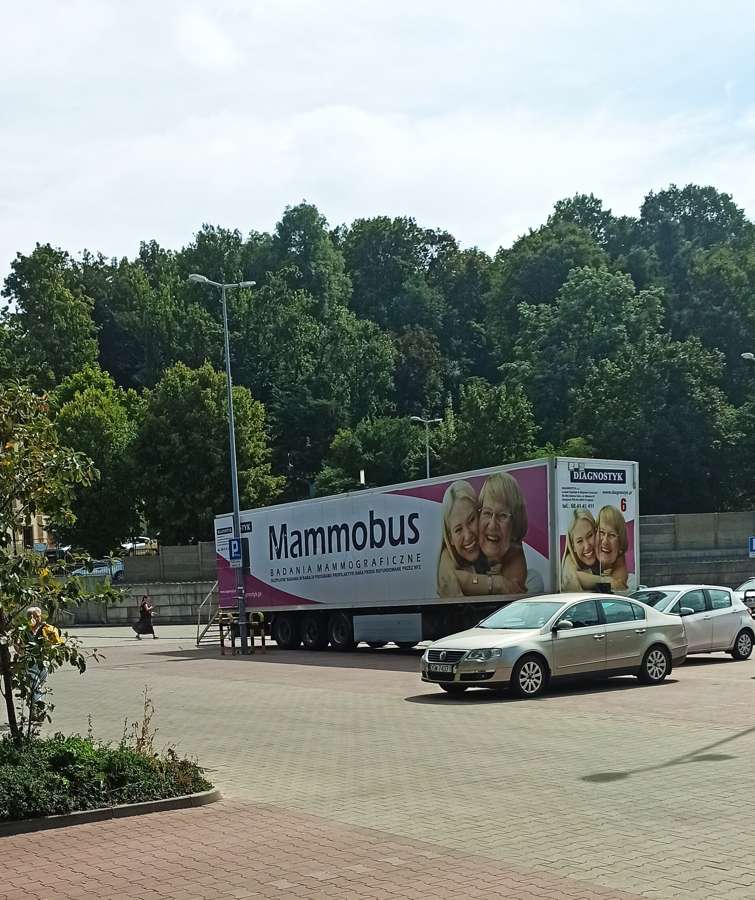
The programme runs in two modes: fixed clinics and mobile units called mammobusy - mammography trucks that park in smaller towns, at supermarkets and community centres on a published schedule. The list of fixed facilities is on the NFZ's ZIP patient portal, and mammobus timetables are published by each voivodeship NFZ branch. Bring your previous mammogram images if you have them: radiologists compare old and new images, which makes real changes far easier to spot.
The practical effect for expats is significant. If you live outside a big city, the mammobus brings the programme to you. If you live in Warsaw or Krakow, multiple clinics offer programme mammograms with short waits. The examination itself takes minutes; staff handle foreign patients regularly, and in larger cities English usually works at registration.
Data source: National Oncology Institute programme page and NFZ patient information, checked 22 October 2026.
How to book, step by step
The mechanics are simple once you know where to look. First, check your eligibility: you need to be 45-74 by year of birth, entitled to public healthcare, and at least 24 months past your last mammogram (12 months for the two follow-up groups). Second, find a facility: fixed clinics are listed on the NFZ's ZIP patient portal under preventive programmes, and mammobus schedules sit on your voivodeship NFZ branch website - both are searchable by town. Third, book: most facilities take phone or online registration, and mammobus stops often accept walk-ins within opening hours. On the day, bring your ID, your previous mammogram images if you have any, and ten minutes for the questionnaire. Results arrive by letter or phone; an abnormal result comes with your documentation and the stage-two referral list already prepared.
One registration tip from experience with Polish healthcare: if a facility's phone line is difficult in English, the written route - email or the online form - usually works better, and larger city clinics answer in English routinely.
Data source: National Oncology Institute programme page and NFZ patient information, checked 22 October 2026.
If you have symptoms, do not wait for screening
This is the distinction that matters most. Screening is designed for healthy women with no symptoms. If you feel a lump, notice discharge, skin changes, a pulled-in nipple or persistent pain unrelated to your cycle, the programme page itself directs you elsewhere: book a GP (POZ) visit, a gynecologist or an oncologist as soon as possible - and under NFZ rules none of these visits requires a referral. That starts the diagnostic pathway, where a doctor can order imaging on medical grounds regardless of your age or when your last mammogram was.
Age matters in a different way here. The free screening window starts at 45, but breast symptoms at 30 are investigated just the same - through your doctor, not the screening programme. Women under 45 who want routine imaging for peace of mind typically have it done privately or on a doctor's order.
Data source: National Oncology Institute programme page, checked 22 October 2026.
Going private: what breast imaging costs
Private breast imaging in Poland is comparatively cheap, and many women combine the free programme with private checks in the off years. Across 37 clinics listing mammography on the Kliniki.pl comparison portal, the average private price is 147 zl; published clinic price lists show 150 zl for a full mammogram in Wroclaw and 180 zl for a standard study in Otwock. Breast ultrasound (USG piersi), the examination doctors commonly use for younger women and dense breast tissue, averages 240 zl across 175 clinics and 79 doctors, with listed prices from 60 to 450 zl - in Warsaw, 190 to 320 zl.
At these prices, a private ultrasound between programme mammograms costs less than a typical restaurant dinner for two. Booking is direct with the clinic, no referral needed, and results are usually in your hands the same day - useful if you want documentation in English to share with a doctor back home. A private gynecology consultation, the natural first stop for any breast concern, averages 231 zl across 221 clinics and 484 doctors on the same portal. Booking platforms such as ZnanyLekarz.pl let you filter by language, so finding an English-speaking gynecologist in Warsaw, Krakow, Wroclaw or Gdansk takes minutes.
Data source: Kliniki.pl price comparisons for mammography (37 clinics) and breast ultrasound (175 clinics), checked 22 October 2026.
If something is found: the cancer-care pathway
An abnormal screening result does not mean cancer - it means the images need a closer look. The programme's second stage provides free deepened diagnostics at listed facilities, and only a fraction of those work-ups end in a cancer diagnosis. If cancer is confirmed, care moves into Poland's comprehensive oncological care pathway (kompleksowa opieka onkologiczna), which coordinates diagnostics, surgery, oncology and rehabilitation for breast cancer patients within the public system. Breast cancer caught early is highly treatable - which is precisely the logic of the screening programme: clinical studies cited by Poland's Patient Ombudsman show that regular mammography screening meaningfully reduces mortality in the 50-69 age group.
The emotional side deserves one sentence: getting a callback after a mammogram is frightening, and in a foreign country more so. The system expects callbacks - they are routine, free, and usually end in reassurance.
It is worth understanding why the programme exists at all. Breast cancer is the most common cancer in Polish women, and the entire screening architecture - the two-year rhythm, the double radiologist reading, the free second stage - is built around one finding repeated across clinical studies: tumours caught at an early stage are treated far more successfully than symptomatic ones caught late. Skipping screening because the result might be scary is, statistically, the dangerous option.
Data source: National Oncology Institute programme page and Patient Ombudsman breast cancer prevention guidance (gov.pl), checked 22 October 2026.
Making it a habit
Put the screening rhythm into whatever calendar system runs your life: if you are 45-74 and insured in Poland, a free mammogram is due every 24 months, and the two-year clock is what eligibility checks. Keep your images - the programme asks you to bring previous ones, and they travel with you if you move countries. Between mammograms, knowing your own body is the first alarm: changes that appear and stay deserve a doctor's visit, not a wait for the next scheduled screen. Partners and family members can help here too - a reminder to book is, in the programme's own framing, a genuinely useful intervention. And if you split your year between Poland and another country, do the screening wherever the two-year clock runs out first; what matters is the rhythm, not the flag on the mammogram machine.
Frequently asked questions
I am a foreigner insured in Poland. Can I use the free screening?
Yes - the programme is open to women entitled to publicly funded healthcare in Poland, which includes foreign employees and residents insured with the NFZ. You book directly with a programme facility or a mammobus, with no referral, and the examination is free.
I am 38. Can I get a free mammogram?
Not through the screening programme, which covers ages 45-74. If you have symptoms, see a GP, gynecologist or oncologist - no referral needed - and imaging will be ordered on medical grounds. Without symptoms, a private mammogram (average 147 zl) or breast ultrasound (average 240 zl) is the usual route.
What happens if my mammogram is abnormal?
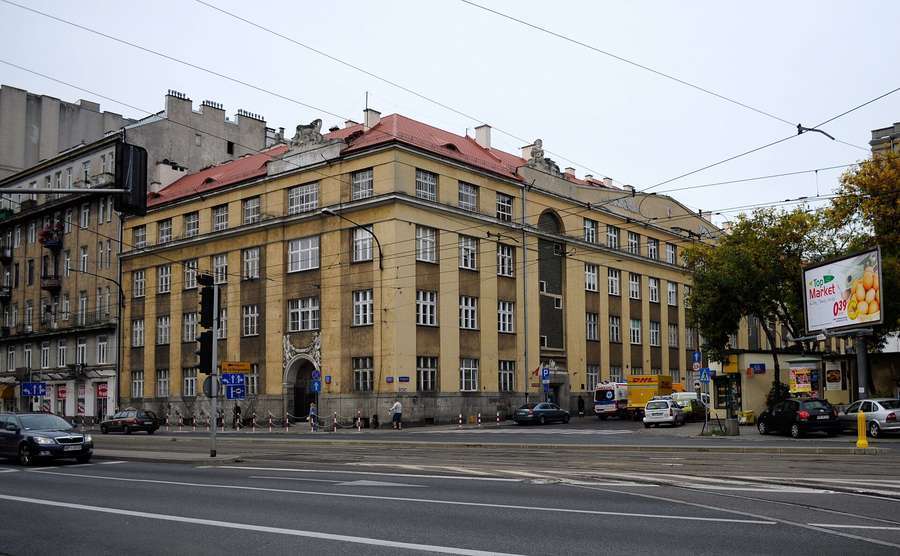
You are notified and referred to the programme's free second stage of deeper diagnostics, with your full documentation and a list of facilities in your area. Most abnormal results do not turn out to be cancer. * Photos: Adrian Grycuk, "Maria Sklodowska-Curie National Research Institute of Oncology, Warsaw", CC BY-SA 3.0 PL, via Wikimedia Commons; Aw58, "Mammobus in Kamienna Gora, 2025", CC BY 4.0, via Wikimedia Commons.