Canned Fish in Poland: Tuna, Sprats and Packing Choices
The essentials: Keep the fish, form and packing together: tuna pieces, broken-up tuna, smoked sprats and tomato-sauce products are different choices. Check stated drained quantities and the current species line rather than guessing from a tin or photo.
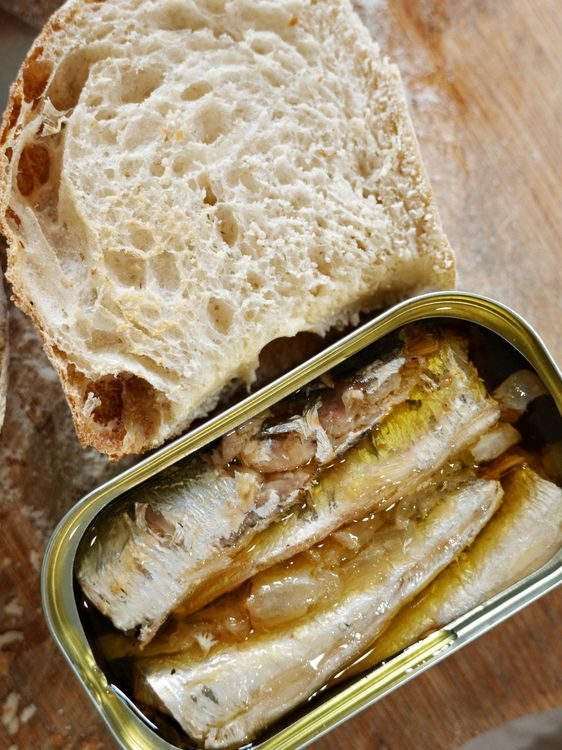
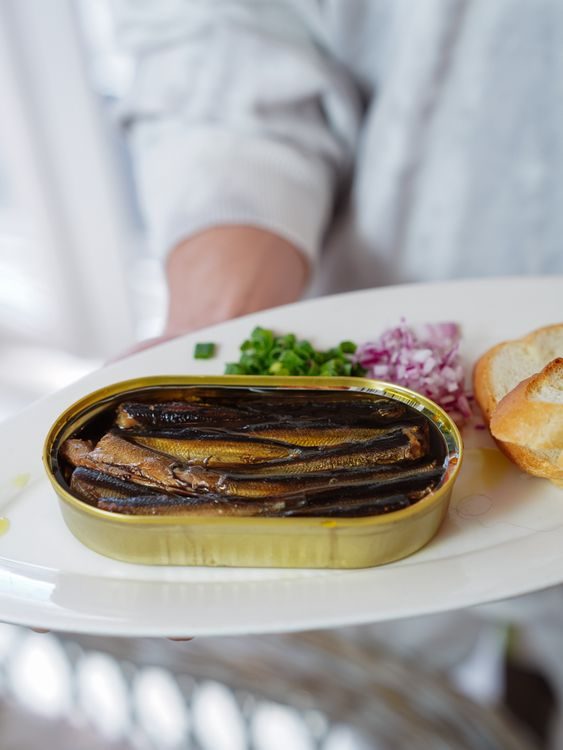
Cover: Eddie O., source photograph, Pexels License. Resized and JPEG-compressed. An opened tin of fish beside bread. Illustrative canned-fish context, not a cited Polish product or verified species, packing oil or drained quantity.
A Polish canned-fish shelf asks you to make several choices at once: the fish, the form of the pieces, the packing liquid or sauce and the quantity you will actually use. A familiar tin size or a short English title cannot settle all of them. Tuńczyk w kawałkach, tuńczyk rozdrobniony, szproty wędzone and fish in tomato sauce are different shopping descriptions, even when they sit beside each other.
Start with the dish you want to make, then read the selected product. The examples here use Polish producer pages from Lisner, Graal, King Oscar and Konshurt, with one explicitly identified retailer-transcribed quantity example. They explain the buying decision, not a nutritional ranking, a fish-handling method or a promise that every tin with the same broad name has an identical formulation.
Keep the fish and the product form in the same note
Tuńczyk means tuna, while kawałki points to pieces. Rozdrobniony identifies a broken-up form, and w strzępach adds the idea of shreds. A useful shopping note retains those words when the form matters to your dish. Writing only tuna invites a substitution that may contain the right fish but not the presentation you intended.
Konshurt's own tuna catalogue shows why the full name is worth keeping. It separately lists solid tuna, pieces with added tuna shreds, and tuna broken into shreds, with different water, vegetable-oil and sauce options. Those are actual named products, not a quality ladder invented by this article. If your recipe calls for visible pieces, investigate the exact form rather than assuming every can will provide them.
The same catalogue also includes tuna flakes in a red curry sauce. A fish name therefore does not mean a neutral ingredient with only water or oil. A sauce can be part of the actual product identity. Keep it in the shopping note so a prepared flavour mixture does not enter a recipe unnoticed when you meant to add your own seasoning.
Tuna in its own sauce can still list water and salt
Lisner's Tuńczyk w sosie własnym 170 g page describes tuna pieces and lists tuna using the source's scientific-name wording, followed by water and salt. This is the actual formulation cited, not an inference from the expression sos własny. The phrase does not establish an ingredient-free fish product or promise that no water has been added.
If you are choosing a relatively plain tuna base for a recipe, this list is useful because it identifies what accompanies the fish in that named item. It does not establish the fish content or drained mass where the page does not state those figures. Do not calculate an imagined drained quantity from a title containing 170 g, and do not use a photograph of pieces to fill a missing number.
Graal's separate solid tuna in water page identifies a 240 g multipack, three 80 g units, and lists solid tuna, Katsuwonus pelamis, water and salt. That is another actual product format, not the same can as Lisner's 170 g example. Retain the multipack structure when comparing what you will buy; an outer pack figure and one inner unit are not interchangeable shopping quantities.
Oil packing needs its own ingredient check
Graal's tuna pieces in oil page lists tuna 65%, vegetable oil 20%, water and salt. The cited list does not name a particular vegetable oil, so this guide does not rename it sunflower, rapeseed or olive oil. The useful comparison is the formula actually stated. A picture of golden liquid is not enough evidence to identify its source.
That product also demonstrates that fish in oil may list water as well. Do not reduce the formulation to a two-ingredient assumption or treat w oleju as proof that the rest of the can is entirely oil. Keep any stated percentages attached to their named ingredients, and do not invent the remaining ingredient shares through subtraction when the source does not give them.
For shopping, the practical distinction is whether you want the named oil-packed product or a water-packed alternative. This article does not promise identical texture or flavour after draining, and it does not rank the two by healthfulness. A recipe may deliberately choose one or the other. Preserve its intended starting ingredient rather than accepting a substitute only because the fish name matches.
Broken-up tuna and drained quantities: one labelled retail example
Konshurt's catalogue lists its 170 g tuna broken into shreds in water with the code 5904947609119. E.Leclerc's listing for the matching MK item names 170 g and 120 g, and transcribes tuna 70.59%, water and salt. The retailer's nutrition table is explicitly for drained product. These are retailer-transcribed details, not a drained-weight statement quoted from Konshurt's catalogue.
The corresponding E.Leclerc oil-packed MK listing explicitly states a mass after draining of 120 g for a 170 g product. Its ingredient transcription names tuna 70.59%, soybean oil 16.9%, water and salt. Keep that information attached to this listed item and source. It does not prove that every 170 g tuna tin yields 120 g after draining, including products from other brands or other packings.
This is why net contents and drained contents need separate fields in a comparison. When a recipe needs a stated amount of drained fish, a can's headline weight may not answer the question. Look for the actual current label. Where the required detail is absent, leave it unresolved rather than manufacturing a conversion from another can with a similar shape.
Sprats in tomato sauce are a formulated product
Lisner's Szprotki w kremie pomidorowym 175 g page lists sprats 50%, identified as Sprattus sprattus, and tomato sauce 50%. The sauce has its own parenthesised ingredients, including water, tomato concentrate 7.5%, sugar, modified starch, rapeseed oil, spirit vinegar, seasonings, salt and guar gum. The tomato figure sits inside the sauce description; this guide does not flatten it into a new whole-can claim.
That is a different cooking ingredient from plain fish plus a separately chosen passata. The maker has already selected a sauce with sweetness, acidity, seasoning and a thickener. If you want a ready-flavoured topping, that may fit your plan. If your recipe separately builds a sauce, note the difference before you add a product whose formulation has already made those decisions.
King Oscar's separate sprats in tomato sauce page gives a 160 g can and identifies tomato sauce 32%, with a longer list of sauce ingredients and seasonings. Its oil is linked to a printed code: S for soybean and R for rapeseed. Those are product-specific label instructions. They do not establish the oil or fish share in Lisner's different formula or another tin from the same shelf.
Smoked sprats add another product distinction
King Oscar's smoked sprats in oil page describes Baltic sprats that are lightly smoked and packed in vegetable oil. It gives a 160 g can and lists smoked sprats, vegetable oil with the same R or S coding explanation, and salt. The word wędzone is worth retaining: it identifies the smoked product rather than simply any sprat in a similar tin.
The producer suggests sandwiches, salads or eating from the can. These are use ideas for its product, not a recipe this article has tested. A photograph cannot establish that another can is smoked, and the dark colour of a serving is not enough to transfer this description to it. Read the name and ingredients together rather than using appearance as a substitute for product identity.
The code-dependent oil information also means the current pack matters. If the oil source is part of your choice, inspect the printed code and the label's own key. Do not assume every pack uses the same option because one online photograph shows it. The guide preserves the maker's instruction rather than choosing an oil on the shopper's behalf.
Sardynki wording is a reason to read the species line
Graal has several pages headed sardynki in vegetable oil 110 g, but their ingredient statements are not consistent. Two product pages name sprat, Sprattus sprattus, while a separate catalogue page under the same broad product wording names Atlantic herring, Clupea harengus, 70%, with rapeseed oil and salt. This article does not decide which formulation is inside a particular current can from the title alone.
For a shopper, that disagreement has a practical consequence: inspect the actual ingredient and species statement on the selected pack, particularly if a recipe or preference depends on it. Do not substitute a generic English fish name into the unresolved web descriptions. Nor should an illustrative stock photograph be presented as proof of the species in a cited Polish product.
The differing pages are preserved as a source caveat rather than averaged into one supposedly settled formula. They show the limits of a short online listing. A guide can still help you buy by identifying what needs checking; it should not hide a meaningful conflict just to make the whole shelf fit into a neat one-word translation.
Choose for the dish, then save the complete identity
For visible tuna pieces, keep the product's form and packing in your note. For a broken-up ingredient, retain rozdrobniony or w strzępach. For sprats, distinguish smoked oil-packed fish from a named tomato-sauce product. If sardynki wording leaves the species unclear across web pages, check the can instead of relying on the photograph or an over-short store title.
Save the brand, full name, pack structure and any stated drained quantity when you find an item you want again. Read current handling instructions on the pack; this article supplies no universal opened-can storage rule, medical advice or dietary-safety assurance. Its purpose is to preserve the recipe's intended fish, form and flavour so a small-looking shopping substitution does not quietly change the dish.
Frequently asked questions
Does w sosie własnym mean there is no added water?
Not in the cited Lisner tuna example, which lists tuna, water and salt.
Does every 170 g tuna tin have 120 g after draining?
No universal rule is established here. The 120 g figure is retailer-transcribed for a named MK oil-packed item.
Can the sardynki title settle the fish species?
The cited Graal pages disagree between sprat and Atlantic herring. Check the current can rather than inferring species from the broad title.
Sources
- Lisner: tuna pieces in own sauce 170 g
- Graal: solid tuna in water multipack
- Graal: tuna pieces in oil
- Konshurt: tuna product identities and codes
- E.Leclerc: retailer-transcribed MK oil ingredients/drained mass
- E.Leclerc: retailer-transcribed MK water product
- Lisner: sprats in tomato cream
- King Oscar: smoked sprats in oil
- King Oscar: sprats in tomato sauce
- Graal sardynki product page: sprat statement
- Graal separate 110 g product page: sprat statement
- Graal catalogue sardynki page: herring statement