Card chargeback in Poland: 120 days, bank complaint, BLIK limits
Short answer: A card chargeback in Poland must usually be requested within about 120 days. Complain to the bank first, as the Financial Ombudsman only helps after that.
You paid by card for something that never arrived, or arrived broken, and the seller will not answer. In Poland there are two separate routes to get your money back through your bank: a card chargeback and an ordinary complaint (reklamacja) to the bank. This guide uses two official sources: a note from the Polish Financial Supervision Authority (KNF) on payments and chargeback, updated 5 March 2026, and a note from the Financial Ombudsman (Rzecznik Finansowy) on complaints dated 13 February 2026. Both were read on 18 October 2026. They describe the system for bank customers in general and do not single out foreigners.
What a chargeback is
According to KNF, a chargeback is a kind of complaint procedure run by the bank that issued your payment card. If it works, the bank returns the money for a card transaction. KNF stresses that this is a voluntary, contractual and commercial solution offered by the big card organisations together with card issuers, not something the law requires.
KNF says chargeback usually applies to commercial transactions where the cardholder:
* did not receive the goods or the service, * did not get a refund after returning the goods, * received goods or a service that do not match the contract, * received damaged goods, * or was cheated by the seller.
It may be refused if the request comes only from a change of mind and the seller does not accept returns, subject to the rules on withdrawing from distance purchases. Even when the procedure is started, a refusal is possible.
Deadline and evidence
KNF says the time to file is limited, usually to about 120 days from the date of the transaction. Banks have their own rules, so check the deadline with your bank on the day you notice the problem. The bank will normally expect evidence: proof of purchase, proof that the contract was not performed, a description of the situation and your correspondence with the seller.
KNF explains that a chargeback does not block or reverse the transaction. It is a justified compensation, and the cost is recovered through the payment system from the seller, the seller's acquirer or the card organisation.
Not authorised payments are different
If you did not agree to the payment at all, chargeback is not the tool. KNF says the general rules on unauthorised transactions in the Payment Services Act apply instead. In a fraud case, tell your bank immediately.
BLIK, bank transfers and e-money
The KNF note was prompted by a discussion of BLIK. It explains that a payment, once authorised, is generally irrevocable. You cannot cancel it from the moment your bank receives the order. Chargeback is not available for every payment method. KNF warns that if a seller takes payment directly, for example by a bank transfer from a banking app, a BLIK phone transfer, a BLIK cheque or electronic money such as PaysafeCard codes, and the seller turns out to be dishonest, the risk falls entirely on you and the complaint route with your payment provider, including chargeback, will not be available.
KNF also describes other protections that exist only if a seller offers them: an escrow account, and paid insurance for online purchases sold by some payment providers or platforms.
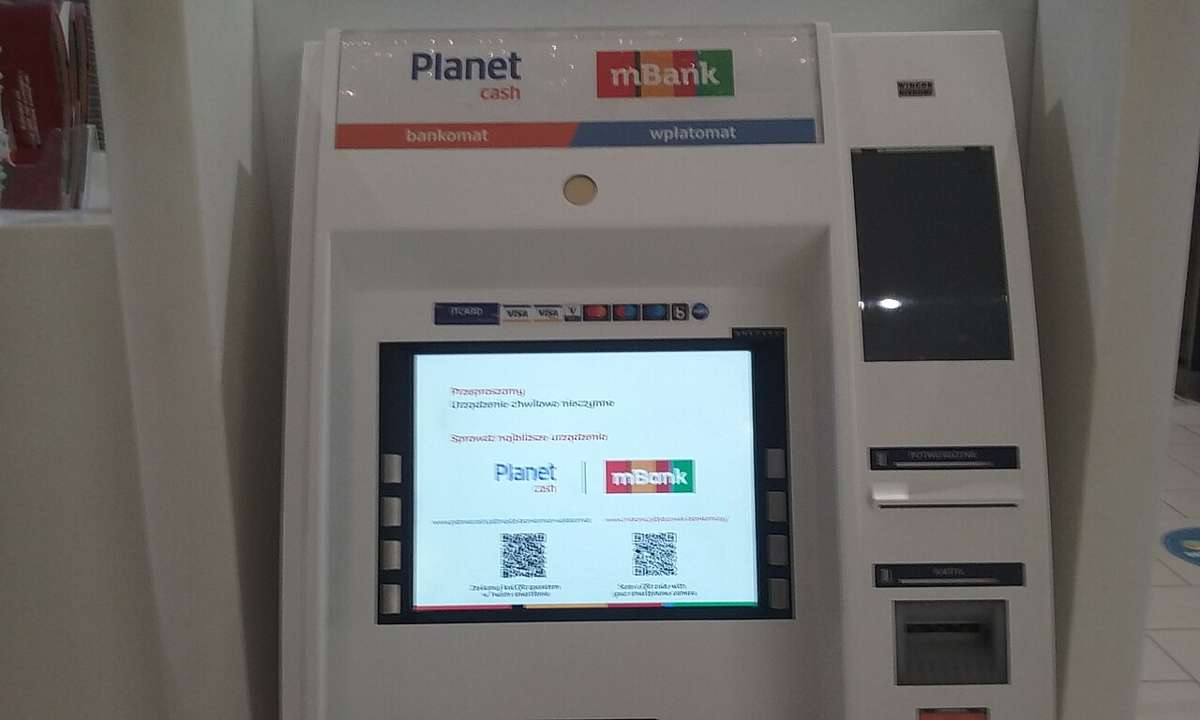
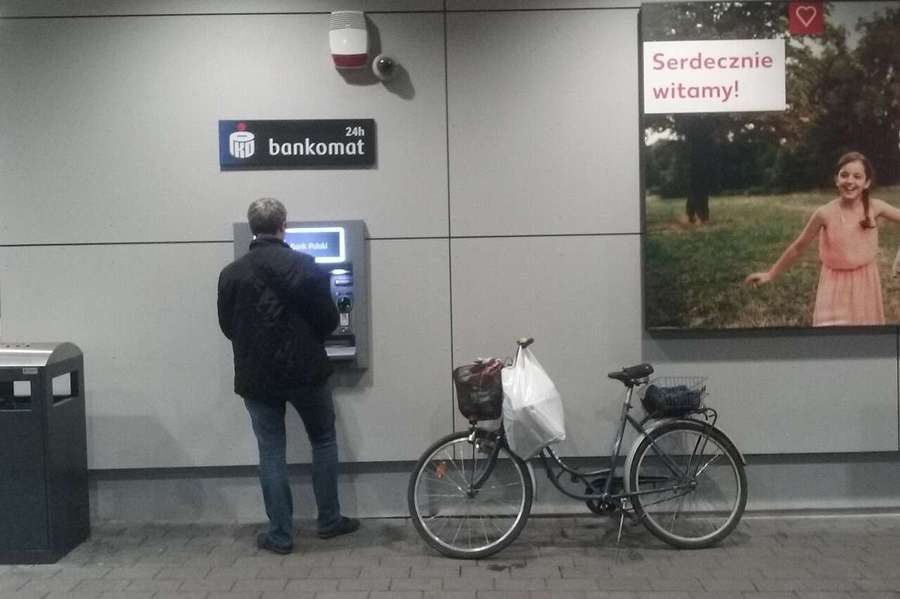
* Photos: cash machines in Tomaszów Mazowiecki, Wikimedia Commons, public domain and CC0.
Making a complaint to your bank
The Financial Ombudsman explains that you can complain to a bank or insurer in writing, orally (for example by phone) or electronically. Since 13 February 2026, financial institutions must accept complaints in electronic form, and the electronic form is the default, with paper still available. A complaint sent by email or an online form does not need a qualified electronic signature. It is enough that it identifies the sender and the problem.
The usual deadline for an answer is 30 days, which can be extended to 60 days in particularly complicated cases, and the institution should tell you the reason for the delay. For payment services the answer is due in 15 working days, extendable to 35, according to the Ombudsman. Keep proof that you filed the complaint and the reply.
When the bank says no
The Ombudsman says you must first complain to the institution and wait for its answer or for the deadline to pass before you ask the Financial Ombudsman for help or for an amicable settlement. Without this step it cannot take up the case. The Ombudsman's office is at ul. Nowogrodzka 47A in Warsaw, and the note gives tel. 22 333 73 26 and an email address, [email protected].
Safer online shopping
KNF's advice includes checking unknown sellers, being wary of heavy discounts, never starting a payment from a link received by SMS, messenger or email, reading the bank's authorisation message to check the amount and recipient, and checking that the web address is correct.
Frequently asked questions
How long do I have for a chargeback?
KNF says usually about 120 days from the transaction date. Ask your bank for its own deadline.
Can I do a chargeback on a BLIK payment?
KNF says chargeback is not available for payments taken directly by the seller, including BLIK phone transfers and bank transfers. For a plain BLIK purchase, ask the bank and the seller what protection applies.
Do I need a signature to complain by email?
No. The Ombudsman says a plain email or online form is enough if it identifies you and describes the problem.