Buying Cookware in Poland: Induction and Pan Dimensions
The essentials: Check the exact model against your hob requirements, distinguish headline diameter from the contact base, and confirm included lids and use limits. Induction compatibility does not by itself establish oven suitability.
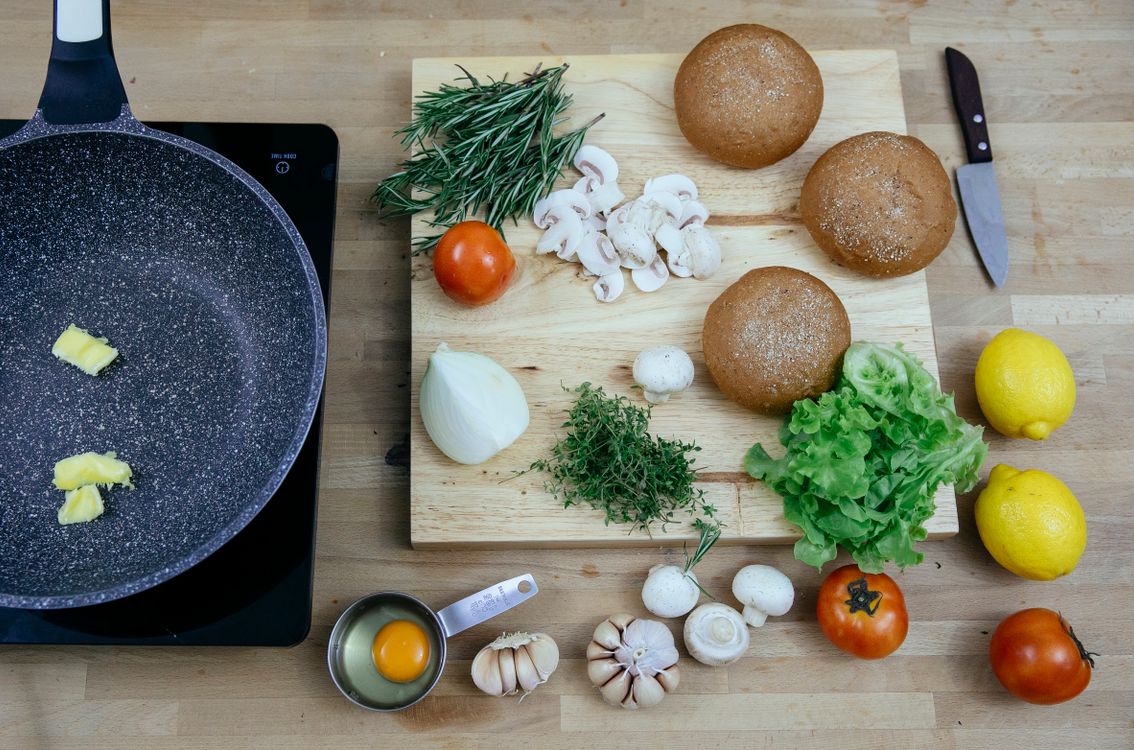
Cover: Katerina Holmes, source photograph, Pexels License. Image unchanged. A frying pan and ingredients on a worktop. Illustrative context, not evidence of a cited model’s compatibility or dimensions.
Choosing cookware for a Polish kitchen is easier when you separate the pan's name, hob compatibility, dimensions and use limits. A 28-centimetre description is not automatically the diameter of the base touching the hob. A glass lid shown beside a pan is not automatically included, and induction compatibility does not establish oven suitability.
This guide concerns reading product information before buying a pan or pot. It does not give cooking, hob-modification or electrical instructions, and it does not rank materials by health or chemical safety. Manufacturer examples show how specifications differ; photographs are general cookware context, not proof about the cited models.
Identify the kitchen's actual hob requirement
Before choosing a pan, establish the type of hob it needs to work with from the appliance's identification and instructions. Then look for the cookware manufacturer's explicit compatibility statement for the exact product. A general description such as modern kitchen or electric cooking is not a sufficiently precise substitute.
IKEA's cited HEMKOMST and MIDDAGSMAT examples explicitly include induction in their compatible hob types. That is useful product evidence. It should not be turned into a claim that every pan made from a similar-looking metal or sold by the same retailer has the same compatibility.
Keep any additional appliance requirements with the hob's own instructions. This guide does not propose modifying the appliance, adding an adapter or diagnosing a fault if cookware is not recognised. The shopping task is to establish a supported match before buying, not to improvise around an unknown mismatch.
Read induction claims for the exact model
Na indukcję or a statement that the product can be used on an induction hob is relevant wording, but confirm it for the actual model and size. A product range can contain different items, and a shortened retailer heading may omit details found in the manufacturer's specification.
Do not treat a decorative symbol as the entire answer when the written description or model identity is unclear. Find the matching product information and preserve its reference. The material name alone does not supply all the construction and compatibility details of the base.
This guide does not offer a universal magnet test or say that one simple home check overrides the cookware and hob manufacturers' conditions. Where the exact match is unresolved, ask for the missing specification rather than replacing it with a broad claim about what usually works.
Separate the headline diameter from the base
Tefal's cited Singapore-market G2550602 example is described as a 28 cm frying pan, while its specification gives a 224 mm bottom diameter for the part contacting the cooking plate. That is a concrete example of two different measurements on one product, not a conversion error.
Use the measurement relevant to your question. The headline size can help identify the product, but the contact-base measurement answers another question. Do not assume the base is 28 cm simply because that figure appears in the product title or beside a photograph.
The 224 mm figure belongs to that specific Tefal reference on its manufacturer page. It is not a standard base size for every 28 cm pan or every version sold under a similar range name. If another model's base dimension matters, obtain that model's actual specification.
Compare dimensions with their labels and units
Średnica means diameter, wysokość height and długość length. A listing may also give length including handles, width, base thickness or capacity. These fields are different descriptions of the object, and they should not be swapped merely because one is easier to find.
IKEA's cited HEMKOMST example is described as 24 cm in diameter and 42 cm long including handles. Those two figures can both be correct. One describes the pan size, while the other helps you understand its overall footprint for storage and handling space.
Check millimetres versus centimetres before comparing numbers. Also distinguish product dimensions from the packed item's dimensions. A shipping box can be larger than the cooking vessel and its handles; its width is not a substitute for the contact-base diameter missing from a listing.
Establish whether a lid is included
Pokrywka means lid. IKEA's cited MIDDAGSMAT product is explicitly named a frying pan with lid and describes the supplied glass lid. That is clearer evidence than assuming a lid is part of every pan purchase because it appears in a styled kitchen photograph.
Read the contents of the selected offer. If a separate lid is needed, verify the intended fit with the cookware supplier rather than treating a matching nominal diameter as a universal guarantee. The actual product design and compatibility information should settle the purchase.
Do not transfer an included-lid promise from one size, bundle or reference to another. A pan sold on its own and a similarly named set can have different contents. Record the actual components you need before comparing a low headline price with another offer.
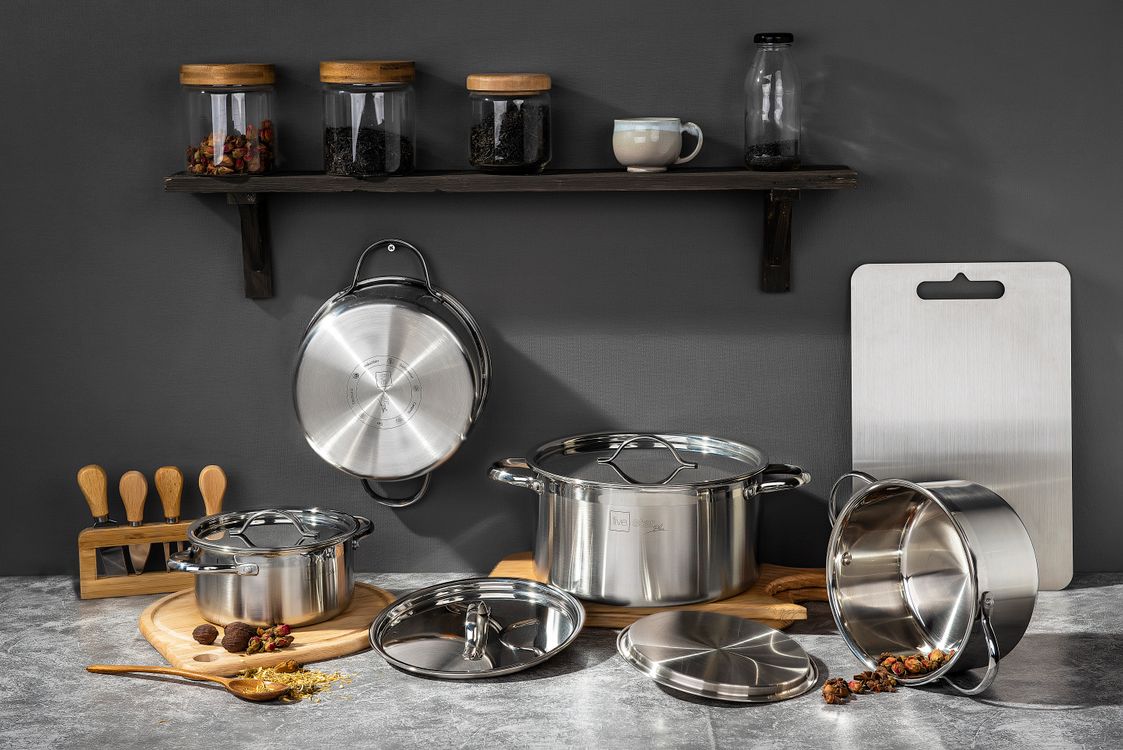
Keep lid height and vessel height distinct
MIDDAGSMAT's example lists a height of 7 cm and a height with lid of 12 cm. Those figures answer different space questions. If you have a storage restriction, the lower number does not describe the assembled pan and lid together.
Likewise, capacity and height should not be treated as identical ways of describing useful space. Read the specified field rather than inventing a volume from a photograph. The shape and dimensions of an individual product matter more than a general assumption based on its name.
For your shopping note, identify which measurement you need: base, body, total length or assembled height. Naming the measurement prevents a seller's correct but irrelevant number from being mistaken for the answer to your actual fit question.
Treat oven suitability as a separate specification
A pan's ability to work on a hob does not by itself establish whether it can go in an oven. Read the exact oven statement, including any temperature limit and exclusions. The handle, lid and other components can have conditions that do not follow from the main vessel's appearance.
The cited Tefal reference states oven compatibility up to 175°C and expressly excludes glass lids from that statement. This is a useful illustration of why the entire condition must stay attached to the product. It is not a temperature recommendation for all cookware or every Tefal pan.
IKEA's HEMKOMST listing says it can be used in an oven, but that should not be used to invent an unstated universal maximum temperature. Read the product's accompanying instructions for the limit relevant to your use. A general online description is not permission to guess a missing condition.
Read cleaning and utensil instructions independently
HEMKOMST's cited example specifies hand washing, while the cited MIDDAGSMAT page permits dishwasher cleaning. Both are product-specific statements. Similar colours, metal descriptions or a shared retailer do not make their care requirements identical.
Read the actual instructions for cleaning and any utensils before use. This guide does not replace them with a blanket rule for all ceramic-coated, stainless-steel or non-stick cookware. The point is to preserve the manufacturer's conditions, not to extrapolate a material-wide promise from one page.
If care instructions affect your choice, compare them before buying rather than assuming the most convenient option is allowed. A correctly matched hob and size can still leave you with a product whose care requirements differ from what you wanted.
Do not convert marketing claims into safety rankings
Product pages can describe coatings, heat distribution, durability or other features in persuasive language. Use the page for its identifiable specifications and stated instructions without turning every comparison into an independently verified fact about health, chemical exposure or long-term performance.
This guide does not decide that ceramic, steel, aluminium or another material is the safest choice. It also does not treat a claim about being free of a named substance as a complete assessment of a finished product. Those questions require evidence beyond a routine compatibility guide.
A practical shortlist can therefore stay modest: supported hob type, suitable dimensions, needed lid, known use limits and acceptable care. Those are decisions you can ground in the exact product without inventing a broad scientific ranking to justify an everyday purchase.
Keep the model reference with your comparison
Save the product reference or exact name alongside the specifications you checked. A broad range name and a diameter may not distinguish every version. Manufacturer pages in different markets can describe different references, so keep the conditions with the actual item they belong to.
If an offer leaves a load-bearing detail unresolved, ask for it before treating the pan as a match. Useful questions name the missing measurement, component or compatibility condition. Asking whether a pan is good is less likely to settle the practical issue than asking for its actual base dimension or included lid.
The outcome is a supported purchase, not a promise that one pan will solve every cooking task. Match the actual hob requirements, read dimensions by their labels, confirm the contents and preserve the use limits. That is a stronger basis for choosing cookware than a familiar logo or a single number in the title.
When comparing two offers, keep each model's evidence on its own line. A dimension from one reference and an oven limit from another should never be combined into a specification for a product that neither source actually describes.
Frequently asked questions
Is a28cm pan’s base always28cm?
No. The cited Tefal reference lists28cm diameter and224mm contact-base diameter. Other models need their own specification.
Does induction-compatible mean oven-safe?
No. Read the separate oven statement and its temperature/component limits. Do not transfer one model’s conditions to another.