Dobrzyca Palace Museum: Tickets, Opening Hours, Park and Access
The essentials: Pleszewska 5a, Dobrzyca. Normal 15 zł, reduced 10 zł. Nov-Mar: Tue-Sat 10:00-16:00, Sun 11:00-16:00; Monday closed. Park free. Official page conflicts on Thursday versus Friday free entry; confirm directly. Eleven entrance steps; first floor not wheelchair accessible.
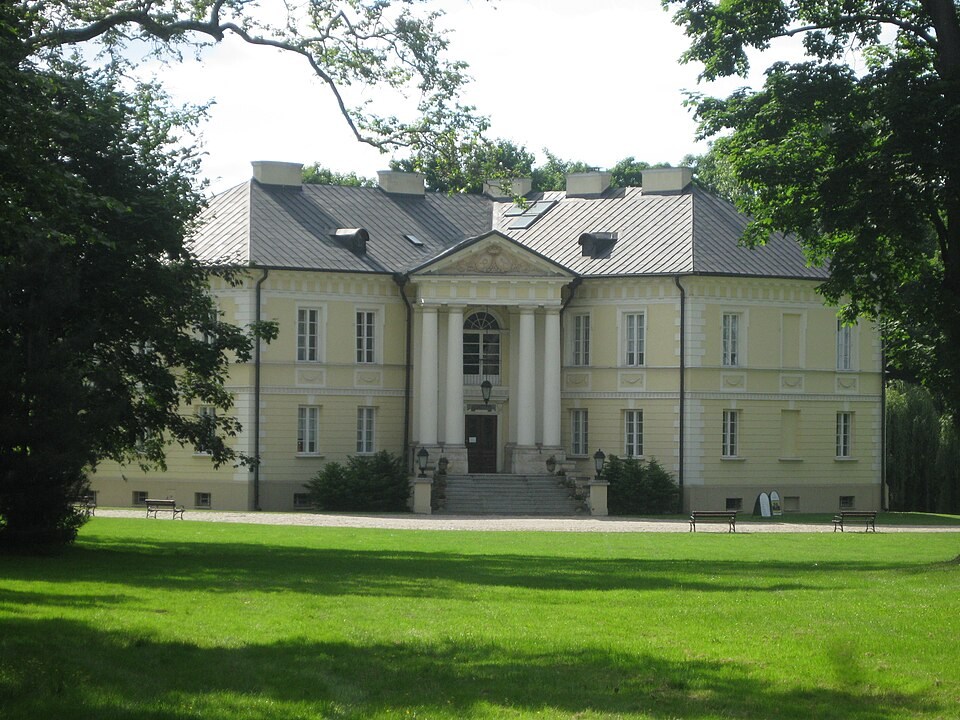
Cover: Dobrzyca Palace photographed on 16 June 2010. Archival view, not a current access or seasonal survey. Photo: LukaszKalisz / Wikimedia Commons, CC BY-SA 3.0 PL. Resized and recompressed under the same licence.
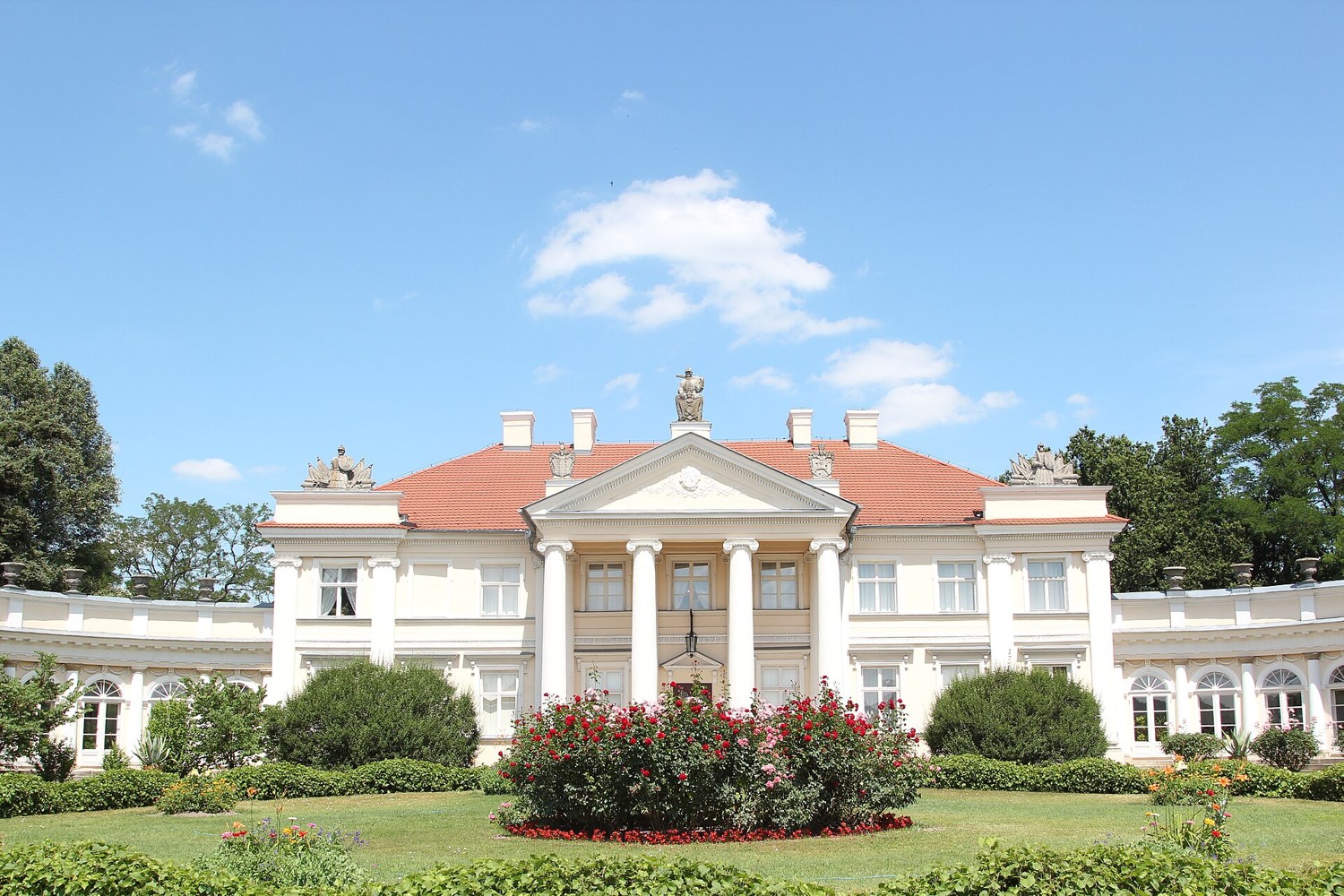
Dobrzyca's palace museum is a manageable cultural stop in southern Wielkopolska, with a bigger decision than its size suggests: do you want the historic interiors, the park, or both? The park is free, while ordinary palace admission is listed at 15 zł. The building's stairs matter more than the ticket price for some visitors, and the museum's own visitor page currently gives two different weekly free-admission days. Plan around those details rather than an attractive photograph alone.
This guide covers the Museum of the Landed Gentry in Dobrzyca, at ul. Pleszewska 5a, 63-330 Dobrzyca. It is not a guide to a similarly named palace elsewhere. The practical information below was checked against the museum's visitor and accessibility pages, with historical context from the National Institute of Cultural Heritage.
Tickets: what the current museum page actually lists
The museum's current visitor information lists a normal ticket at 15 zł and a reduced ticket at 10 zł. Children and young people under 16 are listed at 1 zł, while children under seven enter free. Those age categories overlap on the page, so the sensible reading for a family is to use the stated free category for the youngest children and confirm eligibility at the desk. Bring evidence for any reduction you intend to claim.
A guide is listed at 60 zł. Do not substitute older 40 zł or 50 zł figures still visible on earlier museum pages. Equally, do not assume that the guide fee replaces individual admission: ask for the total for your party when booking. The operator asks groups to contact it several days ahead. Its visitor information gives a maximum group size of 30, or 20 for a visit using audio description.
There is a genuine free-day conflict on the current official page. The opening-hours section names Thursday, while the FAQ names Friday. An older museum page also names Friday, but that does not settle the contradiction on the newer page. Until the museum corrects or confirms it, neither day should be treated as a guaranteed free visit. Call 62 741 30 39 before making a special trip for free admission. The park's separate free access does not resolve the palace-ticket question.
Opening hours: use the correct season
From 2 November to 31 March, the museum lists Tuesday to Saturday opening from 10:00 to 16:00 and Sunday from 11:00 to 16:00. Monday is closed. That makes a winter Sunday a later start than a winter weekday or Saturday. A visitor arriving early to walk outside should not assume the palace ticket desk is already operating.
From 1 April to 31 October, the listed hours are Tuesday to Friday 10:00-17:00, Saturday 10:00-18:00 and Sunday 11:00-18:00. Monday remains closed. These are the published seasonal hours, not a promise of admission on every holiday or during every special event. The website's closure information also contains inconsistent dates across versions, so check your actual travel date rather than copying an old holiday list.
The museum estimates roughly 30-90 minutes for an independent visit, about an hour with an audio guide, and one to two hours for a guided visit. Treat those as planning ranges. They are not last-entry rules. Leave additional time for buying tickets, choosing a route and walking in the park, and ask about final admission if you can only arrive near closing.
Why the palace is worth seeing
The National Institute of Cultural Heritage dates construction of the palace to 1795-1799, with interior work continuing until 1804. Augustyn Gorzeński commissioned it, and Stanisław Zawadzki was the architect. This places the house in the late eighteenth-century world of landowners, political change and classical architecture, rather than the medieval-fortress category that the word palace sometimes gets mixed into on travel lists.
The building has an L-shaped plan. Inside, the interest is in the relationship between rooms, painted decoration and the way a residence expressed its owner's ideas and position. The heritage record names Michał Ceptowski, Antoni Smuglewicz and Robert Stankiewicz in connection with its decoration. You do not need specialist knowledge to enjoy it, but looking at the walls and ceilings, rather than only at furniture, makes the visit more rewarding.
The museum describes the polychrome decoration as original eighteenth-century work restored in the late twentieth and early twenty-first centuries. That is a reason to look closely without touching. The palace is an old building with museum conservation needs, not a furnished house where visitors can sit wherever they like. The heritage record also documents restoration work and the site's 2017 Zabytek Zadbany award, useful context for understanding why the interiors receive attention.
What to expect from the exhibitions
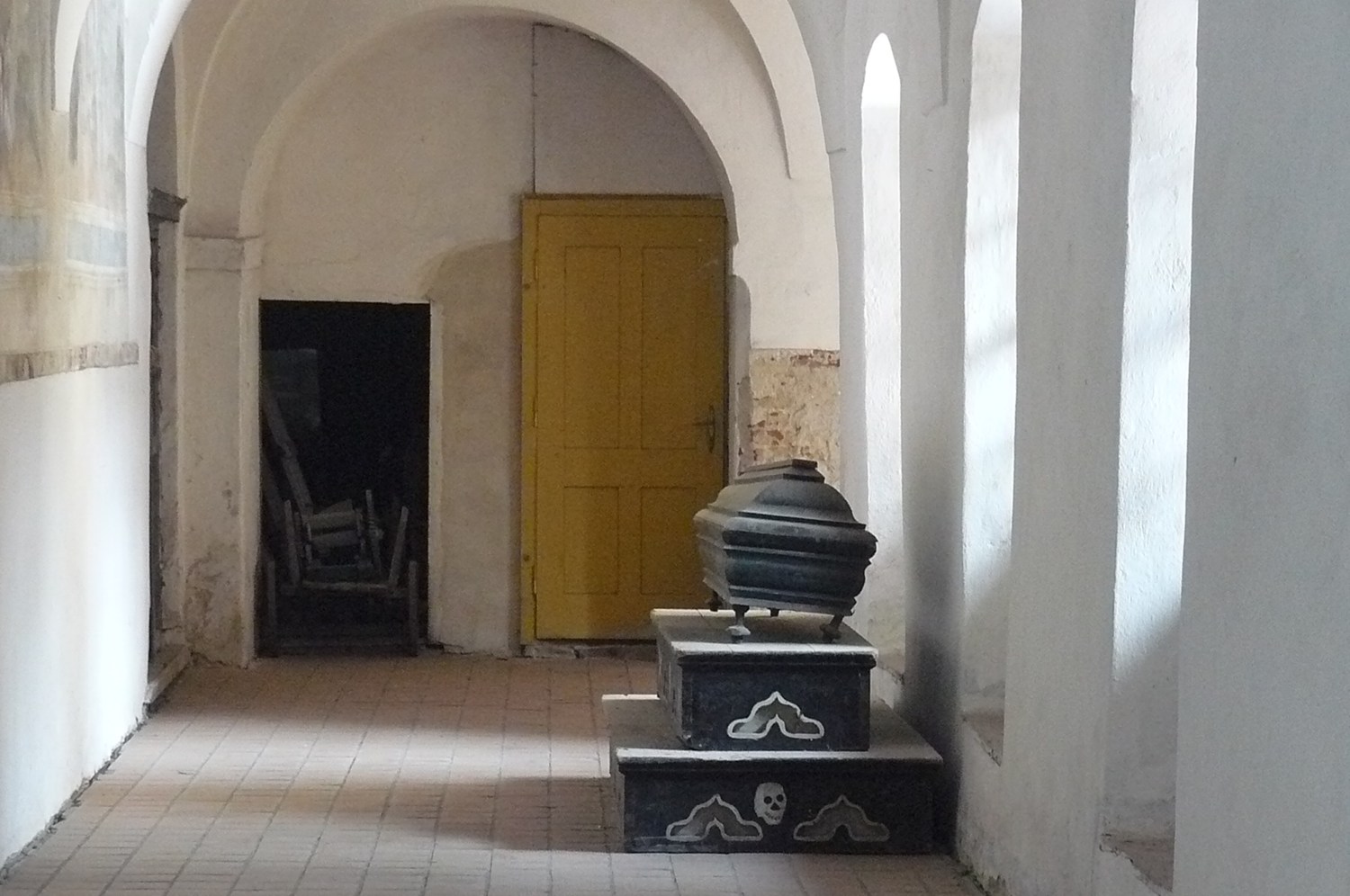
The visitor page places the historical owners, period furniture and dining-room presentation on the first floor. It also describes a ground-floor Freemasonry exhibition and temporary exhibitions whose subjects can change. Do not assume a temporary show mentioned in an old article is still on display. Check the museum's current programme if a particular subject is the main reason for your journey.
Free audio guides are available from the ticket desk with admission. The museum also describes a free family route and an application for the park. These are useful alternatives to simply moving from label to label, especially when a family wants a shared activity. Availability of a device on the day and the language you need are worth checking in advance; the existence of an audio guide alone does not establish an English-language service.
For an English-speaking group, ask specifically whether a guide or audio material is available in English on your chosen date. Do not infer this from an English browser translation of the website. A concise message giving the date, number of people, language and any access needs is more useful to the ticket office than a general request for information.
The park is a separate reason to stop
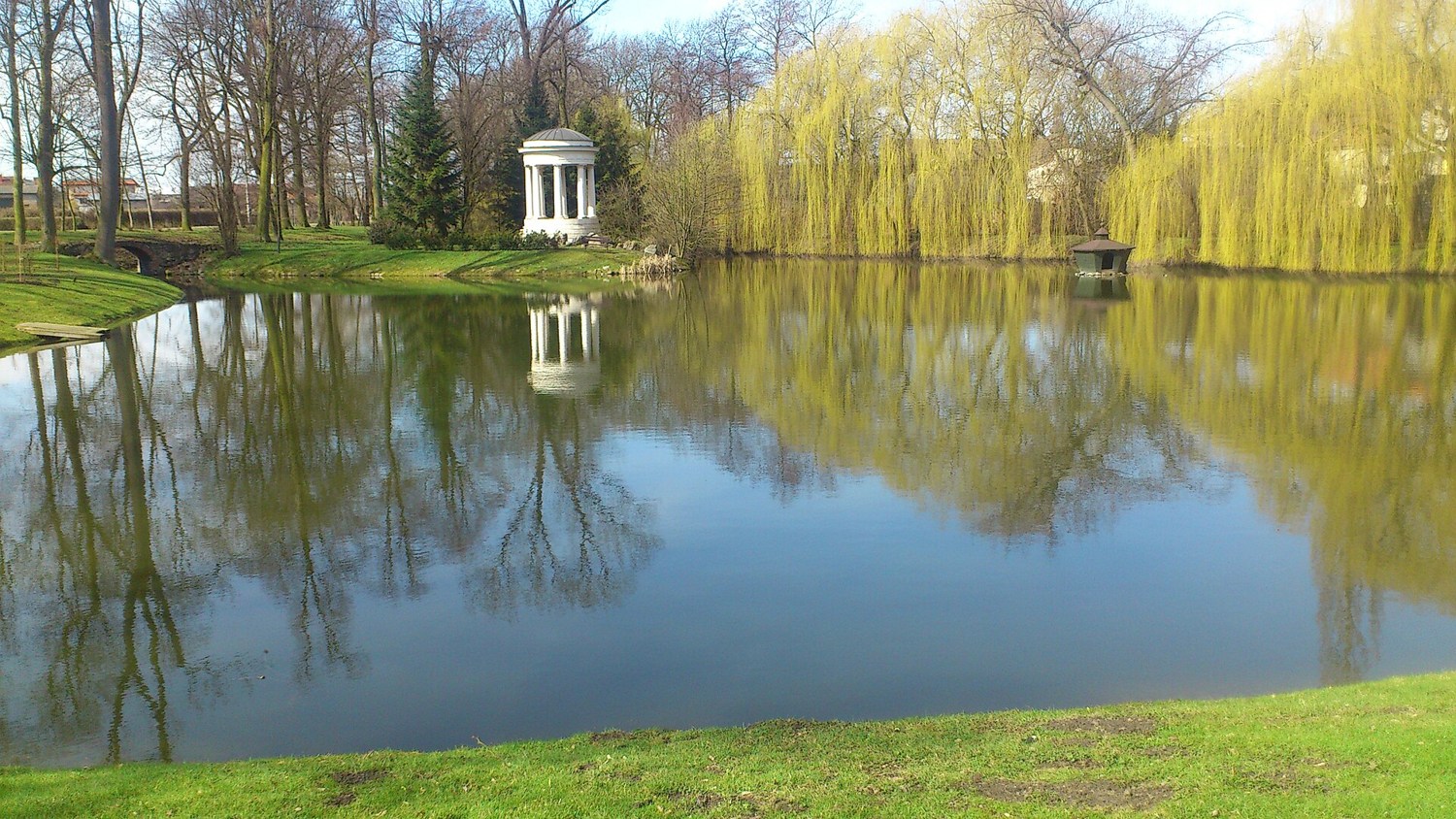
The museum describes free access to the park and its pavilions throughout the year. The grounds cover more than ten hectares and contain over thirty protected natural monuments, alongside features such as the Monopter and Pantheon. The palace and landscape were designed to be experienced together, so even a short walk gives context that an interior-only visit misses.
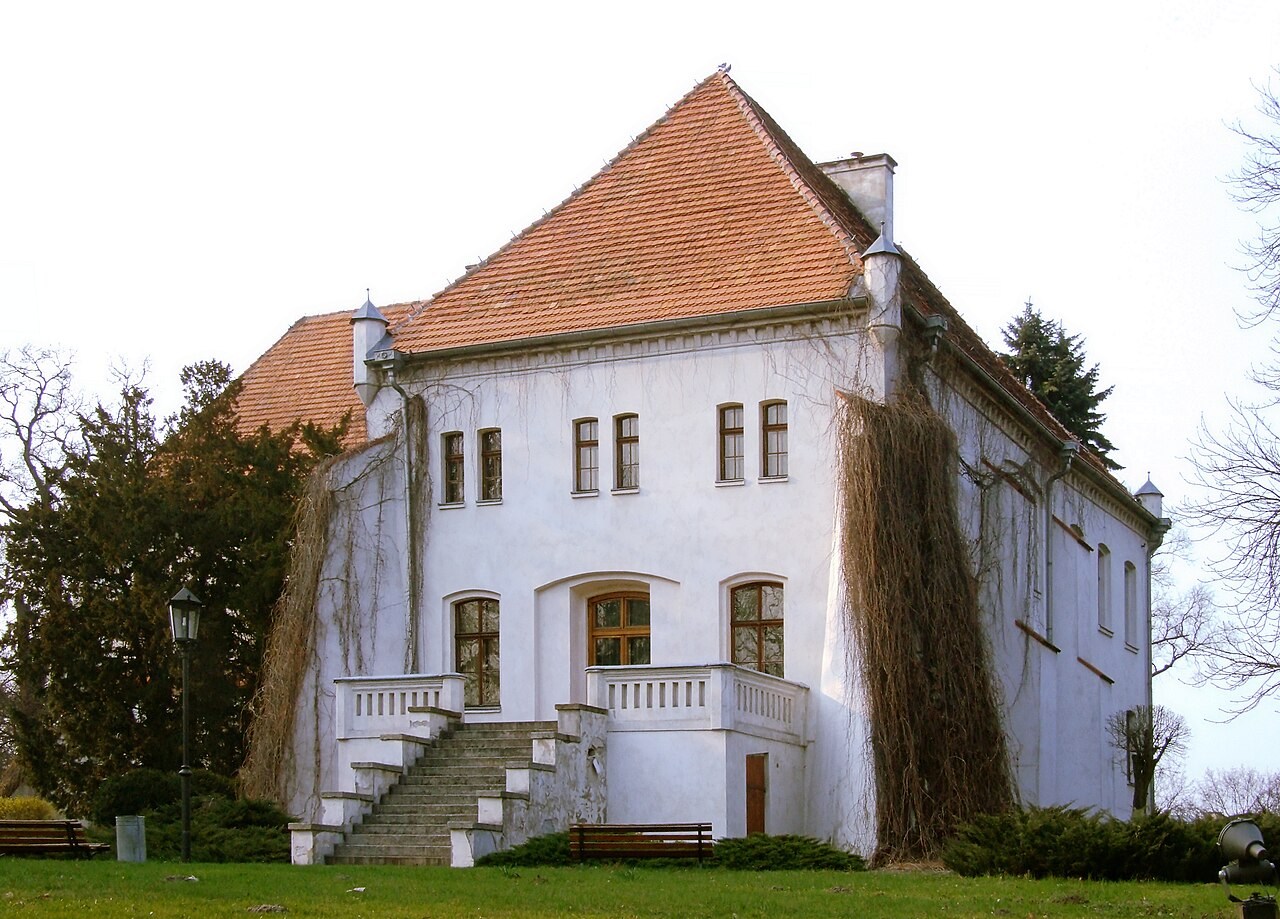
There are also seasonal outdoor exhibitions and an aviary described in the visitor information. Seasonal is the important word: do not promise children a particular display based on a photograph from another month. The photographs in this article show the actual Dobrzyca site in earlier years; they do not establish today's vegetation, weather, water levels or maintenance arrangements.
A park-only visit is a reasonable lower-cost option, but it is not a substitute for the palace collections. It also needs its own practical checks. Outdoor access can be affected by weather, wet leaves or uneven surfaces. If you need a particular route or walking distance, ask the museum which paths fit your needs instead of assuming every part of the grounds is equally easy.
Access: eleven entrance steps are a material barrier
The museum's mobility information describes eleven steps at the palace entrance, with the ticket desk inside the palace. It also notes thresholds on the ground floor. Reaching the first floor involves historic stairs in sections of eleven, three and eight steps, with a handrail on the left. The first floor is not accessible to wheelchair users. That affects access to the historical interiors, not merely an optional viewpoint.
Do not treat the ground floor as confirmed step-free just because it is downstairs. The entrance steps remain a separate barrier, and the published description does not justify a promise of an accessible toilet or a lift. Visitors using a wheelchair, walking aid or pushchair should discuss the whole arrival-to-exhibition route before travelling. Carrying a person or a mobility device is not an access plan this guide recommends.
The museum describes audio description and tactile aids, and its accessibility section gives a coordinator contact. Explain what would make the visit workable, including arrival, seating, communication and the rooms you want to see. Assistance dogs are permitted in the palace; ordinary dogs belong on a lead in the park and are not admitted to the palace. Check any individual arrangements directly with staff.
Getting there and handling the practical gaps
Use the museum address, ul. Pleszewska 5a, Dobrzyca, when planning the final approach. The visitor page describes free parking opposite the gate on Pleszewska Street. That is useful for a driver, but it is not evidence of a reserved accessible space or a guaranteed empty space at a busy event. A passenger who needs a short route should ask about the most suitable drop-off arrangement.
Dobrzyca does not have its own railway station. A public-transport trip can involve Pleszew and a local onward connection, but this article does not present an unchecked bus frequency as a timetable. Check both the outward and return journeys for the actual weekday and season, including the transfer between railway and onward transport. A cheap museum ticket offers little value if the last return connection is missed.
For contact, the museum lists 62 741 30 39 and [email protected]. Use those details to settle the free-admission day, holiday opening, language support or group arrangements. There is conflicting cafe information on the visitor page, so do not rely on food being available inside the museum. Plan a meal separately if that matters to your group.
Photos, families and a workable visit plan
The visitor information allows personal photography without flash or a tripod free of charge. Professional or occasional arranged sessions can carry separate fees. That distinction matters if the visit is really a portrait or wedding shoot rather than casual museum photography. Ask before bringing equipment or organising a session, and follow room-specific instructions protecting the painted decoration and other visitors.
For a first visit, choose a normal paid opening day unless staff confirm the free day, arrive with time for the interiors, and leave the park as a flexible addition. Families can ask about the family route and audio guides at the desk. Anyone with mobility needs should reverse the order of planning: settle the access route first, then decide whether the palace, park or a different destination makes sense. That produces a more reliable day than working backwards from a cheap ticket or an old summer photograph.
Frequently asked questions
Which day is free at Dobrzyca Palace?
The current museum visitor page says Thursday in its hours section but Friday in its FAQ. Confirm on 62 741 30 39 before travelling for free admission.
Is the park free?
The museum lists year-round free access to the park and pavilions. This does not include guaranteed free palace admission.
Is the palace wheelchair accessible?
The museum describes eleven entrance steps, ground-floor thresholds and historic stairs to the first floor. The first floor is not accessible to wheelchair users. Discuss the complete route with staff before travelling.