How to Find an English-Speaking Doctor in Warsaw
The essentials: You have two routes. The free public route is registering with an NFZ primary care clinic through a simple declaration, though English is not guaranteed. The faster English-language route is Warsaw's large private medical networks, which market care in English and can usually see you within days.

Finding a doctor in a new country ranks near the top of every expat's worry list, and Warsaw adds a language layer on top. The reassuring news is that Poland's system gives you two workable routes: a free public one built on the National Health Fund (NFZ), and a private one that is used widely by English-speaking foreigners. This guide explains both, based on the government's patient portal and NFZ guidance, checked on 20 October 2026.
What to know: nothing in this article works until your insurance does. Confirm your NFZ cover first, then choose between the public clinic route and the private English-language route.
Step one: confirm your cover
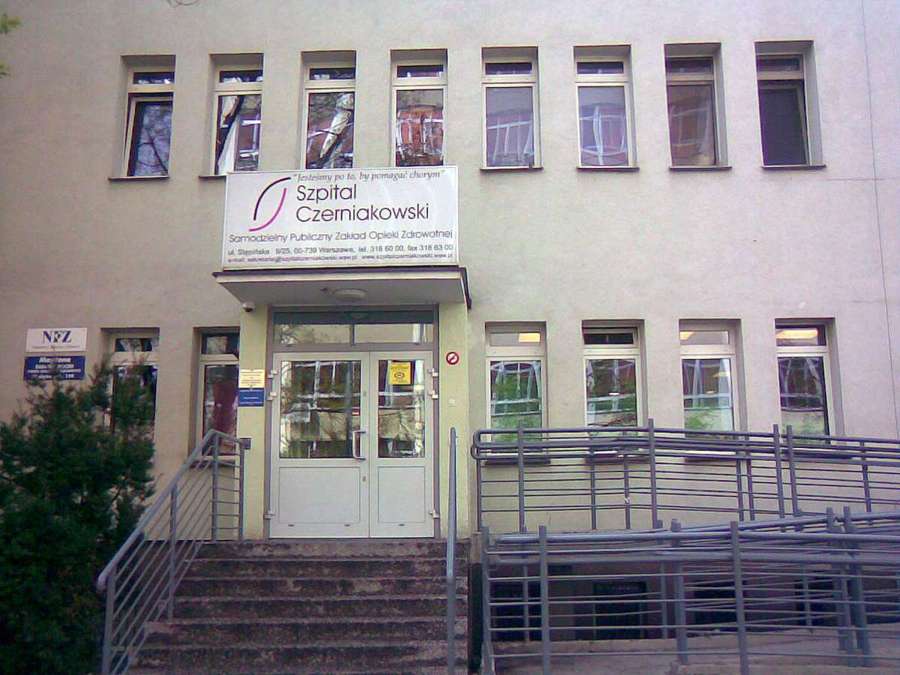
If you work in Poland, your employer registers you for health insurance and contributions flow to the NFZ. Family members can usually be registered through the working spouse's insurance, voluntary NFZ insurance exists for people outside employment, and EEA visitors on a temporary stay use the European Health Insurance Card for medically necessary care at NFZ-contracted providers. You can spot those providers by the NFZ logo displayed outside the building.
Clinics verify your entitlement electronically in the eWUŚ system at registration, so your first visit goes far more smoothly if your status is already active. You can check it yourself on your Internet Patient Account (IKP) or in the mojeIKP mobile app, both run by the government.
Data source: NFZ guidance for foreign patients and Pacjent.gov.pl, updated 20 October 2026.
The public route: registering with a clinic
Polish public healthcare starts with primary care, known as POZ. You choose a clinic, then a doctor, a nurse and, for women, a midwife, and you confirm the choice by filing a declaration. There are three ways to file it: in person at the clinic, electronically with a qualified, trusted or personal signature, or through the Internet Patient Account. Old regional restrictions no longer apply, so you may register with any clinic you find convenient, near home or near work. Distance still matters in one situation: if you register with a clinic far from where you live, the doctor or nurse may have difficulty carrying out a home visit when you are too ill to travel.
Clinics provide services Monday to Friday from 8:00 to 18:00. Registration for a visit must be available in person, by phone, through another person and electronically. If your own doctor is unavailable on a given day, you can see another doctor at the same clinic for matters that cannot wait, so a single clinic covers you even when your chosen doctor is on leave.
Choosing wisely matters because changes are limited: you may change your doctor, nurse or midwife free of charge twice per calendar year without giving a reason, and each further change costs PLN 80. Additional free changes apply if you move home, your doctor leaves the clinic or the clinic closes.
Data source: Pacjent.gov.pl guide to becoming a clinic patient, updated 25 March 2025.
Finding one who speaks English
Here is the honest part: the public system does not guarantee an English-speaking doctor. Younger doctors in Warsaw often speak good English, but you cannot select by language in the official registration system. The practical tactics are to ask the clinic reception directly which doctors speak English before you file your declaration, to check the clinic's website, where doctors' profiles sometimes list languages, and to draw on Warsaw's large expat community for current recommendations.
If language is critical, for example for mental health or a complex diagnosis, the private route below is usually worth the fee. For routine issues, many expats manage in the public system with a sympathetic doctor and a translation app.
Whichever route you choose, bring the same small folder to a first visit: your passport or residence card, proof of your insurance status, and any medical records or medication lists from home, ideally with the generic drug names rather than brand names, since Polish pharmacies stock the same substances under different labels. If you are an EEA citizen in Warsaw temporarily rather than working here, show your European Health Insurance Card instead: it entitles you to medically necessary care at NFZ-contracted providers on the same terms as insured patients, though it is not meant for planned treatment trips.
Data source: Pacjent.gov.pl, updated 20 October 2026.
Managing your care online
Once you are registered, Poland's e-health tools do most of the paperwork. On your Internet Patient Account at pacjent.gov.pl, or in the mojeIKP app, you can check which primary care doctor, nurse and midwife you are declared with: on the website, log in, open "Moje konto" and look under "Twoja Podstawowa Opieka Zdrowotna"; in the app, open the menu and tap the primary care section. The same account shows e-prescriptions and referrals, which is why setting up a trusted profile is one of the first things worth doing after you arrive.
The government also runs preventive programmes through the same account. The Moje Zdrowie programme for adults from age 20 starts with a health questionnaire on IKP, and any resulting examination referrals are issued electronically by your primary care doctor, much like the earlier Profilaktyka 40 PLUS programme for people over forty.
Data source: Pacjent.gov.pl guide to choosing a primary care doctor, updated 20 August 2025.
Specialists: when you need a referral and when you don't
and when you don'tAs a rule, a specialist visit under NFZ requires a referral from a doctor inside the system, usually your primary care doctor. The official exceptions list is worth memorising: no referral is needed for an obstetrician, a dentist, a venereologist, an oncologist or a psychiatrist. Additional exemptions cover people with tuberculosis, people infected with HIV, war invalids and persecuted persons, and addiction treatment. And in any sudden illness, accident, injury, intoxication or life threat, you receive necessary care without a referral at all.
Dental care under NFZ is free only within a restricted scope of services and materials; the dental surgery keeps the list, and anything above standard you pay for yourself.
Data source: NFZ guidance on health care in Poland, updated 20 October 2026.
Nights, weekends and the private alternative
For hospital treatment under NFZ you normally need a doctor's referral, though again emergencies are treated without one. Outside clinic hours, meaning evenings after 18:00, weekends and holidays, Poland runs after-hours care through health units with NFZ contracts. They provide 24-hour outpatient care and home visits when a patient's condition is serious. Addresses and phone numbers of the local after-hours units are available at any clinic, and in a genuine emergency you call 999 or go to a hospital emergency department.
The private alternative is straightforward. Warsaw has several large private medical networks, including Medicover, Luxmed and Enel-Med, which market care in English, run their own clinics across the city and typically offer appointments within days. You pay per visit or buy a subscription package, and no referral is needed for their specialists. Many expats combine both systems: the free NFZ clinic for simple things and prescriptions, a private doctor when speed or English really matters.
Data source: NFZ guidance for foreign patients, updated 20 October 2026.
* Photos: stethoscope by Jacek Halicki, CC BY-SA 4.0; Praski Hospital in Warsaw by Qkiel, CC BY-SA 4.0, both via Wikimedia Commons.
Frequently asked questions
Can I register with any doctor's clinic in Warsaw?
Yes. Regional limits no longer apply in Polish primary care, so you can register with any NFZ-contracted clinic you find convenient by filing a declaration of choice in person, electronically, or through your Internet Patient Account.
Which specialists can I see in Poland without a referral?
Under NFZ rules you need no referral for an obstetrician, dentist, venereologist, oncologist or psychiatrist, and in a sudden illness, accident or life threat you receive necessary care without any referral.
How often can I change my primary care doctor in Poland?
You may change your primary care doctor, nurse or midwife free of charge twice per calendar year without giving a reason. Each further change in the same year costs PLN 80, with extra free changes if you move home or your clinic closes.
Can I register with a Warsaw clinic online?
Yes. You can file the declaration of choice through your Internet Patient Account at pacjent.gov.pl or send it electronically with a qualified, trusted or personal signature, without visiting the clinic in person.
Where can I get medical help in Warsaw at night or on weekends?
Primary care clinics work Monday to Friday 8:00 to 18:00. Outside those hours, after-hours care units with NFZ contracts provide 24-hour outpatient care and, in serious cases, home visits.