Felting Workshops in Poland: Choosing Your First Class
The essentials: Choose the technique and a manageable first project, then confirm the current session, English teaching, included materials and tool ownership. Past events and undated catalogues are format examples, not live availability.
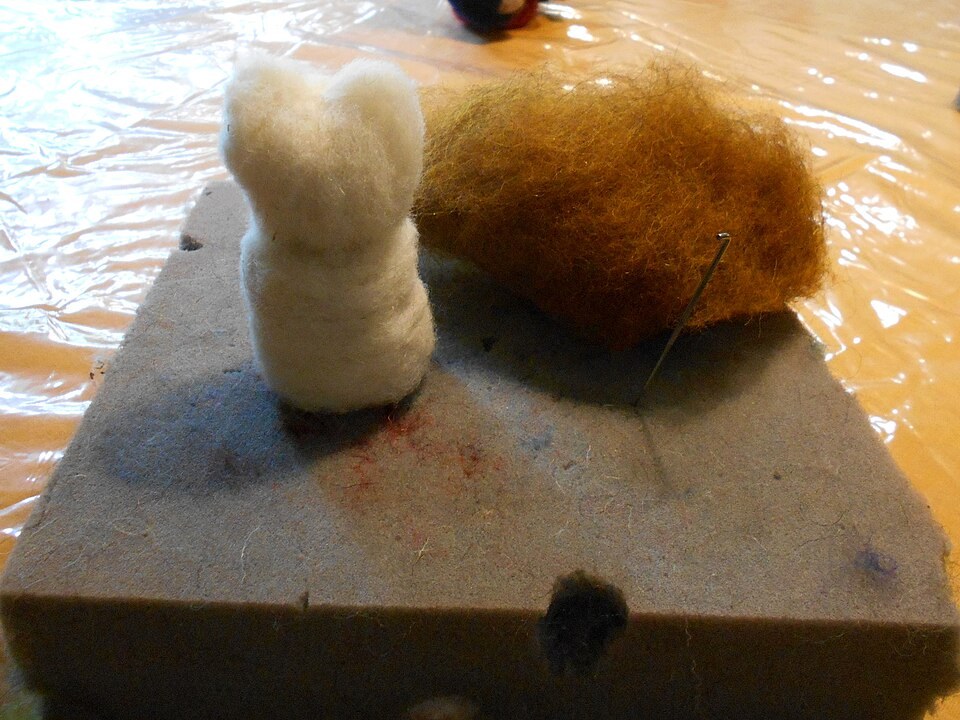
Contextual needle-felting setup, not a reviewed class or promised outcome. © Traumrune / Wikimedia Commons / CC BY-SA 3.0, 29 September 2021. Resized and re-encoded; image derivative under the same licence.
A felting workshop can mean making a small wool picture, shaping a three-dimensional animal or working with water to produce a flower. Those are different first lessons, even when their listings all use filcowanie. For an English-speaking newcomer in Poland, the useful question is not simply whether a class welcomes beginners. It is which technique, project and teaching arrangement that welcome actually covers.
This guide compares six organisers' own descriptions, checked on 29 October 2026. Several dated examples have already finished. They show how programmes differ, not where you can book a remaining seat today. Undated catalogues are likewise starting points for an enquiry, not live calendars.
Start with wet felting or needle felting
Search for filcowanie na mokro for wet felting and filcowanie na sucho or filcowanie igłą for dry or needle felting. Pracownia Kreatywności separates wet-felted jewellery and flowers from needle-felted decorations in its catalogue. Stonogi's programme combines both methods within a longer workshop. These distinctions matter more than the appealing finished object in a promotional photograph.
Ask the organiser to describe what your hands will do during the lesson. Will you work wool with water, use a specialist needle on a support, or alternate between methods? Confirm whether the class teaches one technique from the beginning or adds decoration to an already prepared piece. Neither is a bad format, but they answer different learning goals.
Choose by the process you want to try, then by the object. A flower class is not necessarily a needle-felting class, and a picture is not necessarily a wet-felting class. A broad page mentioning both techniques does not promise that every scheduled session includes both.
Compare a small project with a broad introduction
Pracownia Kreatywności describes a three-hour beginner wet-felting jewellery workshop involving balls, cords and bracelets. Its wider catalogue includes wet-felted flowers and dry-felted flowers or ornaments. It also describes a three-workshop introduction combining wet jewellery, dry felting and a wet-felted flower, with an extended four-workshop version adding a picture. These are useful examples of the difference between one focused session and a sequence.
For a first attempt, a focused class can give you a clearer brief: one method and a bounded result. A sequence may suit someone who wants to compare techniques before buying equipment. Ask whether the sessions must be taken in order and whether each has a separate booking. Do not infer a current start date, included take-home kit or English teaching from the catalogue.
More ambitious catalogue options need a separate conversation. A shawl or specialist theatrical project is not automatically interchangeable with an introductory jewellery session. Describe your actual experience, including if you have none, rather than choosing solely by the most impressive photograph.
Use past event pages as evidence of format
Centrum Kultury Wilanów advertised a dry-felting workshop in Powsin on 19 October 2026, from 17:30 to 19:30. Its description named a pumpkin project, sheep's wool, materials on site and no previous preparation. That date is past. The useful information is how specific a beginner-friendly brief can be: a named object, a technique and a materials statement.
Dom Kultury Stare Babice advertised wet felting on 1 July 2026, from 18:00 to 19:30, for children aged eight and over, young people and adults. That event is also past. Its listed art room was 1.61 on the first floor. For a future visit, ask about the actual room and access route rather than assuming that an old room allocation still applies or that a first-floor room establishes the presence or absence of a lift.
These pages are not evidence of a current weekly group. If a past programme looks right, ask whether a comparable session is planned and request the new event link. Keep the old link as an example of the kind of lesson you mean, not as a booking instruction.
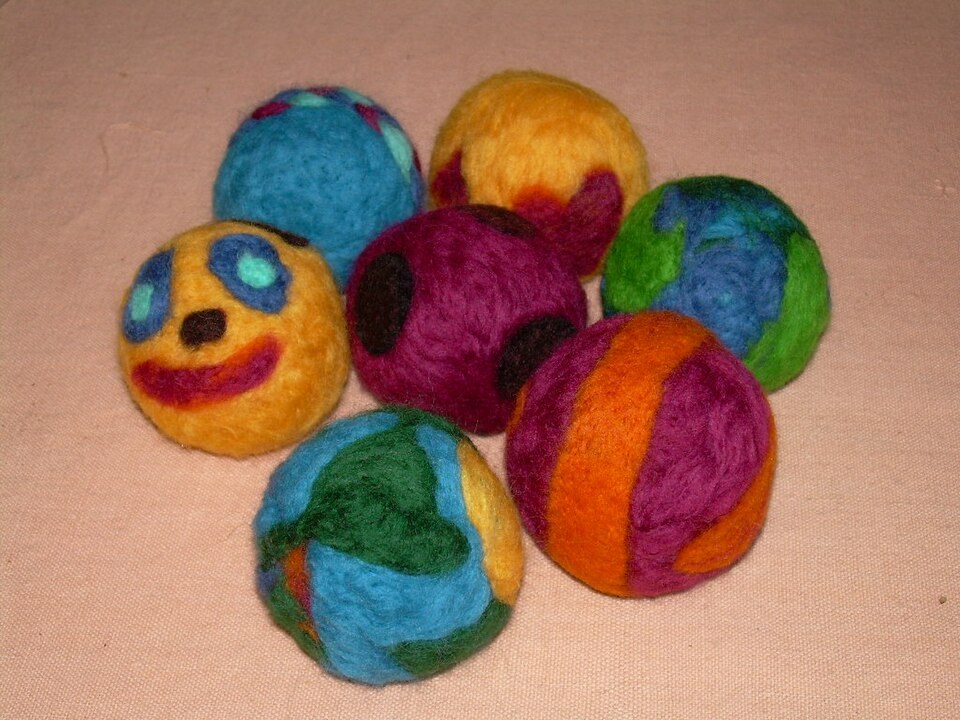
Check what a combined workshop actually finishes
Stonogi's undated Poznań programme describes approximately four hours covering wet and dry felting. Its listed work includes a flat picture, needle-felted appliqué or a spatial flower, followed by assembling a cushion to take home. The programme advertises a maximum group of ten. Confirm the current version, group size and calendar before relying on those details.
A combined session can offer variety, but a finished cushion does not by itself tell you which construction steps you will learn. Ask what is prepared in advance, what participants make themselves and whether sewing or assembly is demonstrated or completed for them. This is especially useful if your aim is to repeat the whole project independently.
CCDIY's workshop overview gives a duration of roughly two and a half to three hours and an audience of children aged nine and over, young people and adults. It discusses wet and dry techniques, materials, colour and texture. Its displayed nearest date, 19 July 2026, is already past. Treat the broad overview as a menu of possibilities, then get a specific project brief for the session offered to you.
Distinguish a first sculpture from a finished toy
The Academy of Fine Arts in Warsaw's September 2026 palace programme included Soft Sculpture workshops on 10 and 14 September 2026, from 17:00 to 19:00. Published on 28 August 2026, the programme described specialist-needle work for ages thirteen and over without prior experience. Participants could make small three-dimensional forms inspired by nature, animals or imaginary creatures, working on shape and detail.
Those workshops have finished. Their description nevertheless provides a useful model for a first sculpture enquiry: ask about the expected size, complexity and amount of individual help. The programme mentioned a possible keyring depending on the form. That is not a promise that every participant makes the same accessory.
A decorative wool animal is not automatically a tested children's toy. If your intended object is for a young child, say so before booking and ask what the organiser can actually confirm about that use. A beginner craft description alone does not establish toy safety, washable construction or suitability for unsupervised play.
Ask about language, materials and tool ownership
The reviewed text does not establish English instruction. Ask whether the teacher can explain the full process in English, provide individual corrections and discuss needle handling or other safety instructions. A translated listing or an English reply to an enquiry is not the same thing as an English-led lesson.
Separate wool and consumables from reusable tools. Ask which materials the price covers, whether you choose colours, whether there is enough wool for your own project and whether a support pad, needle or other equipment is borrowed or yours to keep. Materials available in the room do not necessarily mean a take-home starter kit.
For a three-dimensional project, ask whether you build the form from loose wool or start from a prepared core. For a flat project, ask whether the base is provided and how the finished piece is mounted. These answers help you judge the lesson's scope without turning either format into a claim about better teaching.
Make the practical questions specific
For needle work, ask how the teacher demonstrates safe handling, where hands should be placed and what support is used. For a child, check the age rule for that exact session, whether an adult must attend and who is responsible for supervision. The eight-plus, nine-plus and thirteen-plus examples above belong to different programmes; they are not a nationwide age standard.
For wet felting, ask what to wear, whether a towel or apron is needed and how the piece leaves the workshop. Confirm whether it will be dry enough to pack, how it should travel and what care instructions you receive. Avoid planning to put a damp or fragile project straight into luggage without asking.
Check the venue address, room, step-free route and seating or working-height arrangements if they matter to you. Ask about the hand movements and working positions involved rather than assuming that every wool craft has the same physical demands. Do not rely on promotional wellbeing claims as a medical assessment of whether a class suits you.
Book the actual session, not the attractive example
Before paying, get the current date, start and finish time, project, technique, teaching language and total price in one written confirmation. Ask whether materials, assembly, finishing and any take-home tools are included. Confirm cancellation, transfer, minimum-group and organiser-cancellation terms. An old price or a catalogue duration is not a current offer.
A useful enquiry is: "I am a complete beginner and would like a small needle-felted project. Can you teach and give safety instructions in English? Please confirm the current date, venue, project, group size, total price, included materials, which tools I keep and the cancellation terms." Change needle felting to wet felting if that is your preferred process.
The strongest first-class choice is the one whose description becomes concrete after those questions. You should know what you will practise, what you can reasonably finish and what leaves with you. A modest project with a clear brief is more useful than booking a past listing or assuming a general workshop page promises every technique it mentions.
Frequently asked questions
Does filcowanie always mean needle felting?
No. Look for na mokro for wet felting and na sucho or igłą for needle felting. Confirm the technique for the actual session.
Are the dated classes in this guide still bookable?
The dated examples described here have finished. They illustrate formats, not current availability. Ask each organiser for a new event link.
Will I keep the needle and support pad?
Not necessarily. Supplied materials, borrowed tools and a take-home kit are different arrangements. Ask for the exact included items.
Can children join any beginner class?
No. The reviewed programmes set different age limits. Check the specific session, supervision, adult attendance and handling instructions.
Can I take a felting class in English?
The reviewed pages do not establish English instruction. Confirm teaching, individual help and safety explanations before paying.
Sources
- Pracownia Kreatywności, undated felting catalogue; checked 29 October 2026
- Centrum Kultury Wilanów, past 19 October 2026 event; checked 29 October 2026
- Dom Kultury Stare Babice, past 1 July 2026 event; checked 29 October 2026
- Stonogi Poznań, undated combined programme; checked 29 October 2026
- CCDIY, workshop overview with past 19 July 2026 date; checked 29 October 2026
- Academy of Fine Arts Warsaw, published 28 August 2026, past September programme; checked 29 October 2026