Gdynia Weekend Guide: Ships, Beaches And White Modernism
The essentials: Gdynia, on the Baltic in the Tricity, is a weekend of museum ships and modernism: the ORP Błyskawica destroyer and ORP Sokół submarine (30/15 and 20/15 PLN, closed November to March), the Emigration Museum (28/20 PLN, free Wednesdays) and a free waterfront and beach.
Gdynia is the young sibling of the Tricity, a city that barely existed a century ago, when it was still a fishing village, and was willed into being in the 1920s as Poland's new window to the world. Where Gdansk offers brick Gothic and Sopot offers Belle Epoque charm, Gdynia offers sea air, white modernist facades, a working harbour and some of the best museum ships in Europe, all wrapped in an optimism that only a city built from scratch in a single decade can carry. It makes an easy, breezy weekend that suits families as well as couples, and a surprising amount of it costs nothing at all. This guide covers the practical side, with ticket prices and hours checked on 22 October 2026.
Getting there and around
Gdynia sits at the heart of the Tricity conurbation on the Baltic, about three hours from Warsaw by fast train and half an hour from Gdansk airport by road or rail. Within the conurbation the SKM urban railway links Gdansk, Sopot and Gdynia in minutes, so a Gdynia weekend bolts naturally onto any Gdansk trip or stands alone, and the city's own waterfront, beach and museums are walkable from the main station, which sits ten minutes inland from the sea. For Orlowo, the cliffside district at the city's southern edge with its own small resort feel, the SKM or a short taxi ride does the job.
Data source: PKP Intercity and SKM timetable information, checked 22 October 2026.
The free Gdynia: waterfront, beach and the view
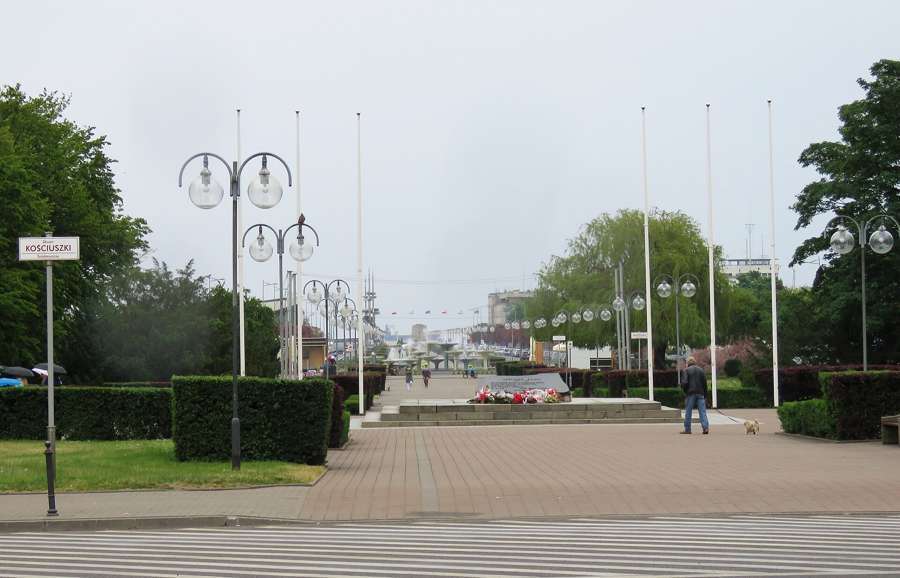
Start where the city meets the sea. Kosciuszko Square, the long waterfront promenade, is Gdynia's open-air living room, leading past the marina to the southern pier, where the museum ships moor, the tall ship Dar Pomorza gleams white across the quay and the harbour views open up to the bay. The city beach stretches just beyond, fine sand with a summer scene all its own. For the panorama, take the free funicular up Kamienna Gora, the wooded hill behind the centre, to a viewpoint over the port and the bay. Further south, the Orlowo district keeps its own small wooden pier under a famous cliff, with the Kepa Redlowska nature reserve, one of the oldest in Pomerania, running along the shore behind it. All of it is free, all of it is best at the golden ends of the day, and on a clear morning the walk from the station to the pier takes ten minutes and resets whatever the week did to you.
Data source: City of Gdynia visitor information, checked 22 October 2026.
The museum ships and the Naval Museum
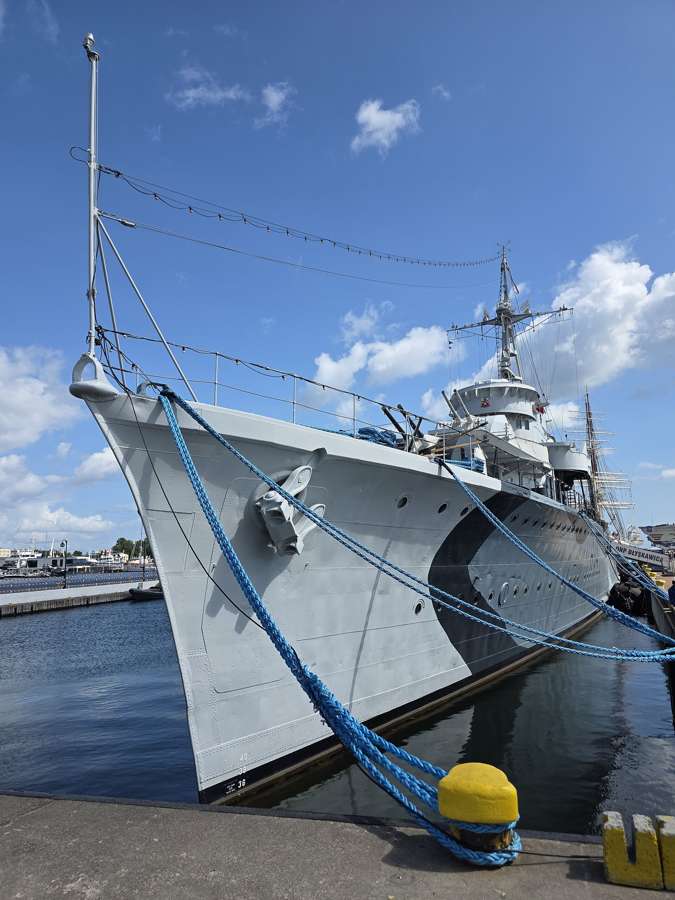
Gdynia's signature sights float, and one of them carries more history per square metre of deck than most landlocked museums manage in a building. The ORP Blyskawica, a 1930s destroyer that fought through the Second World War and became a legend of the Polish navy, is moored at the waterfront as a museum ship, alongside the submarine ORP Sokol, and the Naval Museum itself stands a few streets inland at 1B Zawiszy Czarnego street. Under the museum's current price list, tickets to the museum building cost 30 PLN normal and 15 PLN reduced, with a family ticket for two adults and two children at 75 PLN; the Blyskawica costs the same 30 and 15 PLN, and the Sokol costs 20 and 15 PLN, with entry for ten people at a time in half-hour slots. The museum is closed on Mondays, and Fridays are free in the museum building, without the guiding service, a genuinely good deal for anyone who can shift their weekend by a day.
Two practical notes matter. First, the ships close for winter: from 1 November to 31 March both the Blyskawica and the Sokol are closed to visitors, reopening 1 April, so an autumn or winter Gdynia weekend should be planned around the museums instead. Second, the Blyskawica remains an active-duty navy ship with a professional crew, and can close to visitors at short notice by order of the fleet commander. Reduced tickets cover pupils, students, teachers, pensioners and visitors over 65 under the Museums Act, plus serving soldiers under a director's order of 10 October 2024, and tickets are sold at the box office on the day of the visit.
Data source: Museum of the Polish Navy official price list and visiting rules (muzeummw.pl), checked 22 October 2026.
The Emigration Museum
A few steps from the waterfront, in the beautifully restored interwar Marine Station, the Emigration Museum tells the story of the millions who left Poland through this very building, from nineteenth-century emigrants to America to wartime exiles and recent departures. It is one of the best modern museums in the country, and the setting, in the original transit halls where the emigrants once queued with their suitcases and their fears, does half the work; the exhibitions do the rest with models, letters and reconstructed cabins that children can actually walk through. Tickets to the permanent exhibition cost 28 PLN normal and 20 PLN reduced, with a family ticket at 74 PLN covering two adults and up to four children aged 7 to 18, and groups of ten or more paying 23 and 17 PLN. Wednesdays are free, with tickets collected at the desk.
The museum is closed on Mondays, opens Tuesdays 12:00 to 20:00 and Wednesday to Sunday 10:00 to 18:00, with the box office closing an hour earlier; allow an hour and a half to two hours for the permanent exhibition. An audioguide app costs 18 PLN and covers Polish, English, German, French, Spanish and Swedish, online tickets are sold at bilety.polska1.pl, and during opening hours visitors get free access to the ancestry.com genealogy database, a quietly brilliant touch for a museum about leaving home.
Data source: Emigration Museum in Gdynia official ticket and hours pages (polska1.pl), checked 22 October 2026.
Visiting with children
Gdynia works beautifully with children because the biggest sights are real things rather than glass cases: a destroyer to clamber through, a submarine to squeeze inside, a beach for the afternoon and a funicular ride up the hill for dessert. The city is flat, pushchair-friendly along the waterfront, and the distances between the harbour, the beach and the museums are short enough for small legs. The family tickets help, 75 PLN at the Naval Museum and 74 PLN at the Emigration Museum, and the free Friday at the museum building and free Wednesday at the Emigration Museum reward flexible planners. In winter, when the ships are closed, the Emigration Museum, the waterfront, the Orlowo cliff and the Kamienna Gora viewpoint still carry a weekend on their own.
Data source: official price lists cited above, checked 22 October 2026.
A two-day plan
Day one: the waterfront from Kosciuszko Square to the pier, the Blyskawica and the Naval Museum in the morning while everyone is fresh, lunch by the marina, the city beach or the funicular and Kamienna Gora for the afternoon light. Day two: the Emigration Museum for the late morning, then the SKM to Orlowo for the cliff and the wooden pier, and dinner back on the waterfront as the harbour lights come on. In summer add a harbour cruise from the pier; in winter swap the ships for an extra hour in the museums and a long walk in the sea wind, which is free in every season and somehow better in February.
Frequently asked questions
How much does the ORP Blyskawica cost?
Tickets cost 30 PLN normal and 15 PLN reduced, with a 75 PLN family ticket for two adults and two children. The ship is closed on Mondays and for the whole winter, from 1 November to 31 March, and can close at short notice because it remains an active navy vessel.
Is the Gdynia Emigration Museum free on any day?
Yes: Wednesdays are free for the permanent exhibition, with free tickets collected at the desk. Otherwise tickets cost 28 PLN normal, 20 PLN reduced and 74 PLN for a family of two adults and up to four children aged 7 to 18.
Can you visit the museum ships in winter?
No. Both the ORP Blyskawica and the ORP Sokol close from 1 November to 31 March and reopen on 1 April. The Naval Museum building and the Emigration Museum stay open year-round, both closed on Mondays.
What is free in Gdynia?
The Kosciuszko Square waterfront and southern pier, the city beach, the Kamienna Gora funicular and viewpoint, the Orlowo pier and cliff, Friday entry to the Naval Museum building and Wednesday entry to the Emigration Museum. * Photos: Cover - Andrzej Blaszczak, CC BY-SA 4.0, via Wikimedia Commons (Kosciuszko Square, Gdynia). Body - Zala, CC BY-SA 4.0, via Wikimedia Commons (ORP Blyskawica at the Gdynia waterfront).