Masuria Weekend Guide: Lakes, Sailing And Two Big Sights
The essentials: Masuria, three hours northeast of Warsaw, is Poland's lake-district heartland: sailing towns, the country's largest lake, the Wolf's Lair bunker ruins (30 PLN in season) and the star-shaped Boyen Fortress (25 PLN). Prices checked 22 October 2026.
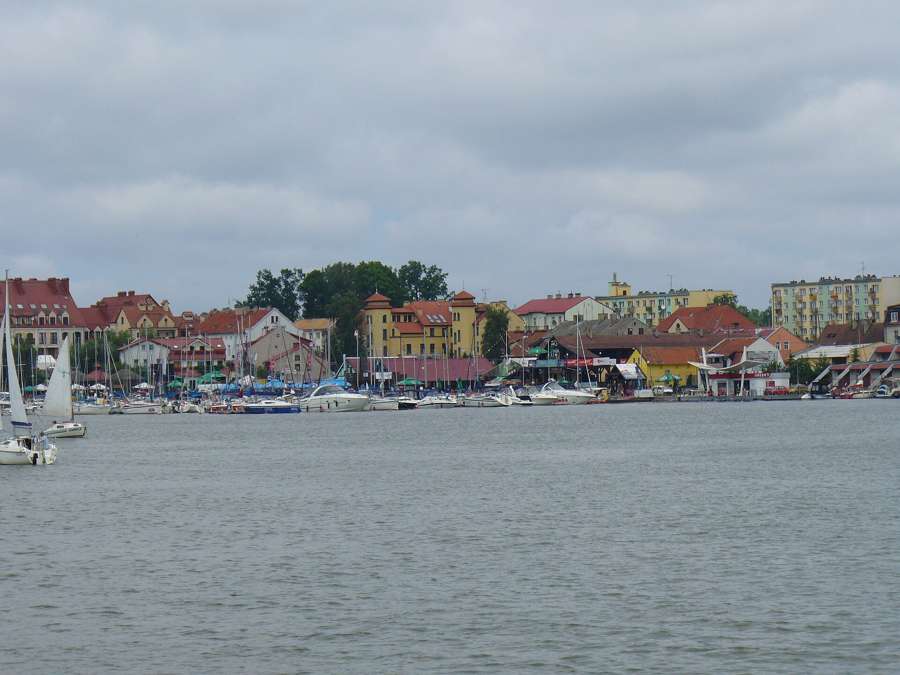
Ask a Polish family where they go in summer and a large share will say one word: Masuria, usually with the faraway smile of someone picturing a jetty at dusk. The lake district in Poland's northeast, centred on the sailing town of Mikolajki and the fortress town of Gizycko, is the country's holiday heartland, a rolling landscape of more than two thousand lakes linked by rivers and canals, fringed with pine forest and dotted with small resort towns. It also holds two of Poland's most unusual sights: Hitler's wartime bunker complex hidden deep in the forest, and one of Europe's best-preserved nineteenth-century fortresses guarding the narrows between two great lakes. This weekend guide covers the highlights, with ticket prices and opening hours checked on 22 October 2026.
Getting there and around
Masuria begins roughly two hundred kilometres northeast of Warsaw; Mikolajki is about three hours by car, Gizycko three and a half. A car is close to essential, since the region's pleasures are spread across many small towns and lakeside villages, and driving lets you chase the weather between them, following the sun from shore to shore. Trains run from Warsaw to Elk and Ketrzyn with onward local connections, but the classic Masurian weekend is a road trip: pick a base town, then loop the lakes. Mikolajki makes the prettiest base for atmosphere, Gizycko the most practical for sights, and smaller resorts like Ruciane-Nida the quietest, though in high season quiet is a relative term anywhere near the water.
Data source: regional tourism information and the official visitor pages cited below, checked 22 October 2026.
The lakes themselves
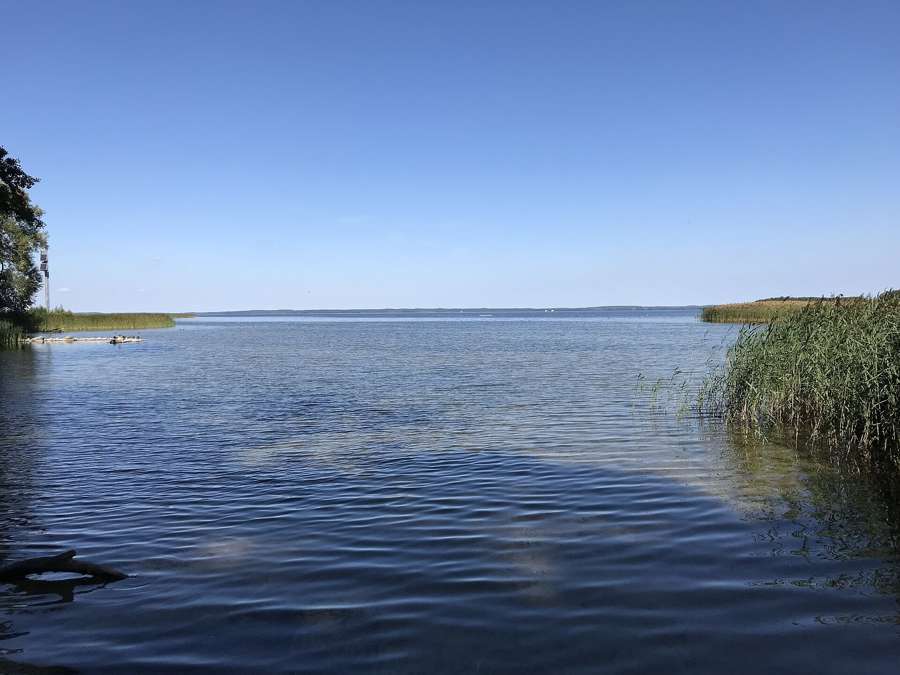
The headline act needs no ticket. Lake Sniardwy, Poland's largest lake at about 114 square kilometres, is big enough to have its own weather, its horizon dotted with sails all summer. Around it, the Great Masurian Lakes chain connects dozens of lakes by canals, and the region's sailing culture runs deep: even non-sailors can get on the water on the white excursion boats that cruise between Mikolajki, Gizycko and Ruciane-Nida in season. Kayakers head for the Krutynia river, a famously gentle hundred-kilometre route through pine forest and marsh that regularly tops lists of Europe's most beautiful paddling trails, with rental outfits in the villages along it who will drive you and your boat back to the start. In autumn the crowds vanish, the forests turn gold and the region becomes a walking and mushrooming destination instead, with mist on the water at breakfast and the lakeside towns returned to their residents.
Data source: Masurian Landscape Park and regional tourism information, checked 22 October 2026.
Wolf's Lair: the bunker city in the forest
Near Ketrzyn, deep in the Gierloz forest, stand the shattered concrete ruins of the Wilczy Szaniec, the Wolf's Lair: Adolf Hitler's principal wartime headquarters, built from autumn 1940 as a self-contained forest city of about two hundred structures spread over 250 hectares, and the site of the failed 20 July 1944 assassination attempt on Hitler. The retreating German army blew the complex up in January 1945, and walking the marked paths among the enormous cracked bunkers is one of the strangest experiences in Polish tourism.
The site, now run by the Srokowo State Forests district, is open every day of the year including holidays: March 8:00 to 18:00, April 8:00 to 19:00, May to August 8:00 to 20:00, September 8:00 to 18:00, and October to February 8:00 to 16:00. Under the price list updated on 1 December 2025, tickets cost 30 PLN normal and 25 PLN reduced in the April to October season, and 25 PLN normal, 20 PLN reduced from November to March, when the indoor exhibitions are closed. Children under six enter free, and Large Family Card holders pay the reduced rate. Tickets are sold only on site, at the entry gate, by card or cash, with parking at 15 PLN per car; bicycles and fully electric cars park free.
Data source: official Wilczy Szaniec visitor page, price list updated 1 December 2025 (wilczy-szaniec.pl), checked 22 October 2026.
Boyen Fortress in Gizycko
The region's second great sight is older and sunnier: the Boyen Fortress, a star-shaped Prussian fortification built in the mid-nineteenth century to guard the narrows between Lakes Niegocin and Kisajno, and one of the best-preserved fortresses of its era in Europe. Its brick walls, bastions, powder laboratory and armourer's workshop are open daily all year, with hours that follow the season: 9:00 to 16:00 from January to March, 9:00 to 17:00 in April and October, 9:00 to 18:00 in May, 9:00 to 19:00 in June and September, 9:00 to 20:00 in July and August, and 9:00 to 16:00 in November and December.
Under the price order of 8 January 2026, tickets cost 25 PLN normal and 20 PLN reduced, children under seven enter free, groups of 21 or more pay 22 and 18 PLN, and a guided tour for up to ten people costs 150 PLN by reservation. Reduced tickets cover schoolchildren, students to 26, pensioners, honourable blood donors, Large Family Card holders and visitors with disabilities. Parking costs 12 PLN for up to three hours, and the fortress also runs occasional night tours in autumn, with the next dates listed for 2 October and 6 November 2026.
Data source: Twierdza Boyen official price list, price order of 8 January 2026 (twierdza.gizycko.pl), checked 22 October 2026.
Smaller stops worth the detour
Two more stops round out a weekend. The baroque pilgrimage church at Swieta Lipka, tucked among the lakes between Ketrzyn and Reszel, holds one of Poland's most beautiful organs, with its famous moving angels, and short organ concerts play through the day in season, usually free or for a small donation. And the swing bridge in Gizycko, one of the few of its kind still working, pivots open to let yachts pass between the lakes several times a day in season, a small free spectacle in the town centre that stops traffic and delights children every single time.
Data source: regional tourism information, checked 22 October 2026.
Visiting with children
Masuria with children is the easiest sell in Polish domestic tourism: the water is warm and shallow at the resort beaches, the boats are an event in themselves, and the two big sights work surprisingly well for young visitors. The Wolf's Lair reads to a child as a giant ruined castle in the woods, and Boyen Fortress, with walls to climb and courtyards to run, needs no storytelling. Family logistics are simple: both sights take cards, both have parking, children under six enter the Wolf's Lair free and under seven free at the fortress, and ice cream is never more than a few minutes away in either town.
Data source: official price lists cited above, checked 22 October 2026.
A two-day plan
Base yourself in Mikolajki or Gizycko. Day one: morning at Boyen Fortress when it opens, the swing bridge and lunch in Gizycko, an afternoon boat trip or beach time on Lake Niegocin, dinner on the Mikolajki waterfront. Day two: the Wolf's Lair in the morning cool before the coach tours arrive, an hour's stop at Swieta Lipka on the way back, and a slow drive home through the lake country with a trunk full of smoked fish from a roadside smokehouse. In summer book accommodation well ahead, because the whole country descends on the same lakeshore; in the golden autumn of October the same loop is quieter, cheaper and arguably prettier, with both big sights still open daily.
Frequently asked questions
How much does the Wolf's Lair cost?
Tickets cost 30 PLN normal and 25 PLN reduced from April to October, and 25 PLN normal, 20 PLN reduced from November to March, under the price list updated 1 December 2025. Children under six enter free; car parking is 15 PLN.
What are Boyen Fortress ticket prices?
Normal tickets cost 25 PLN and reduced 20 PLN, children under seven free, under the price order of 8 January 2026. The fortress is open daily year-round, with hours from 9:00 to between 16:00 and 20:00 depending on the month.
When is the best time to visit Masuria?
July and August for swimming and sailing, when the resort towns are in full swing; June and September for warm weather with thinner crowds; and October for golden forests, mushrooms and near-empty sights.
Do you need a car for Masuria?
Practically, yes: the lakes and sights are spread across many small towns, and public transport between them is thin. Trains reach Elk and Ketrzyn, but a car turns the region from difficult to effortless. * Photos: Cover - Lesnydzban, CC BY-SA 4.0, via Wikimedia Commons (Lake Sniardwy from Niedzwiedzi Rog). Body - nocnalunatyczka, CC BY-SA 3.0, via Wikimedia Commons (the marina at Mikolajki).