Gniezno Day Trip Guide: Poland's First Capital and the Bronze Doors
The essentials: Gniezno, an hour from Poznań, holds the 12th-century bronze Gniezno Doors (16 zł with guide) in the coronation cathedral and the Museum of the Origins of the Polish State (20 zł). Both open Monday to Saturday; Sundays are out for sightseeing.
Every Polish schoolchild knows Gniezno as the first capital of Poland, the city of the coronations and the legendary Lech who founded it. What surprises visitors is how much of that founding story is still physically there: a bronze door cast in the 12th century that ranks among the great artworks of medieval Europe, the cathedral where Poland's earliest kings were crowned, and a modern museum of the Piast dynasty's origins that holds the whole narrative together. It makes a near-perfect day trip from Poznań, fifty kilometres away, and this is how to do it.
Getting there and around
Gniezno lies on the main railway between Poznań and Warsaw, so direct InterCity and regional trains connect it with both, and the station is a pleasant fifteen-minute walk from the cathedral hill through the centre. From Poznań the trip is under an hour by regional train, making Gniezno the easiest deep-history day out in Wielkopolska. By car it is less than an hour from Poznań via the S5 expressway. The town itself is compact: the market square, cathedral hill and museum all sit within a fifteen-minute walking loop.
The cathedral and the Gniezno Doors
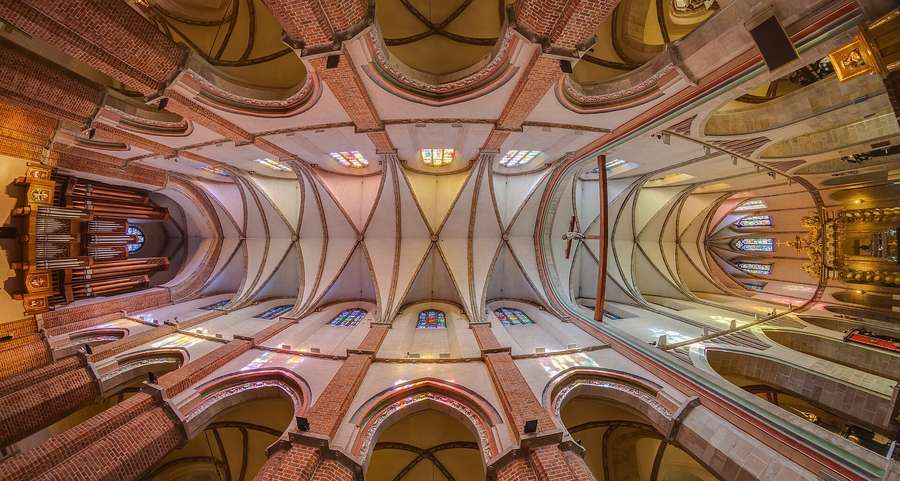
The brick gothic cathedral on Wzgórze Lecha, Lech's Hill, is the mother church of Poland: the country's first archbishopric, the coronation church of its earliest kings, and the resting place of St Adalbert, the missionary whose martyrdom in 997 set the whole story in motion. The treasure everyone comes for is the Gniezno Doors, two bronze wings cast in the 12th century and covered with eighteen relief scenes telling Adalbert's life, from his departure for Prussia to his martyrdom and the buying back of his body for its weight in gold. They have hung in this cathedral for over 850 years, one of the very few Romanesque bronze doors in Europe still in the building they were made for. Take the guided entry slowly and let the guide read the scenes in order; the reliefs are small, dense and astonishingly expressive, and the difference between glancing at them and understanding the story is the difference between a photo stop and a genuine encounter with the 12th century. Inside the church, look for the silver reliquary of St Adalbert and the gothic and baroque chapels layered around the gothic core; the building was raised after a 14th-century fire over the foundations of two earlier cathedrals, and the underground visit makes that layering visible in excavated brick.
Entry to see the Doors is with a guide, included in the ticket: 16 zł normal, 14 zł reduced. Other parts of the complex are ticketed separately: the cathedral underground, which preserves the foundations of the pre-Romanesque churches, at 14/12 zł with a guide; the viewing tower at 12/10 zł; and the Archdiocesan Museum of religious art at 18/16 zł. A combined pass covering everything including the cathedral interior with an audio guide costs 48 zł normal and 42 zł reduced. From May to October the complex is open for sightseeing Monday to Saturday 9:00-17:00; from November to April the hours are 9:00-16:00 and the viewing tower closes. On Sundays the cathedral is closed to sightseeing; it remains a working church, and Mass takes precedence.
Data source: Wzgórze Lecha Gniezno official price list and visiting hours (wzgorzelecha.pl), valid from 1 January 2026, checked 22 October 2026.
The Museum of the Origins of the Polish State
Ten minutes from the cathedral, the Museum of the Origins of the Polish State, MPP, is one of the best-designed small museums in the country. Its permanent exhibition walks through the archaeology of the Piast dynasty: how a tribe around Gniezno and Poznań became a state in the 10th century, the baptism of 966, the Congress of Gniezno in the year 1000, when the Holy Roman Emperor Otto III came to pray at Adalbert's tomb, and the first coronations. The displays mix original finds, armour, jewellery and everyday objects with reconstructions and clear English-language interpretation, and the building itself, a glass pavilion over excavated ground, frames the story well. Allow ninety minutes rather than the forty-five most people budget; the early sections on how archaeologists reconstructed the Piast strongholds of the Gniezno region are the kind of exhibition craft that rewards patience, and the mobile family trail keeps younger visitors hunting for details while you read.
Tickets cost 20 zł normal, 16 zł reduced and 60 zł for a family; groups above ten people pay 15 zł each, and the nationwide Large Family Card takes 10 percent off. Opening hours are 9:00-18:00 from May to September and 9:00-16:00 from October to April, and unlike many Polish museums it opens on Mondays.
Data source: Museum of the Origins of the Polish State official visiting and price pages (muzeumgniezno.pl), checked 22 October 2026.
The rest of the town
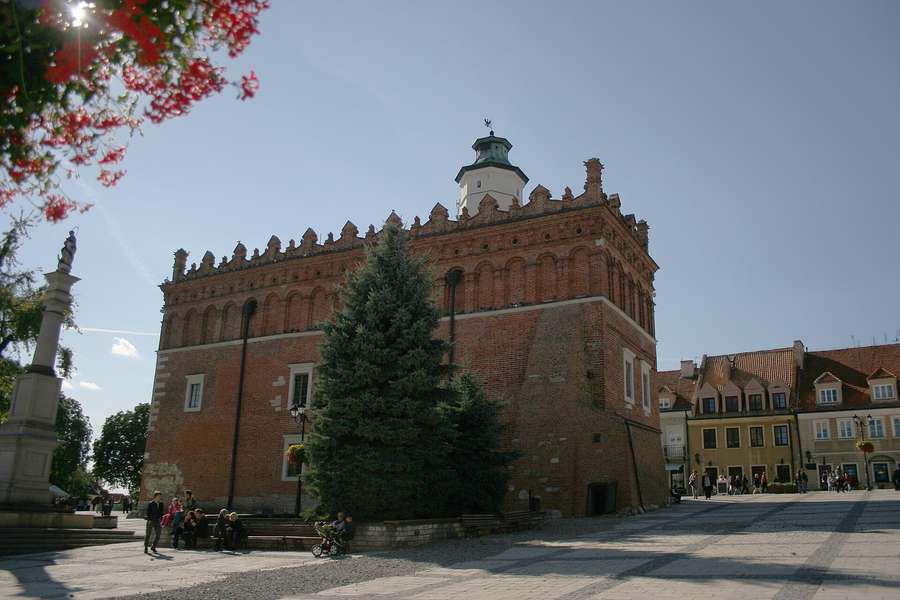
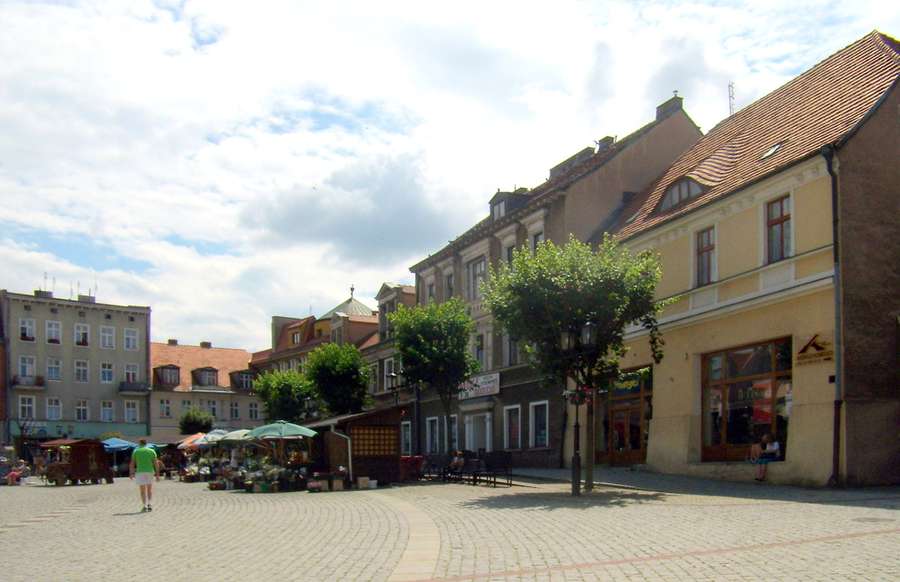
Gniezno rewards a slow afternoon after the big two. The market square, rebuilt after fires and wars, is a modest, lived-in space of cafes and shopfronts rather than a showpiece, and that is its charm: this is a working small city, not a museum set. The streets between the square and the cathedral hill hold baroque churches and traces of the medieval walls, and the boulevards around Lake Jelonek, right below the centre, give you the water-and-spires panorama of the town that has served as its postcard view for a century. The Museum of the Archdiocese collections and several smaller churches fill any remaining hour. In summer the town stages coronation re-enactments and a royal festival; in autumn and winter you get the hill, the doors and the lake largely to yourself. Gniezno also sits at the heart of the Piast Trail, the touring route linking the cradle-state sites of Wielkopolska: the strongholds at Giecz and Biskupin, the island cathedral at Poznań and the monastery at Lubiń are all within an easy drive, so history-minded travellers can string several sites into a weekend with Gniezno as the anchor.
With children
The founding-legend material works well on children: a king's coronation church, a door that tells a saint's story in eighteen bronze cartoons, a tower to climb in the warm months, and a museum with armour and interactive displays. The cathedral complex runs a group tour-guide system included in ticket prices, and the museum's family ticket at 60 zł keeps costs predictable. Prams manage the square and the museum easily; the cathedral hill is cobbled but gentle. For lunch, the square and the streets off it have the full range of milk-bar pierogi to modern bistro, at prices noticeably below Poznań's.
A realistic day plan
Take a morning train from Poznań, walk up to the cathedral for the first guided entry to the Gniezno Doors, add the underground if the archaeology grabs you, then lunch on the market square. Spend the early afternoon in the Museum of the Origins of the Polish State, close with the Lake Jelonek boulevards and a coffee, and ride back in time for dinner. Total paid entries, done fully, come to under 70 zł per adult, which makes this one of the cheapest heavyweight history days in Poland.
Frequently asked questions
How much do the Gniezno Doors cost to see?
Entry to the Gniezno Doors is with a guide included in the ticket: 16 zł normal and 14 zł reduced. A combined pass covering the Doors, cathedral underground, viewing tower, Archdiocesan Museum and the cathedral interior with audio guide costs 48 zł normal, 42 zł reduced.
Is Gniezno cathedral open on Sundays?
No, not for sightseeing. The cathedral complex, including the Doors, museum and tower, is closed to tourists on Sundays because it is a working church; sightseeing runs Monday to Saturday, 9:00-17:00 from May to October and 9:00-16:00 from November to April.
How do I get from Poznań to Gniezno?
Direct regional and InterCity trains run between Poznań and Gniezno in under an hour, and the station is a fifteen-minute walk from the cathedral hill. By car it is under an hour via the S5.
Is Gniezno worth visiting with children?
Yes. The coronation church, the bronze story-door, the climbable tower in season and the hands-on Museum of the Origins of the Polish State make it a strong family history day, and costs stay low: the museum's family ticket is 60 zł.
Can I do Gniezno in half a day?
Yes, though a full day is more comfortable. The cathedral with the Doors and the underground takes about two hours, the Museum of the Origins of the Polish State another ninety minutes, and the old town and lake an hour. A brisk half-day covers the two headline sights; a full day lets you slow down. * Photos: Cover - interior of Gniezno Cathedral by Diego Delso, CC BY-SA 4.0, via Wikimedia Commons. Body - Gniezno market square by Gorofil, CC BY-SA 4.0, via Wikimedia Commons.