Gołuchów Castle: Museum Tickets, Free Tuesday and Access
The essentials: Działyńskich 2, Gołuchów. Normal 20 zł, reduced 13 zł, ages 8-26: 1 zł, children through seven: free. Tuesday free. Sep-Dec 2026: Tue-Sun 09:00-16:00; Monday closed. Plan entry at least one hour before closing. Stairs, no lift or accessible toilet; courtyard access possible.
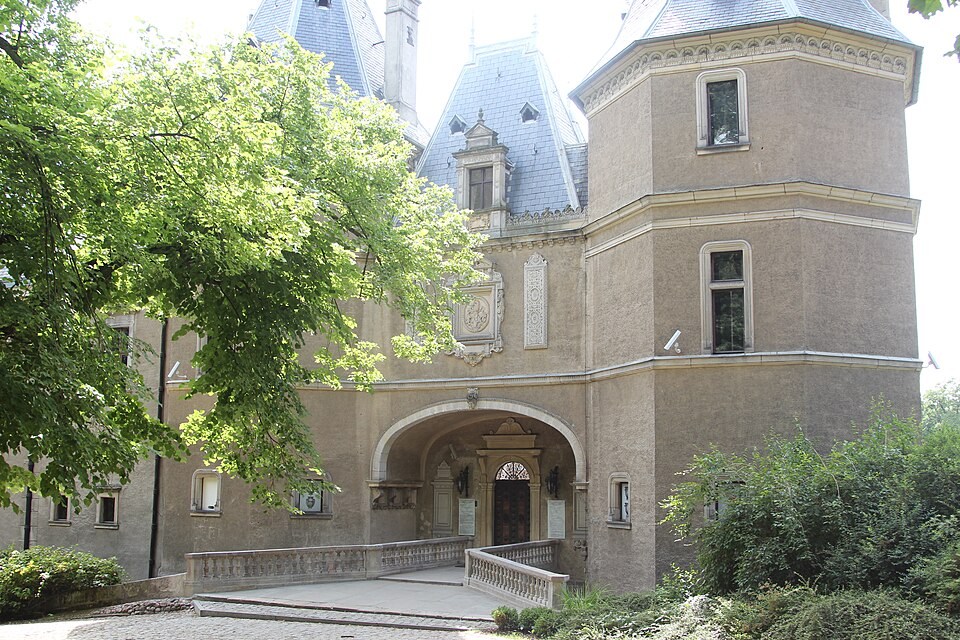
Cover: Gołuchów Castle photographed on 22 June 2019. Archival view, not a current seasonal or access survey. Photo: Fallaner / Wikimedia Commons, CC BY-SA 4.0. Resized and recompressed under the same licence.
Gołuchów Castle is a museum visit inside a much larger landscape, not a single ticket that automatically covers every attraction in the village. The castle belongs to the National Museum in Poznań; the surrounding park and forestry museums have a different manager. That distinction matters when checking opening times, planning access or deciding how much of the day to reserve.
For a first visit, start with the castle's current essentials: normal admission is 20 zł, Tuesday admission is free, and the published September-December 2026 hours are 09:00-16:00 from Tuesday to Sunday. Entry timing is more restrictive than closing time suggests. The three-storey historic building also has entrance stairs, no lift and no accessible toilet. Settle those details before building a day around the photographs.
Tickets and reductions
The official visitor page lists normal tickets at 20 zł and reduced tickets at 13 zł. Children and young people aged 8-26 are listed at 1 zł, while children through the end of their seventh year enter free. Tuesday is listed at 0 zł. Bring the document that proves a reduction: the museum explicitly says concessions require appropriate evidence, and an informal explanation at the desk is not a substitute.
The reduced categories include students, people over 65, pensioners, teachers, and people with disabilities and their carers, among others. Some visitors have separate free-admission entitlements, including holders of Karta Polaka. Use the museum's full list for the entitlement you want to claim rather than assuming every resident, foreign student or accompanying adult qualifies on the same basis.
Tickets can be bought at the museum desk with cash or card, or through the Tobilet service linked by the museum. The ticket service warns that a service fee may apply. Compare the final online total, not merely the museum's headline tariff. The seller also says that a lack of online availability during opening hours can still leave tickets available at the physical desk. That is an option to check, not a guarantee of entry after travelling.
Free Tuesday does not remove the entry rules
Free admission is useful for a flexible traveller, but it does not mean the castle operates as an unrestricted walk-through space. The visitor page describes entries every half-hour, in groups of up to 30, accompanied by an exhibition attendant. A staffed entry is not the same thing as a reserved guided tour in your preferred language.
A guided visit costs 150 zł for a group of up to 30, plus admission tickets, and must be booked ahead by telephone or email. The education page gives an approximate guided duration of 45 minutes. If your group is larger, the museum says it is divided into smaller groups, each paying for its own guided visit. Check the complete arrangement before promising a fixed per-person cost to friends or colleagues.
For English-language help, ask specifically what can be supplied on your date. An English translation of a website does not establish an English-speaking guide or English commentary during an attendant-led entry. Give staff the date, group size and language in the same enquiry. If you only need ordinary admission, do not mistake a paid group-guide booking for a compulsory extra.
Hours and the last-entry problem
The 2026 schedule is divided into seasons. From January to June and again from September to December, the listed hours are Tuesday-Sunday 09:00-16:00, with Monday closed. In July and August, Tuesday-Friday remains 09:00-16:00, while Saturday and Sunday move to 10:00-17:00. Do not carry the summer weekend pattern into an autumn or winter visit.
The museum specifies last entry at 15:00 from Tuesday to Friday. For July-August weekends it specifies last entry at 16:00 and says visits are individual. The linked ticket seller states that entry is possible no later than 60 minutes before closing. For an ordinary non-summer weekend, use that one-hour margin as your planning minimum and confirm the actual entry slot rather than arriving a few minutes before 16:00.
The official page lists holiday closures, including 24-26 and 31 December, and contains a separate quiet-hours calendar. There is a conflict in those lists: 1 November appears both as a closed day and as a quiet-hours date. Do not use the quiet-hours list as proof that a stated closure has been cancelled. Confirm any holiday or special sensory-session visit directly. The page's remaining December quiet-hours entry is 6 December, 10:00-12:00, subject to confirmation.
What kind of castle is this?
The French-looking roofs and towers can make Gołuchów seem like a direct transplant from the Loire Valley. The museum's history is more interesting: the present building combines several construction phases. Its earliest surviving elements belong to the defensive residence built around 1560 by Rafał Leszczyński. Wacław Leszczyński inherited the estate in 1592 and transformed it into a larger aristocratic residence in the early seventeenth century.
In 1853, Tytus Działyński bought the estate for his son Jan, who married Izabella Czartoryska in 1857. Izabella's later rebuilding brought French artists to Gołuchów, including architect Maurycy August Ouradou, sculptor Karol Biberon and painter Ludwik Breugnot. The Loire castles supplied a model for the high slate roofs, chimneys and carved detail visible today.
That history helps avoid a common misunderstanding. Gołuchów is not an untouched sixteenth-century fortress, nor merely a nineteenth-century imitation with nothing older inside. Look for the relationship between its earlier structure and Izabella's museum project. The building itself is part of the collection, and its successive layers explain why a compact exterior can lead into a varied sequence of rooms.
Izabella's museum and the collections
Izabella intended the rebuilt castle to be a museum as well as a residence. The museum explains that the estate arrangement she established before her death protected the accessibility and integrity of her collections. She died in France in 1899 and was buried in Gołuchów. The private museum continued until September 1939, when war interrupted its history.
The collections were looted, dispersed and damaged during the Second World War. Some surviving objects returned to Poland in 1956. The National Museum in Poznań took over the castle in 1951, carried out conservation and supplied rooms with objects from its own holdings. The museum describes tapestries, European Renaissance painting, furniture and decorative arts, alongside objects that have returned from Izabella's collection.
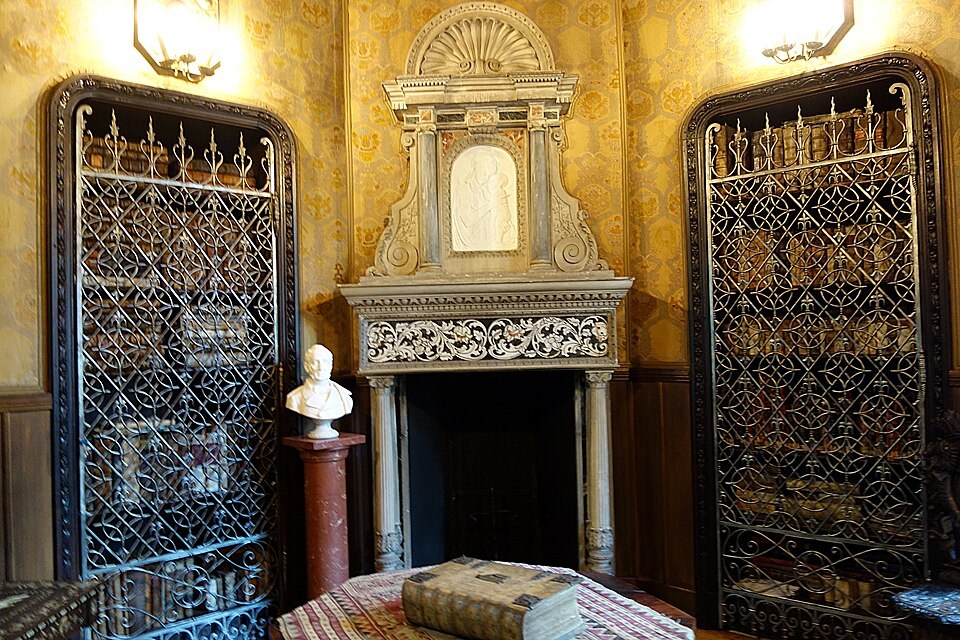
Among the collection's distinctive elements are ancient vases. The official site also presents rooms including the library, dining room, Polish Room and Greek Vases Room. A photograph of a particular room is not a promise that every object will remain in exactly that position. If one collection or room is the reason for your trip, ask about any closure or loan before buying transport.
Access: the courtyard and interiors are different
The museum's visitor page describes a three-storey building without a lift, with stairs at the main entrance and no accessible toilet. Its detailed access declaration goes further: the building is inaccessible to wheelchair users, while access to the internal courtyard is possible. Do not turn that courtyard access into a claim that the museum interiors are step-free.
The declaration lists handrails on internal stairs but says the steps are not marked with contrasting strips. It identifies two accessible parking spaces and an induction loop at the ticket desk. Assistance dogs and guide dogs may enter. The same declaration says there is no online Polish Sign Language interpretation service, no tactile map and no Braille room signage for this branch.
Anyone who needs a short walking route, a seated break or help understanding the route should contact staff before travelling. The wider museum declaration mentions portable museum chairs and other visitor aids at operating branches, but availability and suitability still need checking for your visit. A companion's willingness to help does not remove stairs or establish a safe way to carry a wheelchair.
The park and forestry museums need their own plan
The castle's official park page describes an English-style landscape developed from Jan Działyński's ideas, with gardener Adam Kubaszewski working on the estate from 1876. Its reported area is 158.05 hectares. That scale is a reason to choose a route, not a challenge to cover everything before the castle's last entry. Ponds, open views and old planting make the landscape part of the visit rather than simply a car-to-door approach.
The same page says the Forestry Culture Centre manages the park and buildings in it, including forestry museums in the former outbuilding and carriage house. Those are not castle rooms on the National Museum ticket. Check their current ticketing and hours separately if you want to combine them. The chapel associated with Izabella's burial is described as not accessible to visitors inside.
The official description mentions a stone and then gravel route towards the former outbuilding. Do not assume every park path is smooth or equally workable for a pushchair or mobility aid. In wet or icy weather, a shorter walk with a confirmed return route can be a better choice than following an ambitious map. The photographs here are dated views of the actual castle, not a current path-condition survey.
Getting the final details right
The current visitor page gives ul. Działyńskich 2, 63-322 Gołuchów, telephone +48 62 761 50 94 and [email protected]. The access declaration uses a different street number for the branch, so use the visitor contact to confirm the exact parking or accessible-arrival point if that matters. Avoid treating an address pin alone as a complete arrival plan.
For a car trip, check the parking arrangement and allow time to walk through the grounds. For public transport, build the day from actual outward and return timetables rather than an unverified claim about frequent buses. A straightforward first visit is to secure the castle entry first, leave time for the collections, and add a park walk afterwards. Keep the forestry museums as a separate, checked extension. That makes the day easier to adapt without sacrificing the part you most wanted to see.
Frequently asked questions
Is Gołuchów Castle free on Tuesday?
Yes. The official branch tariff lists Tuesday at0 zł. Opening days, entry capacity and holiday closures still apply.
How late can I enter?
The museum specifies15:00 last entry Tuesday-Friday and16:00 on July-August weekends. The linked ticket seller states entry no later than60 minutes before closing. Confirm your slot for other weekends.
Is the castle wheelchair accessible?
The official access declaration says the building is inaccessible to wheelchair users, but access to the inner courtyard is possible. There is no lift or accessible toilet.