Halloween in Poland: How It's Celebrated, Pumpkin Farms and Dziady
The essentials: Halloween is not traditional in Poland and 31 October is a working day, but cities celebrate with pumpkin farms, costume parties and exhibitions like Warsaw's Halloween Festival (until 1 Nov). Trick-or-treating is rare. The season's main event is All Saints' Day, 1 November, a holiday of candle-lit cemetery visits.
Halloween in Poland: an import that found its place
Halloween is not a traditional Polish holiday, and 31 October is an ordinary working day here, with no closures and no official events. But the celebration itself has taken root over the last two decades, especially in the big cities: shops fill with costumes and plastic pumpkins in October, clubs and bars run Halloween-themed weekends, schools and kindergartens hold dress-up days, and pumpkin farms have become a genuine October family outing. For expats from countries where Halloween is a major event, Poland offers a smaller but real version of it, followed 24 hours later by something much bigger and unmistakably Polish: All Saints' Day.
The key thing to understand is that the two moods sit side by side. The spooky, playful part of the season is commercial and optional; the remembrance part, on 1 and 2 November, is near-universal and taken seriously. Enjoying the first while respecting the second is the whole trick of late October in Poland.
* Data source: seasonal dates checked against the 2026 calendar; All Saints' public-holiday status per the Act on Days Off Work, as of 23 October 2026.
Where to go in Warsaw in October 2026
The biggest dedicated attraction this season is Halloween Festival Warszawa, an exhibition at the Lost World venue by Fort Wola 22 in Warsaw. It runs from 2 October to 1 November 2026 and advertises six themed zones, more than ten attractions and over 300 figures, with light installations and thousands of glowing pumpkins after dark. The organisers describe it as "autumn magic, not horror", with zones for younger children and a separate, clearly marked zone for stronger scares, so it works as a family evening out. Tickets are sold through the event's website.
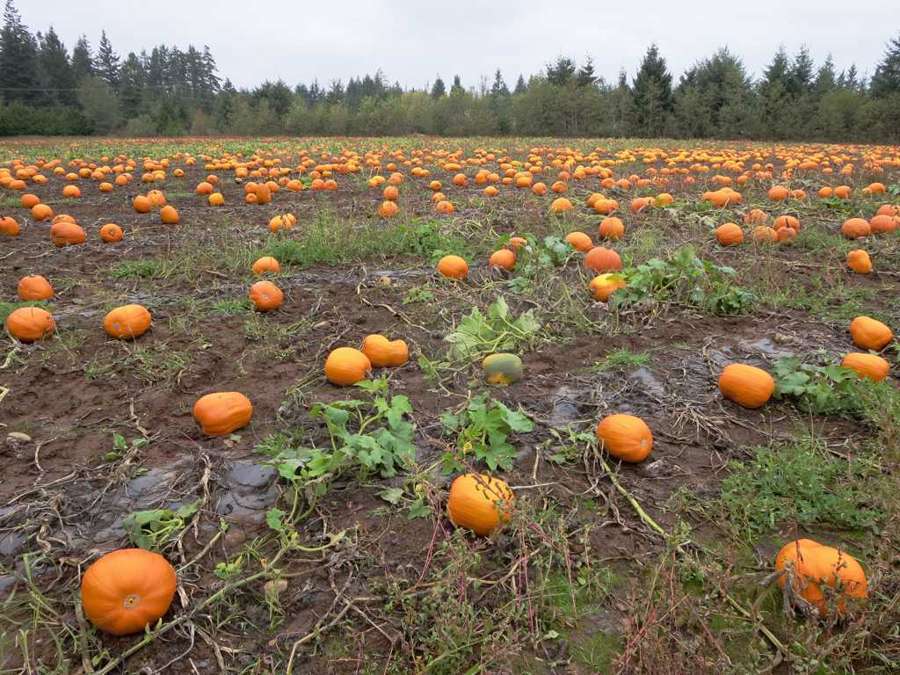
For the classic pumpkin-patch experience, Farma Dyn, the Magic Pumpkin Farm at ul. Drewny 17 in Warsaw's Powsin district, is open daily 9:00 to 18:00 until 31 October 2026. Individual entry without reservation costs 45 zl per person, children under one year enter free, and pumpkins are sold on site at prices displayed at the farm. The farm also runs a mini-zoo, animal feeding and birthday and group packages, and welcomes calm dogs, which makes it an easy half-day trip inside the city limits.
* Data source: halloweenfestival.pl and farmadyn.pl, both fetched 23 October 2026; prices and dates as published on those sites on that day.
Pumpkins, costumes and the trick-or-treat question
Carving pumpkins are widely available in October: supermarkets, markets and garden centres stock them, and a pumpkin farm visit doubles as the shopping trip if you want the full ritual of picking your own. Costumes for children and adults appear in the same shops, and pumpkin-flavoured cakes and soups show up on menus through the month.
Trick-or-treating is the part that works differently. Door-to-door visiting is not an established custom in Poland, and in most apartment blocks and housing estates children do not go around collecting sweets. The exceptions are expat-heavy neighbourhoods, international-school communities and some gated communities, where families organise their own rounds by arrangement. If trick-or-treating matters to your children, the reliable route is organising it with other parents rather than knocking on strangers' doors: in many neighbourhoods an unexpected evening doorbell in costume is more likely to confuse than to delight.
* Data source: practical assessment cross-checked against expat community guidance and the operators above, as of 23 October 2026.
Halloween for adults: parties and nights out
The grown-up version of Halloween in Poland is nightlife-led. Clubs and bars in Warsaw, Krakow and other big cities run Halloween parties on the weekend closest to 31 October, and costume dress is the norm at them rather than the exception. Horror films return to cinema schedules, and escape rooms and seasonal attractions add scary programming for the month. Because 31 October is a workday, in 2026 the big party nights will be Friday 30 and Saturday 31 October, with the quieter Sunday leading straight into the All Saints' travel rush.
* Data source: 2026 calendar dates verified; seasonal programming pattern as advertised by the operators cited above, as of 23 October 2026.
Dziady: the older Polish way of meeting the dead
Long before Halloween arrived, the Slavic calendar had its own feast for the dead at exactly this time of year. Dziady, often translated as Forefathers' Eve, was a ritual of communion between the living and the dead, celebrated by Poles, Belarusians, Ukrainians and Lithuanians; the autumn dziady fell between the last day of October and the first day of November. The core rite was an offering of food to the souls of ancestors, shared at a ritual meal.
The rite was once widespread across the lands of old Poland: households left food out for wandering souls, fires were lit at crossroads to guide them, and the evening belonged to remembrance rather than fear. The tradition survives most powerfully through literature. Adam Mickiewicz, Poland's national poet, made a dziady ritual the plot of the second part of his drama "Dziady" (Forefathers' Eve), published in 1823, and the play remains a school-canon text that every Polish teenager studies. When Poles compare Halloween unfavourably to "our dziady", this mix of folk ritual and literary pride is what they mean: an older, quieter, fireside way of inviting the ancestors in, rather than a costume party.
* Data source: Dziady reference history (Wikipedia), checked 23 October 2026.
From costumes to candles: the 1 November pivot
The day after Halloween, Poland changes register completely. All Saints' Day, 1 November, is a statutory public holiday, and millions of people travel to cemeteries to clean family graves, lay flowers and light candles; 2 November, All Souls' Day, continues the remembrance. The visual effect after dark, entire cemeteries glowing with candlelight, is one of the most striking sights of the Polish year, and the traffic and transport around cemeteries are planned around it for days.
For an expat, the practical points are simple: shops are closed on 1 November, roads and public transport run special cemetery arrangements, and the atmosphere in cemeteries is contemplative rather than festive. Visitors are welcome, but quiet behaviour, no costumes and no party mood are the rule. Our detailed All Saints' Day guide covers the customs, the candles and what to expect.
* Data source: All Saints' Day status per the Act on Days Off Work and our own expat guide to All Saints' Day, as of 23 October 2026.
Making the season work with children
The Polish late-October rhythm suits families well once you know it. October weekends are for pumpkins: the farm trip, the carving session at the kitchen table, the Halloween exhibition or a school dress-up day. Then the calendar itself teaches the second half of the lesson, because the candle-lit cemetery visit on 1 November is something Polish children grow up with, and expat children can experience it the same way.
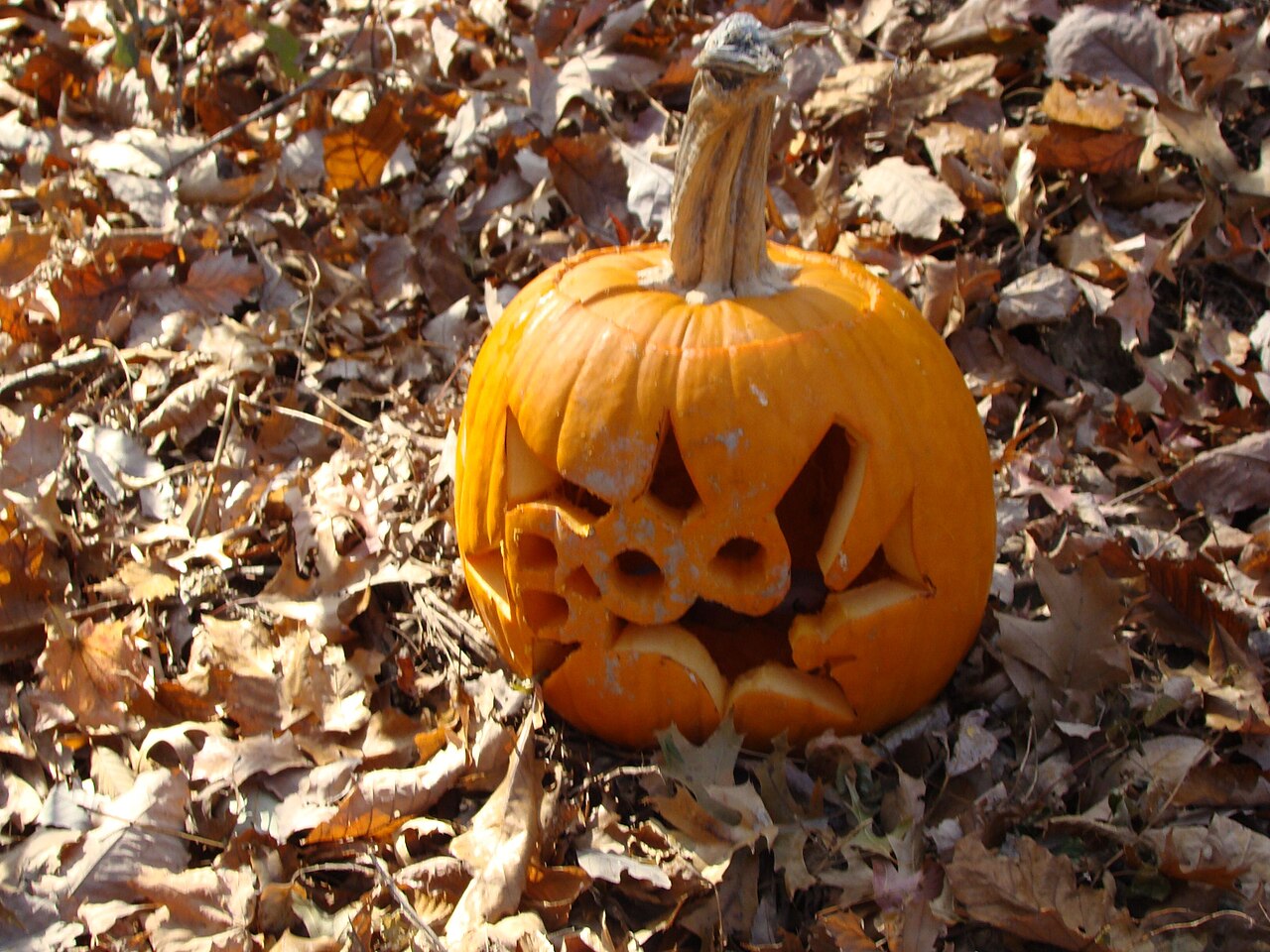
A few things that help: carve pumpkins a day or two before 31 October so they survive to the evening, keep costumes warm enough for late-October weather, and if you light candles on 1 November, the same candle shops and supermarkets sell the grave lanterns, znicze, in every neighbourhood. The season ends up giving children two celebrations instead of one.
* Photos: CC BY 2.0 David Stanley via Wikimedia Commons (pumpkin field, cover); public domain via Wikimedia Commons (jack-o-lantern in leaves, body).
Frequently asked questions
Is Halloween a day off in Poland?
No. 31 October is a normal working day. The public holiday is 1 November, All Saints' Day, when shops are closed.
Can children go trick-or-treating in Poland?
Door-to-door trick-or-treating is not a Polish custom and is rare outside expat communities and international-school circles. Families who want it usually organise it among themselves.
Where can I pick pumpkins near Warsaw in 2026?
Farma Dyn in Warsaw's Powsin district (ul. Drewny 17) is open daily 9:00-18:00 until 31 October 2026; entry is 45 zl per person and pumpkins are sold on site.
What is Dziady?
An old Slavic ritual of honouring the dead with food offerings, held around the end of October, and the title of Adam Mickiewicz's famous 1823 drama, a set text in Polish schools.