Document Photos in Poland: Passport Sizes, Prints and Digital Files
The essentials: Tell the studio the issuing country, exact document and application route. Show the authority's current instructions, confirm print quantity and digital requirements, and check the result before leaving. A biometric label is not universal acceptance.
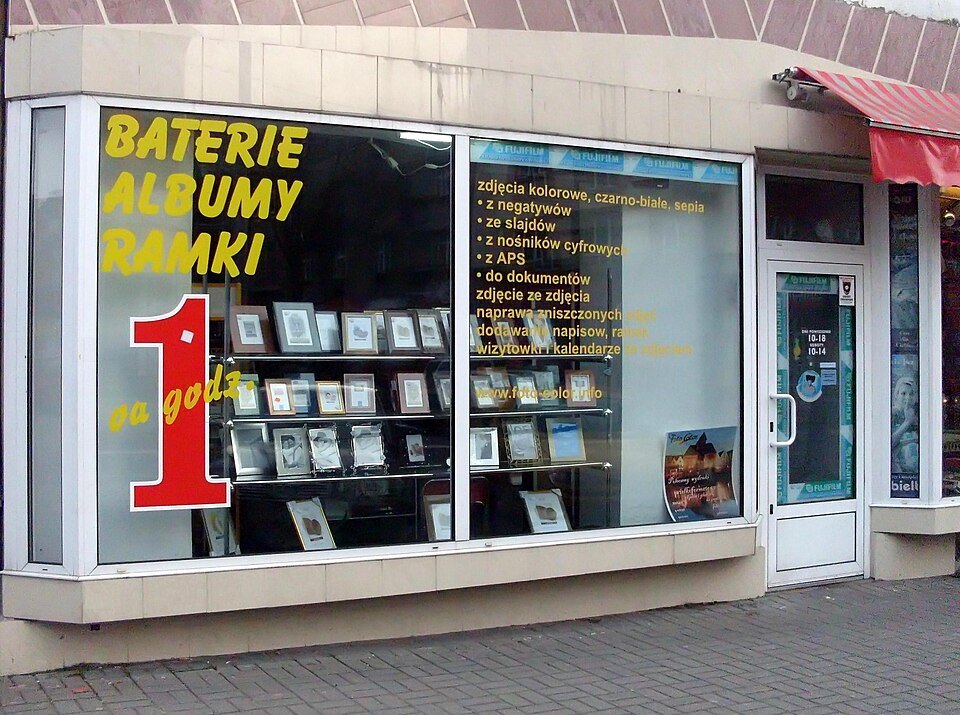
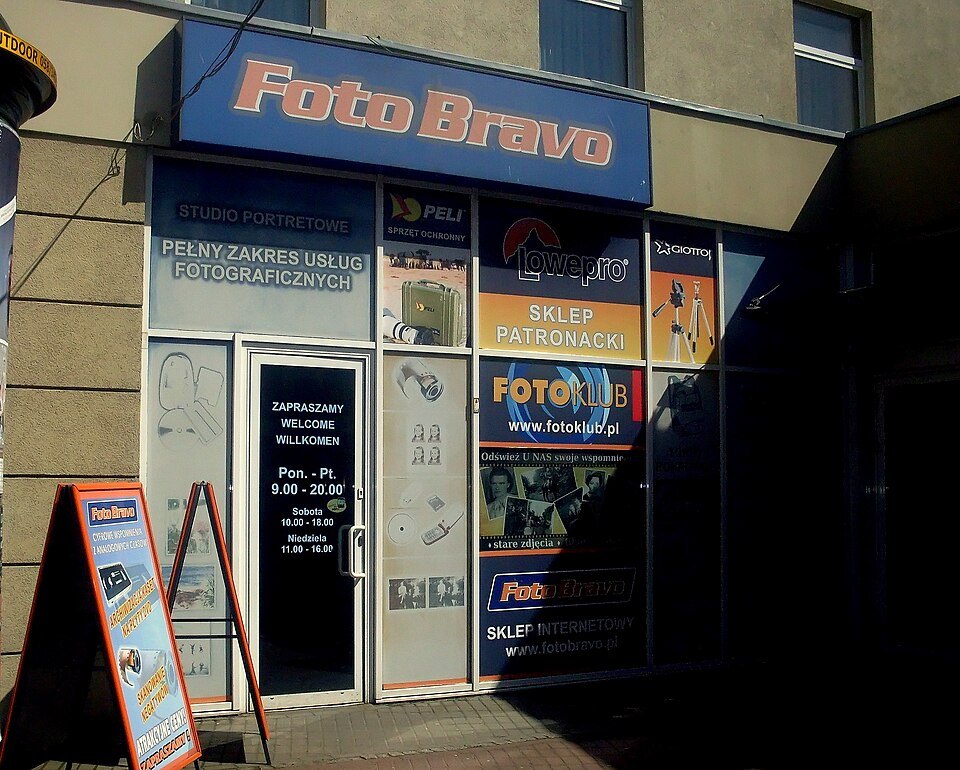
Illustrative December 2008 photograph in Gdynia, not a current studio listing or turnaround promise. Pomeranian / Wikimedia Commons, CC BY-SA 4.0. Resized, same licence.
A photo studio in Poland can make a photograph for a document issued somewhere else, but only if you tell it which document and which application route. Asking simply for a 'passport photo' leaves too much open. A Polish passport, a US passport and a British passport do not all use the same rules, even when the pictures look similar.
Search for zdjęcia do dokumentów or fotograf, then bring the receiving authority's current instructions. This guide compares official examples checked on 27 October 2026. It is not a promise that a particular studio, booth or online service will produce an accepted photo. The destination authority's rules and your actual application checklist remain the starting point.
Name the country, document and application route
Before the photograph is taken, say whether it is for a passport, visa, Polish residence process, identity card or another document. Add the issuing country and whether you will apply online or on paper. Do not assume that 'biometric photo' identifies a single worldwide specification. Even two documents using the same printed dimensions can have different composition or recency conditions.
Show the official requirements on your phone or bring a printout. If a studio offers a preset for your document, ask whether it matches those instructions rather than relying only on the preset's name. A visa photograph and a passport photograph for the same country may belong to different processes. Read the page for the document you are actually applying for.
Ask how many physical copies you need and whether you also need an electronic file. The answer comes from the application checklist, not the standard packet sold at the counter. A sheet containing several small portraits is not automatically the right output for an upload form, and an email attachment does not replace printed photographs where the authority requires them.
The common Polish print size is not a universal passport size
Poland's government guidance for Polish identity cards and passports gives a printed size of 35 mm wide by 45 mm high for an office application. It says the photograph should have been taken no earlier than six months before the application. It also describes a frontal view, natural expression, closed mouth and a face occupying 70-80% of the photograph.
Those are requirements for the Polish documents described on that page. They are not a rule for every foreign passport application made while living in Poland. The US State Department's passport-photo page gives a printed size of 2 by 2 inches, or 51 by 51 mm. Ordering the usual Polish 35-by-45 print would therefore not meet that US printed-size requirement.
British printed passport photographs use 35 mm by 45 mm, but the UK page says they must have been taken within the last month and gives its own head-size and background requirements. Matching the outer dimensions alone does not make a Polish-format photograph interchangeable. If you are ordering for more than one country, ask for separately prepared outputs checked against each authority's instructions.
For a Polish residence application, check the current procedure
Do not mix up applying for a residence permit with requesting issue or replacement of a residence card. The Świętokrzyskie office's card issue/replacement page lists two photographs with its own checklist. Its separate new-MOS FAQ describes an uploaded photograph for the online residence-permit process. These pages concern different procedures, not two quantities to average into one general rule.
The MOS FAQ checked for this guide specifies a JPG photograph of at least 684 by 883 pixels, maintaining the stated 35-by-45 proportions, with a maximum file size of 2.5 MB. It also describes recency, sharpness, natural colour and facial composition. Use the current form and the instructions for your own case when ordering the file; this guide does not determine your eligibility or filing route.
If your checklist and a general information page appear inconsistent, resolve that before paying for a large set of prints. Save the relevant instruction and ask the responsible office which output is needed. A photographer can prepare a file, but cannot decide which immigration procedure applies to you or replace the receiving authority's document checklist.
Digital photographs have their own technical requirements
Pixels, file size and millimetres answer different questions. A file can have plenty of pixels and still show the wrong crop or background. A correctly printed portrait can still be unsuitable for upload if its electronic version is too small, too large or in the wrong format. Ask the studio to supply the actual digital file required by the application, not a photograph of the printed sheet.
Poland's identity-card/passport guidance illustrates this distinction. It gives a minimum of 492 by 633 pixels for the online identity-card route it describes, and 768 by 1004 pixels for an online passport application for a child under 12, each with a maximum size of 2.5 MB. These figures are not substitutes for the separate MOS specification or a foreign passport portal's requirements.
Ask for the file in a way you can download and retain without changing it. Do not send it through a channel that silently shrinks images if you need the original dimensions. Before leaving the studio, check that you can open the delivered file and that the name, format and intended document match your order. Keep it private rather than posting it as a public example for someone to check.
Prepare for the photograph using the receiving authority's rules
Read the rules about glasses, head coverings, shadows, expression and the background before the sitting. Poland's guidance allows ordinary corrective glasses under conditions that keep eyes visible and avoid reflections. Other authorities have their own instructions. Tell the photographer the destination instead of assuming a rule remembered from a previous application still applies.
Religious, disability and health-related exceptions need the exact authority's guidance too. Do not assume that the supporting document or statement used for one procedure will be the same for another. If an exception is relevant, clarify what is required before the appointment. A studio's familiarity with one kind of application is useful, but does not authorize a different authority's exception.
For children, check the specific age rules and ask whether the studio can accommodate the sitting. Poland and the UK publish child-related exceptions, but they are not expressed in identical terms. Ask about appointment time, support and the final background rather than assuming any family snapshot can be cropped into an acceptable document photo.
Do not confuse document preparation with beauty editing
A document photograph needs to represent you under the destination rules, not create a polished social-media portrait. The US passport page requires an original, unedited photo without filters or digital changes. The UK digital-photo rules likewise say the photo must be unedited and without effects or filters. Do not assume an automated background or face-editing tool is acceptable because it advertises a biometric result.
Ask the photographer what processing is included and show any prohibition on alteration in the official instructions. Avoid face reshaping, skin-smoothing filters or other changes that depart from the required likeness. If the photograph is technically poor, a new sitting is safer than trying to repair it with an unfamiliar app and hoping an upload checker will approve it.
Uploading successfully is not proof of final acceptance. A website can accept the file format without settling every visual requirement. Review the actual photograph and any warning the application gives. Do not treat a commercial service's acceptance promise as a decision by the authority processing your document.
Agree the studio order and check the result before leaving
Confirm the complete price, number of prints, digital-file inclusion and delivery time. Ask whether another format or extra copies cost more. This guide gives no national price because the relevant order may include different outputs and services. If you have an appointment soon, confirm when everything will be ready rather than relying on a historical 'one hour' sign in a photograph online.
Ask about the studio's policy if an authority rejects the photograph. Find out what evidence it needs, whether it offers another sitting and whether the promise covers only a photo defect. A remake policy should not be mistaken for reimbursement of every application delay or travel cost. Keep the receipt and written description of what you ordered.
Inspect prints for damage, marks and the requested dimensions. Check that the digital file is the individual portrait rather than a contact sheet. Do not cut a larger image down where the destination prohibits that: the UK printed-photo guidance expressly says the photograph must not be a cut-down version of a larger picture. Follow the relevant instructions for separating and submitting prints.
If the authority rejects the photograph, retain the reason and contact the studio promptly with the original order details. Correct the specific problem against the official requirement rather than repeatedly submitting the same file. A reliable order starts with one clear sentence: the country, exact document, paper or online route, and the official photo instructions you want the studio to follow.
Frequently asked questions
What should I ask for at a Polish photo studio?
Ask for zdjęcia do dokumentów, then name the country, exact document and paper or online application route. Show the official requirements and confirm the number of prints and digital-file specification.
Are all passport photos 35 by 45 mm?
No. Polish printed passport guidance uses 35 by 45 mm, while US printed passport guidance uses 51 by 51 mm. Even matching dimensions do not establish identical age, crop or background rules.
Can I use a six-month-old photo for a British passport?
The UK printed-photo page says the photograph must have been taken within the last month. Do not transfer Poland's six-month guidance to another country's application.
Is the digital file the same for Polish ID and MOS?
Do not assume so. The pages checked give different minimum pixel dimensions for different procedures. Order the file for the actual current form and verify its format and size.
Does a photo service guarantee official acceptance?
No commercial promise replaces the receiving authority's decision. Check the studio's remake policy, retain your order and use the authority's stated rejection reason if a correction is needed.
Sources
- Gov.pl Polish ID and passport photo guidance, updated 4 October 2024, checked 27 October 2026
- Swietokrzyskie office new MOS FAQ, checked 27 October 2026
- Swietokrzyskie residence card issue/replacement checklist, checked 27 October 2026
- UK government printed passport photo rules, checked 27 October 2026
- US State Department passport photo rules, updated 24 March 2026, checked 27 October 2026
- UK passport service digital photo rules, checked 27 October 2026